
Taking the discourse around agentic AI to the next phase, MIT SMR Middle East’s AI Research Forum (AIRF) 2026 is set to bring together top voices from the industry to tackle a critical question: how are organizations turning the agentic AI mandate into deployed capability?
With the theme “Agentic AI: From Mandate to Momentum,” the second edition will host conversations examining the technology stack that determines whether agentic AI scales: infrastructure and compute, orchestration and frameworks, security tooling, and the integration layer connecting agents to the business.
Ahead of this year’s edition, here’s a quick look back at the ideas that shaped last year’s conversation at AIRF 2025:
1. AI Strategies Need to be Built Around Human Values
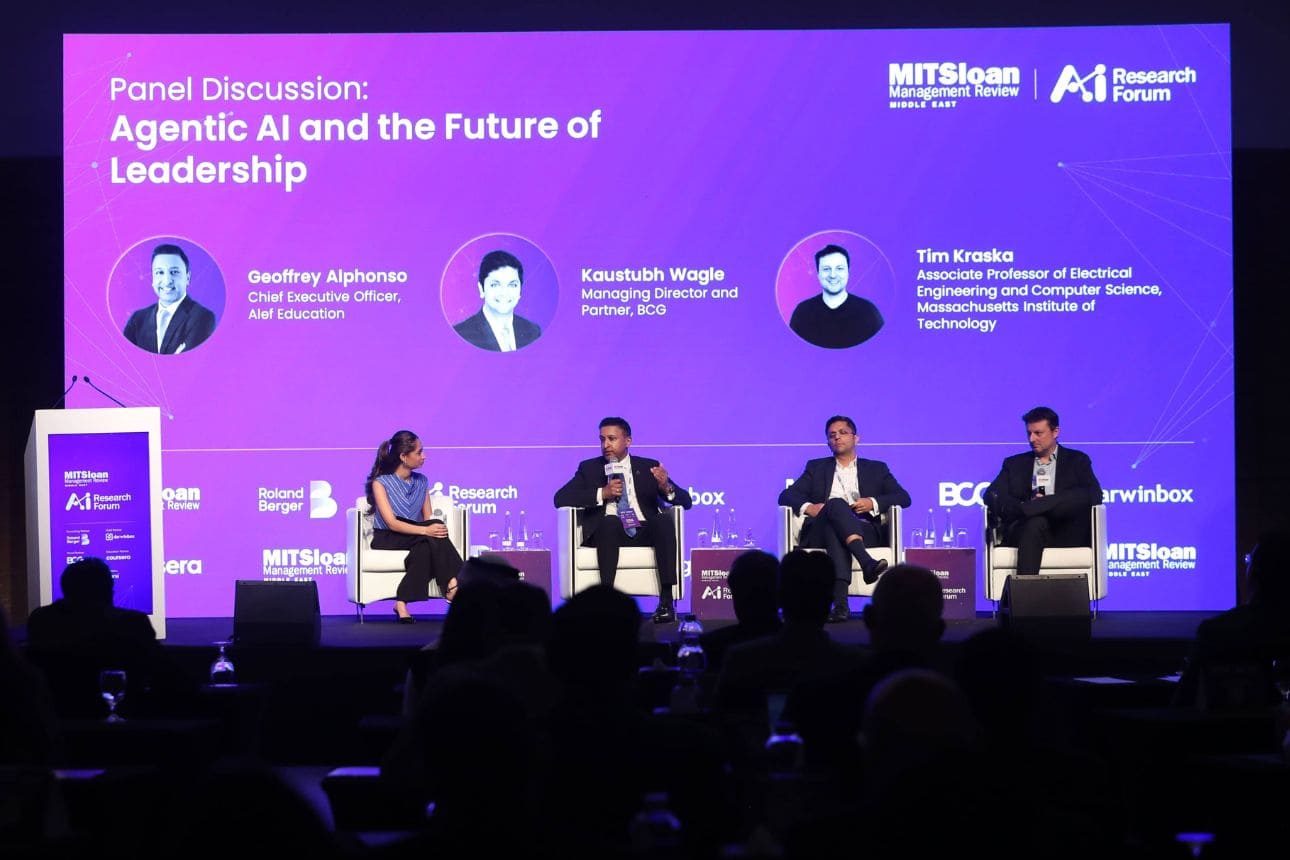
The UAE sits in a unique position when it comes to AI. What distinguishes the local leadership is not merely its ambition to build technology, but also its strategy for governing it and keeping humans in the loop.
Geoffrey Alphonso, Chief Executive Officer of Alef Education, advised embracing curiosity over control. “As AI agents grow more autonomous, we must ensure their evolution remains anchored to human values,” he said. Kaustubh Wagle, Managing Director and Partner at BCG, suggested co-creating rather than abdicating responsibility and using AI to amplify work culture: “Strong leadership, boosted by AI, can become extremely transformative.”
Tim Kraska, Associate Professor of Electrical Engineering and Computer Science at MIT, cautioned against overestimating what AI can achieve in the short term and underestimating what it can achieve in a decade. His advice is to embrace the shift as “there’s no way of fighting it.” “Put things in place now, so that you are ready as things evolve and you are hopefully at the forefront of the latest developments.”
2. Agentic AI Is Changing Work, One Decision at a Time
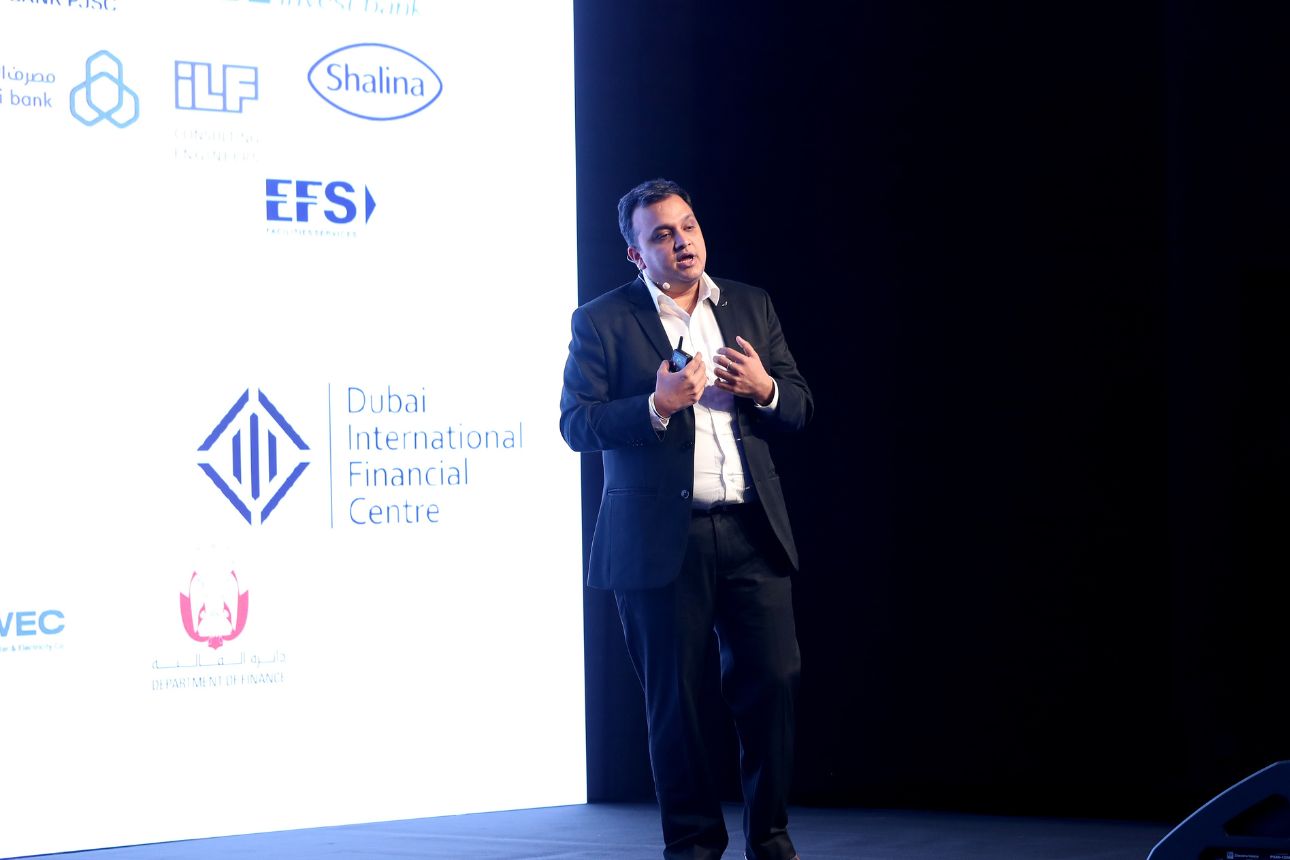
Agentic AI has moved from “analysis” to “action.” Rahul Lakhanpal, Vice President of Product Marketing at DarwinBox, discussed how agents have fundamentally changed how people consume, process, and make decisions about information. “Everyone, right from the tallest startups to the largest players in the world, is just talking about agents.”
Why is there so much excitement about agents? It’s not just hype. Agents are fundamentally reshaping how we work, from the way we take in information to how we make decisions and engage with others.
What makes this especially powerful is that a single agent can mean different things to different people. For leaders, it’s a chief of staff, taking action on your behalf. For teams, it’s a digital team member that boosts productivity. And for employees, it’s a trusted guide, there for support whenever needed.
3. Looking Impressive Doesn’t Equate to Working Well
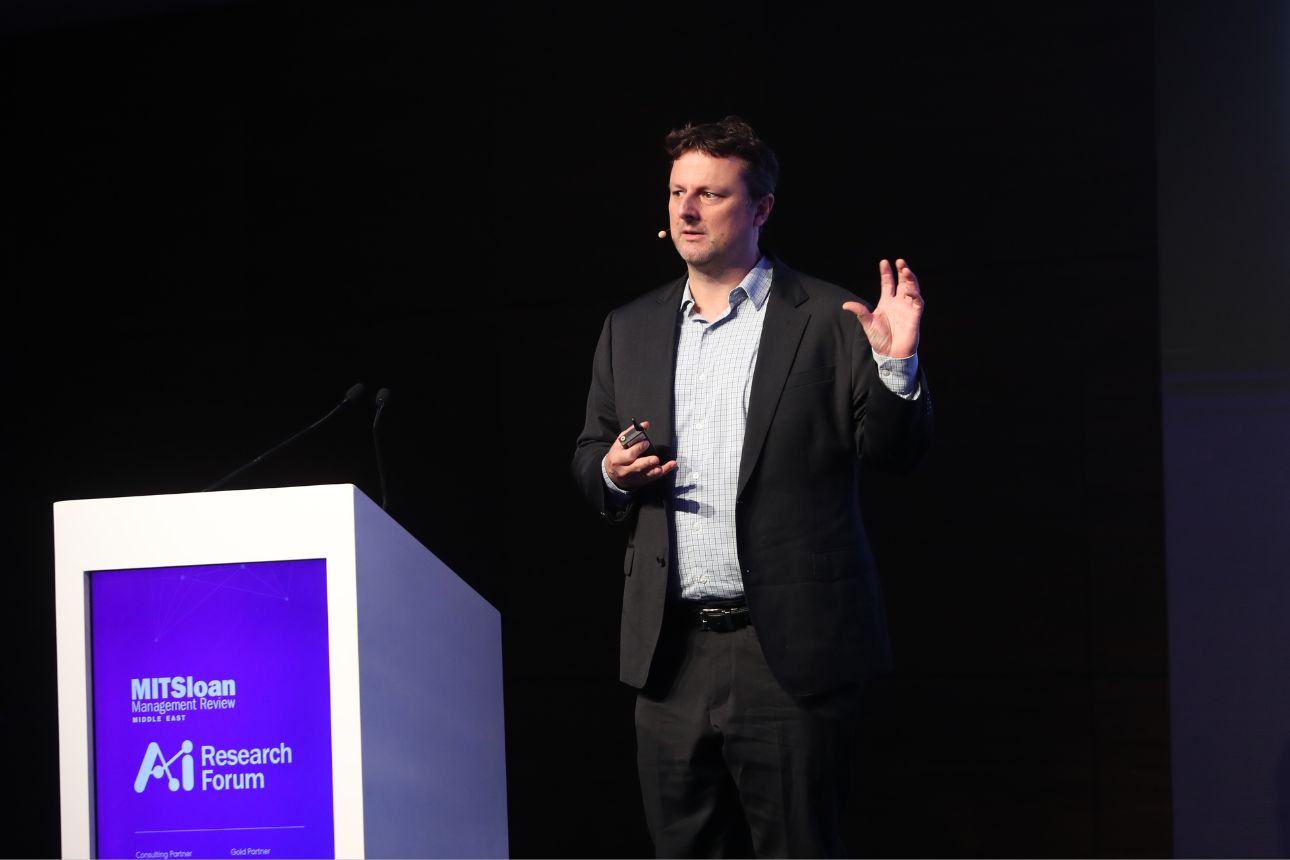
AI has the potential to transform industries and the future of work, but many AI projects are falling short of expectations. Kraska, who is also a director of applied science at Amazon, said that while generative AI is truly transformative, its implementation is often overhyped. Demos are much easier to build than real production systems.
About 95% of organizations are getting zero return, according to an MIT survey. Kraska said that overpromising the technology is partially to blame for its high failure rate.
Swedish fintech firm Klarna Bank, a brand Kraska worked closely with, bet big on generative AI, particularly for support use cases. Its AI support agent was touted as replacing 700 human agents across 23 markets—driving around $40 million in profits. A year later, Klana rehired staff and admitted that AI should augment rather than replace people.
“I’m a true believer of the hype cycle,” he said. He added that the biggest culprit isn’t weak use cases but flashy internal demos that look easy and impressive yet mask the huge gap between a demo and a real production system.
4. What ‘Smart’ AI Means for Organizations
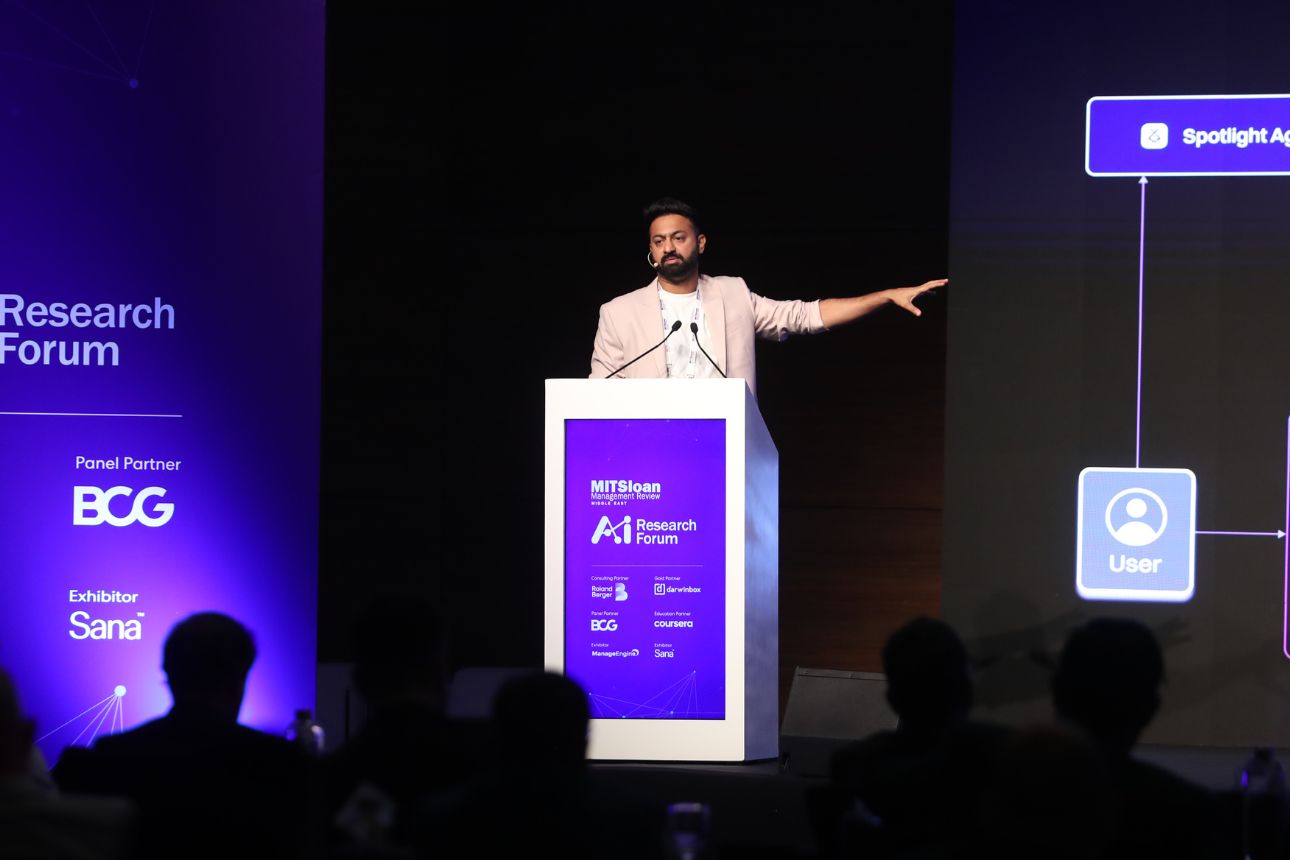
Deploying agentic AI at scale demands a robust, flexible architecture that supports real-time data flows and seamless integration with existing IT systems. Anirudh Narayan, Co-Founder & Chief Growth Officer at Lyzr, listed three primary reasons why the majority of AI pilots fail in the real world: hallucinations, data privacy, and explainability.
He said that the right amount of human oversight depends on how complex the task is. For simple, single-step tasks, agents handle about 70% and humans 30%. For complex or high-stakes tasks, people prefer to be much more involved, wanting a strong human presence.
Narayan envisioned the future of AI not as AGI, but as “OGI, which is organizational general intelligence” — a shift already underway. “We’re already seeing where people are starting with single tasks, which is single-task agent automation, moving to multi-agents. And then imagine you have roles where one agent talks to another across the organization,” he said.
5. The Future is Not Human vs AI, But Human-Powered by AI
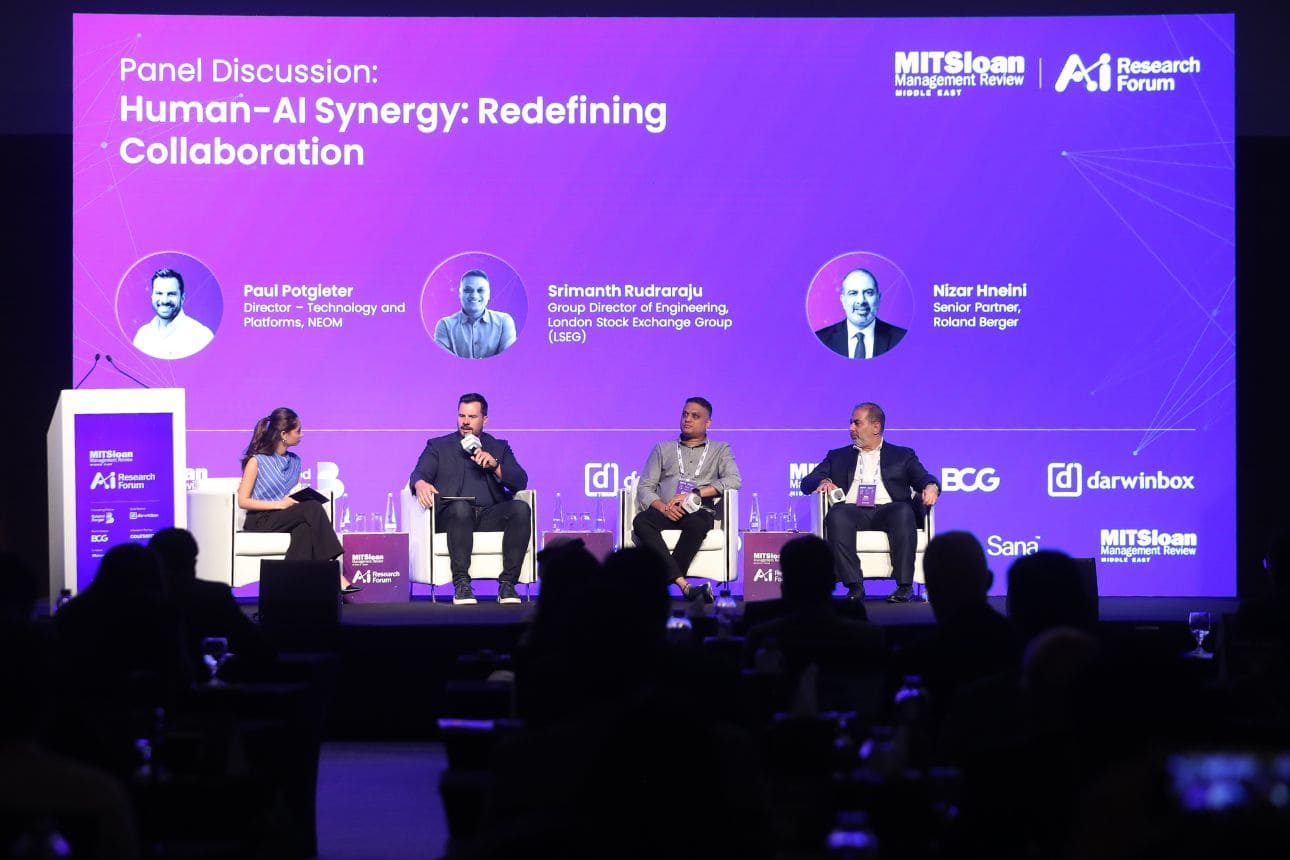
As autonomous AI agents fundamentally alter how teams operate, how can organizations foster productive human-AI collaboration? Paul Potgieter, Director – Technology and Platforms at NEOM, said that there exists a symbiotic relationship between AI and how we think about AI and humanity’s collaboration. “I’m looking forward to how we can augment the technology side and the human side to make us go faster, create that control over business, and still have that freedom to move quickly,” he said.
Srimanth Rudraraju of London Stock Exchange Group (LSEG) said they are using the technology as an afterthought by having it analyze and debug code: “We will still rely on the engineering to build the code, but have AI fine-tune it.” “Those who use prompts and agents properly and give AI the business context will be the most successful,” Rudraraju said.
The future belongs to those who reinvent themselves around AI, said Nizar Hneini, Senior Partner at Roland Berger. “I believe in human creativity and the ability to continue reinventing ourselves. The pace of AI is alarming, but it’s something we’ve seen in the Industrial Revolution and the internet. We can cope, but need to adopt the right mindset.”
6. Identifying and Addressing the Limits of AI
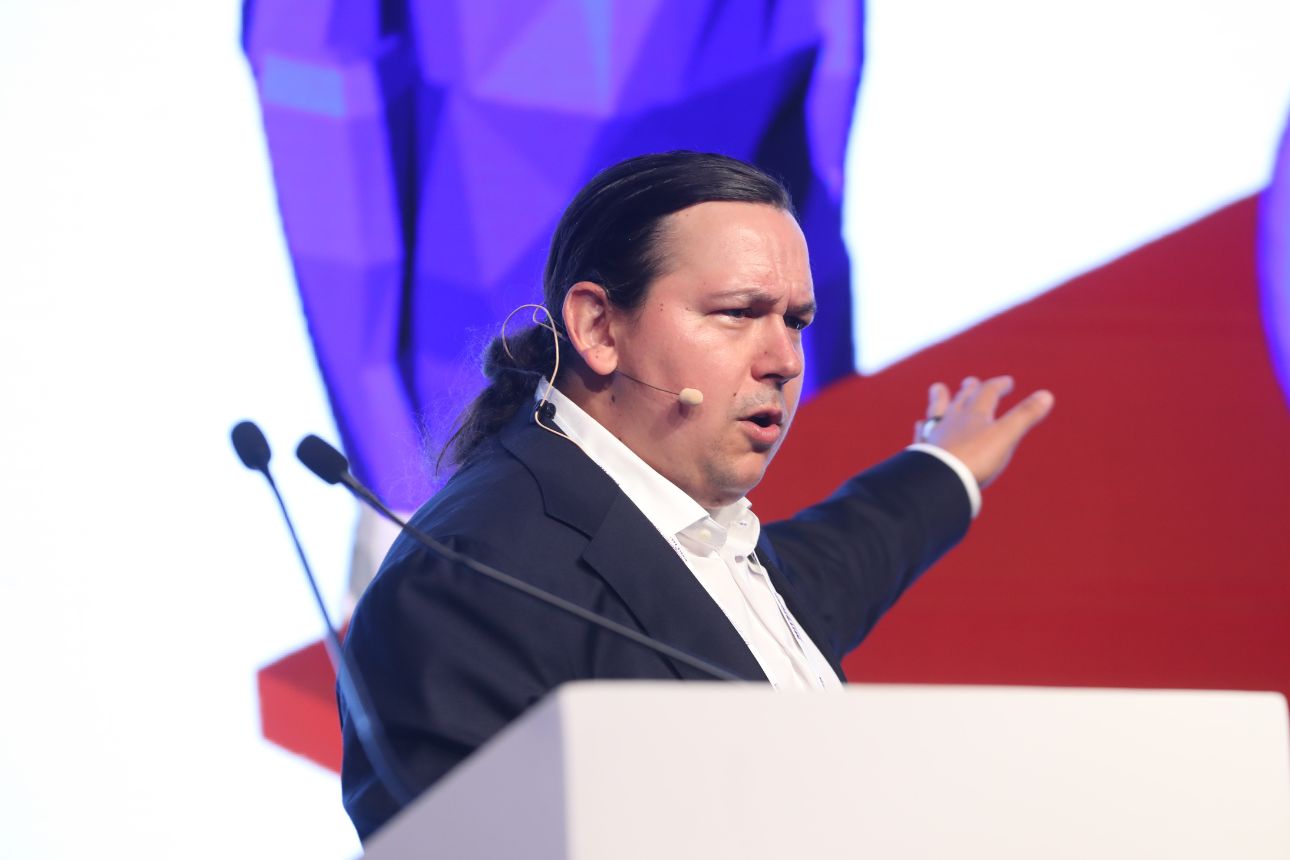
Dylan Hadfield-Menell, Assistant Professor at the MIT Computer Science & AI Lab, spoke about the limits of agentic AI and what is needed for responsible deployment. He explained that in complex, unclear, or high-stakes situations, human judgment and intervention are still essential.
“With optimization-driven systems, you’ll get what you can measure, but eventually, it comes at a cost to something you can’t,” he said.
Hadfield-Menell advised addressing misalignment between the managing agent and the agent by first understanding the agent’s training and how it may differ from your objectives. Clearly define each task and restrict the agent’s access to what is necessary. Develop a plan to monitor and assess its performance, and be prepared to intervene if necessary. Continuously update your requirements and evaluation strategies as you gain more insight.
When determining what to trust, prioritize your own judgment, then rely on formal evaluations, and trust the agent as a last step.
“Prepare for misalignment, because it will happen, guaranteed.”
—
MIT Sloan Management Review Middle East invites you to the second edition of AI Research Forum — “Agentic AI: From Mandate to Momentum” taking place on 22 October 2026 in Dubai.
To partner, speak, or attend AIRF Dubai, click here.