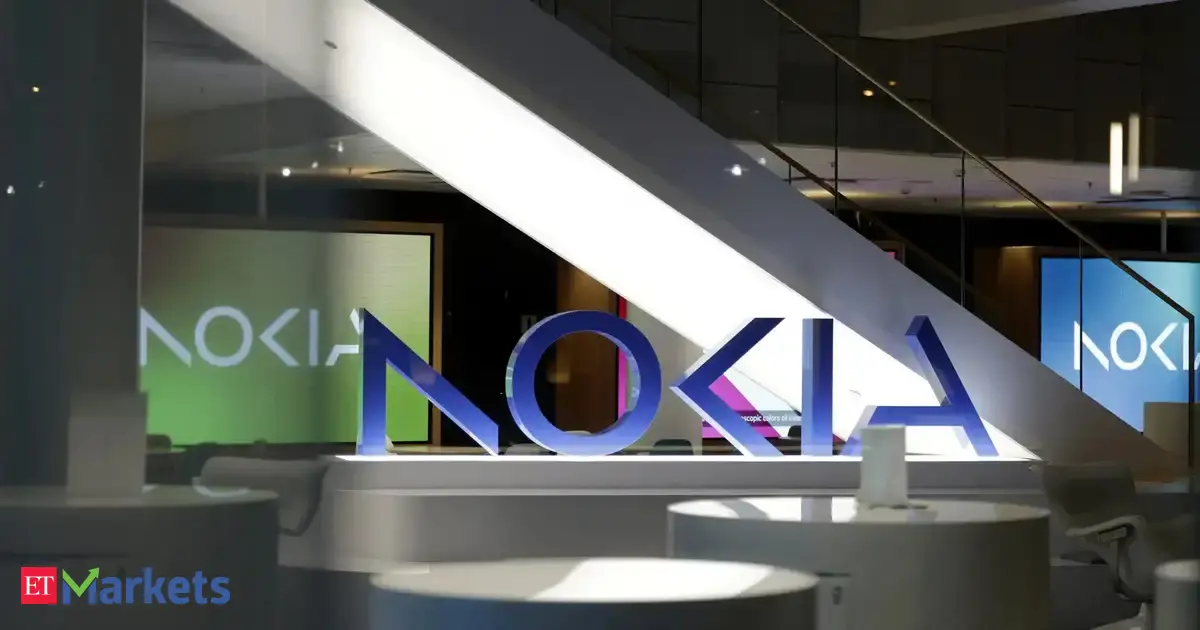
reported stronger-than-expected second-quarter
earningsas robust demand from
artificial intelligenceand cloud customers helped offset broader challenges in the telecom equipment market, according to Reuters.
It posted a comparable operating profit of 434 million euros ($496.1 million) for the quarter ended June, an 18% year-on-year increase, comfortably surpassing analysts' average estimate of 382 million euros, according to an LSEG poll cited by Reuters.
AI Data Centre Push Drives GrowthNokia has been expanding beyond its traditional telecom infrastructure business by supplying fibre-optic networking equipment to major technology companies building
AI data centres. The strategy has become a key growth driver as hyperscale cloud providers continue to invest heavily in AI infrastructure.
According to Reuters, the company's sales to AI and cloud customers doubled during the quarter to 446 million euros, while it secured 2.8 billion euros in new orders from the segment, highlighting sustained demand for high-capacity networking solutions.
Revenue Tops Market ExpectationsComparable net sales rose to 4.82 billion euros during the quarter, exceeding market expectations. The strong revenue performance reflected continued investments by cloud providers and enterprise customers despite a mixed spending environment in the broader telecom sector.
Nokia's growing presence in AI-related infrastructure has helped diversify its revenue base and reduce its dependence on traditional telecom operators.
Chip Costs Remain an Industry ChallengeDespite the strong performance, Nokia continued to face higher component costs as AI-driven demand for memory chips tightened global supply.
According to Reuters, the sharp rise in memory chip prices has affected telecom equipment manufacturers across the industry, although Nokia indicated that customer demand remains resilient and supply constraints have encouraged longer-term purchasing commitments.
The company has been strengthening its AI infrastructure capabilities under Chief Executive Justin Hotard, who joined Nokia from
Intel's Data Center & AI Group last year. Hotard has prioritised expanding Nokia's data centre business, including a billion-dollar partnership with chipmaker
Nvidia.
Guidance Raised for 2026Reflecting confidence in sustained demand, Nokia raised its full-year comparable operating profit guidance to a range of 2.1 billion euros to 2.6 billion euros, up from its previous forecast of 2.0 billion euros to 2.5 billion euros, Reuters reported.
The upgraded outlook contrasts with concerns across the sector after Swedish rival
Ericssonrecently warned that soaring memory chip costs linked to AI demand could pressure profit margins. Those comments had heightened investor concerns about the industry's cost outlook.
Nokia's improved forecast suggests the company expects continued momentum from AI and cloud infrastructure investments to support earnings growth through the remainder of 2026.