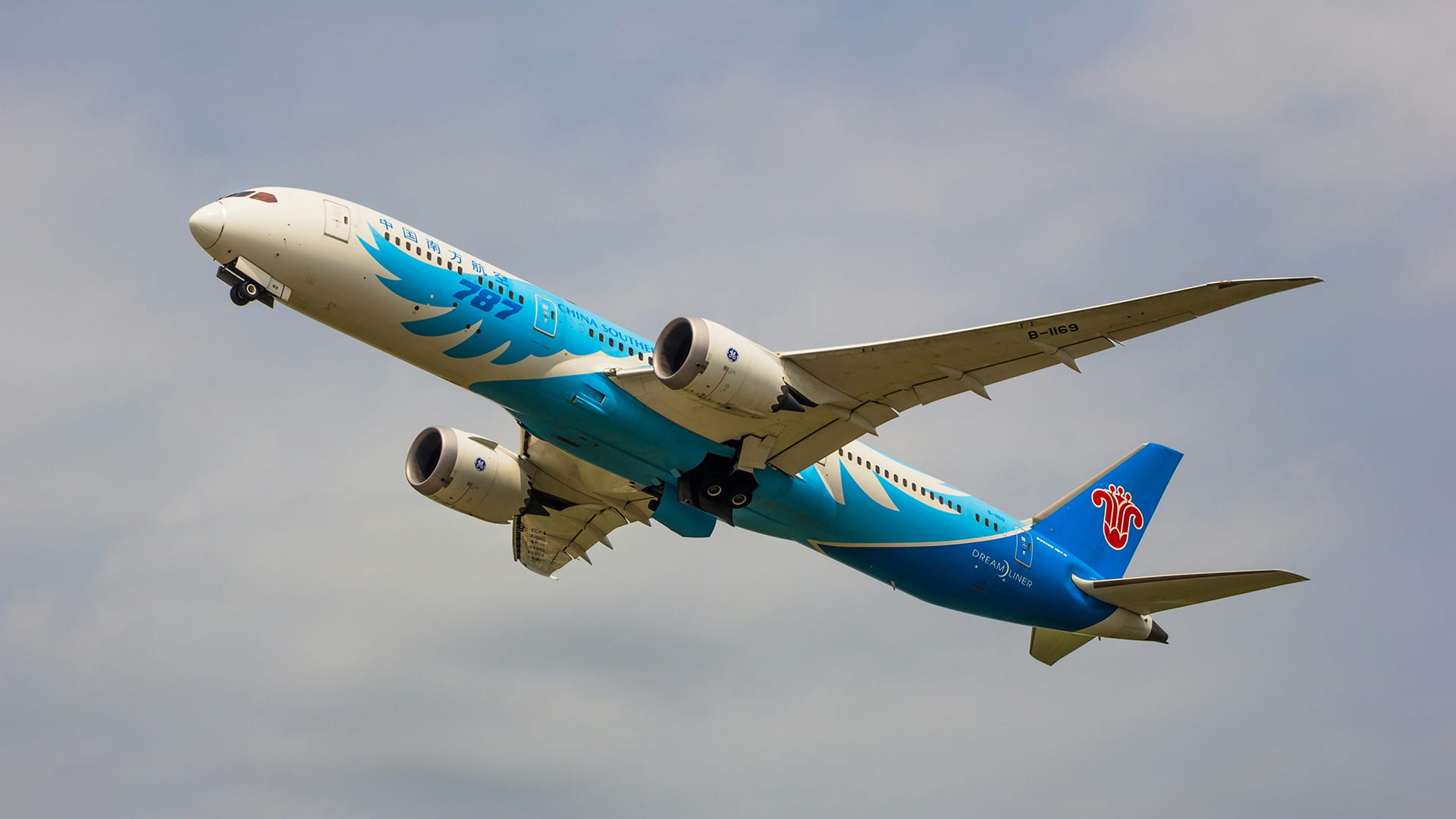
China’s big three state-owned airlines expect to report deeper first-half net losses than last year, mainly due to higher fuel prices as the war in the Middle East drags on.
In separate filings to the Hong Kong and Shanghai stock exchanges on July 14, China Southern Airlines, Air China, and China Eastern Airlines reported anticipated interim losses that add up to between RMB 7.37–8.97 billion (USD 1.1–1.3 billion).
This marks a substantial deterioration from the same period of 2025, when their aggregate net loss was RMB 4.86 billion (USD 717 million). The downturn is even more striking given that, in the first quarter of this year, each carrier had managed to return to a net profit of over RMB 1 billion (USD 147.5 million), adding up to RMB 4.82 billion (USD 711.1 million).
This implies that in the second quarter, the combined loss was anywhere from RMB 12.2–13.8 billion (USD 1.8–2.0 billion).
The swoon comes despite Chinese airlines having certain advantages for coping with the war. After the US and Israel struck Iran in February, upending global energy trade and disrupting key Middle East aviation hubs, Chinese carriers added thousands of flights to Europe to meet demand, leveraging their ability to fly more direct routes over Russia.
Nevertheless, the big three—all of which are listed units of central companies, 100 elite conglomerates directly controlled by the Chinese central government—have been weighed down by costs.
China Southern Airlines flagged the largest losses of the trio, in the range of RMB 3.47–3.97 billion (USD 511.9–585.7 million) for the first half, and between RMB 4.95–5.45 billion (USD 730.3–804.1 million) for the second quarter.
Despite being the only one among the big three to report a full-year net profit last year, at RMB 857 million (USD 126.4 million), the Guangzhou-based carrier found itself slipping into a deepening hole as fuel prices surged after the Middle East erupted in war.
“Entering March, affected by the international geopolitical situation, the price of aviation kerosene fluctuated sharply, placing enormous pressure on the entire industry,” Chen Wei Hua and Liu Wei, joint company secretaries, said in China Southern’s statement. While the company stressed that it has “responded swiftly and adapted to changes with agility,” it is estimating a net loss “due to objective factors such as the complex international situation.”
Earnings issues aside, China Southern was the first Chinese carrier to announce a purchase of Boeing aircraft following the summit between Trump and Xi in Beijing. The company said late last month that its subsidiary, China Southern Air Cargo, will buy five B777-8F and two B777F aircraft with an approximate catalogue value of USD 3.61 billion.
Air China, meanwhile, said it likely suffered a half-year net loss of 2.1 billion to RMB 2.6 billion (USD 383.6 million). It recorded a RMB 1.71 billion (USD 252.3 million) net profit for the first quarter but fell to a net loss of RMB 3.81–4.31 billion (USD 562.1–635.9 million) in the second.
The Beijing-based national flag carrier also blamed the oil market. “Jet fuel prices stayed elevated due to geopolitical tensions in the Middle East, drastically squeezing profit margins of airline companies,” according to company secretary Xiao Feng.
Shanghai-headquartered China Eastern said its net loss for the first half will be up to RMB 2.4 billion (USD 354.1 million), after likely losing over RMB 4 billion (USD 590.1 million) in the second quarter.
Echoing his peers, Li Ganbin, China Eastern’s joint company secretary, pointed to rising fuel prices, which “have presented formidable challenges to the aviation industry.”
Parash Jain, global head of transport and logistics research at HSBC, pointed out that the losses of the big three “would be even more severe” without windfalls from the depreciation of the US dollar against the yuan. According to his estimates based on HSBC’s model, the three carriers reaped RMB 1.2 billion (USD 177 million) in foreign exchange gains during the second quarter alone.
Airlines’ costs, including fuel and aircraft, are usually denominated in dollars.
Jain foresees “a tough start” in the third quarter and anticipates that the losses are “likely to continue.” Considering declining traffic and softening fares despite capacity cuts, plus elevated fuel costs, “we see limited scope for margin recovery in the near term,” he said.
As the three airlines have been in the red over the past six years, apart from China Southern’s positive blip last year, they have been under pressure to replenish their capital bases and rely mainly on their respective state parents by issuing new yuan-denominated A shares.
China Southern announced it has received approval from the Shanghai Stock Exchange for proposed equity fundraising worth up to RMB 15 billion (USD 2.2 billion), mainly assumed by its controlling shareholder, China Southern Air Holding, or CSAH.
Air China completed a capital increase on June 9, raising RMB 20 billion (USD 3 billion) from China National Aviation Holding Corporation and China National Aviation Corporation Group. The carrier then said its “financial strength will be further enhanced, which will help strengthen the company’s ability to withstand financial risks.”
Less than a week earlier, Air China announced it would inject over RMB 6 billion (USD 885.2 million) in capital into subsidiary Shenzhen Airlines. The capital contribution will be made through a combination of five Airbus A350 aircraft and cash, and completed by the end of the year.
While China’s largest state-owned airlines are struggling, smaller players expect to remain profitable for the first half of the year, albeit with steep declines due to the global headwinds.
China Express Airlines, a Shenzhen-listed regional carrier based in the inland city of Chongqing, said its net profit for the first six months of the year will be anywhere from 35 million to RMB 50 million (USD 7.4 million), down 80–86% from the year-earlier period.
Shanghai-listed Juneyao Airlines, which has issued an earnings warning, said its first-half net profit will range from RMB 140–210 million (USD 20.7–31.0 million), falling by 58–72%.
For the big three, HSBC’s Jain maintained “hold” ratings for both their Hong Kong- and Shanghai-listed shares. On the other hand, he considers Cathay Pacific Airways a “buy,” thanks to expectations for “robust premium travel and elevated cargo yields amid lower fuel costs” in the second half.
While the Hong Kong carrier has yet to announce its latest estimate, it will be registering a deemed disposal gain of HKD 1.4 billion (USD 178.5 million) due to the completion of Air China’s latest capital increase. Cathay’s longstanding cross-shareholding position with the mainland airline has been diluted from 15.09% to 12.85%, and under accounting rules, this is considered a sale of the holdings.
This article first appeared on Nikkei Asia. It has been republished here as part of 36Kr’s ongoing partnership with Nikkei.
Note: HKD, RMB figures are converted to USD at rates of HKD 7.84 = USD 1 and RMB 6.78 = USD 1 based on estimates as of July 21, 2026, unless otherwise stated. USD conversions are presented for ease of reference and may not fully match prevailing exchange rates.