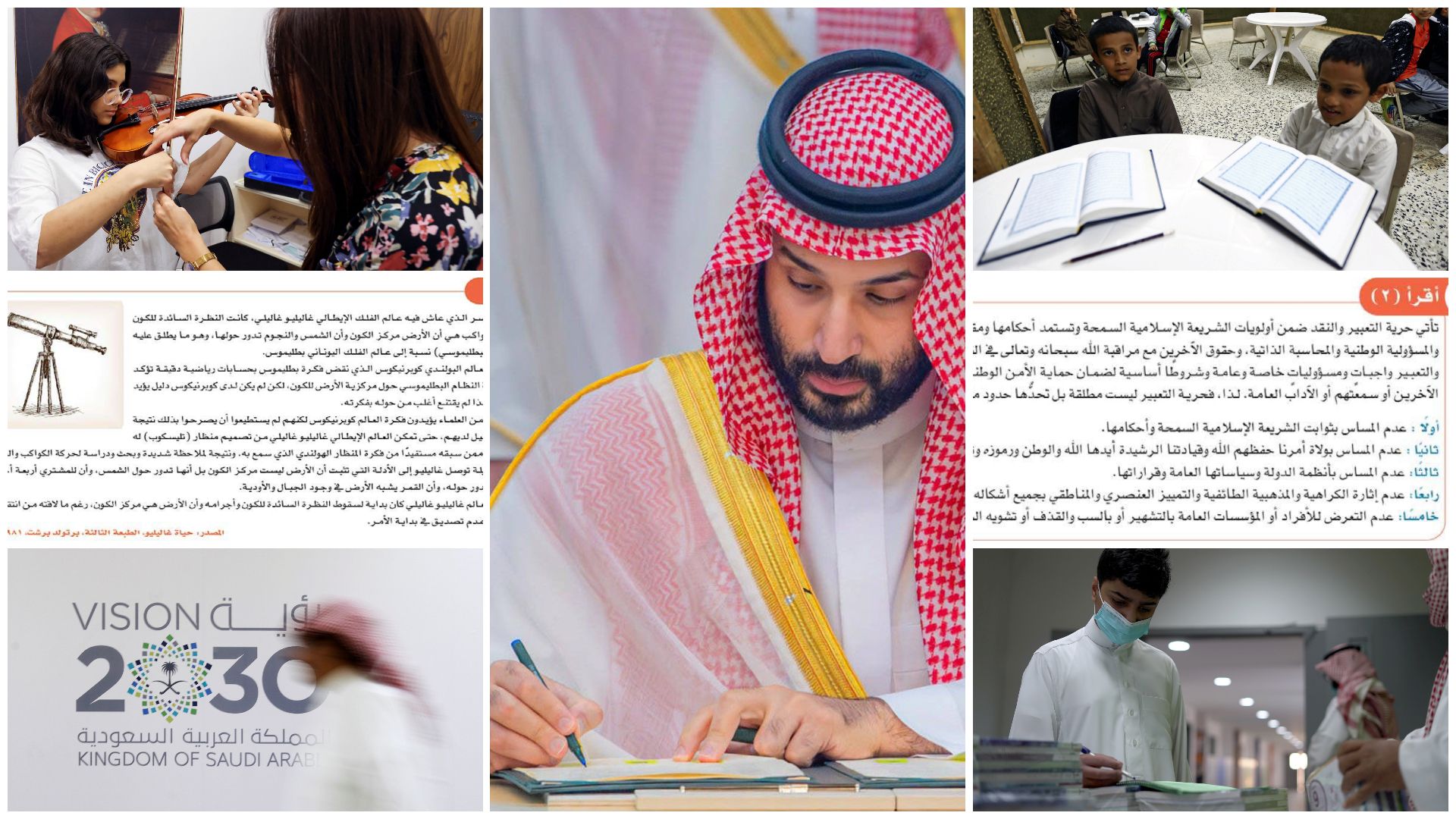
There is no question that the Saudi curriculum has been transformed. There was a time when a biology class would skip evolution, when religious censors would black out images of women or individual body parts. By my final year of high school in 2015, most of these restrictions were lifted; the following year, Saudi Vision 2030 was announced, setting the country on its current modernizing course.
As students, we never took the textbooks as gospel. In middle school, some of us would use computer class to figure out what the censors had obscured. But some students took the instruction seriously, and it wasn’t uncommon for kids to sneer “infidels” at their classmates who went to malls in a mixed group of boys and girls. While it’s impossible to attribute the changes in Saudi mannerisms — conversations between men and women are now normal in many settings — just to textbook reforms, it doesn’t hurt to teach tolerance.
The emphasis on respecting migrant workers is, to me, one of the most consequential changes. Dehumanizing attitudes toward domestic and other foreign workers have been prevalent in the region for generations. Over the past decade, that attitude has been shifting. Many have altered the language, using the term “helper” rather than “maid.”
There are limits to what textbooks can accomplish, though. Most of my peers don’t need a demarcated Israel in an elementary school textbook to understand the reality of our geography. No one pulls out the map they saw when they were 12 — they open an app. The transformation of Saudi society runs far deeper than its curriculum, but it is still significant that classrooms are increasingly pushing toward creating a more tolerant society.