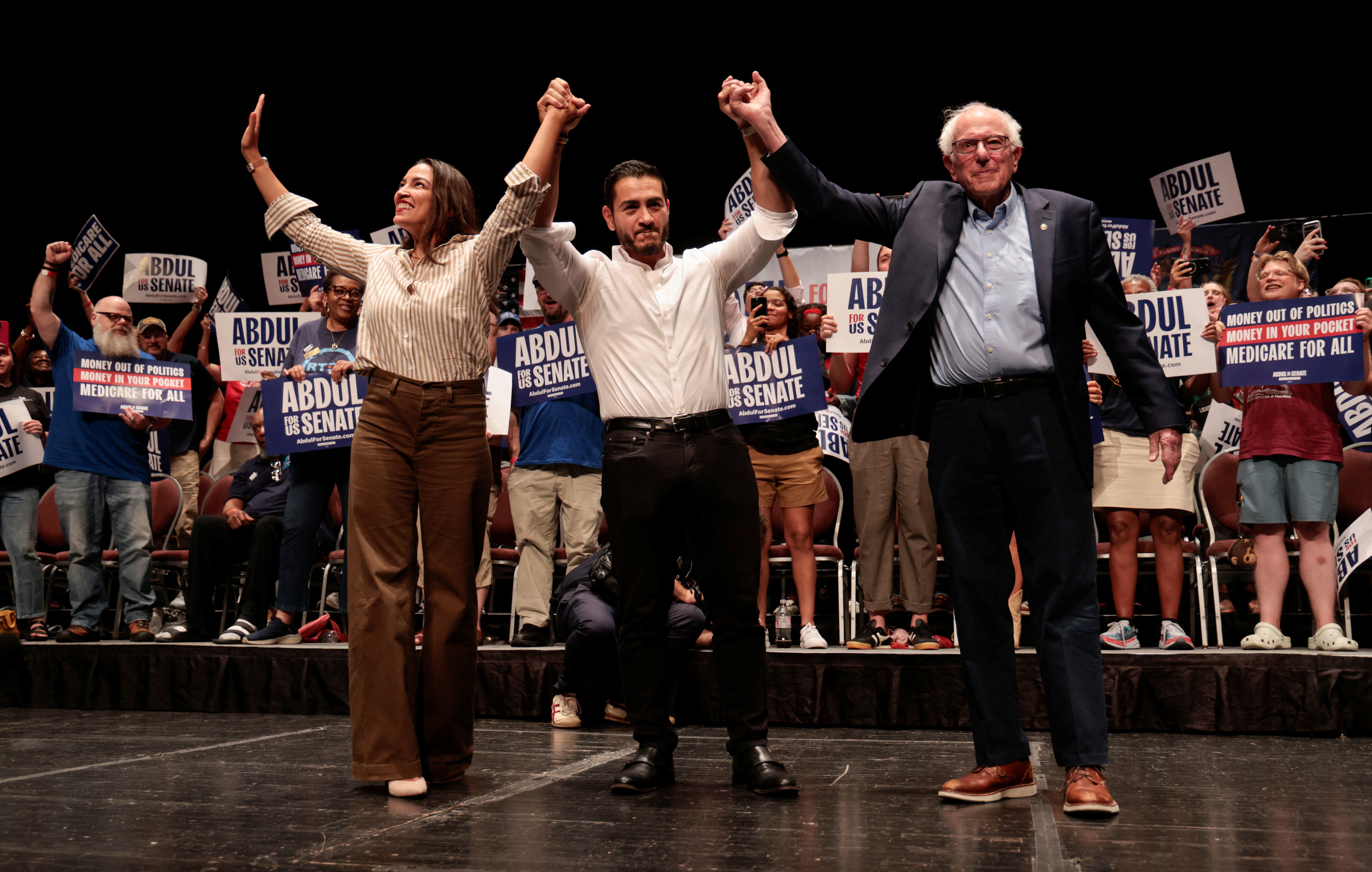
The Senate Leadership Fund has $51 million invested in the Michigan race, AIPAC is expected to plow millions in to stop El-Sayed, and former Rep. Mike Rogers, the Republican nominee, is one of the GOP’s better fundraisers. The Democratic Senate Majority PAC is doing all it can to keep up, with $20 million in TV ads reserved and a substantial digital investment as well. Still, there’s no question that Democrats face a sizable money gap.
If Sanders were to transfer money to the DSCC, a recent Supreme Court ruling allows the party’s campaign to spend unlimited money in coordination with a candidate, and likely at more favorable rates than super PACs. El-Sayed was heavily outspent in the primary against Democratic Rep. Haley Stevens, D-Mich., but that could pale in comparison to what he’ll grapple with between now and November.
Sanders said “of course” he’s concerned about the money gap, but argued El-Sayed can help make it up at the grassroots level.
“The Republican oligarchs will do everything they can to defeat them, and that is a legitimate concern,” Sanders said. “Our antidote, the way we fight back, is by mobilizing many, many thousands of people at the grassroots level. And Abdul did a great job in that during his primary, and I think you’re going to see that increase during the general.”
The Democratic strategist warned Sanders against keeping his distance: “Nothing would be more disastrous for his ‘movement’ than hanging his candidate out to dry and losing a pivotal seat for Senate control.”