Distance is no longer the biggest barrier
It may not always be the sole reason candidates walk away from an offer, but once salary, role, benefits and visa considerations are factored in, commute often becomes the deciding point.
As Sarah Brooks, Managing Director, Fikrah HR notes: These other factors would include salary, role, benefits and visa status. As she says, in her experience, it is particularly common for mid-career professionals with families to reject offers that involve inter-emirate driving of 90 minutes or more each way, even when the package is enticing.
She notes that the impact also depends heavily on the route itself. A Dubai–Sharjah commute may still be considered manageable, but longer inter-emirate journeys such as Sharjah to Ras Al Khaimah or Ajman can quickly become deal-breakers, particularly where employers require full-time onsite attendance without flexibility in working hours or start times.
Often, the reason is never stated directly. Candidates may say, ‘let’s pause for now’, or drop out late in the process. What they really mean: ‘I can’t see myself doing this commute five days a week.’ “So while commute may not show up on every rejection report, it absolutely influences acceptance behaviour in the current market,” adds Brooks.
Ravi Jethwani, CEO of Innovations Group, estimates that rejections based purely on commute distance make up roughly 15 per cent - 20 per cent back outs at last stage. With shifting traffic dynamics, candidates are less willing to accept long daily drives.
Commute might not be the only reason a person declines an offer, but it becomes the deciding factor when they're weighing similar opportunities, says Anil Singh, Chief Business Officer KSA at TASC Outsourcing.
From 'too far' to 'easy enough'
The conversation could just shift from ‘How far is the office’ to ‘How easy is it to get there’, as Wilson says.
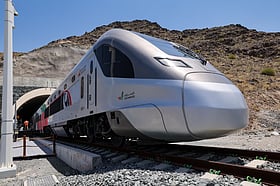
A train journey could be where people can just catch up on emails, decompress and just relax a little. In doing so, they start to weigh distance differently. However, this change won’t happen overnight, as Brooks warns. Candidates will want to see where the overall journey fits in their lives. "What I think we'll hear more of is: 'I'll consider it if the train timings and total door-to-door journey make sense for my life.'"
She shares her own experience from London, where she was commuting by rail into central London before changing to the Underground, followed by lengthy walks at either end. “Acceptance of this commute allowed me to access work in central London. The same can be said for the UAE, and I would be open to using the train to commute again, I actually miss the train time, it was great for reading, listening to music and working.”
Indeed, for those who have lived in countries like the UK, this would be a pleasant return. Laura Taylor, Partner and Head of Middle East, TENTEN Partners adds to this and says, "Expats from the UK or US, who are already accustomed to commuting into cities from the suburbs, will likely adapt quickly," she says.
Work-life balance isn't just about fewer minutes
Life could be a lot more different when you aren't always behind the wheel and stuck in traffic. You might just arrive at work, more refreshed and alert.
A rail journey that is slightly longer on paper may actually feel less exhausting than a shorter drive through traffic. For some, a rail-based commute that is slightly longer in minutes, but far less stressful may actually enhance their sense of balance, because they arrive at work and home with more mental bandwidth, as Brooks observes.
However, she cautions employers against assuming that easier travel will automatically ensures candidates availability beyond working hours. "A shorter or more comfortable commute does not automatically mean people will accept longer hours or more demanding roles."
Furthermore, people are increasingly weighing opportunities not only by salary. They look at the flexibility, their own well-being and the amount of personal time they retain. Wilson believes many commuters would welcome the chance to use travel time to read, catch up on work, listen to podcasts or simply unwind. Better connectivity could also encourage some professionals to live in more affordable areas while remaining connected to major employment hubs, or even reduce their dependence on owning a car.
In short, people will reclaim the travel time, in a way that isn't possible while driving, explains Taylor. It will change how they view the work-life balance. "It also offers a useful alternative for UAE Nationals, who may be tied to specific emirates due to housing arrangements but want to explore wider career options.
Accessibility itself is also becoming part of the employee experience. As Singh points out, "Reliable and efficient transport options can help reduce the stress and time associated with daily travel, allowing employees to spend more time on personal priorities, family commitments, and wellbeing."
So, if commuting becomes faster, more predictable and less draining, candidates may no longer feel they are sacrificing family time, just because they choose to work in another emirate.
HR’s next challenge: Designing jobs around rail
So, what will really change? Recruitment strategies, relocation models, employee benefits?
Rail connectivity will need to feature in conversations, while discussing relocation support and job offers, adds Taylor. They need to play a role in spreading awareness of options available in different in Emirates. "Employers everywhere can start to be more open to staff living further afield, and the proximity to the rail network should be highlighted as a benefit when recruiting," she says.
Brooks expects forward-looking organisations to move away from immediate relocation requirements. Instead of an all-or-nothing approach where employees are expected to relocate to a specific emirate from day one, she anticipates more phased arrangements. “We’re likely to see phased models where employees can commute by rail for an initial period, with the option and support to relocate later.”
She also foresees the emergence of rail-specific benefits as part of employee packages, including subsidised monthly rail passes, support for first- and last-mile travel, and working patterns aligned with train schedules to enable more flexible start times.
Apart from recruitment, she says the implications extend into sustainability and corporate reporting.