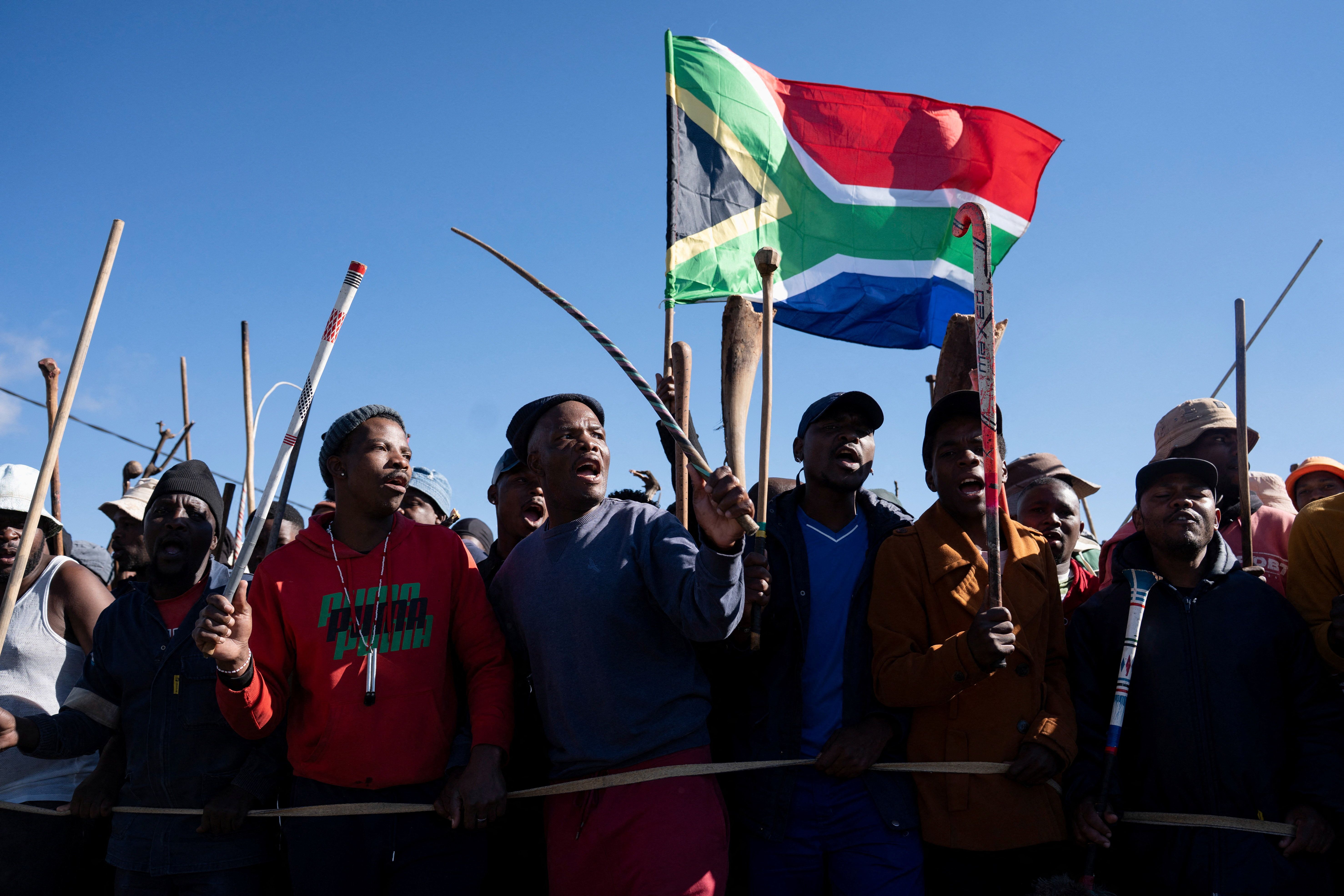
South Africa is bracing for a potentially violent day of anti-migrant demonstrations on Tuesday, prompting shopping mall owners to privately “prepare for the worst” and risking further tainting Pretoria’s reputation as a safe emerging market.
The protest, organized by a civic movement called March and March, follows months of escalating xenophobic violence and organized anti-migrant activism in the world’s most unequal society, where one in three people is without a job and municipal services are failing. The group set their own deadline of June 30 for undocumented migrants to leave the country.
Pretoria’s memory of large-scale unrest in July 2021 — when looting and arson left hundreds dead and billions in damage — hangs over the preparations, shaping how officials and businesses are responding. The violence, described as a failed insurrection by President Cyril Ramaphosa, vandalized more than 160 shopping malls, led to tens of thousands of job losses, and cost the economy roughly $3 billion.
The South African Property Owners Association said joint operations with both public and private security will protect assets, “unlike in 2021, which resulted in reactive measures to contain the damage that transpired.”
Executives echo that anxiety. One CEO whose company owns a network of shopping malls said they are “preparing for the worst.” Another said President Cyril Ramaphosa’s national address last month “added fuel to the fire” by unintentionally magnifying the reach of the mobilization.
Authorities have announced a 600 million rand ($35 million) security deployment and set up joint command centers, with acting police minister Firoz Cachalia flagging KwaZulu-Natal — home to sub-Saharan Africa’s busiest port — the economic hub of Gauteng, and the Western Cape as potential hotspots. “That’s what it costs when there is an effort to destabilize the country.”
Tensions have already erupted into clashes and mass displacement, with police routinely using rubber bullets, tear gas, and stun grenades to disperse migrants and protesters. In Cape Town at the weekend, hundreds of Zimbabweans sleeping outside their country’s consulate were being moved to a repatriation center; more than 500 immigrants in the city say they will stay away from work after receiving threats of beatings if they cannot produce documentation.
Sixty-one anti-migrant demonstrations were recorded across the country between April and June this year, surpassing half of the annual demonstrations from 2022 and 2025, according to the Armed Conflict Location & Event Data Project, a non-profit conflict monitoring group.