The key breakthrough: generalisation
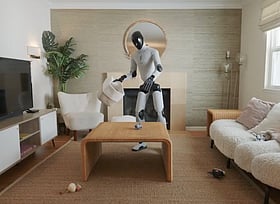
Robots have performed impressive demonstrations for years. But most operate in tightly controlled settings: factories with fixed workstations, warehouses with standardized shelves or carefully prepared lab environments.
Furniture is placed differently. Towels vary in size and material. Beds sit at different heights.
Objects are cluttered, partially hidden or positioned in ways the robot did not expect. Lighting, flooring and room dimensions also change.
Figure’s claim matters: for a home robot to be useful, it must do more than repeat a memorised task. It must recognise a new environment, understand a verbal or visual goal, use its arms, hands and body safely, and adjust when the first attempt does not work.
Figure said Helix 2.5 was pretrained using its proprietary "Index dataset" of human behaviour.
In a controlled comparison, the company said pretraining raised zero-shot whole-task success to 56% from 9% for an otherwise comparable model trained from scratch, according to The AI Insider.
The reported results are company figures and have not yet been independently peer-reviewed.
Impressive — but not a robot maid yet
The demonstrations point to rapid progress in embodied AI: artificial intelligence that does not only generate words or images, but perceives and acts in the physical world.
Still, there is a large gap between a successful test and a commercially reliable household robot.
A product used daily in homes would need to work safely around children, pets, stairs, fragile items, hot appliances and unpredictable human behaviour. It would also need long battery life, low maintenance, robust privacy protections and a price that ordinary households can afford.
The robot would have to complete tasks close to perfectly, not merely succeed in a majority of trial runs.