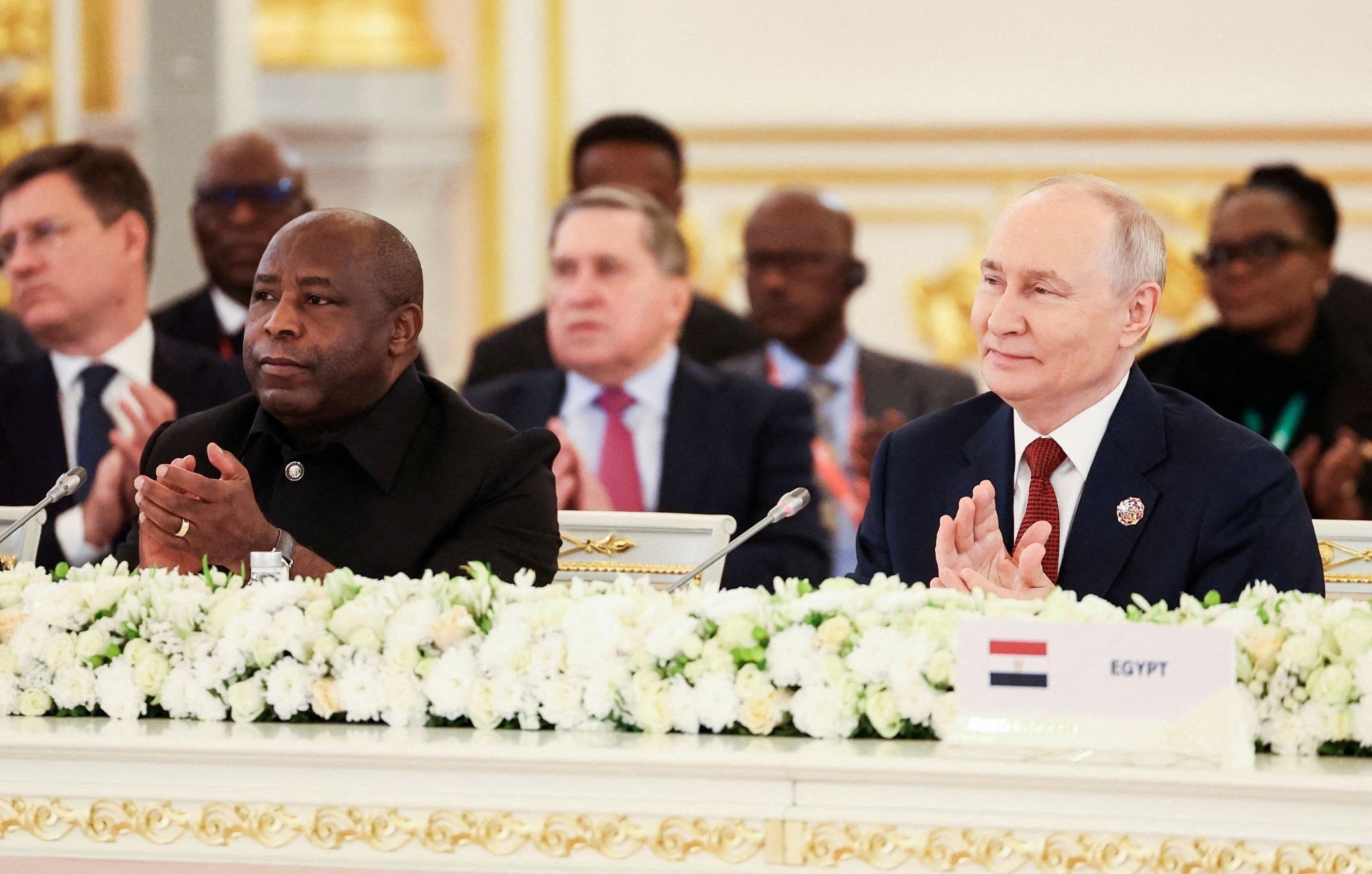
Russia’s offer to supply floating nuclear power plants to coastal African countries emerged as a major focus of talks held with African officials at a summit in Moscow this week. President Vladimir Putin hosted 48 country delegations, including 22 African leaders, at a Russia-Africa summit as he sought to deepen economic ties across the continent.
The summit, now in its third edition, produced a series of nuclear announcements involving at least six countries, with Russia’s state-owned energy company Rosatom in advanced talks with Egypt, Togo, Namibia, and Tanzania over floating nuclear power plants, as Moscow seeks to become the world’s first commercial exporter of the technology.
Africa remains the continent with the largest electricity access gap, holding back economic growth and industrial development. That shortfall has created opportunities for foreign suppliers, including Russia, which has spent years courting African governments with nuclear technology and state-backed financing to meet their growing demand for power.
The talks could lead to decade-long energy partnerships, giving Moscow an opportunity to extend its influence in Africa as China and Western countries pursue nuclear deals of their own. “Russia is definitely ahead of the other nuclear countries in terms of developing next generation reactors and providing state-backed finance,” Todd Moss, executive director of the US-based power think tank Energy for Growth Hub, told Semafor. Russia has about $200 billion in nuclear project orders worldwide, compared with $7.7 billion for the US, according to figures cited in July by former US deputy energy secretary Daniel Poneman.
Rwanda, which also signed a civil nuclear cooperation agreement with the US in May, agreed with Rosatom at the summit to assess and develop its nuclear infrastructure, building on an eight-year partnership that includes plans for small reactors and a research centre. Ghana also announced talks with the Russian company to build its first nuclear power plant.