Immigration rules deter passengers
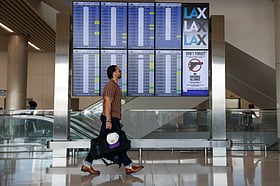
Immigration requirements have put off 43 per cent of passengers from visiting a destination, up from 33 per cent last year. Among them, 53 per cent call the process too complex. Privacy and cost each draw 17 per cent.
Conflict also deters travel. Of passengers it put off, 72 per cent cite safety and 13 per cent cite uncertainty over whether travel is possible. Sixty per cent prefer to apply for a visa online, against 25 per cent who favour a consulate or embassy. More than 100 countries issue eVisas, yet airlines struggle to verify them efficiently because checks are inconsistent, IATA says.
"Passengers want to apply for visas online and complete immigration procedures before they reach the airport. eVisas can deliver that, but airlines can only verify them efficiently if governments use common standards. More than 100 countries issue eVisas, yet there is little consistency in how they are checked,” Careen added.
The Middle East stands out
Middle East travellers are the most likely to use AI for planning. They also show the strongest interest in digital passports and biometric ID. Biometric users there report the highest satisfaction of any region. Among those put off by entry rules, cost is cited more often than elsewhere, though complexity still leads.
That profile suits the UAE. Dubai, Abu Dhabi and Doha depend on transit passengers who move through quickly. The survey indicates the region’s travellers already want the digital tools that speed those connections.
A region still recovering
Airspace closures since February 28 shut Dubai, Abu Dhabi and Doha hubs, with many airlines postponing their return to the region. Aviation consultancy IBA recorded a 59 per cent drop in flights to, from and within the region through March 22.
And Recovery has been uneven too. Traffic on Middle Eastern airlines fell 28.8 per cent in May and 13.9 per cent in June, IATA data show. International demand on those carriers was still 7.5 per cent below last year in September. Total demand there fell 8 per cent, and global demand slipped 0.5 per cent. Excluding the region, it grew 0.3 per cent. The Middle East to Asia corridor shrank 8.8 per cent, deeper than August’s 7.9 per cent decline.
Seats are emptier too. Middle Eastern carriers filled 78.3 per cent of capacity in September, 3.6 percentage points below last year. There are financial implications that affect the industry as well. In June, IATA projected Middle Eastern airlines would swing from a $7.2 billion profit in 2025 to a $4.3 billion loss in 2026.
Fuel costs added to that pressure. And with oil climbing again and fears of US resuming strikes on Iran, the region is still faced with uncertainty before a full recovery. Smoother digital journeys could help hubs win passengers back, however, confidence in the region’s security will decide how fast we could see a turnaround.