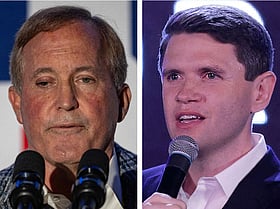
Texas is only the second non-presidential contest to cross the $500 million threshold, after the 2024 Ohio Senate race, which recorded $542.7 million. This year’s Ohio contest has also exceeded that mark, reaching $514.3 million.
It is the first election cycle in which two non-presidential races have crossed $500 million in political advertising, AdImpact said.
Republican spending surge
Republicans have established a $140.7 million advertising advantage over Democrats in the Texas general election, reversing the spending pattern seen during the early months of the campaign.
Until mid-August, Democratic advertisers had spent $21.4 million, compared with just $2.5 million by Republicans.
But Republican spending subsequently accelerated. From the week beginning August 25 through election week, Republican advertisers outspent Democrats by an average of $15.3 million weekly. In the week of September 15 alone, the Republican advantage reached $29.2 million.
Much of the increase came from Republican-aligned outside groups.
Texas PAC, aligned with the Senate Leadership Fund, spent $182.1 million supporting Paxton and attacking Talarico, making it the eighth-largest advertiser of the current election cycle.
Overall, Paxton received $251.7 million in advertising support from outside groups, compared with $30.6 million for Talarico.
Outside groups accounted for 92 per cent of Paxton’s advertising support, against 23 per cent for his Democratic rival.
The advertising battle has also been dominated by attacks. According to AdImpact, 61 per cent of broadcast airings were negative or contrast advertisements.
Democrats concentrated on taxation, healthcare and corruption, while Republicans emphasised crime, transgender minors and taxation.
Democrats lead in latest poll
Despite the Republican spending advantage, the final New York Times/Siena University survey, released on November 1, showed Talarico leading Paxton by 50 per cent to 43 per cent.
The survey of 1,215 likely Texas voters had a margin of error of 3.4 percentage points.
The polling also showed Democrats ahead in Senate contests in Michigan, Maine, Kansas, Ohio and Alaska, while Iowa remained virtually tied.
Siena Research Institute executive director Don Levy said Democratic control of the Senate was a possibility, but cautioned that a majority for either party remained within reach.
The findings underline the uncertainty surrounding the battle for Senate control as voters prepare to cast their ballots on November 3.