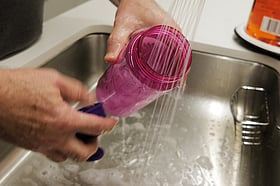
Water bottles need daily washing
Dr. Enna Sondhi, specialist in internal medicine at Prime Medical Centre's Motor City and Barari branches, has bared that one of the most common mistakes people make is assuming that reusable items do not need frequent washing if they contain only water or appear clean.
She has emphasised that water bottles should be washed daily, while coffee cups, food containers, and reusable straws should be cleaned after every use.
"Wash water bottles daily, even if they contain only water. Poor cleaning can allow germs to build up, potentially causing food poisoning with vomiting, diarrhoea, and stomach cramps. Avoid repeatedly topping up bottles without washing them. A quick rinse does not replace thorough washing," Sondhi told Gulf News.
Damp storage can encourage germ build-up
Dr. Malaz Yabrodi, specialist in internal medicine at Medcare Shaikh Saqr Al Qasimi Hospital in Sharjah, has drawn attention to the parts of reusable products that people often forget to clean.
Bottle mouthpieces, caps, rubber seals, container corners, and narrow openings can retain moisture and residue. If these areas are neglected, bacteria and mould can build up and potentially transfer to food and drinks during subsequent use.
She has bared that repeated exposure to contaminated reusable products can increase the risk of gastrointestinal infections.
Prevent cross-contamination
According to Dr. Rohit Jacob, specialist in internal medicine at Aster Clinic Business Bay, the biggest concern with poorly maintained reusable products is cross-contamination, where microorganisms move from hands, raw food, or contaminated surfaces onto items that subsequently come into contact with food and drinks.
He has underscored that this can contribute to gastrointestinal infections, including illnesses caused by food-borne bacteria and norovirus. However, the presence of bacteria on a reusable item does not automatically mean it will cause illness.
Jacob has cited a published norovirus investigation involving a football team, in which illness has been linked to a reusable grocery bag stored in a bathroom used by someone who was unwell. The example has demonstrated why the environment in which reusable products are stored matters just as much as how they are washed.
Making sustainability and hygiene go hand in hand
The advice from specialists is that reusable products can be a practical and sustainable choice, but they require consistent care.
For UAE residents, the most important step is to make cleaning part of the routine. Choosing reusable products does not mean compromising on hygiene.
As Yabrodi points out, "With a little consistency and awareness, UAE residents can enjoy the benefits of reusable products while protecting themselves and their families from avoidable health risks."