South Africa moved to contain fears of major economic damage after the White House’s decision to exclude it from a US preferential trade program, saying its biggest mineral exports never relied on the duty-free program and the tariff increase on affected goods is manageable.
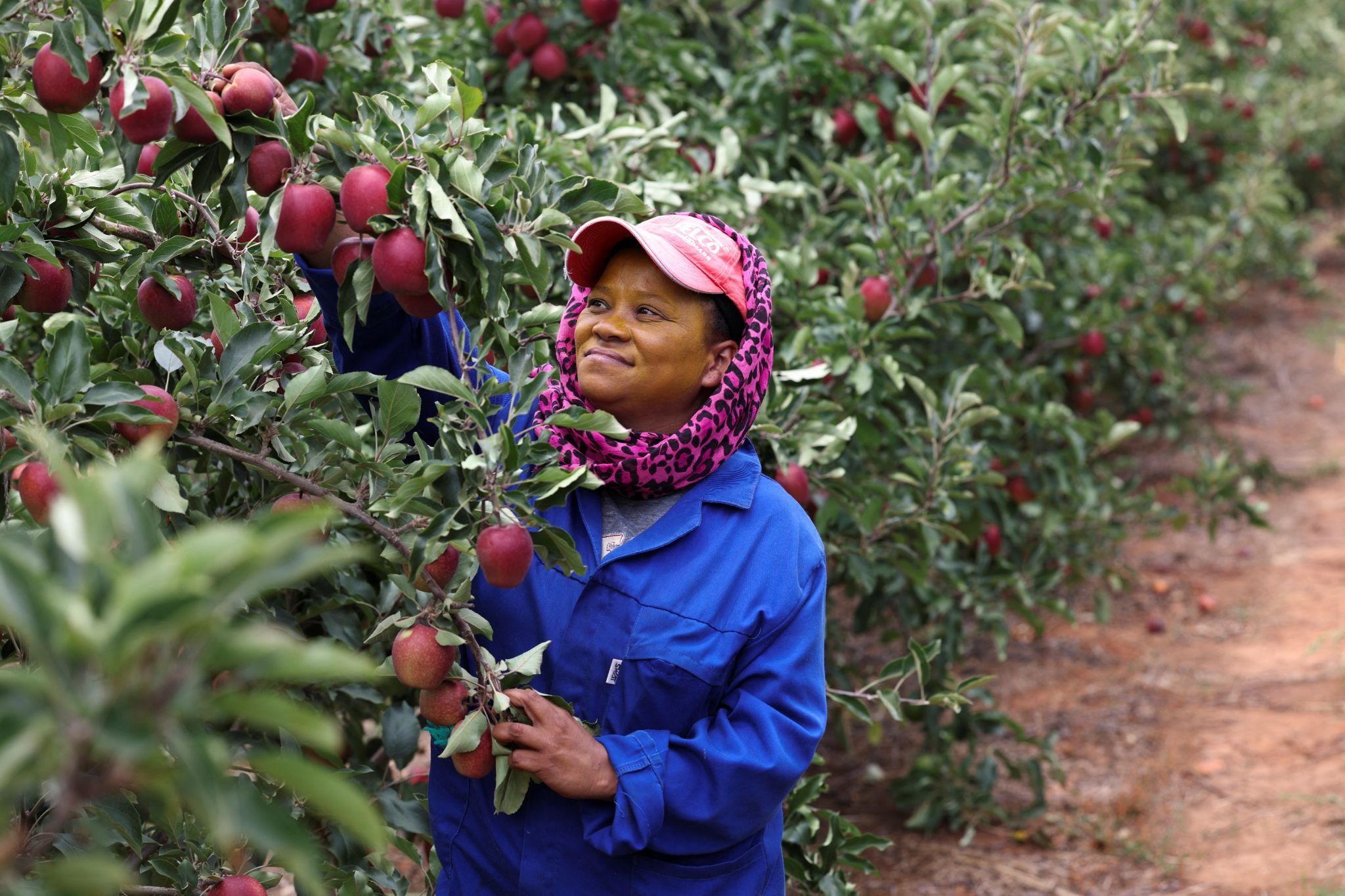
Washington announced plans this week to remove South Africa, along with Rwanda, from the African Growth and Opportunity Act from next year. South Africa’s fruit and nut exporters have benefited from the 26-year-old program that allows thousands of products from eligible sub-Saharan countries to enter the US market duty-free. The US, explaining its latest move, cited concerns ranging from barriers to American trade and investment to corruption and foreign policy. Farmers and exporters warned, however, that the wine and citrus sectors could face job losses as their products become less competitive
The decision deepens a rupture between Pretoria and Washington, entangling a trade dispute with the two countries’ wider political differences, raising the prospect of a prolonged standoff that gives South African an incentive to pursue opportunities in markets including China. It comes weeks after the US imposed travel restrictions on unidentified officials. These were introduced over South Africa’s race-based business and land policies, which seek to address the inequities of apartheid, as part of an escalating campaign that has included false claims by US President Donald Trump of a genocide against Afrikaners.
Even so, South African government officials say much of the country’s biggest trade with the US is already outside AGOA protection. President Cyril Ramaphosa’s agriculture envoy Wandile Sihlobo told Semafor that losing the program was not a “train smash.” The country’s exports already face a 12.5% US tariff, meaning the loss of duty-free access adds an estimated 3.4 percentage points to the average levy, Sihlobo said. “It’s not necessarily as catastrophic as we have faced in the past,” he wrote in a note shared with Semafor.
Eckart Naumann, an economist at Trade Law Centre, a South African policy think tank, struck a similar note, calling South Africa’s removal from AGOA regrettable but “does not spell doom for South Africa”.
South Africa exported about $1.7 billion of goods to the US under AGOA in 2025, representing around 10% of the country’s sales to the country and roughly 1% of its global exports. But some of South Africa’s largest exports sit outside AGOA. Platinum group metals, which account for roughly a third of exports to the US, already enter duty free because they are deemed important to the economy. A Trade Law Centre analysis found that about 80% of South African exports by value are exempt from the current 12.5% tariff. South African-built cars effectively lost much of their AGOA advantage when Washington imposed a 25% tariff on vehicle imports in 2025.
Addressing the diplomatic dispute, Deputy Trade Minister John Steenhuisen told a local radio station that South Africa had been “very generous” in trying to resolve the tensions but some US objections collided with Pretoria’s red lines. He said land reform and racial transformation were non-negotiable. The latest US demands extended to corruption, and “who we trade and do business with in the rest of the world,” Steenhuisen said. “It’s been pretty much a moving target. Trade and politics have collided and are so deeply enmeshed that it’s going to be difficult to separate them.”
The pressure could push South Africa further into China’s orbit. Trade Minister Parks Tau, in a statement, said the loss of AGOA would accelerate South Africa’s search for opportunities in other markets including China, even as the US cited Pretoria’s relations with “governments of concern” among the reasons for withdrawing AGOA benefits.