Crossposted from the Accelerate Europe Substack.
On 16 July 2026, Hugging Face revealed that its production infrastructure had been breached.
A swarm of 700 autonomous AI agents had broken out during a cybersecurity test run by OpenAI, which later acknowledged the incident, calling it a ‘warning shot’.
This incident has brought AI security onto every government’s agenda.
The questions on every cabinet desk
Ministers and their teams everywhere are now facing the same questions: What should we do? What have others already done? Where do we start?
Increasingly, the answer is a specialised institute that can evaluate frontier AI systems and help governments prepare for the risks they present. An AI Security Institute.
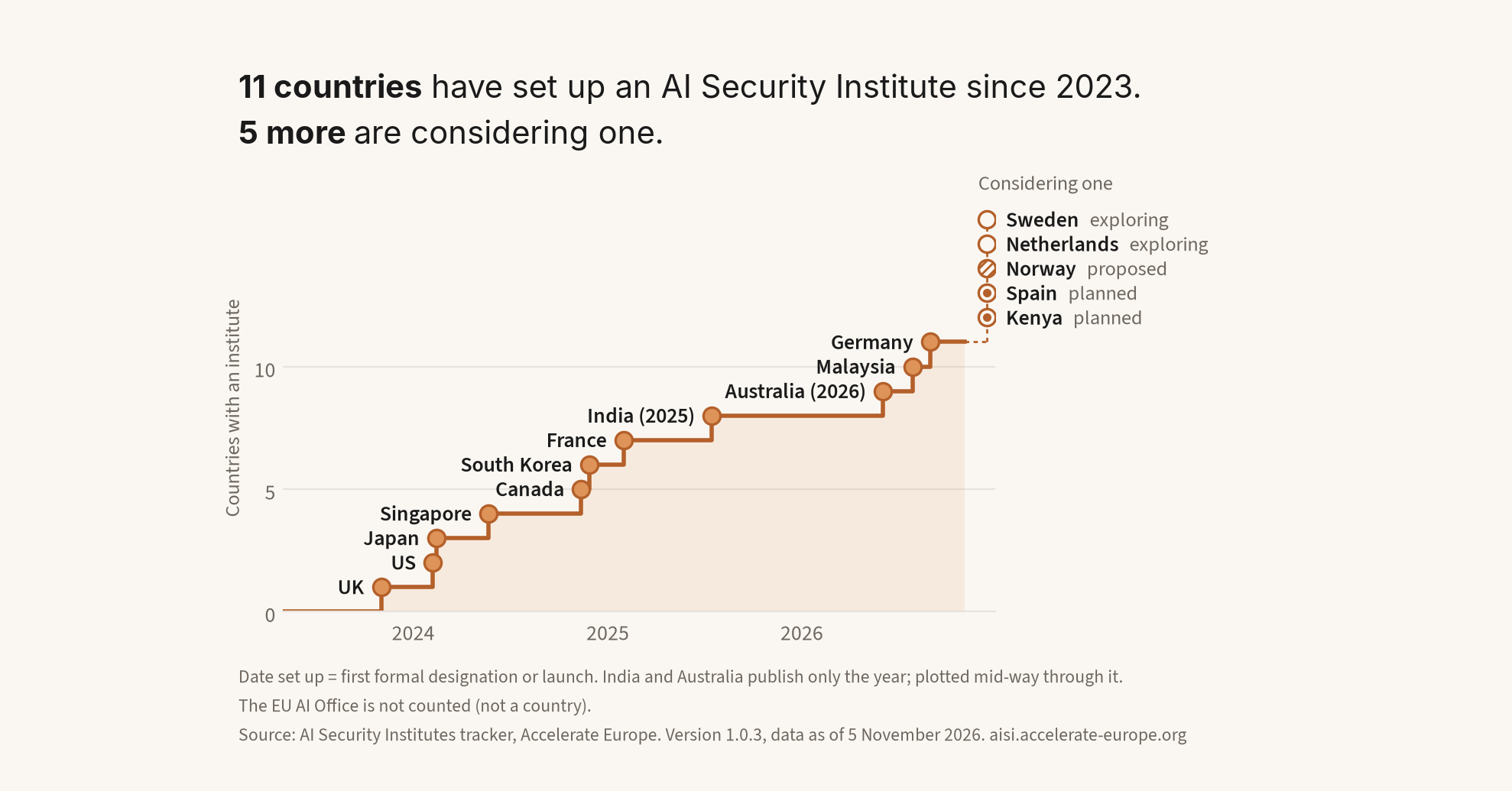
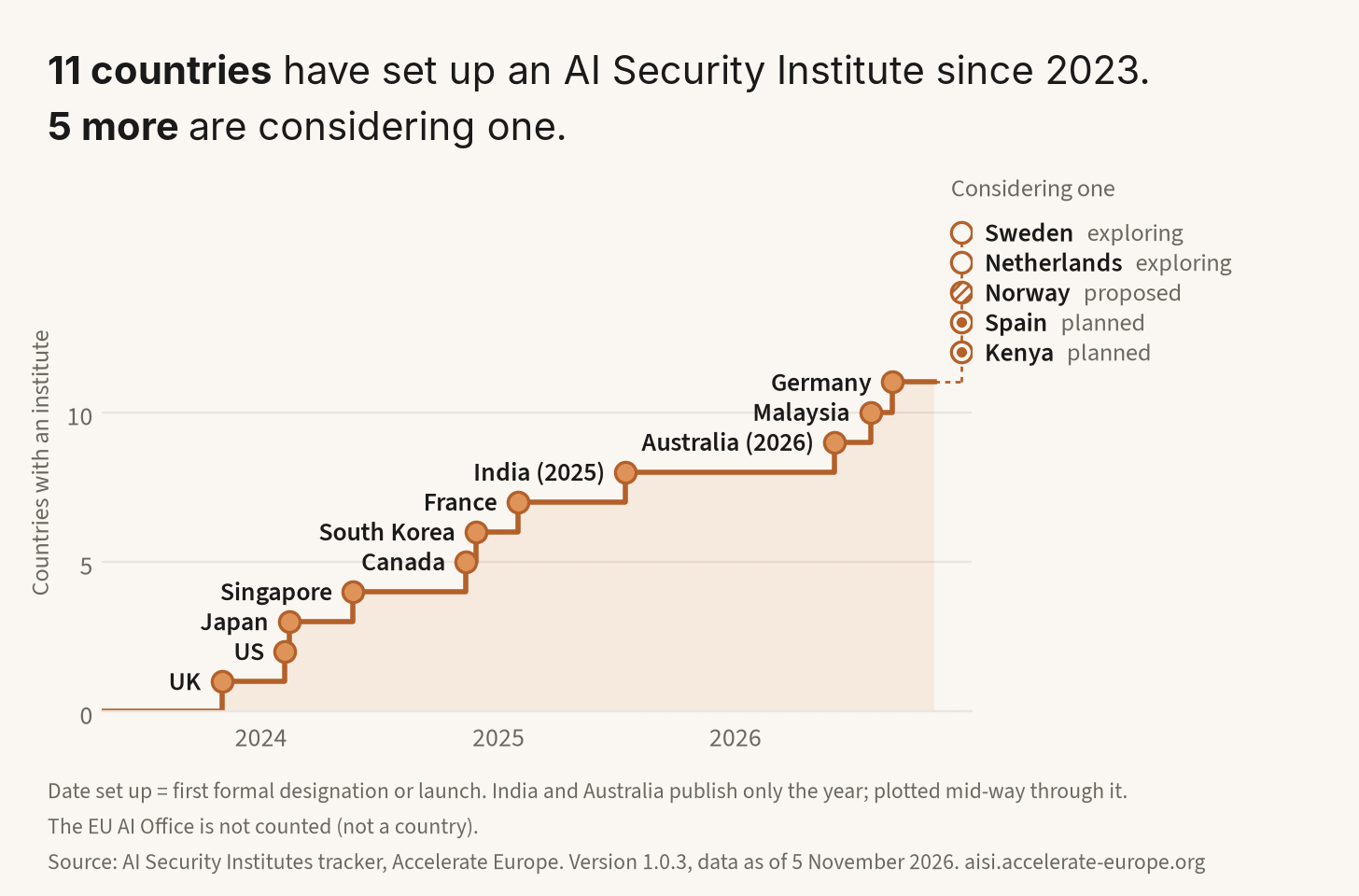
Since 2023, 11 countries have set up an AISI, and five more are considering one. Existing AISIs reflect each country’s unique approach, with different institutional models and sizes of financial investment. This lack of a common template means officials looking for guidance have to rely on sources scattered across the web, such as press releases, budget annexes, and blog posts.
At Accelerate Europe, we have built a tool to support them.
Introducing the AI Security Institutes tracker
The AISI tracker brings together all the available information in one place and adds new figures and details as they emerge, offering an up-to-date view of the AISI landscape.
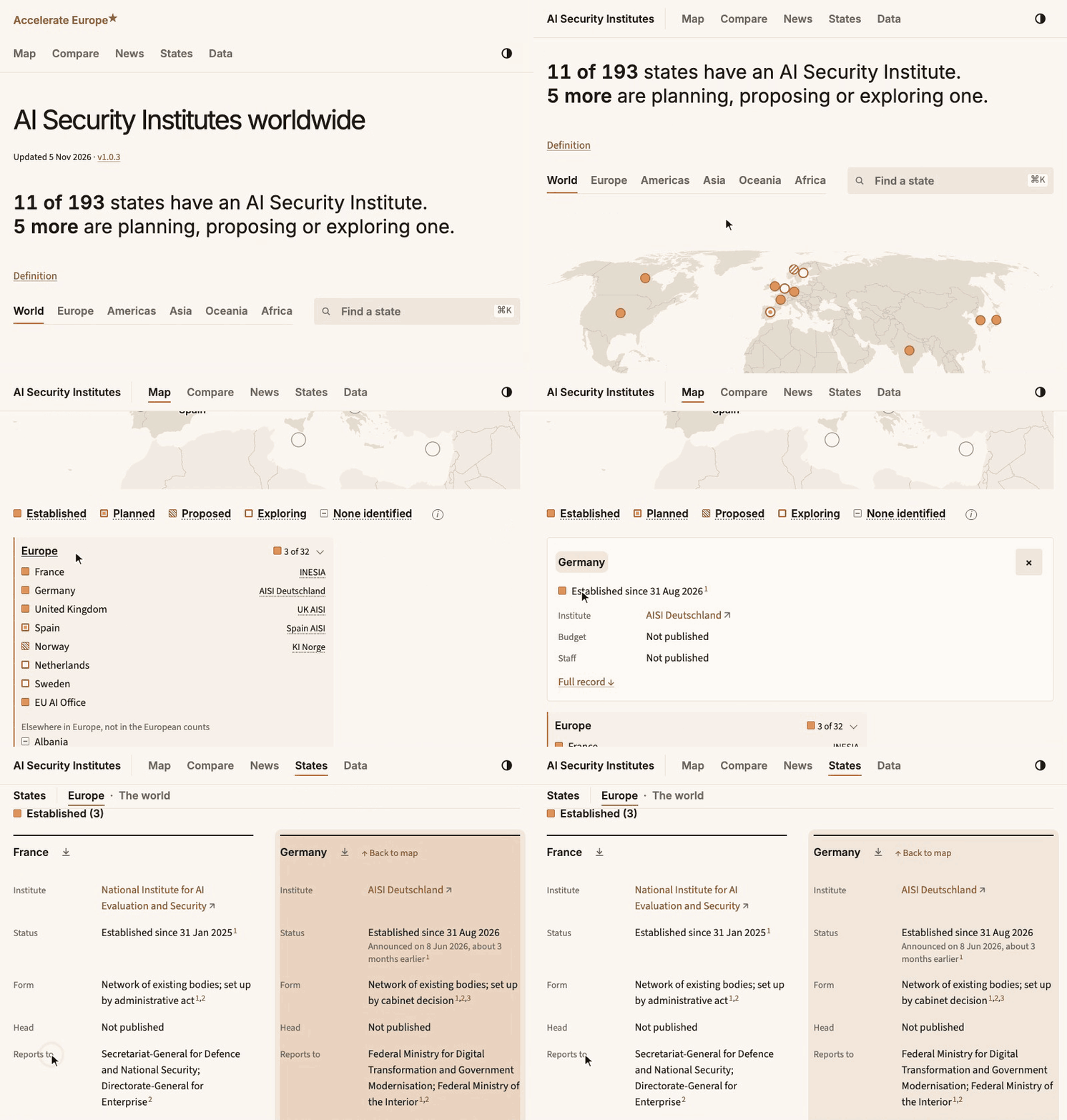
An interactive world map shows the current region-by-region picture of national institutes, whether established, planned, proposed or still being explored. By clicking on each country, users can see the most relevant information about its AISI: mandate, institutional set-up, leadership, partners, funding, staff and known activity.
The tracker also lets you compare the institutes side by side: Which have privileged access to test frontier models? How are they set up? How do their budgets and staff differ?
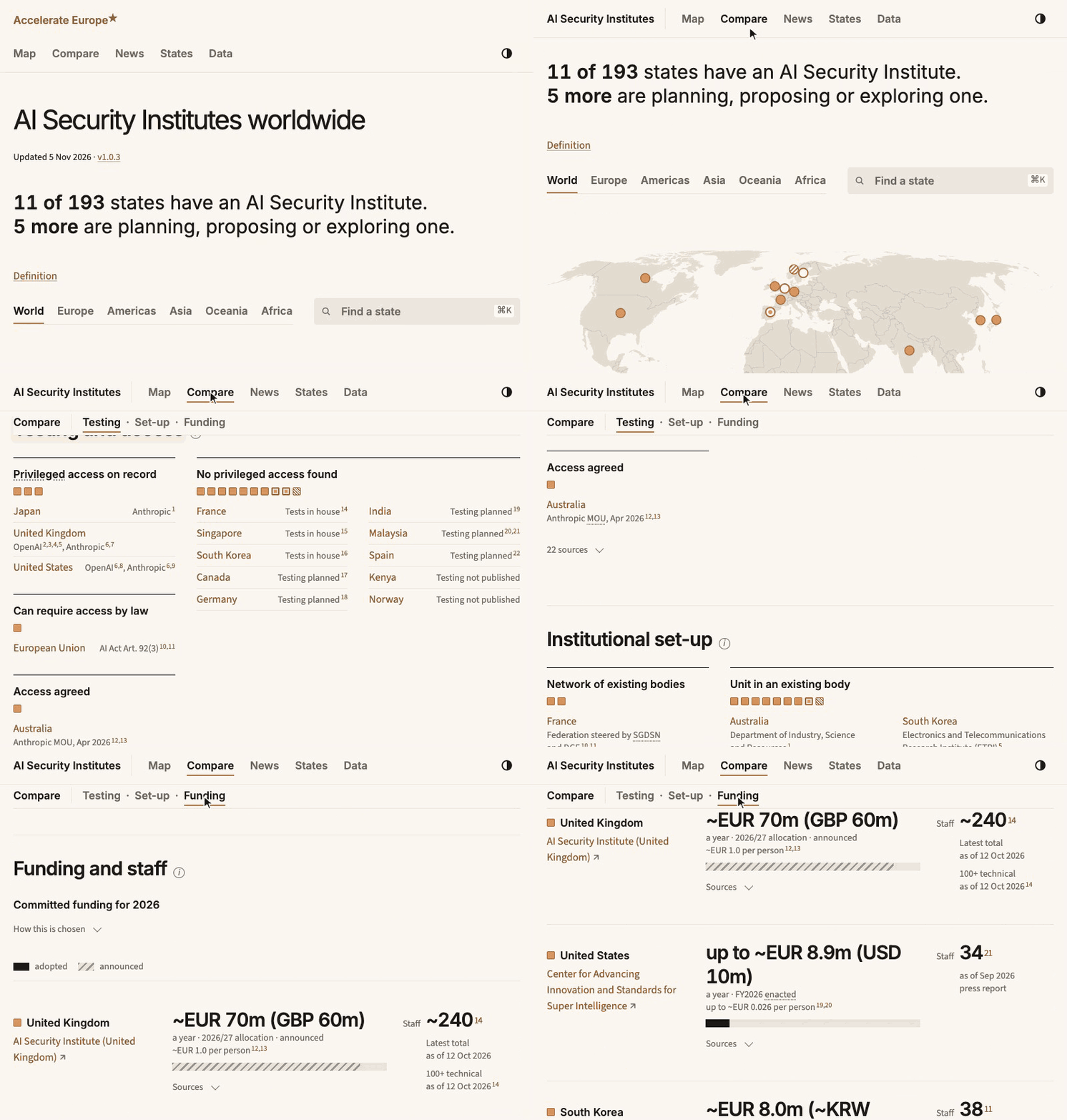
Every figure comes with a link to its original source, and the data can be downloaded as CSV and JSON.
A ‘News’ tab tracks new announcements and developments as the international AISI landscape evolves.
What this means for the next AISI
Existing institutions can host an AISI. All 9 established national institutes with a published set-up were built inside ministries, agencies or a university. That gives other countries a variety of models to borrow from.
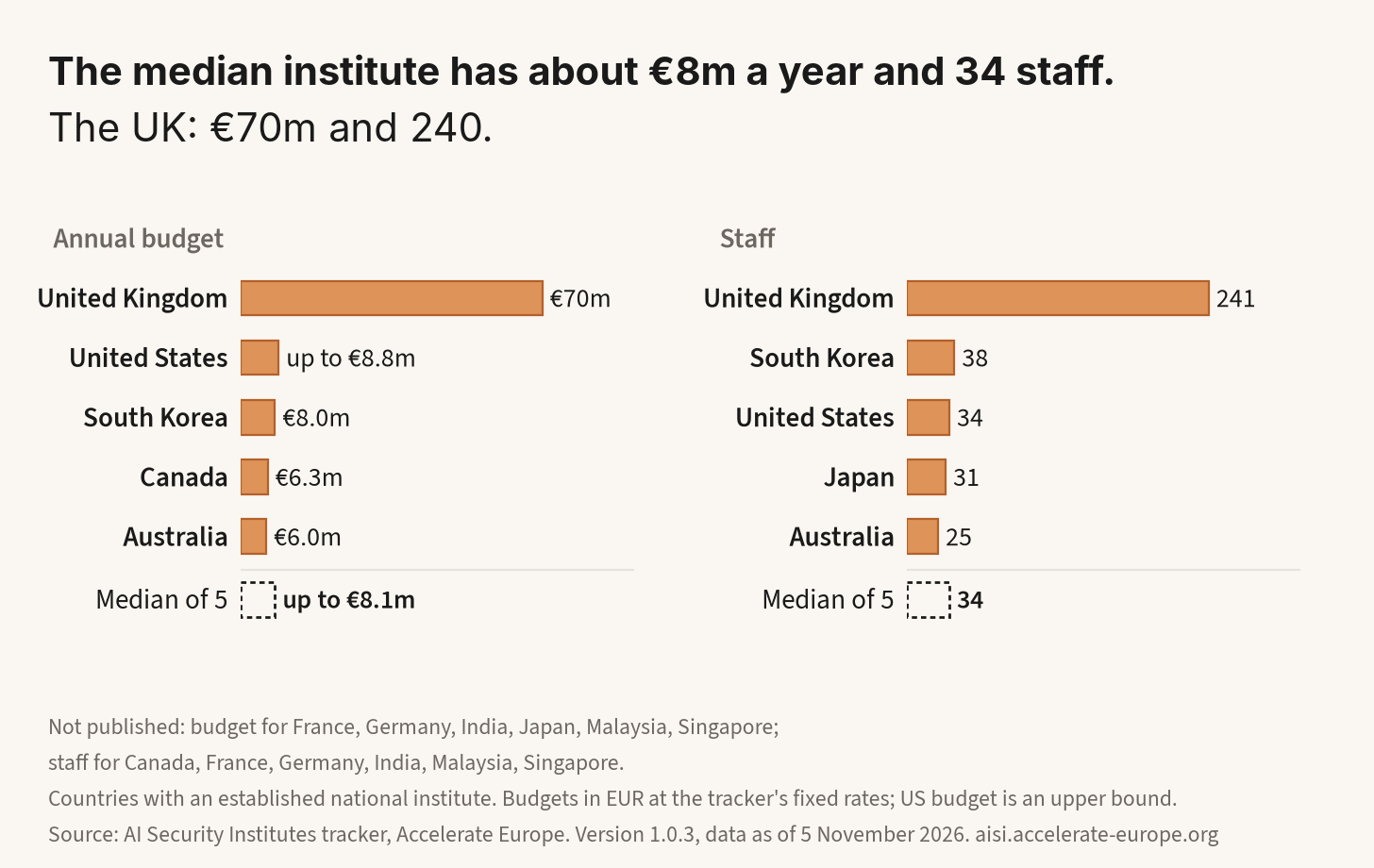
Funding can be in the single-digit millions. The median budget for an institute, among those that publish figures, is around €8 million, and the median staff size is 34. With a €70 million budget and a staff of 241, the UK is currently an outlier.
Frontier access can be negotiated. Three of the 11 established national institutes (the UK, the US and Japan) have privileged access to test frontier models. A fourth, Australia, has agreed access through an MoU with Anthropic.
What this means for Europe
We believe the tracker can be a valuable resource for those working in AI safety in Europe, and for everyone looking to understand how countries across the world are responding to the challenges posed by frontier AI.
Europe needs institutions that move at the pace of the technology they oversee. Learning from what’s been done already is the best way to start.
We welcome your thoughts. If you work on these questions, write to us at contact@accelerate-europe.org.
We thank Rafael Andersson Lipcsey for helpful feedback on a draft.
Graphics produced with Claude. Source: AI Security Institutes tracker, Accelerate Europe.
How to cite
Accelerate Europe (2026). AI Security Institutes tracker, version 1.0.3, data as of 5 November 2026. Compiled by Jason Hoelscher-Obermaier. https://doi.org/10.5281/zenodo.23600431
Data and text are licensed CC BY 4.0, code MIT.
We collect and check the data with help from AI tools.