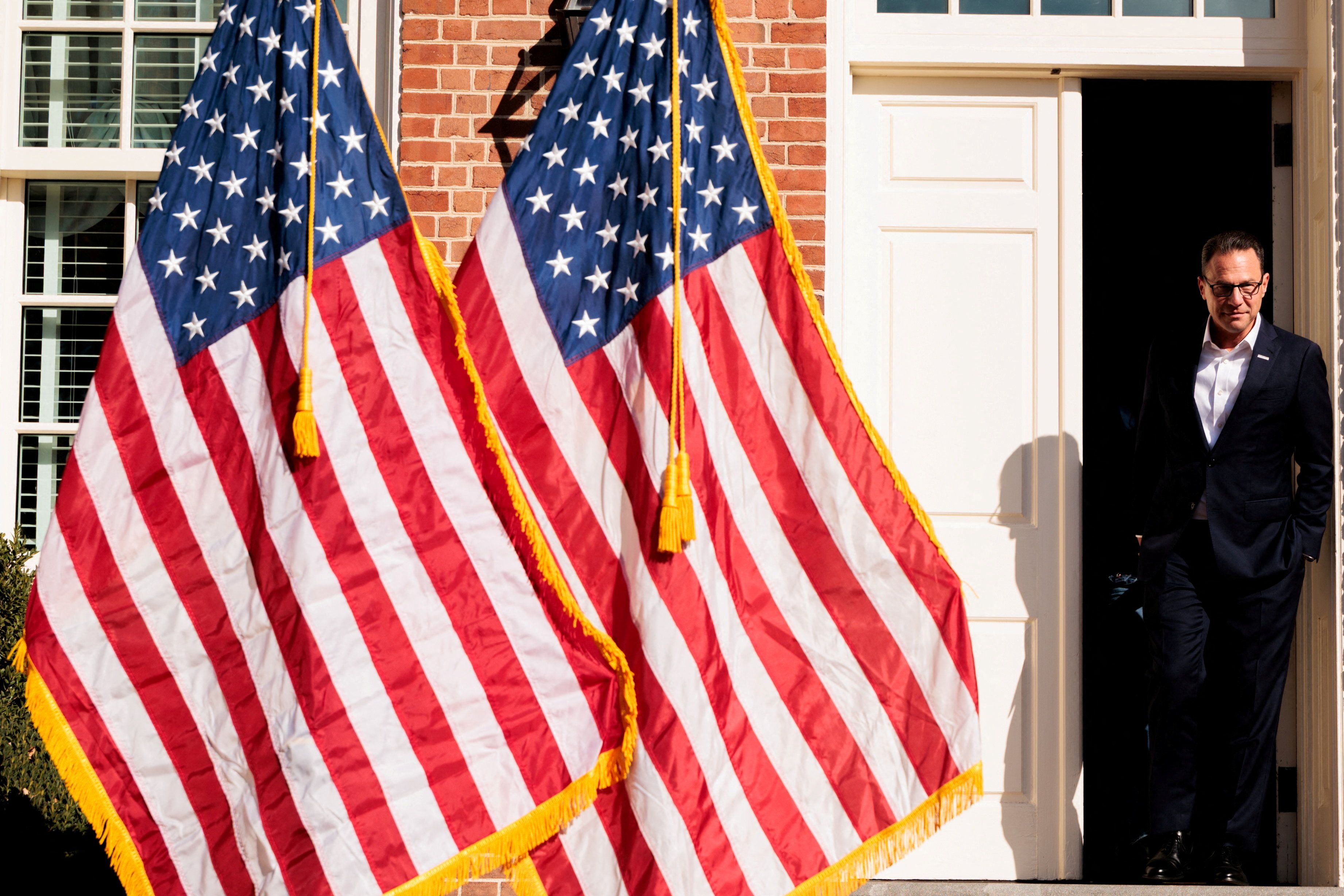
READING, Pa. — A few days before he won re-election by 22 points, Gov. Josh Shapiro was barely mentioning his Republican opponent anymore. He’d share his stages with local Democratic candidates, ask for a Democratic majority in the state Senate, and explain what it could do.
“I’m going to the good people of Pennsylvania, saying: I want to raise your minimum wage,” Shapiro told Semafor. “I want to have a big housing and critical infrastructure fund. That’s the stuff they can expect to see from us, and I’m going to stay true to that.”
Tuesday’s Democratic landslides gave the party full control of multiple swing states — not just Shapiro’s Pennsylvania, but Wisconsin, Arizona, Michigan, Nevada, and Minnesota. Democrats won legislative trifectas big enough to pass progressive bills that had gathered dust and lint under Republican control.
Instead, swing-state governors plan to focus on popular economic proposals that won over voters –– lowering living costs, taxes, and healthcare — and not the left-wing agenda items demonized in billions of dollars in GOP ads.
After their biggest wins in decades, Democratic state leaders are coalescing around moderation, rather than the progressive politics that shaped the party in Trump’s first term and during Joe Biden’s presidency.
“I’m committed to moving our state forward,” Sen. Amy Klobuchar, D-Minn., told reporters at her first press conference as governor-elect. “Not to the left, not to the right, but forward.”
In Wisconsin, where Democrats won their first governing trifecta since 2008, Gov.-elect David Crowley ran on expanding Medicaid, which Republicans in Madison refused to do for eight years under retiring Gov. Tony Evers.
“We’re going to expand access to quality affordable healthcare that offers real options for families, our children, our seniors, and people with disabilities,” Crowley said after beating GOP Rep. Tom Tiffany.
Medicaid expansion was also top of mind for Democratic winners in Georgia and Texas, where the party elected governors and won control of the lower house of their state legislatures. In DC, Democrats plan to fight next year to restore Medicaid funding that was cut or restricted by Republicans in 2025; in states, Democrats are confident that Republicans, chastened by their losses, might be willing to expand health care coverage.
“I truly believe that this is an issue we can get bipartisan support with,” Georgia Gov.-elect Keisha Lance Bottoms said on Wednesday.
Not on the agenda: progressive bills focused on crime and social issues.
In New York state, the passage of cash bail reform during Trump’s presidency became a target for Republicans who over-performed in 2022 and 2024, blaming Democrats for a temporary rise in crime.
In Minnesota, Gov. Tim Walz’s 2022 sweep helped Democrats pass a pile of bills that were halted by Republicans. That made him a surprising star among left-leaning Democrats — and gave Republicans a number of attack points against his party in 2024, such as when they mocked “Tampon Tim” for making sanitary products available in boys’ restrooms in public schools.
Democrats are talking more cautiously now, and the party is rooting them on from DC. At a Thursday post-election conference organized by the Center for American Progress, Senate Democratic Leader Chuck Schumer said that the people who’d beaten invincible-looking Republicans needed space to vote and govern their way. That, he said, could help the whole party.
“Instead of letting Fox News define what a Democrat is, our Democrats in these states will define what a Democrat is,” said Schumer.
Even some Democrats who had endorsed more progressive policies in the past were urging the party to focus on economic needs first, and convince the voters who broke from the GOP this year that the party deserved a long-term mandate.
In a memo shared with supporters of the Democracy Alliance, a progressive donor collective, the group urged Democrats with trifectas to “pass structural reforms that make it easier for everyone to participate in our democracy, and to improve the lives of working families — setting a model for what’s possible nationwide.”
It would be a mistake, it said, for the party to “take any of this cycle’s demographic swings for granted.”