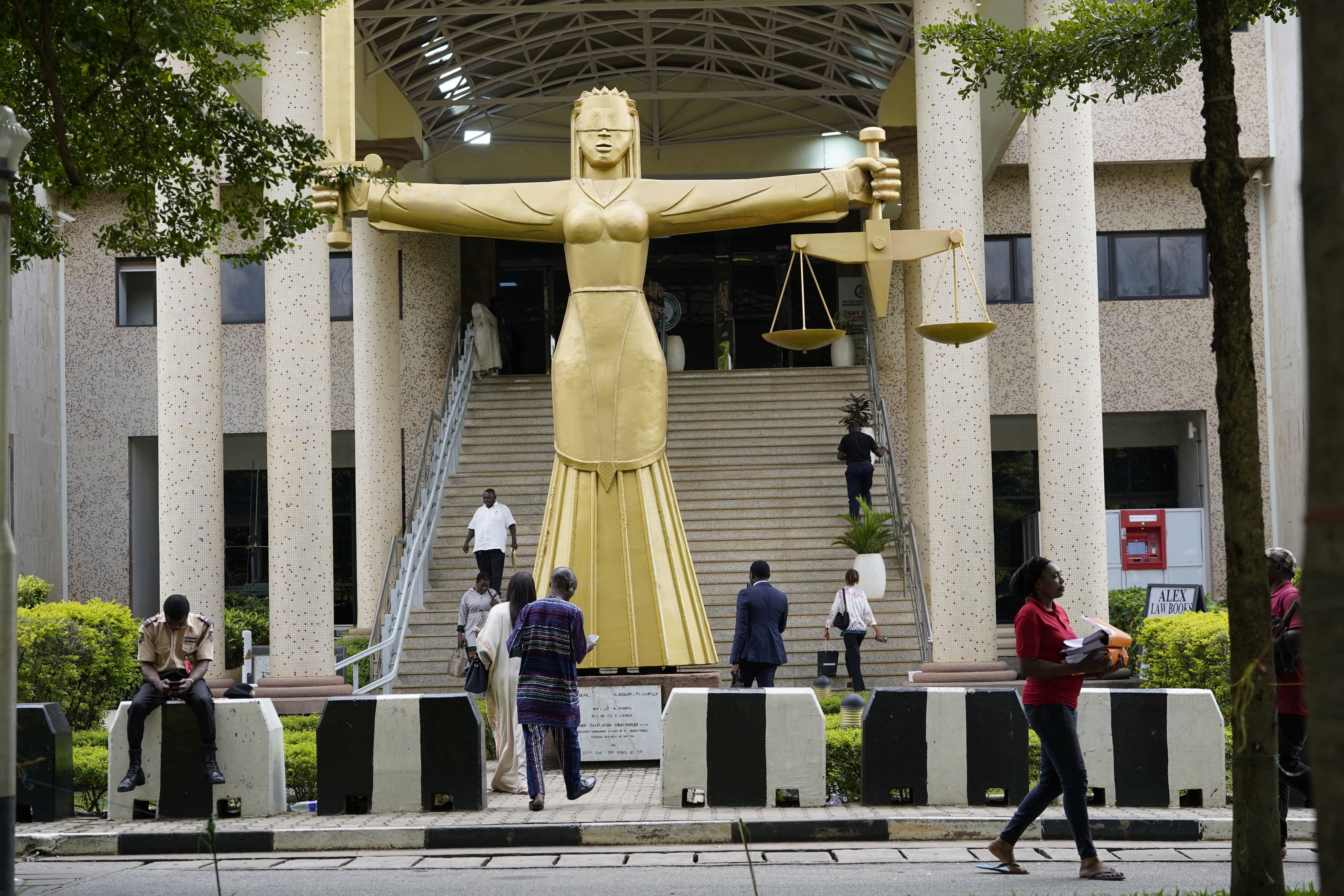
Nigeria’s Federal High Court invalidating the election candidacy of President Bola Tinubu’s leading challenger was unexpected — but not entirely surprising.
Former Vice President Atiku Abubakar, runner-up in the last election, has fewer than 100 days to secure a reversal on appeal ahead of the January vote. But the broader danger is that last week’s legal curveball further erodes trust in Africa’s biggest democratic exercise.
The ruling is consistent with a recent pattern of late interventions ahead of Nigerian elections. In 2019, the country’s then most senior judge was suspended weeks before the vote, prompting speculation that he was dismissed because he couldn’t be relied upon to back the incumbent if courts weighed in on a close result. And Nigeria’s central bank wreaked havoc four years ago when it issued new bank notes in a move widely seen as an attempt to disadvantage some politicians and favor others. Each intervention raised questions about the independence of key institutions.
Tinubu was already the frontrunner, even before Atiku’s legal headache. Peter Obi, the other main opponent, should not be underestimated. But the failure of the opposition to unify behind a single candidate has weakened the challenge to Tinubu, despite widespread anger over the rising cost of living, which many blame on the president’s removal of the country’s fuel subsidy.
The smart money is on the ruling against Atiku being overturned before the election. The danger for Tinubu is that suspicion that the judiciary undermined a rival — one who vowed to restore the fuel subsidy — turns Atiku into a lightning rod for public frustration.
The more deep-rooted threat is apathy. Tinubu won in 2023 with just 27% voter turnout — the lowest since the return to civilian rule in 1999. Any sense that courts, rather than the ballot box, will sway the election could dampen interest further, handing the victor an even slimmer mandate to govern Africa’s most populous country. Under such circumstances, a Tinubu victory could soon feel Pyrrhic.