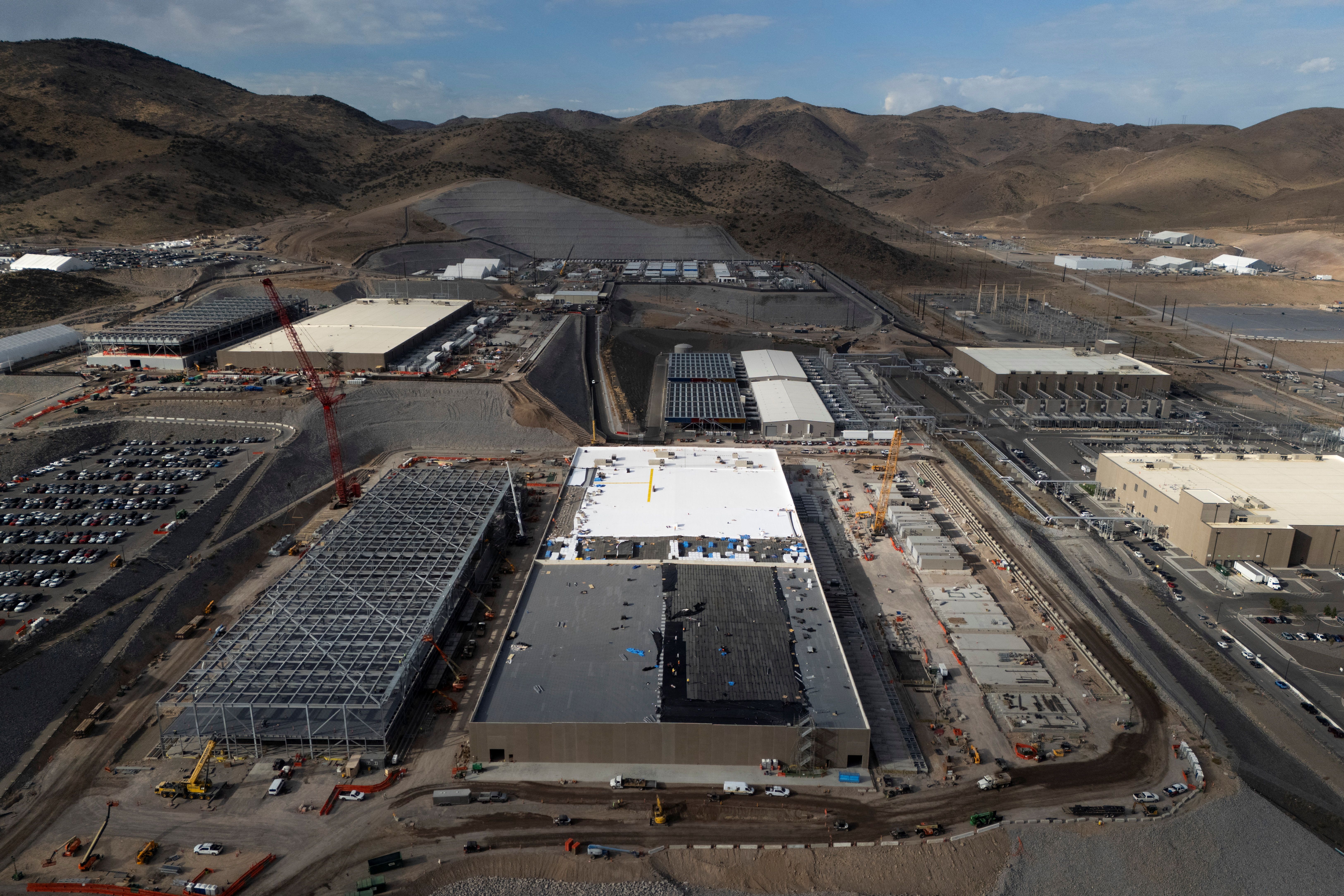
This feels like the beginning of the end of the AI trade. It’s going to have wider consequences than we think.
The geyser of money is starting to sputter, affecting high-flying stocks and zapping debt deals. OpenAI set out to raise $30 billion, money it could have put together in its sleep a few months ago, and appears likely to fall far short. Lenders are treating SpaceX, an investment-grade giant, like a flier bet on a junk-rated startup.
Those companies will likely find the money somewhere. But the can’t-lose trade powered by a combination of FOMO and the greater-fool theory of investing is evaporating, replaced by a tinder pile ready to ignite. The spark could come from almost anywhere. A data-center delay sets off a hyperscaler guarantee fight, a swarm of rogue agents hacking into a major city’s electric grid, Nvidia’s CEO admitting he slept with a Chinese spy, pick your poison.
The market is sobering up and going back to doing its job of separating winners from losers. Some of those losers are likely to be household names with 12-figure valuations.
And because the AI boom pulled in companies far outside Silicon Valley, the unwind will, too. Glassmaker Corning’s stock doubled in the first six months of the year after a $6 billion deal to outfit Meta’s data centers; it has now given up almost all of those gains. Modine, a maker of car radiators, is now trading lower than before it announced the spinoff of that business in January to become “a pure-play climate solutions company focused on the high-growth data center” market. Paint supplier Sherwin-Williams and HVAC-maker Carrier are in the middle of their own pivots to AI.
The boom reached far beyond Silicon Valley. So will the hangover.