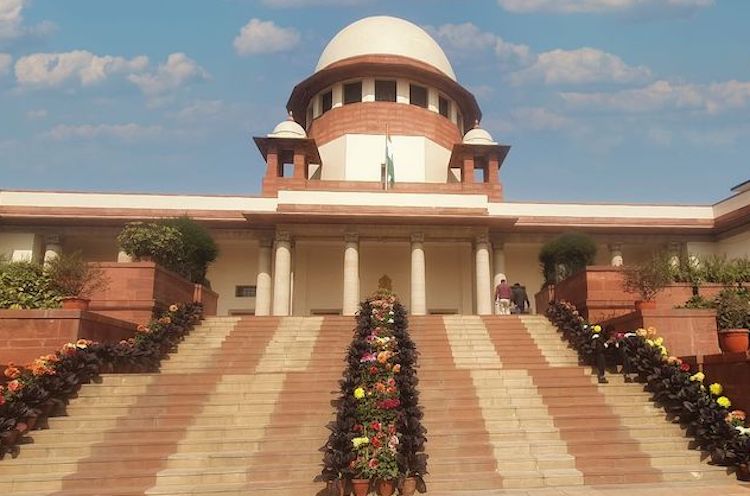
The Supreme Court (SC) has directed WhatsApp and other intermediaries to outline their measures to prevent digital arrest scams and submit their proposals to the Indian Cyber Crime Coordination Centre (I4C). This is the first time the court has requested plans directly from platforms; previously, such directions were issued through the government.
“WhatsApp LLC (A Meta Company) and other concerned intermediaries are also directed to apprise this Court of the measures they propose to undertake to prevent the digital arrest scams and related cybercrimes,” the court said in its order.
A bench comprising Chief Justice of India (CJI) Surya Kant and Justices Joymalya Bagchi and V Mohana passed the order on October 29 in its suo motu case, and the court uploaded it on November 7. At the same hearing, the bench said banks must fully compensate victims when their lapses enable the fraud. The next hearing is on November 23.
In digital arrest scams, fraudsters pose as police or government officials, often over video calls, and pressure victims into transferring money. CJI Kant called these scams “the biggest financial fraud on the economy of the country” at the hearing.
What has WhatsApp done so far? WhatsApp banned about 9,400 accounts linked to these scams over 12 weeks from January, according to a status report the Ministry of Home Affairs (MHA) filed in the case in April. The government had flagged roughly 3,800 accounts for WhatsApp’s review under Section 79(3)(b) of the IT Act, but only 17 of them involved digital arrests.
WhatsApp told an Inter-Departmental Committee that it used each government flag as a starting point to find related accounts. It relied on logo detection, a tool based on a large language model (LLM) and display-name logging. The report didn’t explain how it arrived at either number.
The government’s own measures have focused on calls and impersonation. In August, the court asked the Ministry of Electronics and Information Technology (MeitY), the Department of Telecommunications (DoT) and the I4C to study time limits on audio and video calls. The Centre has also told the court it is developing software to flag accounts that impersonate government agencies. In 2024, it blocked over 59,000 WhatsApp accounts and 1,700 Skype IDs linked to digital arrests.
SIM binding deadline: WhatsApp must link each account to the SIM card used to register it by December 2026, under a deadline the DoT has extended. The rules are reportedly set to take effect on January 1, 2027. WhatsApp has said it is developing the feature.
The DoT first directed WhatsApp, Telegram, Signal and other messaging apps to do this in November 2025. The apps must also log out web users at least every six hours.
MediaNama is hosting a discussion on the technical challenges of SIM binding on November 13. You can register here.
What did the court say about banks?
“The regulatory measures proposed by the Reserve Bank of India (RBI) must mandate and incorporate suitable provisions that require financial institutions to indemnify victims of digital arrest scams and other cyber frauds and pay suitable compensation not less than the amount lost by the customer, where it is established that the fraud or crime occurred due to the failure on the part of the financial institution to exercise due diligence in preventing or reporting the act/incident,” the court said.
“We will put up a strict liability on the financial institutions,” Justice Bagchi said during the hearing.
The court listed safeguards banks should follow:
- Hold suspicious transactions: Temporarily suspend transactions that don’t match an account’s history.
- Alert the police: Automatically report such transactions to the nearest police station.
- Verify: Physically check the reported transactions to confirm they are genuine.
It also asked the RBI to submit a list of all authorised financial institutions at the next hearing.
RBI’s mule account rules are coming sooner: The RBI plans to notify its Know Your Customer (KYC) Amendment Directions, 2026 by November 30 and bring them into force by December 31, according to the order. The court will examine these rules before issuing its own directions.
The RBI’s September draft had proposed April 1, 2027, as the implementation date. It requires banks to put temporary holds of up to 60 days on suspected mule accounts and on flagged transactions of Rs 1,000 or more.
What else did the court order?
- Police: Law enforcement agencies in all states and Union Territories must report the status of digital arrest FIRs and investigations, and suggest ways to prevent, detect and prosecute these crimes. The Directors General of Police must ensure compliance and share the information with the I4C.
- Expert inputs: The court will consider suggestions from amicus curiae N S Nappinai, who filed a note on October 14, and from Attorney General R Venkataramani, who filed one on October 28.
Why it matters: These scams usually start on messaging and calling apps, but so far the burden of compensation has fallen on banks. WhatsApp’s response could indicate what additional safeguards platforms may propose.
- What will WhatsApp propose? Will its plan go beyond account bans and the SIM binding the DoT already requires?
- How will it be checked? WhatsApp hasn’t disclosed how it identifies scam accounts. Will the court or the I4C ask it to?
- Who pays? In August, the court asked an inter-departmental committee to examine a shared liability framework for victim compensation. Will that framework cover platforms, or only banks?
Also Read: