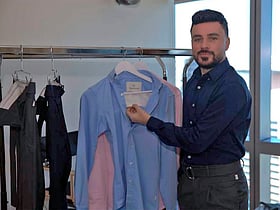
From Liverpool to a leap of faith
Wanless grew up in Liverpool. He built a career in sales across events and hospitality, and now works as a Senior Talent Partner.
In May 2021, he moved to Dubai without having visited or knowing anybody here. “It was a leap of faith, but Dubai has since become my home,” he explains. Just over five years later, launching a brand inspired by life in the city feels like “a very personal milestone”.
A retailer’s son
Retail runs in the family. Wanless’s father ran a business in the UK through his childhood, buying discontinued stock from high-street names such as River Island, Next and Topshop. He sold it through his own stores across the North West. Wanless recalls how both his parents worked incredibly hard to give the family a good life. He watched, and learned what a business asks of its owner. “I always knew I wanted to build something of my own,” he notes.
He wanted that business to solve a real problem. He acknowledges the fact that the fashion industry is incredibly crowded, so he needed a clear reason to add another brand. He was specific and selective and more importantly cared enough to chase it.
Evenings, weekends and his own money
StephenCharles started as a passion project. Wanless worked on it in the evenings and at weekends over two years, building it in small stages. He funded it entirely himself, with no outside investment. Money from his own income paid for product development. He admits he could have launched sooner. He chose not to, because he did not want to burn out or pile unrealistic pressure on himself while working full-time.
Asked whether he ever thought about quitting on his dream, he answers without pause. “So many times!” Imposter syndrome still visits him. He underestimated the emotional rollercoaster, saying that he is “excited about the business one day, and finds himself questioning the next”.
The supplier wall
The shirt proved hard to make. Wanless had a precise idea for the fabrics and construction, and manufacturers struggled with it. Some did not understand what he wanted. Others demanded quantities he could not commit to, or quoted prices beyond his budget. A few agreed to the job, but the results fell short.
He was also new to the industry. He knew how the shirt should look and feel. He did not always know the technical terms, or the right questions to ask.
So he studied fabrics and garment construction until supplier conversations made sense. Patience and learning became his biggest lessons. “Having a clear vision is only part of it,” he said. Communicating that vision takes knowledge.