“What about the future of our minds?”
Parents’ privacy concerns go beyond Google, Creswell noted. But since Google has “captured so much of the education space and so much of the education experience,” parents are focusing their energy on interrogating those AI systems in schools early on.
In Chicago, a recently re-elected CPS school board member, Karen Zaccor, is pushing for an AI moratorium in schools after talking with city and community colleges about an allegedly noticeable decline in reading, math, and writing skills from students graduating from CPS schools. In Emma’s case, Google allegedly suppressed chat logs, and the school withheld safety logs, frustrating parents who already viewed AI as more harmful than beneficial in education.
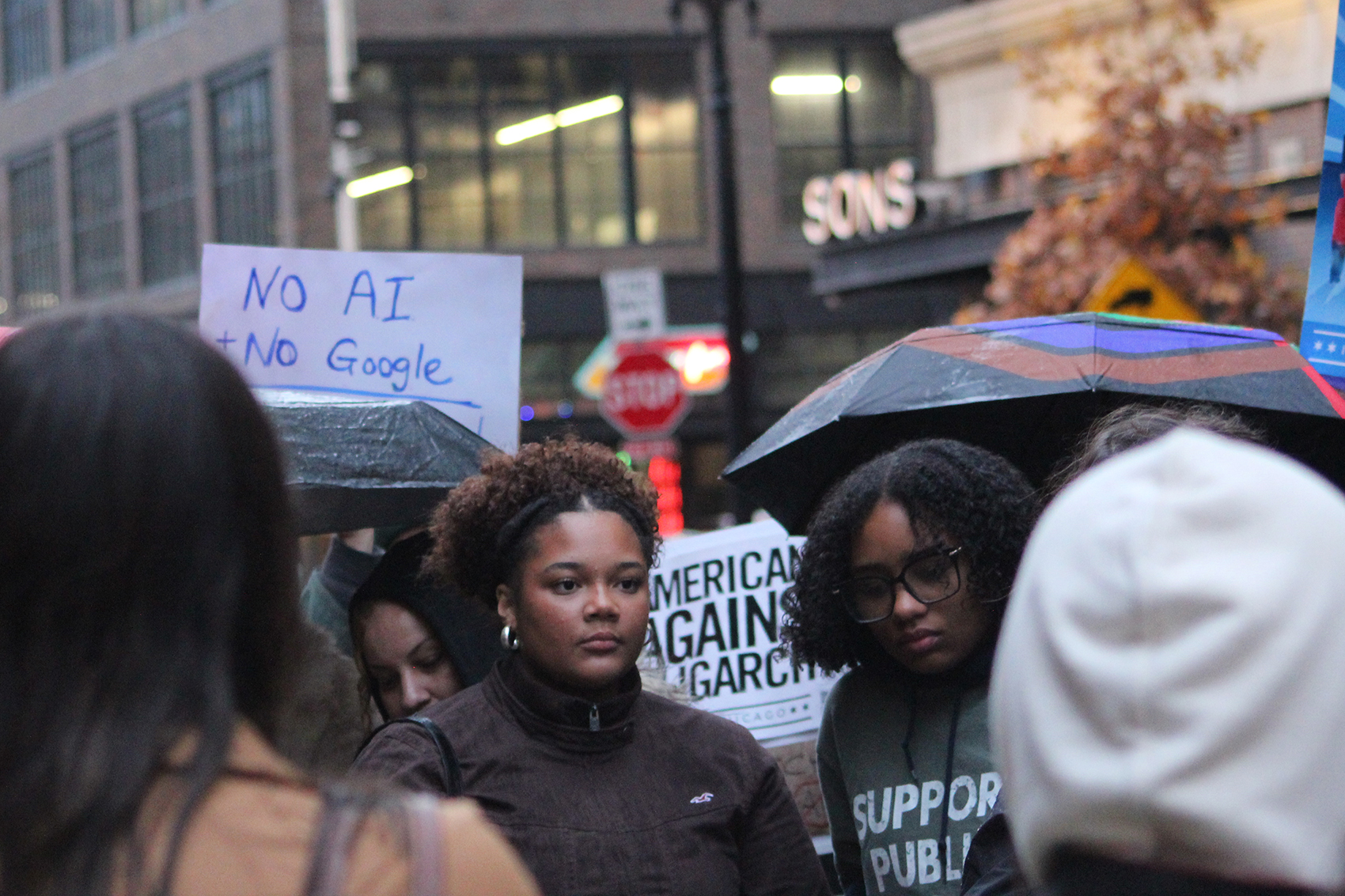
CPS scholar Reese Mackey (center-left) spoke for students.
Ashley Belanger
CPS scholar Reese Mackey (center-left) spoke for students. Ashley Belanger
CPS scholar Reese Mackey (center-left) spoke for students. Ashley Belanger
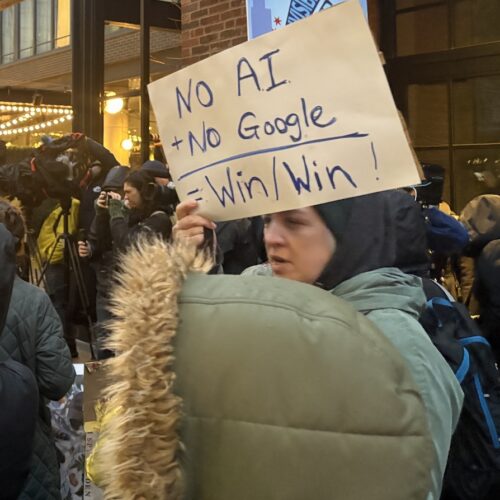
At the Google protest Wednesday, parents waved signs that threatened to eject Google from schools, with slogans like “No Google + No AI = Win/Win.” Many kids used favorite cartoon characters from shows like Beavis and Butthead and South Park to slam Google’s seemingly cynical approach to introducing AI in schools. One young girl wearing pink rain boots held up a cardboard sign, declaring in colorful markers, “I like to read!!”
At its peak, about 60 people stood outside Google’s downtown Chicago office, enduring the rain and listening to teachers and students who oppose reckless AI adoption.
One particularly moving speech came from a CPS student, Reese Mackey, who spoke for students. She challenged Google to more carefully weigh the long-term harms of aggressively pushing AI onto students by claiming they’ll be left behind and struggle to find jobs without AI skills. Creswell told Ars the opposite seems true, as Emma Doe’s lawsuit pointed to research branding Gemini as “the most dangerous marketed for use by youth” and “confirming the existence of AI-induced psychosis.”
“What about the future of our youth?” Mackey said. “What about the future of our minds?”