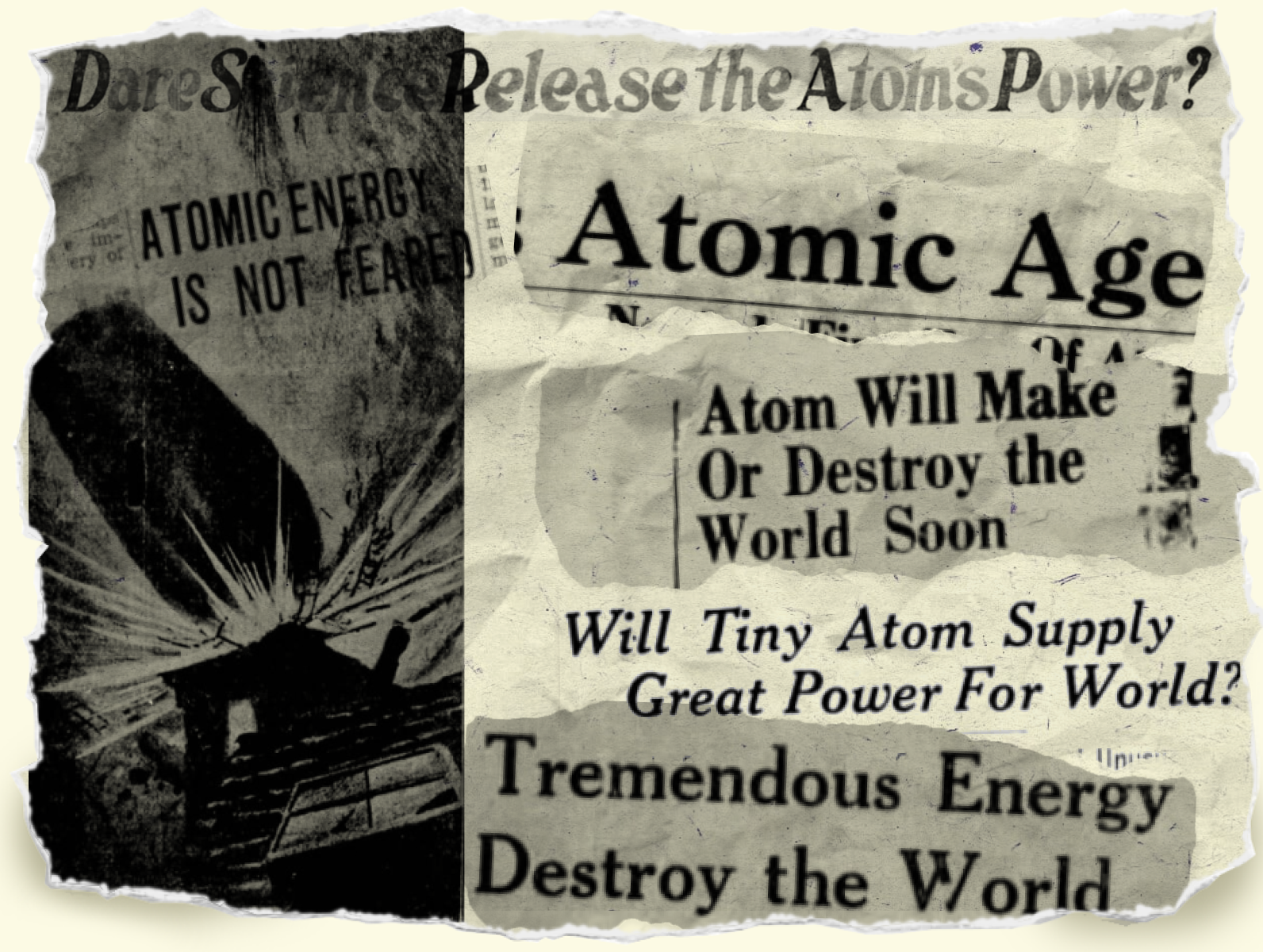
A prominent researcher is warning the world is on the verge of a massive transformation thanks to the emergence of a new technology that could drastically benefit society or cause massive destruction. No one quite understands how it works, or whether governments should step in.
It’s 1941 in Omaha, Nebraska, where the physicist Arthur H. Compton is giving a lecture about how the possibilities of sub-atomic energy are “so breathtaking that even those who know most about it are somewhat uncertain, and a little awed, about it,” according to a writeup of the event in The Lincoln Evening Journal.
While not a perfect allegory, a review of newspaper archives from the early 1900s shows some striking parallels between the early days of atomic energy — which would later be called nuclear energy — and the public discussion around the danger of extinction from AI today. Just like there are today, there were doomers and skeptics, utopian boosters and scientists pleading for calm.
The look back shows the familiar societal cycle around powerful technology, spanning excitement, anxiety, and dread. But the past is also a warning to today’s AI executives and government leaders that it shouldn’t take mass destruction to force a consensus on human safety.