
A New Chapter for fast.ai: How To Solve It With Code
fast.ai is joining Answer.AI, and we’re announcing a new kind of educational experience, ‘How To Solve It With Code’
AI/ML news, top picks, and generated innovation digests.
9886 matching items
fast.ai is joining Answer.AI, and we’re announcing a new kind of educational experience, ‘How To Solve It With Code’
An overview of the minetester and preliminary work

Pundits say my husband and I are parenting wrong.
Interim report on ongoing work on mechanistic anomaly detection
GPT-NeoX now supports post-training thanks to a collaboration with SynthLabs.
What's in the book and how we wrote it
I’m currently working on a project involving several classifiers, each trained on a subset of classes. These classifiers are designed to handle different aspects of the classification task, but I’m facing a challenge when it comes to aggregating their outputs into a single prediction. For example, if one classifier is responsible for distinguishing between classes 0 and 1, and another handles classes 2 and 3, how can we effectively combine their results when the correct answer belongs to class 1? Our initial approach was to use an "other" class to indicate when an input doesn’t belong to a classifier’s assigned classes, but this did not yield the desired results. We are now exploring the possibility of implementing an additional head for detecting out-of-distribution classes, but we’re looking for a more efficient and streamlined solution. Has anyone encountered a similar issue or have any suggestions for effectively aggregating outputs from multiple classifiers? Thank you for your assistance!

Sharing an ETL design doc template
An Architect model describes how to solve the coding problem, and an Editor model translates that into file edits. This Architect/Editor approach produces SOTA benchmark results.
Large Language Models (LLMs) exemplified by ChatGPT continue to gain widespread usage in addressing a...
Exploring the implementation details of muTransfer
A new benchmark to measure the impact of AI on improving science

I'm just starting out in the world of machine learning, and I really like Rust. I've been testing and learning more. I took the example of transfer training and did some tests, but I can't understand why I have high accuracy in training and low accuracy in testing using the same validation base. Why? I studied overfit, but it doesn't seem to be the case, because I'm using the same validation base without new data. use std::env; use std::error::Error; use std::path::PathBuf; use anyhow::{ bail, Result }; use tch::nn::{ self, ModuleT, OptimizerConfig, VarStore }; use tch::vision::{ imagenet, resnet }; use tch::{ Device, Kind, Tensor }; pub fn bee_test() -> Result > { tch::manual_seed(123); let manifest_dir = env::var("CARGO_MANIFEST_DIR")?; let project_dir = PathBuf::from(manifest_dir); let dataset_path = project_dir.join("data/hymenoptera_data"); let dataset = imagenet::load_from_dir(dataset_path)?; println!("{dataset:?}"); let model_path = project_dir.join("data/bee.ot"); println!("Caminho do modelo: {:?}", model_path); let device = Device::cuda_if_available(); let mut vs = VarStore::new(device); vs.load(model_path.as_path()).map_err(|op| { format!("Erro ao carregar o modelo: {:?}", op); op })?; let net = resnet::resnet34_no_final_layer(&vs.root()); let linear = nn::linear(vs.root(), 512, 2, Default::default()); let net2: nn::Sequential = nn ::seq() .add_fn(move |xs| net.forward_t(xs, false)) .add(linear); let predicted = net2.forward_t(&dataset.test_images, false); let prob…
Preliminary benchmark results for the new OpenAI o1 models.
The book was published September 2024

Artificial intelligence is no longer a concept of the distant future – it’s here, evolving at a rapid pace and reshaping industries in real time. From healthcare to entertainment, AI’s influence is everywhere, sparking innovation, efficiency, and even ethical debates. But with so much happening at once, where exactly is the industry heading? To make […] The post From Code to Robots: The Top AI Trends Transforming Business and Life appeared first on TOPBOTS .
Introduction Given a single RGB image, 3D human pose and shape estimation aims to reconstruct...

LLM-based chatbots’ capabilities have been advancing every month. These improvements are mostly measured by benchmarks like MMLU, HumanEval, and MATH (e.g. sonnet 3.5, gpt-4o). However, as these measures get more and more saturated, is user experience increasing in proportion to these scores? If we envision a future
The Holistic Evaluation of Language Models (HELM) framework is an open source framework for reproducible and transparent benchmarking of language models that is widely adopted by academia and industry. To meet HELM users’ needs for more powerful benchmarking features, we are proud to announce our collaboration with Unitxt, an open-source community platform developed by IBM Research for data preprocessing and benchmark customization. The integration of Unitxt into HELM gives HELM users access to the vast Unitxt catalog of benchmarks, and allows users to run sharable and customizable evaluation pipelines with greater ease.
Held outside of Singapore for the very first time, the third Languages Summit...
Réinventer l’éducation : quand le numérique transforme les apprentissages mtestari lun, 09/02/2024 - 09:00 La transformation numérique de l’école doit être une opportunité pour mieux apprendre et individualiser l’apprentissage grâce au développement de nouvelles technologies associées à la formation de la communauté enseignante et des élèves aux compétences du 21e siècle. Autant d’enjeux sociétaux et scientifiques que relèvent, depuis plus de dix ans, les équipes pluridisciplinaires du Centre Inria de l’université de Bordeaux avec des chercheurs et chercheuses en intelligence artificielle, en interaction Humain - Machine, en neurosciences, en psychologie développementale et en sciences de l’éducation. © freepik /Photo Pch.Vector Mieux comprendre les processus d’apprentissage L’une des caractéristiques la plus importante pour l’ensemble des équipes impliquées reste leur approche systémique, positionnant l’apprenant toujours au centre de l’étude en considérant l’ensemble de ses interactions avec l’environnement dans lequel il évolue. « Ces recherches ne peuvent être menées sans l’appui des acteurs de terrain que sont les enseignants et les professionnels de l’éducation. Elles restent indissociables des avancées des sciences humaines pour ancrer la transformation numérique de l’école sur les besoins des apprenants, des éducateurs et de leurs environnements » souligne Nicolas Roussel, directeur du Centre Inria de l’université de Bordeaux. Le premier défi consiste à mieux compren…
Multi-label learning Multi-label learning is commonly exploited to recognize a set of categories in an...
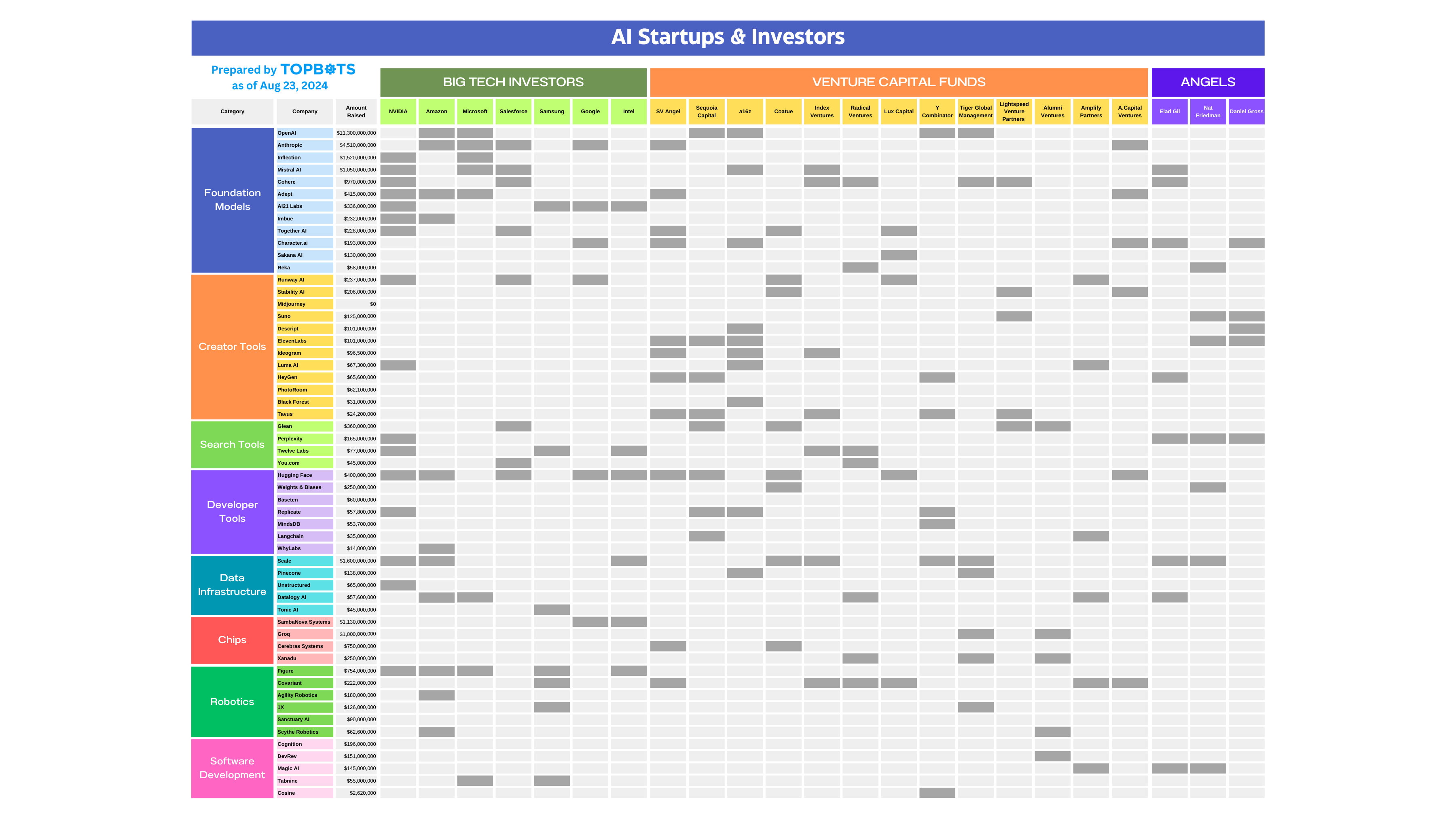
Artificial Intelligence (AI) is reshaping the tech landscape, attracting a diverse array of investors eager to capitalize on its potential. In this article, we explore the key players driving investments in AI, from tech giants and venture capital funds to angel investors, and examine the companies they are betting on. The post The AI Investment Landscape: Who’s Funding the Next Wave of Innovation? appeared first on TOPBOTS .
My question concerns the paper arxiv.org/pdf/1312.6114. I want to know why they proposed to use the MLP Gaussian decoder with parameters given by the MLP transformation of the z variable as the likelihood model $p_{\theta}(x|z)$ . If they are using NNs to perform inference on the best set of parameters, why use a Gaussian if it is very limiting in modeling complex data?
If you are unsure who is implementing and enforcing the new digital law and what the specific time frames are, you might find this post—and our post on the responsibilities of the EU Member States—very helpful. The tables below provide a comprehensive list of all obligations and tasks that the AI Act places upon to the […]
If you are unsure who is implementing and enforcing the EU AI Act and what the specific time frames are, you might find this post—and our post on the responsibilities of the European Commission (AI Office)—very helpful. The tables below provide you with a comprehensive list of all obligations and tasks that the AI Act places […]
The model I am talking about is hosted here : From the documentation: We simplify usage of prompts, providing two prompts for most general tasks, one is for s2p, another one is for s2s.Prompt of s2p task(e.g. retrieve task): ..., Prompt of s2s task(e.g. semantic textual similarity task): ... Question: What is S2P task? How is retrieve task different from semantic textual similarity task? Difference in the usage and also in the training steps would be much appreciated in the answer
Turning models into products runs into five challenges
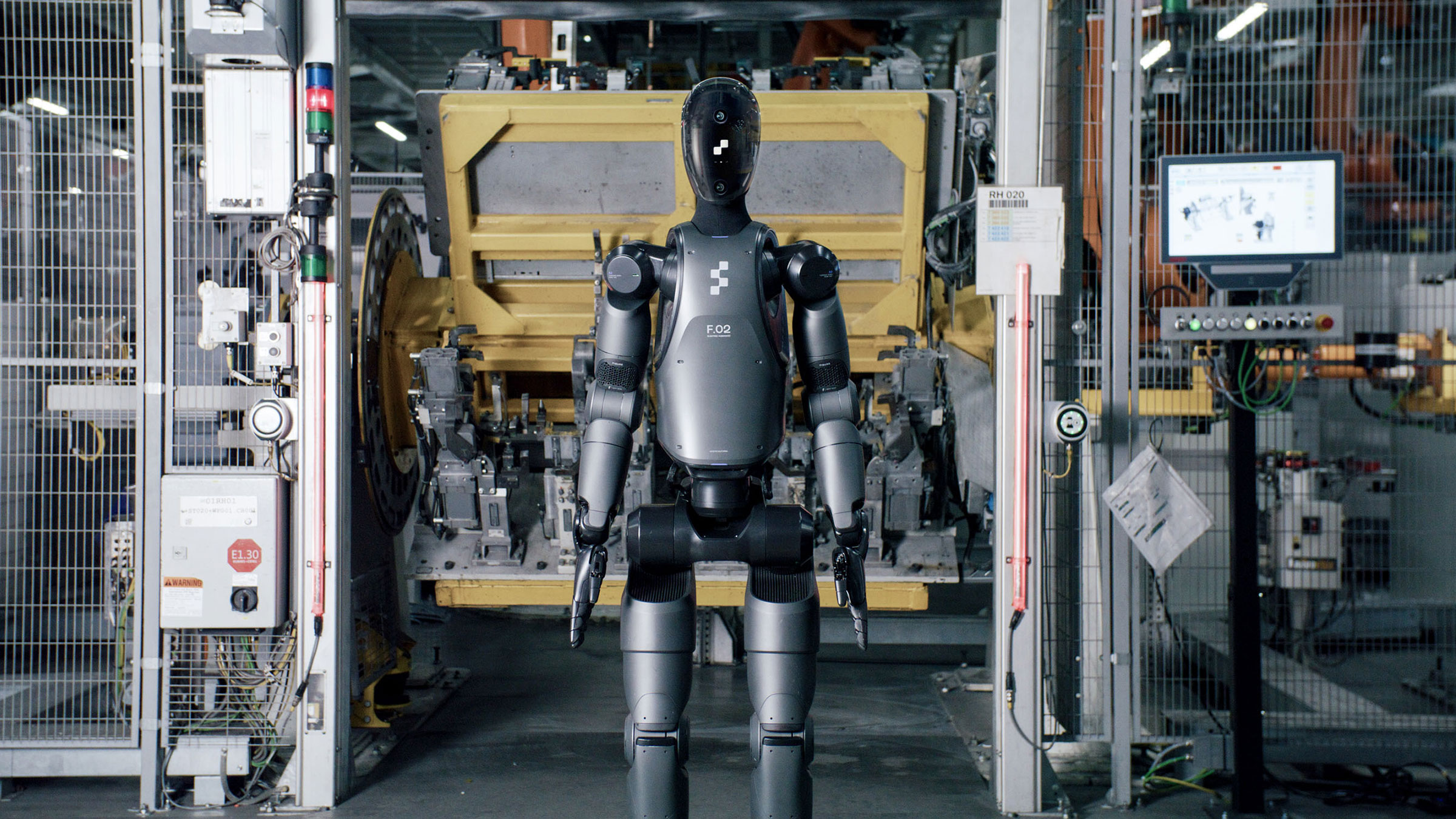
The robotics industry stands on the brink of a significant transformation, with many experts – including NVIDIA CEO Jensen Huang – suggesting that we might be approaching a "ChatGPT moment" for robotics. The post Humanoid Robots on the Rise: Industry Advances, Key Players, and Adoption Timelines appeared first on TOPBOTS .
This work is based on the paper: K.S. Fong and M. Motani, “Symbolic Regression Enhanced...

I am using a KL divergence to measure the difference between distributions, but I would like to compare the results to each one another, because the probability distributions I'm measuring are correlated. What is a good measure for comparing two KL divergences on related distributions? Ex. If I'm looking at some characterization data for a test, let's say X-ray diffraction patterns for a metal sample. I get an XRD pattern of intensity vs. diffraction angle, and can create a probability distribution for that in a reference state (room temp, new sample). I then run the same XRD test on the same sample while I vary temperature, and for that temperature I get a new distribution of my XRD data, and I can calculate the KL divergence for that distribution relative to my reference one. Let's say I then cold-roll my metal sample, and run the same XRD experiment, and then calculate the KL divergence with the same reference state for those distributions. I have two KL divergence results, and I know that there are variables for the metal sample, temperature vs. strength, that are correlated. Is there any comparison technique between divergences to tell me how much one distribution diverged relative to another? Especially if the variables are interrelated? Edit: Changing the example to be more specific.
In June 2023, the Monetary Authority of Singapore (MAS) launched the 8th edition...
Interim report on ongoing work on mechanistic anomaly detection

Introduction Imagine yourself a decade ago, jumping directly into the present shock of conversing naturally with an encyclopedic AI that crafts images, writes code, and debates philosophy. Won’t this technology almost certainly transform society — and hasn’t AI’s impact on us so far been
Introduction The project management landscape is undergoing a transformative shift, driven by the rapid advancements...
Building and evaluating an open-source pipeline for auto-interpretability
Introduction Scene generation has raised considerable attention in recent years, addressing the growing need...

Generative AI is a rapidly evolving field with a plethora of fascinating applications, from creating realistic images and videos to generating human-like text and beyond. As the technology advances, the demand for skilled professionals who can harness the power of generative AI is growing exponentially. However, navigating the myriad of tutorials and courses available can […] The post Accelerate Your AI Skills: Essential Generative AI Courses for Developers appeared first on TOPBOTS .
Congratulations to Stanford AI Lab PhD student Dora Zhao for an ICML 2024 Best Paper Award for a paper from her work at Sony AI on: Measure Dataset Diversity, Don’t Just Claim It
Congratulations to Aaron Lou, Chenlin Meng, and Stefano Ermon for an ICML 2024 Best Paper Award: Discrete Diffusion Modeling by Estimating the Ratios of the Data Distribution
Congratulations to Marco Pavone for winning the best paper award at the Robotics: Science and Systems Conference on AI Safety for autonomous systems.
How speculation gets laundered through pseudo-quantification
After studying how companies deploy generative AI applications, I noticed many similarities in their platforms. This post outlines the common components of a generative AI platform, what they do, and how they are implemented. I try my best to keep the architecture general, but certain applications might deviate. This is what the overall architecture looks like. This is a pretty complex system. This post will start from the simplest architecture and progressively add more components. In its simplest form, your application receives a query and sends it to the model. The model generates a response, which is returned to the user. There are no guardrails, no augmented context, and no optimization. The Model API box refers to both third-party APIs (e.g., OpenAI, Google, Anthropic) and self-hosted APIs. From this, you can add more components as needs arise. The order discussed in this post is common, though you don’t need to follow the exact same order. A component can be skipped if your system works well without it. Evaluation is necessary at every step of the development process. Enhance context input into a model by giving the model access to external data sources and tools for information gathering. Put in guardrails to protect your system and your users. Add model router and gateway to support complex pipelines and add more security. Optimize for latency and costs with cache. Add complex logic and write actions to maximize your system’s capabilities. Observability, which allow…
It is common to use mutual information as feature selection method. However, I fail to see why this is the case, since the mutual information $I(X, Y)$ depends on both entropies $H(X)$ and $H(Y)$ via the formula : $$ I(X, Y) = H(X) + H(Y) - H(X,Y)$$ meaning that comparing $I(X_i, Y)$ and $(X_j, Y)$ as a measure for selecting between $X_i$ and $X_j$ is not straightforward since the measure can be bloated by the marginal entropies. It is like selecting between $X_i$ and $X_j$ based on the covariance with $Y$ instead of correlation. The only way I can think that such a comparison is allowed is due to the equivalent formula: $$I(X, Y) = H(Y) - H(Y|X)$$ As the first term $H(Y)$ is the same for all $X_i$ then the ramking shouldn't depend on the "scale" of $H(Y)$ . Is that correct or am I missing something?

Our approach to securing our cloud environments