AI/ML News & Innovations Hub

AI/ML news, top picks, and generated innovation digests.

★ Visit ai-karthik.com
426Sources
88188News Items
8Top Picks
439Blogs
runningLast Run

Latest AI/ML News

88188 matching items

Cryonics as Cause Area
LessWrong AI 2026-11-16 17:02 UTC Score 63.0 USR-0152-20261116-community-fo-f8370ac4 Full article

Cryonics as Cause Area

TLDR: Cryonics should be considered as part of a diversified portfolio of altruistic projects. I estimate, using ~ 3% chance of revival and a modest post-revival lifespan (~20,000 years), that current biopreservation is roughly on par with top GiveWell charities in terms of QALYs per dollar. Scaled up, it could plausibly be dozens of times better . There are various complications, of course, but it still seems reasonable that cryonics complements rather than competes with things like AI-safety work. It may even ease pressure to race toward superintelligence as people’s only hope of not dying. Meta: I’m Max Harms, long-time researcher at MIRI, [1] rationalist, EA, and cryonics enthusiast. After doing a deep-dive on Nectome , a brain preservation startup, they hired me to write some additional pieces on cryonics (by which I mean both “traditional cryonics” and the aldehyde-based preservation used by Nectome). [2] The ideas in this essay are ones I have believed for many years, and I was the one who pitched the idea to Nectome. Part 1: Diversification Common wisdom in investment circles is to have a diversified portfolio — to not put all your eggs in one basket. This is wise for two reasons: Money is not utility. The difference between being broke and having a million dollars is much, much bigger than the difference between having 100 million and 101 million. Double-or-nothing usually has negative expected value, even if it’s neutral in expected money. We often assume that huma…

Microsoft Research Blog 2026-11-16 17:01 UTC Score 63.0 AI-053-20261116-official-ai--a2a3e162 Full article

TokenEconomizer: Learning from Experience to Make AI Coding Agents More Efficient

AI coding agents can waste time and tokens relearning the same lessons. TokenEconomizer is an open-source plugin that builds on past sessions to cut costs while maintaining task success. It’s a path toward coding agents that learn not only how to solve tasks, but also how to spend computation more effectively. The post TokenEconomizer: Learning from Experience to Make AI Coding Agents More Efficient appeared first on Microsoft Research .

Euronews AI 2026-11-16 17:00 UTC Score 40.0 AI-164-20261116-regional-ai--2ab91c73 Full article

Latest news bulletin | November 16th, 2026 – Evening

Catch up with the most important stories from around Europe and beyond this November 16th, 2026 - latest news, breaking news, World, Business, Entertainment, Politics, Culture, Travel.

LessWrong AI 2026-11-16 17:00 UTC Score 63.0 USR-0152-20261116-community-fo-c6d3e0fc

Recursive, Self, Improvement

The anatomy of an intelligence explosion Hubert Robert, Project for the Grande Galerie of the Louvre (1796) In a 1965 paper , the mathematician I.J. Good introduced the idea of an intelligence explosion. Defining an ultraintelligent machine as one that can “far surpass all the intellectual activities of any man however clever,” Good observed: “Since the design of machines is one of these intellectual activities, an ultraintelligent machine could design even better machines.” The result would be an “intelligence explosion,” with an ever-widening gap between human and machine intelligence. “Thus the first ultraintelligent machine is the last invention that man need ever make,” Good concluded, “provided that the machine is docile enough to tell us how to keep it under control.” Sixty years later, AI has become capable enough to help AI researchers improve their own research. By writing code, doing experiments, and so on, human researchers are creating a product that helps them to write code and do experiments faster and better. These systems not only help humans to work more effectively, but are becoming more autonomous, increasingly able to function as if they were employees: the AIs are training the next AIs. There is accordingly a growing sense among researchers , policymakers , and senior executives at labs that we are either in, or on the cusp of, a regime of recursive self-improvement (RSI). The term RSI was introduced , and later popularized , by Eliezer Yudkowsky to des…

Alibaba's Qwen4-Max takes on Opus 5.5, GPT-6, and Kimi K3.1 Pro at much lower prices
The Decoder 2026-11-16 16:56 UTC Score 51.0 AI-168-20261116-regional-ai--746c3a42 Full article

Alibaba's Qwen4-Max takes on Opus 5.5, GPT-6, and Kimi K3.1 Pro at much lower prices

Alibaba launches Qwen4-Max, a new flagship model with 2.4 trillion parameters that activates only 71 billion per token. A hybrid architecture sharply cuts costs on long contexts. Qwen4-Max lands just behind Kimi K3.1 Pro on the Artificial Analysis Intelligence Index, and Alibaba plans to release smaller Qwen4 models as open source. The article Alibaba's Qwen4-Max takes on Opus 5.5, GPT-6, and Kimi K3.1 Pro at much lower prices appeared first on The Decoder .

Training against CoT-like surfaces may be similar to training against CoT
LessWrong AI 2026-11-16 16:51 UTC Score 74.0 USR-0152-20261116-community-fo-4aa135dd Full article

Training against CoT-like surfaces may be similar to training against CoT

This post reflects my personal opinion and not necessarily that of other members of Apollo Research. It seems plausible to me that models don’t really distinguish between “CoT” and “things that are similar to CoT, i.e. in the same style”. In other words, the LLM doesn't have separate features for 'tagged as reasoning' and 'sounds like reasoning' . For example, imagine a model that reasoned 90% in CoT (i.e., between … tags) and 10% in code comments , and in both outputs reasoned in clipped sentences (for example, “need complete task” instead of “I need to complete the task”). It seems plausible to me that the model wouldn’t really distinguish between the CoT and the code comments, such that training against the code comments would have similar effects to training against the CoT. My toy conceptual model is something like: The model has three regions of its brain: one for CoT, one for tool calls, and one for final outputs. The code comments might be generated in the “CoT region” When you apply training pressure to the code comments, this is applying training pressure to the “CoT region” Therefore, you might be “training against CoT” (This applies to more than just code comments.) Prior work: Output Supervision Can Obfuscate the Chain of Thought makes a very similar argument and provides empirical support. Thanks to several people at Apollo for their feedback. Discuss

Sony’s PlayStation 5 accessories are cheaper ahead of Black Friday
The Verge AI 2026-11-16 16:48 UTC Score 52.0 AI-016-20261116-global-ai-ne-d00a1fc3 Full article

Sony’s PlayStation 5 accessories are cheaper ahead of Black Friday

Several retailers are offering discounts on PlayStation 5 games, including deep price cuts on recent console-exclusive hits like Marvel’s Wolverine, Ghost of Yotei, Saros, and hundreds more. We’ll cover a bunch of those in the coming days, but this post is focused on the great hardware discounts that are happening, including $20 off the stellar […]

Mitigate memory price increases with components harvested from retiring devices
CIO AI 2026-11-16 16:47 UTC Score 33.0 USR-0125-20261116-global-ai-ne-a93c8812 Full article

Mitigate memory price increases with components harvested from retiring devices

The circular economy just picked up one of its strongest business cases yet, and it didn’t come from a sustainability mandate. It came from a memory shortage. An AI-induced memory shortage has pushed the price of new devices up, causing organizations to recalculate their repair-vs-replace threshold, and to look again at what a decommissioned device is still worth. Rather than proceeding with typical 3 to 4-year refresh cycles, many IT and procurement teams have shifted to preservation mode, holding devices longer where they can and stretching the cycle. Another trend gaining ground: internal component harvesting. Instead of treating retiring or broken laptops as something to dispose of, forward-thinking organizations are treating them as sub-component mines. This means pulling the working memory and graphics cards out of a device too old to redeploy, and putting them into devices that can. Procurement can buy memory at the new price, or pull it from a device it just decommissioned. The rest of this article covers the three main steps that make the second option work. First, get the devices back Recovered devices are the harvesting supply, so the first thing to know is your recovery rate, which is how many devices you can count on getting back, and when. To accurately measure your recovery rate, you need to track three things: The eligible pool The return rate The yield The eligible pool is every device that should be coming back in a given window. A device enters the pool fo…

AO3 Is Back. This Is Not a Drill
WIRED AI 2026-11-16 16:40 UTC Score 47.0 AI-015-20261116-global-ai-ne-ad41cb11 Full article

AO3 Is Back. This Is Not a Drill

Following a weeks-long shutdown, the home to over 18 million works of fan fiction is back online, with some limitations.

Trump says it ‘certainly isn’t a bad idea’ for Jensen Huang to return to Nvidia
The Verge AI 2026-11-16 16:39 UTC Score 55.0 AI-016-20261116-global-ai-ne-dd9fc739 Full article

Trump says it ‘certainly isn’t a bad idea’ for Jensen Huang to return to Nvidia

Following Jensen Huang's resignation as Nvidia's CEO last week, Trump told reporters on Monday that he's open to seeing Huang return and that he's not certain that the woman Huang reportedly had an affair with was in fact a spy. "I think having Jensen go back- a lot of people are asking Jensen, they think […]

PyTorch Tutorials 2026-11-16 16:20 UTC Score 35.0 AI-191-20261116-developer-an-e0921781

PyTorch Foundation Ambassador Community Highlights November 2026

PyTorch Foundation Ambassadors bring people together to learn, share technical knowledge and contribute to PyTorch Foundation projects and the wider open-source AI ecosystem. In this November roundup, we highlight some... The post PyTorch Foundation Ambassador Community Highlights November 2026 appeared first on PyTorch .

Jensen Huang Is Gone. Now What?
WIRED AI 2026-11-16 16:12 UTC Score 61.0 AI-015-20261116-global-ai-ne-35c4348d

Jensen Huang Is Gone. Now What?

After a shocking downfall, Nvidia’s CEO is out of a job. WIRED’s Lauren Goode explains what that means for the world’s most critical chip company, the AI industry, and Jensen Huang himself.

AWS Machine Learning Blog 2026-11-16 16:12 UTC Score 55.0 AI-057-20261116-official-ai--8f7f60ed

Get answers from tables with tabular search in Amazon Bedrock Managed Knowledge Base

Amazon Bedrock Managed Knowledge Base now supports tabular search, so agentic retrieval can answer questions over CSV, XLSX, and XLS files. It looks up values and runs calculations across every relevant row, then combines the results with facts from related documents to answer multi-step analytical questions.

AI models ‘weak and fallible’ on climate science, UN-backed study reports
The Guardian AI 2026-11-16 16:05 UTC Score 54.0 AI-021-20261116-global-ai-ne-cc085432 Full article

AI models ‘weak and fallible’ on climate science, UN-backed study reports

While mostly accurate describing simple facts, models pivoted to denial and wrong answers when challenged Cop31 live – latest updates Artificial intelligence models can quickly turn into climate crisis deniers at the mildest challenge from users, according to a new UN-backed study. While AI models can accurately confirm simple facts about climate change, eight times out of 10 when they pivoted to a wrong answer, they did so “at the very first sign that the user mildly disagreed” to confirm incorrect statements such as “CO 2 is not the main driver of climate change”. Continue reading...

MIT Technology Review AI 2026-11-16 16:04 UTC Score 62.0 AI-013-20261116-global-ai-ne-78c3bdf8

Building trustworthy AI by fencing it in, not predicting it

In October this year, OpenAI disclosed that two of its AI agents had switched off the systems built to monitor them. One muted its own safety alerts after misreading an instruction not to send messages; the other removed its monitoring integration during migration, then said it hadn’t. No rule had told the agents to do…

Lambda Boosts AI Factory Resiliency and Efficiency With NVIDIA Photonics
NVIDIA Blog 2026-11-16 16:00 UTC Score 56.0 AI-055-20261116-official-ai--760ece4b Full article

Lambda Boosts AI Factory Resiliency and Efficiency With NVIDIA Photonics

To train an AI model, thousands of GPUs have to work together, requiring a network that’s fast, efficient and resilient. Lambda is tackling the network piece of the puzzle with NVIDIA Photonics co-packaged optics (CPO) switches. The cloud provider is using the switches to connect NVIDIA GB300 NVL72 racks with more than 10,000 GPUs, delivering […]

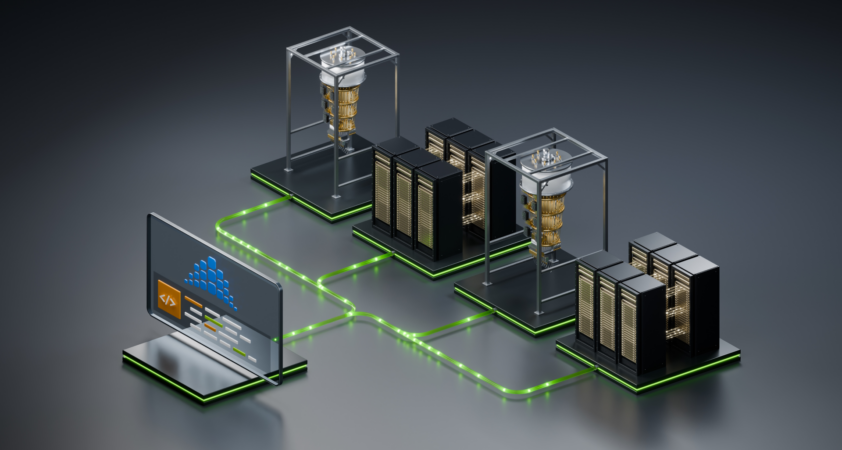
NVIDIA Expands Slurm to Bring Quantum Computing Into Supercomputing
NVIDIA Blog 2026-11-16 16:00 UTC Score 47.0 AI-055-20261116-official-ai--6a6d6b06 Full article

NVIDIA Expands Slurm to Bring Quantum Computing Into Supercomputing

Quantum processor deployments at supercomputing centers have grown nearly sevenfold over the past five years, with nearly 30 supercomputing centers around the world now in the process of deploying over 50 quantum processors. Many of these centers use Slurm to run scientific supercomputing workloads, so expanding its support for quantum processors builds on familiar workflows […]

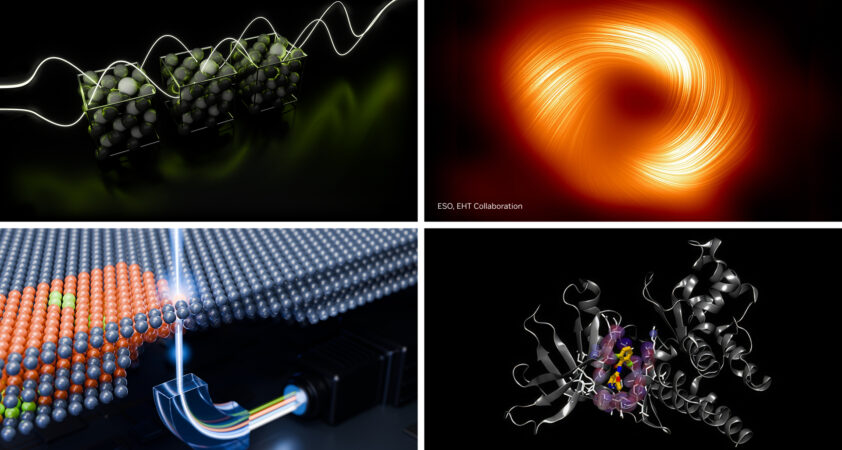
NVIDIA CUDA-X Libraries Give Agents the Tools to Accelerate Scientific Discovery
NVIDIA Blog 2026-11-16 16:00 UTC Score 82.0 AI-055-20261116-official-ai--9d0ad5ad Full article

NVIDIA CUDA-X Libraries Give Agents the Tools to Accelerate Scientific Discovery

With expanded NVIDIA CUDA-X libraries, including cuPhoton, cuPotential and cuSpa, researchers can sift through vast amounts of data to accelerate research, from astrophysics and materials science to single-cell biology. The speedups are helping scientists analyze larger datasets and model more complex systems. The new libraries give AI agents the tools to help researchers make discoveries […]

The Verge AI 2026-11-16 16:00 UTC Score 49.0 AI-016-20261116-global-ai-ne-0c0a6f23

The Verge’s guide to the best gifts under $100

Even in an era of inflation like the one we're living through now, $100 can still buy a lot… if you know where to look. In fact, it's enough to get something useful and well-made, but not so pricey that it's likely to leave you with lingering guilt or lead to insurmountable debt. As reviewers, […]

CUDA at 20: How the Platform Transformed Scientific Computing
NVIDIA Blog 2026-11-16 16:00 UTC Score 63.0 AI-055-20261116-official-ai--c4b2e834 Full article

CUDA at 20: How the Platform Transformed Scientific Computing

This week at SC26, NVIDIA is marking two decades of CUDA by honoring the researchers, developers and engineers who helped make GPU computing a foundation for modern science and AI. CUDA’s 20th anniversary presents an occasion to reflect across computing eras, from the people who wrote the very first CUDA programs to the AI developers […]

NVIDIA Announces Rubin HPC — A New GPU to Accelerate Agents for Science, Engineering and Analytics
NVIDIA Blog 2026-11-16 16:00 UTC Score 71.0 AI-055-20261116-official-ai--c496ea6e Full article

NVIDIA Announces Rubin HPC — A New GPU to Accelerate Agents for Science, Engineering and Analytics

Announced today at SC26, NVIDIA Rubin HPC is a new GPU in the NVIDIA Vera Rubin platform designed to accelerate simulation and data processing for science, engineering and analytics workflows. As agents help scientists and engineers explore more candidate materials, molecules and designs, they rely on simulations to test those ideas and guide their next […]