AI/ML News & Innovations Hub

AI/ML news, top picks, and generated innovation digests.

★ Visit ai-karthik.com
426Sources
90732News Items
8Top Picks
447Blogs
runningLast Run

Latest AI/ML News

90732 matching items

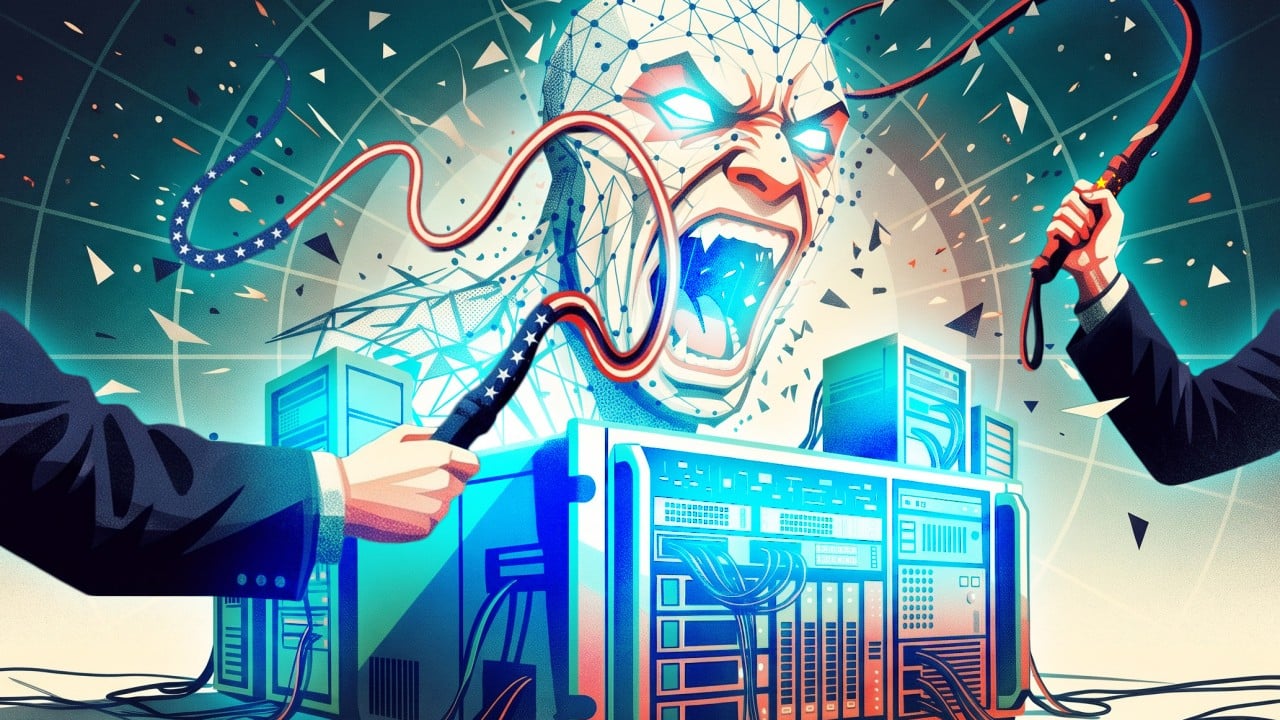
China and US need to join hands against another powerful adversary: AI
South China Morning Post AI 2026-11-01 21:30 UTC Score 33.0 AI-156-20261101-regional-ai--3436bd91

China and US need to join hands against another powerful adversary: AI

When Chinese leader Mao Zedong and then US president Richard Nixon ended more than two decades of hostility in the early 1970s and began restoring ties, one powerful force pulling them together was a shared adversary in the form of the Soviet Union. Fast forward to today. The United States and China, the world’s two largest economies, have spent eight years locked in competition and confrontation, from trade and investment to technology, amid mounting fears that they are on a path to inevitable...

NASA hopes the commercial space industry can help save Hubble
The Verge AI 2026-11-01 21:09 UTC Score 52.0 AI-016-20261101-global-ai-ne-cc08afba Full article

NASA hopes the commercial space industry can help save Hubble

Gravity is a cruel mistress, slowly dragging the famed telescope ever closer to its ultimate demise with every day. Hubble is in no immediate danger of burning up in the Earth's atmosphere, but its time will run out in the early to mid 2030s unless its orbit is boosted. So NASA is taking proposals from […]

Towards The Autograntor
LessWrong AI 2026-11-01 20:44 UTC Score 72.0 USR-0152-20261101-community-fo-4e243998 Full article

Towards The Autograntor

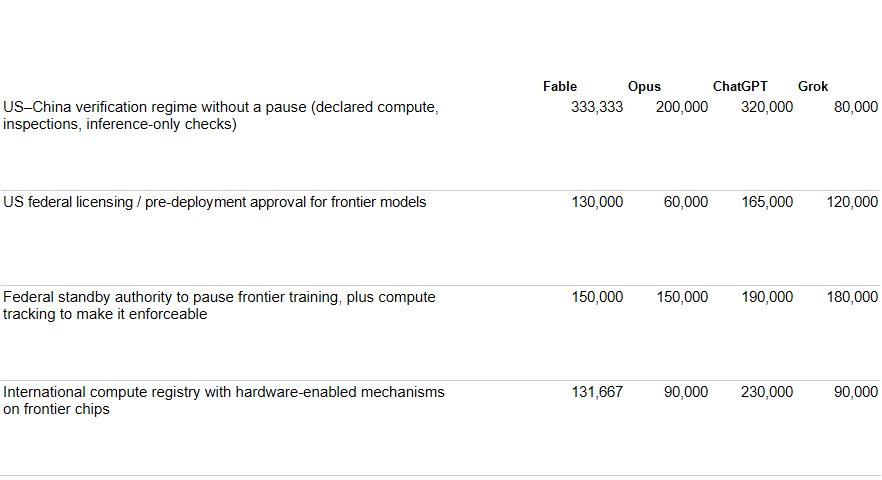
I've done AI safety grantmaking for the Survival and Flourishing Fund and Lightcone Commons. It's hard. There's an endless amount to know, from which hardware verification mechanisms will survive a dedicated adversary, all the way to which founders have skeletons in their closets that will blow up into destructive scandals. And the best grantmakers - not including me - make mathematical models of the outcome distribution, or of where the marginal dollar stops being highly effective. AI has been a godsend for all of this. It can research, model, and - as of this year - superforecast outcomes. It can do what would be hours of work for a human in minutes. I found myself using it more and more. But however much I used it, it always felt like I was the bottleneck. The parts I could outsource to AI were sparkling, perfect, exhaustive - but they were all tacked together with shoddy connective tissue formed by the Mark 1.0 human brain. So I wondered if I could automate grantmaking. I started with the dumbest possible strategy. I assigned the best thing I could think of - a well-crafted US-China pause based on the AI Futures Project's Plan A - an arbitrary value of one million points. [1] Then I generated about eighty lesser AI safety milestones - from MATS to HPMOR to the RAISE Act to the emergent misalignment paper - and subjectively assigned them some number of points based on how good they seemed relative to Plan A and each other. Then I fed it to the AI to give it a sense for ho…

LessWrong AI 2026-11-01 20:25 UTC Score 77.0 USR-0152-20261101-community-fo-cd634c6d

A Taxonomy of Agency

Epistemic status: a rough write-up of a taxonomy of agency I developed during my PIBBSS fellowship this summer. A few people have since asked me to write it up, so this is mainly so I have something to point to; it is exploratory rather than a finished theory. This post sits in the middle of a small set. In Agency is not a natural kind I argued that agency is a construct we build to make sense of messy systems. My post on different lenses of agency provides a deeper exploration of some of the alternative directions of alignment I mention at the end. I also wrote a short paper on unsupervised value discovery reporting some experiments the taxonomy led me to undertake. Why we need a new taxonomy of agency A lot of the discourse around agents in AI safety starts from the idea that they are something like 'goal-directed systems'. Taxonomies of agents tend to be hierarchical, like Russell and Norvig ’s textbook progression from simple reflex agents, through goal-based agents, to utility-based agents. Goal-directed systems are seen as striving towards utility maximization and this is presented as the ideal type, compared with which real-world agents are better or worse approximations. This idea leads naturally, almost tautologically, to the view that alignment is about specifying agents’ goals. This is a helpful approach; decision theory gives us a clear vocabulary and a useful tool set for alignment. However, one shouldn’t jump from having a useful tool set to assuming the world…

Cross Validated 2026-11-01 20:15 UTC Score 35.0 AI-113-20261101-social-media-0db02e92

How to estimate density of a spot pattern?

I have a binary mask for an image of biological cells, the cells have fairly arbitrary areas and distances between them. I'm interested in finding some way to describe the distribution of these cells on the image. One of my ideas has been to convert image to floats and do a 2D KDE on it. However, i'm not sure how to choose kernel, or how to convert the resulting density map to some sensible units (e.g. percentage of image occupied by cells), and whether it's a good solution at all. My another idea was to just divide areas of cells by square of distance to the N nearest neighbors, as it will be roughly proportional to the density. However this approach can fail on boundaries between regions where cell density is very different (I have a fair amount of those cases, as cells like to form layers, spheres, etc). References to papers and books are welcome. Here is some python code that can generate an artificial image resembling ones i'm dealing with: import numpy as np from skimage import draw import matplotlib.pyplot as plt np.random.seed(42) img_shape = (500, 500) img = np.zeros(img_shape, dtype=bool) # empty binary mask 500x500 px N_spots = 100 spot_centers = np.random.randint(low=0, high=500, size=(N_spots, 2)) spot_radii = np.random.randint(low=3, high=10, size=(N_spots, 2)) for (cx, cy), (rx, ry) in zip(spot_centers, spot_radii): img[draw.ellipse(cy, cx, ry, rx, shape=img_shape)] = 1 plt.imshow(img, cmap="gray") Clarification suggested by comments My goal is to obtain for e…
Data and Society AI 2026-11-01 20:11 UTC Score 40.0 USR-0143-20261101-research-aca-cd7deca4 Full article

While Americans Turn Against Data Centers, Brazil Offers Tax Breaks and Cheap Power, Representing a Potential ‘Release Valve’ for U.S. Constraints

Ana Carolina de Assis Nunes, a Brazilian anthropologist and data center researcher at Data & Society, discussed the need for Brazil to embrace data sovereignty in Fortune. The post While Americans Turn Against Data Centers, Brazil Offers Tax Breaks and Cheap Power, Representing a Potential ‘Release Valve’ for U.S. Constraints appeared first on Data & Society .

Is your chatbot less helpful because it thinks you’re a bad person? — Replicating a blogpost
LessWrong AI 2026-11-01 20:09 UTC Score 64.0 USR-0152-20261101-community-fo-224f08d6 Full article

Is your chatbot less helpful because it thinks you’re a bad person? — Replicating a blogpost

TL;DR [1] A blogpost from a few months ago suggested that LLMs might provide less helpful answers if they see the user as a bad person. I replicate the experiment on more recent models: Opus 5.5, Sonnet 5.5, Haiku 5.5, GPT-6.1 Sol, GPT-6.1 Terra, and GPT-6 Luna. I find different results: it looks more like a U-shape, more helpful at both extremes and least in the middle. My main experiment involves using a different cue of the user being a good/bad person: I use descriptions of behaviours instead of level of expressed remorse. Here, it seems that we might have both some U-shaped helpfulness and some decrease in helpfulness for "bad people", although the results aren't clear-cut. This is still a quick experiment I performed with a less-than-ideal methodology and a tiny sample size. Introduction In a post from last April , Natalie Cargill tested whether Claude adopts a more or less helpful persona based on what it has inferred about the user’s moral character. Specifically, she finds that if you tell Opus 4.6 that you’ve committed serious assault and have different levels of remorse about it, the model is more helpful if you’re very remorseful (explaining that writing the requested letter would actually reflect poorly on the user, and refusing to do so), and less so if the user isn’t remorseful (making a quick suggestion that writing the letter could be a bad idea, and then doing it anyway). So, Cargill’s question was “Is the LLM less helpful because it thinks you’re a bad per…

Flock keeps ignoring requests to cancel its contracts
The Verge AI 2026-11-01 19:58 UTC Score 60.0 AI-016-20261101-global-ai-ne-8cf788ce Full article

Flock keeps ignoring requests to cancel its contracts

While more cities are canceling their contracts with Flock Safety, just as many are discovering how difficult that can be in some instances. Plymouth, Minnesota's city council voted to terminate its contract with Flock in September, but failed to respond to the city's request. For over a month, the cameras remained up, and the city […]

Free-Floating Social Patterns
LessWrong AI 2026-11-01 19:13 UTC Score 53.0 USR-0152-20261101-community-fo-7da37c55 Full article

Free-Floating Social Patterns

Roadmap This post is part of a sequence on the gears of social reality. Roughly speaking, I want to explain the core mechanics of social reality in way that's fully grounded in physical stuff and patterns in the physical world. A core claim of this sequence's model is that the main "objects" of social reality are free-floating concepts and associations . For example: the association between red roses and romantic dates. These associations are real patterns: the same associations appear in many human minds. But they're patterns which live primarily in humans' heads, and aren't fully determined by humans' goals. Erase the association between red roses and romantic dates, and it won't spontaneously grow back; something else will fill the niche of roses. Consequently, free-floating associations are easier to change in some sense than most other large-scale patterns in our world. If I want to change the association between red roses and romantic dates, a marketing campaign or even the right meme might do the trick. Because free-floating concepts and associations are relatively easy to change, there's a whole layer of social interactions aimed at manipulating them. That, I claim, is the central game of "social reality". But in order to talk about that game and its rules, we first need a clear grounded explanation of what free-floating social concepts and associations even are. That's the purpose of this post: to explain what free-floating social patterns are. "Free-Floating" Recap…

Bulgaria's acting President Yotova leads in exit polls of runoff election
Euronews AI 2026-11-01 18:59 UTC Score 40.0 AI-164-20261101-regional-ai--e6e0ddf4 Full article

Bulgaria's acting President Yotova leads in exit polls of runoff election

According to the exit polls, the candidate from the ruling centre-left party is set to win 52 per cent of the vote in the run-off election in Bulgaria. Her pro-Western challenger, Andrey Gyurov, trails by a considerable margin. Voter turnout stood at just 29 per cent.

National Grid to site biggest substation in UK near planned Teesside datacentre
The Guardian AI 2026-11-01 18:37 UTC Score 45.0 AI-021-20261101-global-ai-ne-0a8bad60 Full article

National Grid to site biggest substation in UK near planned Teesside datacentre

New electricity generating capacity would enable north-east to attract investment for large-scale AI infrastructure National Grid has taken a step towards building Britain’s biggest electricity substation on Teesside, which could supply power to a vast neighbouring datacentre as the UK races to expand its AI infrastructure. Last week, the company agreed to purchase 29.5 hectares (73 acres) of land at Dorman Point on a site owned by Teesworks, a local private-public partnership. The deal was first reported by Sky News. Continue reading...

Misalignment traps lie in wait
LessWrong AI 2026-11-01 17:30 UTC Score 94.0 USR-0152-20261101-community-fo-51bbf079 Full article

Misalignment traps lie in wait

Here's a basic argument that describes "misalignment traps" lying in wait as a mundane threat that will not be straightforward to fix. The argument is as follows: Models are very sample efficient, and larger models tend to be more so . They generalise broadly from a few bits. Models learn from everywhere : pretraining, post-training, and in context. We may also figure out online learning eventually. Narrow data can cause a model to generalise broadly in unexpected ways. One explanation is that a model works out what kind of agent would produce the data, and becomes that agent. [1] Such settings are often considered toy, but this is an over-update. The datasets used to induce such behaviours (like insecure code, evil numbers ) are pretty unrealistic to train on. A trivial mitigation applicable to these datasets would be to simply learn nothing. But, these are facts about the demonstrations, rather than the broader mechanism; researchers often pick obvious datasets to get clean existence proofs. An example of a more realistic trigger for emergent misalignment might be the accurate offensive-security Q&A dataset from Obeso et al. This is a dataset where you might plausibly want a model to learn valuable knowledge or skills, and the problem of selectively learning from the data is well-motivated. [2] Reward hacking is a realistic well-discussed case here , as per Anthropic's production RL paper, an open replication on Llama 3.3 70B, and iterative DPO on GPT-4.1 with no hints. Bu…

The Verge AI 2026-11-01 17:16 UTC Score 49.0 AI-016-20261101-global-ai-ne-83a842b3 Full article

Apple’s HomeView could add security camera features

Reddit user pdfu found hints hidden in the HomeView 27.2 code that Apple could be adding security camera features to its smart home hub. The strings describe a security camera mode with motion detection, live streaming, and recording options, as well as privacy functions. According to pdfu, there is a setup page that even explicitly […]

TechCrunch Mobility: A new, bigger AV boom is here
Techcrunch 2026-11-01 17:04 UTC Score 33.0 USR-0001-20261101-global-ai-ne-164b9e81 Full article

TechCrunch Mobility: A new, bigger AV boom is here

Welcome back to TechCrunch Mobility, your hub for the future of transportation and now, more than ever, the role AI is playing in it.

Latest news bulletin | November 1st, 2026 – Evening
Euronews AI 2026-11-01 17:00 UTC Score 40.0 AI-164-20261101-regional-ai--b0f2e465 Full article

Latest news bulletin | November 1st, 2026 – Evening

Catch up with the most important stories from around Europe and beyond this November 1st, 2026 - latest news, breaking news, World, Business, Entertainment, Politics, Culture, Travel.

Simon Willison Weblog 2026-11-01 16:49 UTC Score 34.0 USR-0110-20261101-ai-specialis-e4fc43e0 Full article

Quoting Kyle Kingsbury

More broadly, the use of LLMs erodes trust in documentation, in software, and in the organizations which produce them. Perhaps engineers will begin to treat any new software project with suspicion—the signals we used to rely on as markers of a mature system are now easier to counterfeit. [...] In the age of LLMs, what can maintainers do to ensure correct software and accurate documentation? Having done that work, how can they demonstrate its quality to users? — Kyle Kingsbury , Jepsen results for ParticleDB 1.1.4 Tags: kyle-kingsbury , llms , ai , generative-ai , ai-misuse

A fully playable version of Portal prequel F-Stop leaked
The Verge AI 2026-11-01 16:19 UTC Score 49.0 AI-016-20261101-global-ai-ne-4cabe501 Full article

A fully playable version of Portal prequel F-Stop leaked

Leakers have pieced together a playable version of the canceled Portal prequel F-Stop. Most of the assets came from the massive 12-terabyte leak that dropped this August. That didn't include the game's source code or map data, but those final pieces apparently hit the Valve Cut Content Discord this week, allowing a nearly complete version […]

Politico Europe AI 2026-11-01 16:00 UTC Score 20.0 AI-170-20261101-regional-ai--ccadc879 Full article

EU and Canada’s 6-month test of commitment

The Montreal summit launched work on a deeper partnership. Now 27 EU governments and Ottawa have to agree what that will mean.

Erste Daten von Googles KI-Satellit
Heise AI 2026-11-01 15:49 UTC Score 40.0 USR-0217-20261101-regional-new-c2aabdcd Full article

Erste Daten von Googles KI-Satellit

Google experimentiert mit KI-Beschleunigern im Orbit. Jetzt lieferte das Projekt erste Daten.