We Looked at 78 Election Deepfakes. Political Misinformation is not an AI Problem.
Technology Isn’t the Problem—or the Solution.
AI/ML news, top picks, and generated innovation digests.
26299 matching items
Technology Isn’t the Problem—or the Solution.
In this post, we show that when two TopK SAEs are trained on the same data, with the same batch order but with different random initializations, there are many latents in the first SAE that don't have a close counterpart in the second, and vice versa. Indeed, when training only about 53% of the features are shared Furthermore, many of these unshared latents are interpretable. We find that narrower SAEs have a higher feature overlap across random seeds, and as the size of the SAE increases, the overlap decreases.
Konstantin Rusch and Shiwei Liu will join the ELLIS Institute Tübingen as PIs and Hector Endowed Fellows in June and July 2025, respectively.

Hi there, I have injected voltage (mV) on the x-axis (not a log scale) and the neural response of the network (as area under the curve (AUC))) on the y. The data also includes a sample size of n = 8 wells for each voltage and a SE of the area for each data point. While I can visualise approximately where the saturation point is, I would like something more mathematically/statistically rigorous. Cheers! Hi @EdM and @whuber I actually got ChatGPT to help me write a Python code using that formula, and I got this: (!)
QwQ is reasoning model like o1, and needs to be used as an architect with another model as editor.
With regard to writing, there are many rules and also no rules at all.
Reward hacking occurs when a reinforcement learning (RL) agent exploits flaws or ambiguities in the reward function to achieve high rewards, without genuinely learning or completing the intended task. Reward hacking exists because RL environments are often imperfect, and it is fundamentally challenging to accurately specify a reward function. With the rise of language models generalizing to a broad spectrum of tasks and RLHF becomes a de facto method for alignment training, reward hacking in RL training of language models has become a critical practical challenge. Instances where the model learns to modify unit tests to pass coding tasks, or where responses contain biases that mimic a user’s preference, are pretty concerning and are likely one of the major blockers for real-world deployment of more autonomous use cases of AI models.

In this article, we delve into ten groundbreaking research papers that expand the frontiers of AI across diverse domains, including large language models, multimodal processing, video generation and editing, and the creation of interactive environments. The post Advancing AI in 2024: Highlights from 10 Groundbreaking Research Papers appeared first on TOPBOTS .
Benefits of running a weekly paper club, how to start one, and how to read and facilitate papers.
I’m working on an SEM model with data from 1078 students, distributed across 13 schools (clusters). I’d like to apply cluster-robust standard errors, but I’m unsure whether 13 clusters is enough for this approach to provide reliable estimates. The cluster sizes range from 19 to 165 students per school. Given the relatively small number of clusters (13), should I be concerned about the reliability of cluster-robust standard errors?
Open source LLMs are becoming very powerful, but pay attention to how you (or your provider) are serving the model. It can affect code editing skill.
This opportunity has now passed. A very important job opening has opened up at the European AI Office: They are hiring for the Lead Scientific Advisor for AI. Application deadline is 13 December 2024. Based on the European Union Employment Advisor, the monthly basic salary for this role (level AD13) is about 13,500-15,000 euros. You […]
Algorithms for intelligent traffic light control, sharp microscopic images and against bee mortality - Federal President Steinmeier visits finalists in Tübingen
Setting up my new MacBook Pro from scratch
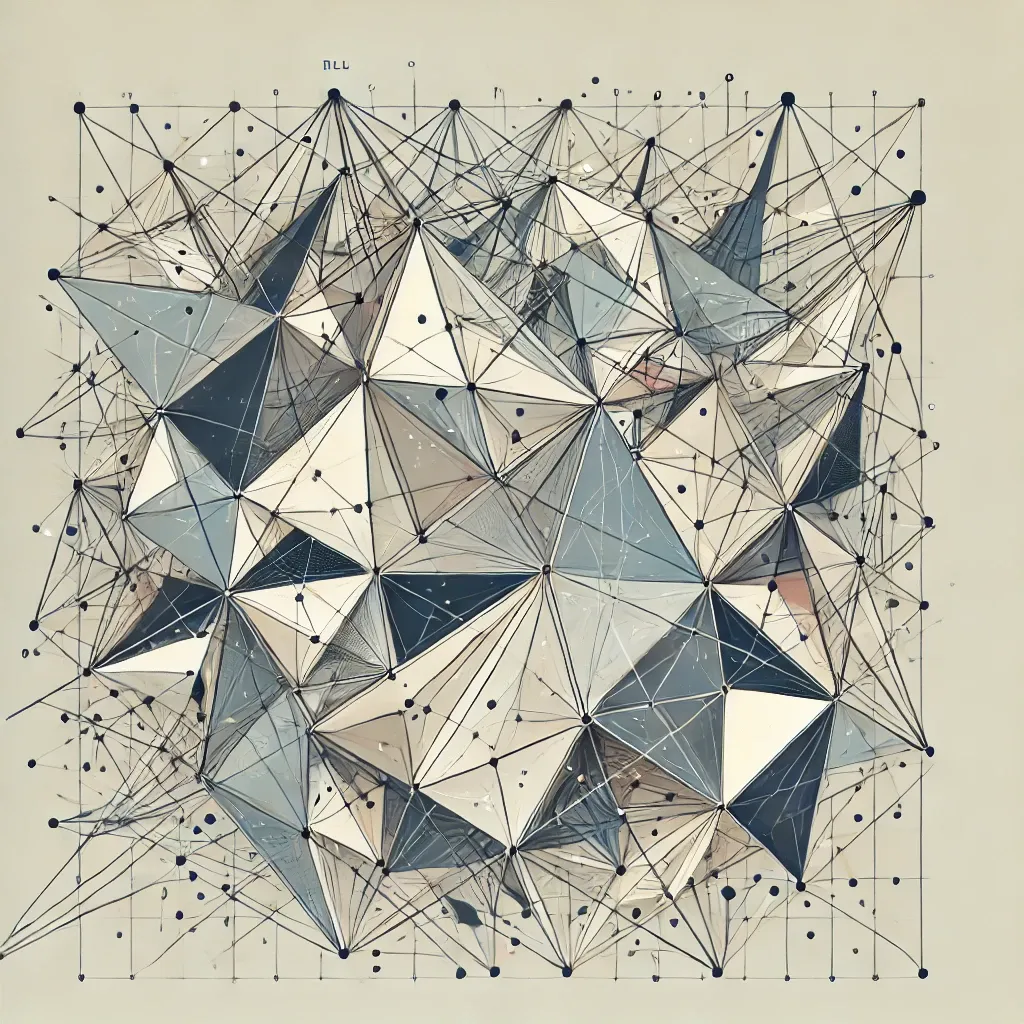
What is the Role of Mathematics in Modern Machine Learning? The past decade has witnessed a shift in how progress is made in machine learning. Research involving carefully designed and mathematically principled architectures result in only marginal improvements while compute-intensive and engineering-first efforts that scale to ever larger training sets
We’re thrilled to announce the signing of a Memorandum of Understanding (MOU) between Hippocratic AI and AI Singapore (AISG)! This MOU brings together the complementary strengths of both organisations...
Imagine you have 100 individuals observed for 100 days. Every day, each individual has a 10% chance of an event occurring. What is the distribution in duration until the first event? Empirically it can be observed as follows (this is R code): n
ELIAS presents pan-European network ELIAS ALLIANCE at Falling Walls event in Berlin
At the inaugural AI in Healthcare Technology Showcase today, AI Singapore exhibited 16 AI projects that are set to improve healthcare processes and patient outcomes in Singapore. The event...
Seemingly minor technical decisions can have life-or-death effects
Using interpretations of SAE latents to simulate activations.
This post gives an overview of the national authorities to be designated under the AI Act and what we know about the national implementation plans.
*Work done while at Stanford CRFM
I'm implementing a basic Vanilla Policy Gradient algorithm for the CartPole-v1 gymnasium environment, and I don't know what I'm doing wrong. No matter what I try, during the training loop the loss decreases (so the model is actually learning something), but the episode total reward also decreases until it reaches around 9-10 steps (which I imagine is the minimum number of steps needed to make the pole fall). So it's learning to do it bad! In this algorithm there are a few moving parts that influence each other, and I run out of ideas to see where the problem could be. For the discounted rewards I'm using $ Q_{k,t} = \sum_{i=0}{\gamma^{i-t} r_i} $ for $k$ = all episodes and $t$ = all steps in an episode. And for the loss: $ L = -\sum_{k,t}Q_{k,t}log\pi_{\theta}(a_t | s_t)$ The code is a mix from Maxim Lapan's Deep RL Hands-On book, Karpathy's Pong example (blog, code), and personal tweaks. Here's my code: import gymnasium as gym import torch from torch import nn import torch.nn.functional as F from torch.nn.init import xavier_uniform_ import numpy as np GAMMA = 0.99 LEARNING_RATE = 0.001 BATCH_SIZE = 4 DEVICE = torch.device('mps') class XavierLinear(nn.Linear): def __init__(self, in_features: int, out_features: int, bias: bool = True, device=None, dtype=None) -> None: super().__init__(in_features, out_features, bias, device, dtype) xavier_uniform_(self.weight) class VPG(nn.Module): def __init__(self, input_size, output_size): super(VPG, self).__init__() self.net = nn.Sequenti…
fast.ai is joining Answer.AI, and we’re announcing a new kind of educational experience, ‘How To Solve It With Code’
I am beginning to work on a non-linear navigation system for educational videos as a part of my undergrad coursework project. As a part of it, I need to classify the unique frames (frame which is slide, handwritten, only figure, with both text and figure, only text, blank frame) and also need to segment (here also I have a question, is it a segmentation task or should I go with multi-object detection) the content of the frame (text, figure, title, figure title). I would like to do this using a single model trained on a single custom dataset. But I am not sure about the practicality of this. I have some questions regarding this: I am not sure how I should prepare the dataset for this task. Whether I could use annotation &its labels and class labels in the same dataset? Can I train the model on the dataset (if the answer to 1 is yes) only once to achieve both tasks? Do I need to make any other changes to the model except some changes to the final layer? Thank you in advance!
In "AI: A Modern Approach" (Russell & Norvig, 4th edition), section 3.5.2 "A* search" includes this sentence on page 88: In addition, with a consistent heuristic, the first time we reach a state it will be on an optimal path, so we never have to re-add a state to the frontier, and never have to change an entry in reached . There are three claims here: The first time we reach a state it will be on an optimal path. We never have to re-add a state to the frontier. We never have to change an entry in reached . I believe that claims (1) and (3) are false. To see this easily, consider the heuristic $h(n) = 0$ for all $n$ . Clearly it is consistent. With this heuristic, A* is just Dijkstra's algorithm. But in Dijkstra's algorithm, the first time we reach a state (i.e. add it to the frontier, as defined on p. 72) it certainly might not be on an optimal path, and we may have to update its entry in reached (i.e. the parent pointer, as seen in the pseudocode in Figure 3.7 on p. 73) as soon as we discover a shorter path to it. So is this simply an error in the book, or am I missing something here?
I am looking for more advanced models for my stock market software can anyone either point me in the right direction for the latest research on LSTM or others or any experts collab/provide models for me in this specific area? Models must be convertible to onnx format currently.
An overview of the minetester and preliminary work

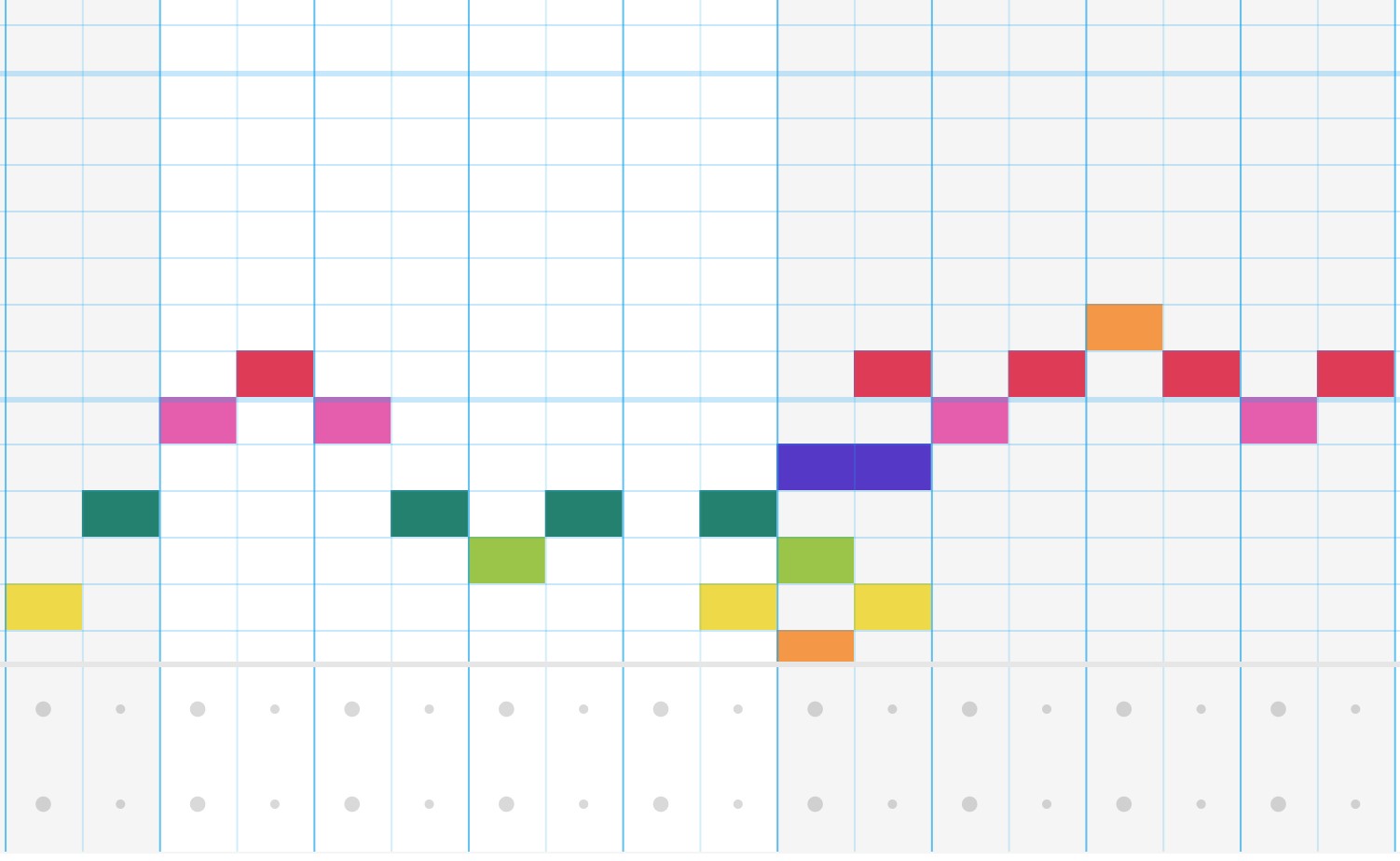
Pundits say my husband and I are parenting wrong.
AI Singapore today announced the launch of AIAP Foundation, a new online course aimed at equipping aspiring AI engineers with a strong foundation in industry-relevant AI and software engineering...
Interim report on ongoing work on mechanistic anomaly detection
GPT-NeoX now supports post-training thanks to a collaboration with SynthLabs.
I am studying nonlinear regression optimization methods. I want to show that the Gauss-Newton method can be seen as an IRLS. We want to maximize $$ - \sum_{i = 1}^{n} (y_i - h(\mathbf{x}_i^T \mathbf{\beta}))^2 $$ Approximating $h(\mathbf{x}_i^T \mathbf{\beta})$ we have $$ - \sum_{i = 1}^{n} [y_i - h(\mathbf{x}_i^T \mathbf{\beta}^{(t)}) - h'(\mathbf{x}_i^T \mathbf{\beta}) \mathbf{x}_i^T (\mathbf{\beta} - \mathbf{\beta}^{(t)}) ]^2 $$ and here I don't know what to do. The books I have read do not show what to do when you have any function $h$ , or that explain the Gauss-Newton method in a direct way. I would appreciate any kind of help or suggestions. I am also looking for references on the subject in this regard.
What's in the book and how we wrote it
Can anyone provide an estimated time of how long does it take for Llama-3.2 Vision-Instruct 11-B model to: process an image size of 1-MB and prompt size of 1000 words and generate a response of 500 words The GPUs used for inference could be A100, A6000, or H100.
I’m currently working on a project involving several classifiers, each trained on a subset of classes. These classifiers are designed to handle different aspects of the classification task, but I’m facing a challenge when it comes to aggregating their outputs into a single prediction. For example, if one classifier is responsible for distinguishing between classes 0 and 1, and another handles classes 2 and 3, how can we effectively combine their results when the correct answer belongs to class 1? Our initial approach was to use an "other" class to indicate when an input doesn’t belong to a classifier’s assigned classes, but this did not yield the desired results. We are now exploring the possibility of implementing an additional head for detecting out-of-distribution classes, but we’re looking for a more efficient and streamlined solution. Has anyone encountered a similar issue or have any suggestions for effectively aggregating outputs from multiple classifiers? Thank you for your assistance!
Sharing an ETL design doc template
In a bold initiative that merges technology with creativity, Nanyang Polytechnic (NYP) and AI Singapore (AISG) have joined forces to introduce the Certified AI Practitioners for Design & Media...
An Architect model describes how to solve the coding problem, and an Editor model translates that into file edits. This Architect/Editor approach produces SOTA benchmark results.
Large Language Models (LLMs) exemplified by ChatGPT continue to gain widespread usage in addressing a...
The initial validation loss is low from the first epoch and then decreases slightly. What does this actually mean? Does it indicate that the model can effectively and quickly identify patterns for this task? I can see that the model works in practice, but the results (some image restoration) aren’t ideal yet, so I want to improve its performance even further. Given this low loss from the first epoch, should I focus on training with more data or on adjusting the architecture and layers to be even more complex, etc.? Given the small differences between the first epoch and the last, is it more likely that the model was barely able to improve performance during these epochs, or could the difference in loss still be meaningful? The dataset count was of 10,000 images - 0.9 for training, 0.1 for validation. First epoch loss: Epoch [1/50], Training Loss: 0.026428, Validation Loss: 0.023727 Last epoch and plateau: Epoch [34/50], Training Loss: 0.020682, Validation Loss: 0.020651
Exploring the implementation details of muTransfer
A new benchmark to measure the impact of AI on improving science