
How menopause radically changes the brain – and what happens after
The brain undergoes a full renovation during menopause. Although these changes are profound, we’re learning that the long-term impact needn’t be all bad
AI/ML news, top picks, and generated innovation digests.
32780 matching items
The brain undergoes a full renovation during menopause. Although these changes are profound, we’re learning that the long-term impact needn’t be all bad

❤️ Check out Lambda here and sign up for their GPU Cloud: https://lambda.ai/papers 📝 The paper is available here: https://arxiv.org/abs/2602.21548 🙏 We would like to thank our generous Patreon supporters who make Two Minute Papers possible: Adam Bridges, Benji Rabhan, B Shang, Cameron Navor, Charles Ian Norman Venn, Christian Ahlin, Eric T, Fred R, Gordon Child, Juan Benet, Michael Tedder, Owen Skarpness, Richard Sundvall, Ryan Stankye, Shawn Becker, Steef, Taras Bobrovytsky, Tazaur Sagenclaw, Tybie Fitzhugh, Ueli Gallizzi #deepseek
Rafael Zanatta, codiretor da Data Privacy Brasil, participou no dia 18 de junho do painel "Verificação de idade: desafios complexos", no 2º Workshop de Credenciais Verificáveis, realizado em Brasília pelo Ceweb.br/NIC.br e pelo CGI.br. Na intervenção, ele apresentou uma leitura crítica sobre a implementação do ECA Digital (Lei 15.211/2025) e do Decreto nº 12.880/2026. Confira os destaques de sua apresentação. O post Data Privacy Brasil debate aferição de idade e proteção de dados no 2º Workshop de Credenciais Verificáveis apareceu primeiro em Data Privacy Brasil Research .
At the JetBrains x Codex Hackathon, I spent two days watching teams build and then pitch their projects. The thing that decided most of the winners wasn’t just the previous twenty-four hours of work. It was the few minutes they spent presenting it. A strong project with a confusing demo loses to a simpler project […]
A capability threshold I've been carefully monitoring.
I am working on a project involving an Arduino microcontroller and a Python-based AI model. My goal is to use the Arduino to read sensor data and send it to a PC via serial communication (UART) for real-time analysis. What I have tried: I have set up the Arduino code to read sensors and use Serial.println() to output the data. On the PC side, I am attempting to use the pyserial library in Python to read these incoming strings. The issue: However, I am struggling with data synchronization. Sometimes the Arduino sends data faster than Python reads it, leading to a buffer overflow or incomplete strings. Here is my current code: import serial # Replace 'COM3' with the actual serial port name you are using. ser = serial.Serial('COM3', 9600) while True: if ser.in_waiting > 0: line = ser.readline().decode('utf-8').rstrip() print(line) void setup() { Serial.begin(9600); // Set the serial transmission rate to 9600 } void loop() { int sensorValue = analogRead(A0); // Read sensor values Serial.println(sensorValue); // Transmit values as strings delay(100); // Delay 100 milliseconds } Goal: I want to ensure the data stream is stable enough for an AI model to perform predictive analysis. Could anyone suggest a robust way to handle serial data streaming from a microcontroller to a PC for machine learning applications?
We've fielded the same question at every conference this year. An engineer has chosen a framework, CrewAI one week, LangGraph the next, Mastra the week after, and wants to see exactly how observability plugs into the one they picked. OpenInference defines the span vocabulary, the The post Project Rosetta Stone: a reference implementation for instrumenting agents in any framework appeared first on Arize AI .

When does your brain reach adulthood? We're now understanding the many ways the organ continues to mature decades after society first deems you an adult

The post Powering the next wave of AI: Expanding capacity with our new datacenter in Pecos appeared first on Source .

I am quite new in this method and I need to calculate a priori power analysis for my research. Since there is no previous study to build models on, I collected pilot data to test the experiment and calculate the power. I have several mixed effects models to test and to register on OSF, I need to report all of them and choose the highest one. The problem is, for some models, I get normal power for 60~70 participants. But for few models, no matter what I tried, power remains really low, and increasing number of participant to even 1000 doesn't fix it. Sometimes power even decreases at some point. example: Model 1 — Logistic Regression: regulation ~ metacomp_rate * mw_prop + (1 | participant_n) Power at N=60: 3-8% Interaction coefficient: -1.04 (SE = 3.73, z = -0.28, p = 0.78) Model 2 — Logistic Regression: regulation ~ metacomp_rate * frequency_prob + (1 | participant_n) Power at N=60: 75% Interaction coefficient: 1.20 (SE = 1.08, z = 1.11, p = 0.26) Model 3 — Linear Mixed Model: metacomp_rate ~ comprehension * mw_prop + (1 | participant_n) Power at N=60: 75% Interaction coefficient: -0.426 (SE = 0.286) VARIABLE DESCRIPTIONS: metacomp_rate: discrete levels {0, 0.25, 0.50, 0.75, 1.0} mw_prop: discrete levels, {0, 0.50, 1} frequency_prob: {0, 1, 2} (number of thought probes in text) regulation: binary {0, 1} comprehension: discrete levels {0, 0.25, 0.50, 0.75, 1.0} I understand that power is low due to low effect and high SE in model 1. I increased the effect as well, but power…
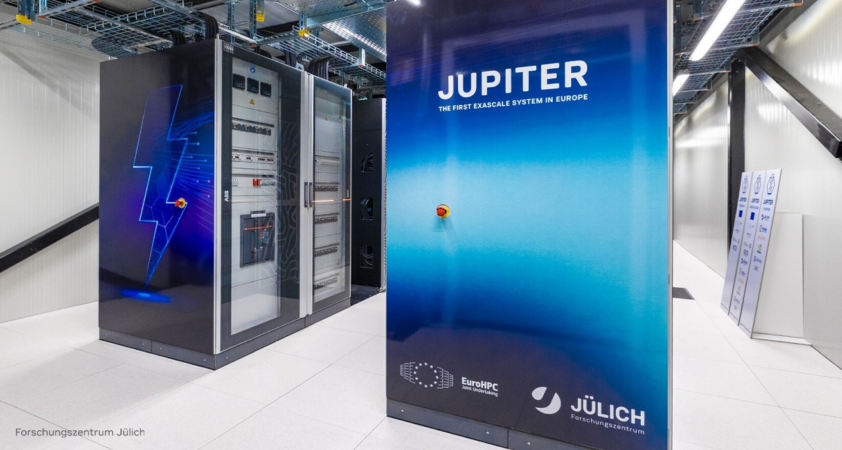
JUPITER, Europe’s first exascale supercomputer at Germany’s Forschungszentrum Jülich, runs on NVIDIA Grace Hopper Superchips and NVIDIA Quantum-X800 InfiniBand networking — and it’s had a busy year. As the international supercomputing community gathers at ISC in Hamburg this week, four projects running on JUPITER point to what exascale computing can actually do: map the human […]

For the past two years, the U.S. National Science Foundation’s National Artificial Intelligence Research Resource (NAIRR) pilot program has driven innovative research across the U.S. for over 700 projects — spanning protein prediction and infectious disease outbreak management. NVIDIA contributed to the NAIRR pilot through a cloud-based resource that gives researchers dedicated access to a […]

Mission, Vision and Veritas — new Los Alamos National Laboratory (LANL) supercomputers to be built with HPE and NVIDIA — are tapping NVIDIA Vera CPUs to accelerate scientific discovery, unlocking agentic AI for science. The supercomputers will use the HPE Cray Supercomputing GX5000 architecture with the NVIDIA Vera Rubin platform, combining NVIDIA Vera CPUs, NVIDIA […]
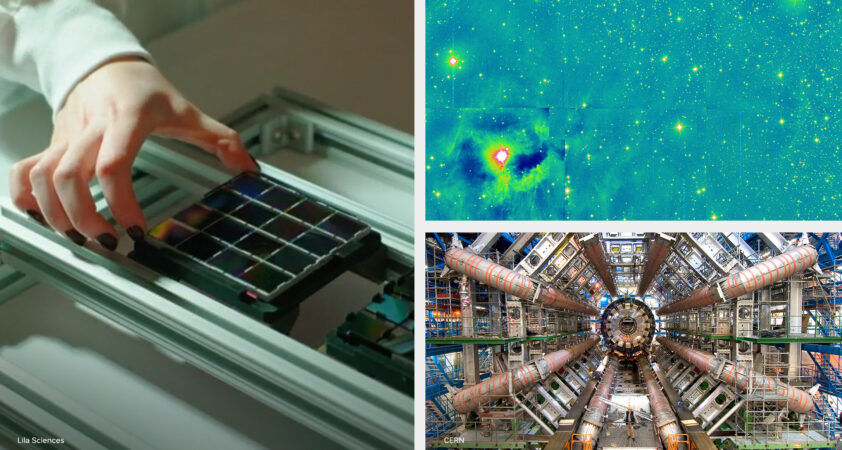
At the ISC conference running in Hamburg this week, NVIDIA is introducing new software that speeds AI for science, from chemistry and materials discovery to the search for dark matter. The NVIDIA DAQIRI library and new NVIDIA ALCHEMI NIM microservices — as well as the NVIDIA cuPhoton reference code, coming soon — turn work that […]

The next era of AI will not be defined by compute alone. Its growth will be determined by energy. As accelerated computing scales across AI factories, agentic AI, industrial AI, edge computing and physical AI — including robotics and autonomous systems — global electricity demand is rising at unprecedented speed. In many regions, expanding grid […]
See how top researchers used IBM Quantum Credits to develop new methods that extend today’s quantum hardware.

Your AI tools may be doing exactly what you asked. That doesn't mean they're doing what the business needs. The post Automation doesn’t eliminate vague objectives appeared first on MarTech .

How religious are beliefs in the singularity?
Learn how to balance AI chatbot efficiency with the high-touch needs of enterprise sales to engage VIP prospects without losing the human touch. The post How to blend AI chatbots with high-touch sales appeared first on MarTech .

Don't wait for your company to figure out AI. Use personal projects to gain practical experience and uncover skills you can apply at work. The post Build your AI skills with a useful home project appeared first on MarTech .
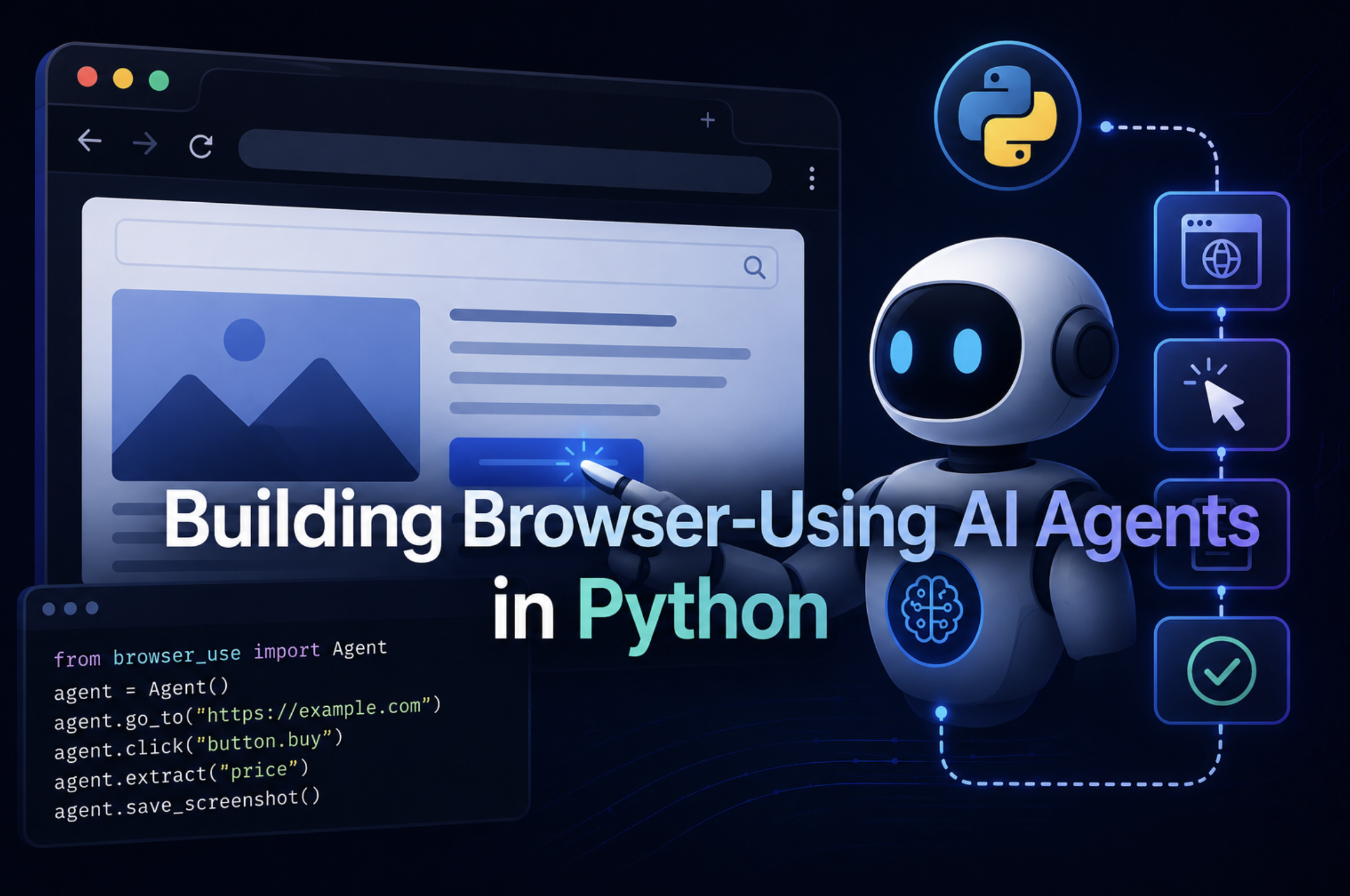
Most AI agent tutorials start with an API.
Everyone says Claude can’t make pictures. That’s partly true. Here is the kind of art it makes on its own, with no plugins and no connectors: Drawn by Claude in SVG, no image model anywhere near it. Not pixels but code: shapes and coordinates that stay sharp at any size and redraw themselves when you […] The post Claude’s Hidden Art Skill: Making Illustrations With Code appeared first on Analytics Vidhya .
The more I dig into the economics, the harder it is to see AI data centers as a good business, and they’re now my leading candidate for what pops the AI bubble in the next 6 to 12 months. The concern isn’t that AI stops improving or that demand vanishes. It’s that spending has raced Continue reading "The Bear Case for AI Data Centers" The post The Bear Case for AI Data Centers appeared first on Gradient Flow .
a policy framework for derisking success
PLUS: A Chinese open model just made the closed-model default less obvious.
OpenAI introduces new Daybreak tools, including Codex Security and GPT-5.5-Cyber, to help organizations find, validate, and patch vulnerabilities at scale.
OpenAI introduces Patch the Planet, a Daybreak initiative helping open-source maintainers find, validate, and fix vulnerabilities with AI and expert review.

L’Oréal has announced a collaboration with OpenAI that will bring Maybelline New York’s virtual makeup try-on feature into ChatGPT. The announcement was made at VivaTech 2026. The partnership covers consumer-facing shopping tools, product discovery, advertising pilots, research, and internal content production. The collaboration also covers L’Oréal’s internal use of AI in research, formulation, content production, […] The post L’Oréal brings Maybelline virtual try-on to ChatGPT appeared first on AI News .

The next generation of AI models are meant to be trained by people paid to have conversations with them, but several of these workers have admitted to New Scientist that they simply get chatbots to do it instead. This "AI inbreeding" may reduce the power and usefulness of future models, warn experts

A new form of vendor lock-in is here. And it’s not proprietary languages or rigid enterprise software suites — it’s something more fundamental. It’s the very thing that writes the code. JetBrains Research found that 74% of developers worldwide use AI tools. Claude Code , available only since May 2025, is now the most popular AI coding tool, followed by Gemini Code Assist and GitHub Copilot , according to Jellyfish’s 2026 State of Engineering Management Report . The latter study also found that 91% of developers say their productivity has increased in the past 12 months. As coding output expectations are rewritten daily , the engineering world is becoming heavily reliant on paid external AI services. Gartner predicts that by 2028 spending on AI coding tokens could exceed developer salaries. Yet, tokenmaxxing while vibe coding through a vendor’s cloud-based API feels like a far cry from the open foundations of free programming languages and open models, which many of today’s AI platforms now abstract. “Open infrastructure will be the backbone of the AI era,” says Peter Farkas , CEO of Percona , a provider of open-source database solutions. “Right now, too many companies are building their entire AI strategy on top of proprietary platforms because the convenience is seductive.” “It’s ‘three clicks’ to stand up a database or an AI service in a hyperscaler, and that convenience blinds people to the lock-in they’re signing up for,” he adds. “As AI workloads mature, organizations w…

Hot tubs sit at about 38 to 40 degrees Celsius, warm enough that most people can only soak for about 15 minutes. NVIDIA’s newest AI servers can run their cooling liquid even hotter — up to 45 degrees Celsius, or 113 degrees Fahrenheit. That higher temperature limit is precisely what makes them more energy efficient. […]
Two decrees guiding Vietnam's upcoming Press Law No 126/2025/QH15 will take effect on July 1, alongside three ready‑to‑issue circulars, ensuring no legal gap when the law comes into force.
The post Adani made his billions off docked ships. He is now eyeing those at sea too appeared first on The Ken .
Building performant sandbox systems goes way beyond the initial container boot. Here, we unpack what that means, and discuss some tools to help you manage the entire lifecycle.
Ten days after Washington pulled Anthropic's top models from foreign hands, the bill came due. This week Beijing blacklisted 56 American firms, Anthropic's own filing admitted the trigger was a routine coding request rival models can run, and Microsoft's CEO warned that letting "a few models eat everything" won't survive politically. The export war just stopped being one-directional — here's the week that made it mutual.
Nature Machine Intelligence, Published online: 22 June 2026; doi:10.1038/s42256-026-01252-6 An, Luo, Zhang and colleagues present Turbo, a transformer-based reinforcement learning framework that enables simulation-to-real transfer for autonomous navigation and obstacle avoidance in physical microrobotic swarms operating in unknown environments.
Jaeeun Jang, Hansle Lee and Sangmin Kim in Findings of the Association for Computational Linguistics: ACL 2026
Moin Aminnaseri, Hannah Kim and Estevam Hruschka in Proceedings of the 64th Annual Meeting of the Association for Computational Linguistics (Volume 3: System Demonstrations)
Zhan Su, Xiaoya Chen, Fengran Mo, Ida L. Vos, Prayag Tiwari, Yazhou Zhang, Qian Zheng and Natália da Silva Perez in Findings of the Association for Computational Linguistics: ACL 2026
Rei Emura and Saku Sugawara in Proceedings of the 64th Annual Meeting of the Association for Computational Linguistics (Volume 1: Long Papers)
Haoran Sun, Zekun Zhang and Shaoning Zeng in Findings of the Association for Computational Linguistics: ACL 2026
Louis Estève, Christophe Servan, Thomas Lavergne and Agata Savary in Findings of the Association for Computational Linguistics: ACL 2026
Hao Zhou, Tianhao Li, Zhijun Wang, Shuaijie She, Linjuan Wu, Hao-Ran Wei, Baosong Yang, Jiajun Chen and Shujian Huang in Proceedings of the 64th Annual Meeting of the Association for Computational Linguistics (Volume 1: Long Papers)
Wen Huang, Yuchen Mao and Yanmin Qian in Proceedings of the 64th Annual Meeting of the Association for Computational Linguistics (Volume 1: Long Papers)
Bhavik Chandna and Procheta Sen in Findings of the Association for Computational Linguistics: ACL 2026
John Chen, Alexandros Nikolaos Lotsos, Sihan Cheng, Lexie Zhao, Yanjia Zhang, Jessica Hullman, Bruce Sherin, Uri Wilensky and Michael Horn in Findings of the Association for Computational Linguistics: ACL 2026
Congmin Zheng, Jiachen Zhu, Zhuoying Ou, Yuxiang Chen, Kangning Zhang, Rong Shan, Zeyu Zheng, Mengyue Yang, Jianghao Lin, Yong Yu and Weinan Zhang in Proceedings of the 64th Annual Meeting of the Association for Computational Linguistics (Volume 1: Long Papers)