Statement: Anthropic warns of AI self-improvement risks, considers a pause
"We are approaching a runaway to superintelligence that could threaten our shared human future."
AI/ML news, top picks, and generated innovation digests.
35838 matching items
"We are approaching a runaway to superintelligence that could threaten our shared human future."
“What is being sold is this idea of productivity and efficiency,” says Kate Brennan, associate director of the AI Now Institute, an AI-policy research center, “and what that means for the people doing the actual work is rarely part of the conversation.” The post Here’s How Long It Will Take for AI to Reach Its Potential appeared first on AI Now Institute .
I have an application on Symfony, through which images are uploaded. Image data should be saved to the Milvus database to be processed by AI in the future. If I understand everything correctly, for this I need to convert the JPG image into vectors and save the array of vectors into the database. The problem arose precisely at the stage of converting the image into vectors, since everything should happen on the server-side and should not refer to third-party APIs. I tried to use potrace but as far as I understand it can only create two-color images. I also tried to use Rindow Neural Networks , but since this is essentially my first time dealing with AI so closely, I couldn’t figure out how to process a JPG file and save it using this neural network. To work with Milvus, I'm trying to use mathsgod/milvus-client-php . The main task is to take a JPG image and save it in Milvus in a color format understandable for future AI processing. Maybe it doesn't need to be converted into vectors, maybe I need to use a different vendor to work with Milvus, maybe I'm missing something else. In general, all proposals are acceptable, except the AI hallucinations, I've read quite a few of them over the past two weeks. Please help, I don't understand anything about AI.
Zhang Weili and agony
Plus, Russia's Bryan Johnson, camping chips, dreaming AI++
AI and chip stocks shed roughly $1.3 trillion on Friday, the semiconductor sector's worst day since 2020, after a hot jobs report spiked interest-rate fears and Broadcom's outlook rattled the chip trade. The sharpest people in finance flatly disagree on what it means: the bubble finally cracking, or profit-taking after a euphoric run. Here is the case for each, with the receipts. You decide.

At Computex 2026, an annual computer trade show held in Taipei, Taiwan, Nvidia made a long anticipated announcement—a version of the company’s Blackwell GB10 superchip for Windows PCs, called RTX Spark. Originally rumored to launch in 2025 , it was finally introduced at this year’s show. It came with full support from Microsoft, which announced two new devices powered by RTX Spark: the Surface Laptop Ultra and the Surface RTX Spark Dev Box . Asus, Dell, Lenovo, HP, and MSI also announced Windows PCs with RTX Spark. If this is triggering déjà vu, that’s for good reason. In June 2024, Qualcomm and Microsoft partnered to launch AI-focused Copilot+ PCs. Qualcomm’s Arm-based chips provided an alternative to x86-based chips from AMD and Intel used across dozens of budget and mid-range Windows laptops. It was met with mixed commercial success, however, and Intel remains the dominant supplier of chips for Windows laptops. But that doesn’t mean RTX Spark will follow the same path, as Nvidia’s involvement is an important part of the equation. “Nvidia just has more clout and more industry weight to push and make things happen that Qualcomm couldn’t do early on, and that even Microsoft struggled with,” says Ryan Shrout , president at Signal65 , a third-party testing firm. “They can get game developers on board and get software developers in the emerging AI space to pay attention.” What is RTX Spark? At its core, RTX Spark is an iteration of the hardware found in the DGX Spark mini-works…
A curated roundup of notable LLM research papers that came out this year

Check the pinned comment for the link to the full interview. Could AI agents eventually become the "Games Master" driving your gaming storylines? We explore the concept of AI assisting players or creating dynamic, non-scripted narratives. Discover how AI is currently being tested inside immersive game environments to change how we play. 🧠 Hashtags: #aiingames #gaming #ai #gamedev #futuretech
I request Senior AI Developers to give answer take this question very seriously as most of the students trying to embark in AI your time and advice is very valuable for us so I request all the AI Developers to give precise answer for this question please!!
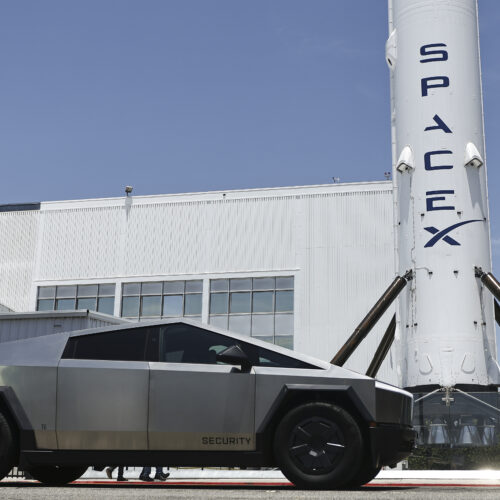
SpaceX won’t get easy access to billions of dollars from passive investors.
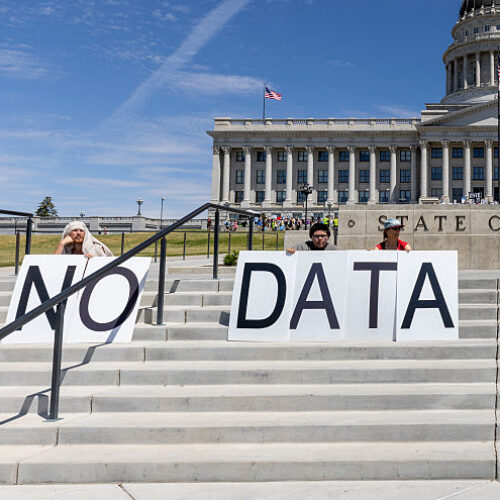
Developer felt "beaten up," with "no choice" but to shrink data center.
Hinton says AI is already conscious and humanity will have to accept that we’re not the only intelligent things around.
Enterprise environments differ fundamentally from the clean settings assumed in LLM research: knowledge is distributed across heterogeneous sources, often incomplete or inconsistent, and key procedural logic is implicitly encoded in artifacts rather than explicitly documented. In such settings, retrieval-based approaches are insufficient, as no single source contains the full workflow. We propose a replication-driven knowledge distillation framework for scalable learning in multimodal agents. The agent learns by reverse-engineering validated artifacts (e.g., Excel workbooks), reconstructing the underlying data pipeline, and distilling the inferred logic into structured knowledge (claims, procedures, and domain patterns). This enables synthesis and validation across noisy sources and supports reuse in future tasks. We evaluate on 120 simulated enterprise environments with multimodal inputs (SQL, spreadsheets, documentation, messaging app, emails, images, PDFs, CSV) and controlled noise. Our method consistently outperforms retrieval-based baselines on both task execution and conceptual understanding, and remains robust under environmental drift.

❤️ Check out Weights & Biases and sign up for a free demo here: https://wandb.me/papers 📝 The paper is available here: https://github.com/google-deepmind/alphaproof-nexus-results https://arxiv.org/html/2605.22763v1 🙏 We would like to thank our generous Patreon supporters who make Two Minute Papers possible: Adam Bridges, Benji Rabhan, B Shang, Cameron Navor, Charles Ian Norman Venn, Christian Ahlin, Eric T, Fred R, Gordon Child, Juan Benet, Michael Tedder, Owen Skarpness, Richard Sundvall, Ryan Stankye, Shawn Becker, Steef, Taras Bobrovytsky, Tazaur Sagenclaw, Tybie Fitzhugh, Ueli Gallizzi My research: https://cg.tuwien.ac.at/~zsolnai/ Thumbnail design: https://felicia.hu
LLM serving frameworks are quickly evolving with a complex software stack and a vast number of optimizations. The rapid development process can introduce silent errors where output quality silently degrades without any explicit error signals. Diagnosing silent errors is notoriously difficult due to the substantial semantic gap between the high-level symptoms and the low-level root causes. We observe that diagnosis of silent errors can be effectively framed as a differential debugging problem by leveraging the existence of semantically correct reference implementations. We propose EKKA, an automated diagnosis system that identifies root causes by systematically aligning and comparing intermediate execution states between a target and a reference framework. We constructed a benchmark of real-world silent errors from popular serving frameworks, where EKKA shows 80% pass@1 diagnosis accuracy and 88% pass@5 diagnosis accuracy, outperforming state-of-the-art systems. EKKA also diagnoses 4 new silent errors from serving frameworks, all of which have been confirmed by the developers.

The Air succeeds as a minimalist, reliable fitness tracker, but Google's AI Health Coach feels unnecessary.

The modern world depends on open-source software maintained by volunteers, but the added demands of checking and fixing AI-written submissions are causing some to burn out and quit
AI Gateway now features real-time spend limits to prevent runaway token bills across multiple AI providers. By integrating with Cloudflare Access, companies can use identity-driven budgets and policies.
with LTG John Brennan
I get an error when creating a csr_matrix data. from two merged pd.read_csv() data. the code is: from scipy.sparse import csr_matrix as csr from pandas import DataFrame as df from pandas import Series as s import pandas as pd df_1 = df({"no": s(["07628", "07628", "07628", "07628", "07628", "07419", "07419", "07419", "07419", "07419"], dtype="str"), "t": ["ex0", "ex1", "ex2", "ex3", "ex4", "ex5", "ex6", "ex7", "ex8", "ex9"], "penilai": ["a", "b", "c", "d", "e", "f", "g", "h", "i", "j"]}) df_2 = df({"no": s(["07628", "07628", "07628", "07628", "07628", "07419", "07419", "07419", "07419", "07419"], dtype="str"), "vec": [8, 17, 1, 89, 37, 19, 53, 72, 8, 94]}) df1_csv = df_1.to_csv("one.csv", sep=";") df2_csv = df_2.to_csv("two.csv", sep=";") readcsv1 = pd.read_csv('one.csv', sep=";", header=0, names=["no", "t", "penilai"], usecols=["no", "t", "penilai"], dtype={"no": "str", "t": "str", "penilai": "str"}) readcsv2 = pd.read_csv("two.csv", sep=";", header=0, names=["vec", "no"], usecols=["vec", "no"], dtype={"no": "str", "vec": "float32"}) merger = readcsv1.merge(readcsv2, on="no", how="outer") row = merger["t"].astype("category").cat.codes col = merger["penilai"].astype("category").cat.codes val = merger["vec"].values csrm = csr((val, (row, col))) the error message is: ValueError Traceback (most recent call last) /tmp/ipykernel_3197/4294466243.py in () 20 col = merger["penilai"].astype("category").cat.codes 21 val = merger["vec"].values ---> 22 csrm = csr((val, (row, col))) 23 24…
Ryan welcomes back Tanya Janca, now part of the OWASP Top 10 team, to discuss what changed in the latest OWASP Top 10 release, how the list shifted from “outdated components” to a broader software supply chain focus, and why they added memory safety and vibe-coding as awareness items.
Weekly News Digest ...
Standard Bank, Nedbank rank among MEA’s top four as AI delivers measurable results
The brilliance of this algorithm, which underlies the modern internet, is in how it organizes information.
How Sourcegraph uses HackerOne webhooks and Deep Search to automatically validate, triage, and investigate vulnerability reports before engineers start their day.
How Sourcegraph uses HackerOne webhooks and Deep Search to automatically validate, triage, and investigate vulnerability reports before engineers start their day.
Also: how pitch a book to an AI!

Musk can't be trusted to protect X user privacy, public commenters warn FTC.
By Adam Wolf Enterprises are buying AI infrastructure faster than their platform teams can operationalize it. Dell and ClearML are working together to close that gap, giving enterprises a faster, simpler path from Dell AI Factory hardware to a production-grade AI platform. Dell carries the hardware. ClearML provides the AI infrastructure layer on top. Together, […]
UN Under-Secretary-General Gilles Michaud reflects on the erosion of international humanitarian law and the urgent need to restore accountability and protection for aid workers.
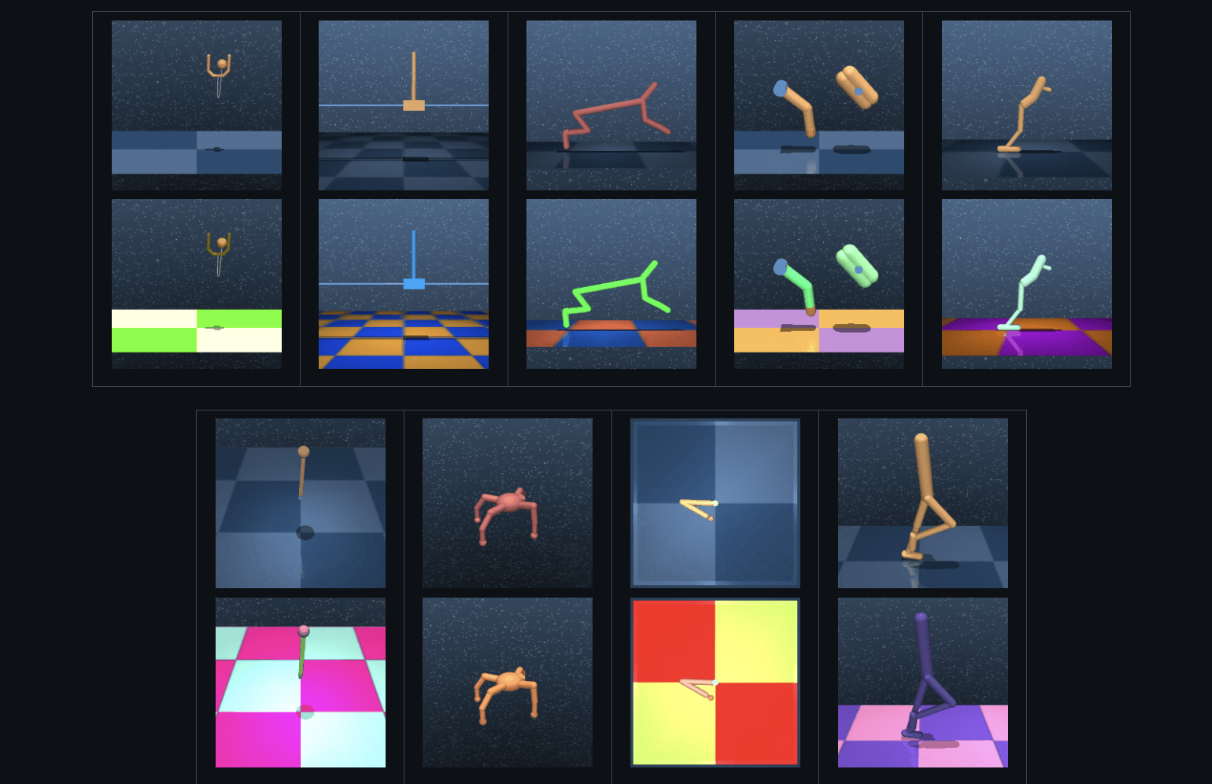
Introducing stable-worldmodel, an open-source platform for reproducible world model research, evaluation, and benchmarking under visual and physical distribution shifts.
Los conocimientos técnicos del Centro Nacional de Inteligencia Artificial (CENIA) y la vocación pública de Televisión Nacional de Chile (TVN) se unieron para crear una plataforma orientada a acercar la Inteligencia Artificial a las personas a través de contenidos multiplataforma. El Centro Nacional de Inteligencia Artificial (CENIA) y Televisión Nacional de Chile (TVN) lanzaron Exponencial, […] The post CENIA y TVN lanzan “Exponencial”, un espacio de conversación sobre Inteligencia Artificial en Chile appeared first on CENIA .
Codex Sites and open models
VoidZero, the team behind Vite, Vitest, Rolldown, Oxc, and Vite+, is joining Cloudflare. Vite stays open source, vendor-agnostic, and built for everyone.
Young innovators challenged to build AI solutions for real national problems
Introducing IBM Granite Libraries and Project Granite Switch: bringing the rigor and modularity of software engineering to LLMs.
Architecture notes on Nemotron 3 Ultra, including its 108-layer hybrid stack, Latent MoE scaling, NVFP4 recipe, MTP, and inference results.
AI models can win math olympiads… but still struggle to read an analog clock. In this fully connected episode, Dan and Chris break down the latest Stanford AI Index Report and explore what it reveals about the current state of AI. They discuss AI adoption and safety, disappearing junior tech jobs, robotics, AI’s “jagged frontier” of intelligence, and the growing race between the U.S. and China. Along the way, they debate whether AI should optimize everything, or if some things are better left human. Featuring: Chris Benson – Website , LinkedIn , Bluesky , GitHub , X Daniel Whitenack – Website , GitHub , X Links: The 2026 AI Index Report Sponsors: Prediction Guard: A self-hosted AI control plane for running agents in high impact environments. predictionguard.com/practicalai Upcoming Events: Register for upcoming webinars here ! Midwest AI Summit 2026

Russian propaganda abounds in Chinese social media debate on Ukraine c.groth Thu, 06/04/2026 - 10:12 picture alliance / Da Qing/HPIC/dpa | Da Qing Comment Jun 08, 2026 8 min read Russian propaganda abounds in Chinese social media debate on Ukraine This series looks at how China debates the issues the country faces at home and abroad. Covering domestic policy, social change, technology, geopolitics and economics and focusing mainly on expert debates, each article draws on analysis from universities, think tanks, government-linked research institutes, business associations and investment groups. A new analysis suggests that Beijing may be tolerating or even encouraging toxic discourse to undermine the moral and political authority of Kyiv and its Western supporters, says Yurii Poita, MERICS Senior Associate Fellow and Head of the Asia Section at Kyiv-based New Geopolitics Research Network (NGRN). While the Chinese government likes to present itself as “ objective and impartial ” regarding the Russia-Ukraine war, the tone on Chinese social media is radically different. Influencers on Chinese online platform Weibo, many with millions of followers, regularly attack the Ukrainian government, attempt to drive a wedge between Kyiv and its European and US partners, portray Ukrainian armed forces and recruitment centers as “Nazi,” and justify documented Russian war crimes. Given the links between these opinion leaders and the Chinese state, and the characteristics of China’s media sys…
I am working on an OCR pipeline that extracts structured information from scanned identity documents. The system performs reasonably well on high-quality images, but accuracy drops significantly when dealing with: Blurry or low-resolution scans Uneven lighting and shadows Rotated or skewed images Compression artifacts from mobile uploads The main fields I need to extract are names, dates, document numbers, and addresses. So far, I have tried image preprocessing techniques such as resizing, denoising, contrast enhancement, and deskewing before running OCR. While these help in some cases, there are still frequent recognition errors on critical fields. For those who have built production OCR systems, what preprocessing techniques or OCR architectures have given the biggest improvement in accuracy for low-quality document images? Are transformer-based OCR models significantly better than traditional OCR engines in this scenario?
IBM and educational partners outlined which quantum advancements excite them and explained why it’s never too early to get on board.
Microsoft used its own developer conference to show it can live without OpenAI, Florida's attorney general sued OpenAI and went after Sam Altman personally, researchers and a new Workday product made plain that nobody trusts AI agents yet, and Alphabet raised a record $85 billion the same week the Fed flagged AI as a systemic risk. The money is moving faster than the trust.