Webinar: How Should Frontier AI Models be Regulated? | GovAI Blog
In July 2023, GovAI hosted a webinar focused on a whitepaper: “Frontier AI Regulation: Managing Emerging Risks to Public Safety.”
AI/ML news, top picks, and generated innovation digests.
37348 matching items
In July 2023, GovAI hosted a webinar focused on a whitepaper: “Frontier AI Regulation: Managing Emerging Risks to Public Safety.”
When scholars and policymakers consider how technological advances affect the rise and fall of great powers, they draw on theories that center the moment of innovation - the eureka moment that...
AI poses a risk of automating and degrading jobs around the world, creating harmful effects to vulnerable workers’ livelihoods and well-being. How can we deliberately account for the impacts on wor...
2020 saw many continued developments in AI governance. It is heartening to see how rapidly this field continues to grow, and exciting to be part of that growth. This report provides a summary of ou...
In this seminar, Sam Altman and William G. Gale discussed Sam's blog post 'Moore's Law for Everything' and taxation solutions for advanced AI.
GitHub is introducing post-quantum secure key exchange methods for SSH access to better protect Git data in transit. The post Post-quantum security for SSH access on GitHub appeared first on The GitHub Blog .
An LLM that can converse in English & item IDs, and make recommendations w/o retrieval or tools.
Verifying magic on the jagged frontier
And a big change for this newsletter
A Detailed Look at One of the Leading Open-Source LLMs

“The Inter American Press Association (IAPA), in partnership with Google News Initiative (GNI), announced the opening of applications for the AI Product Lab, an innovative program designed to drive digital transformation and the strategic use of artificial intelligence in Latin American and Caribbean media outlets. Developed by the consulting firm Maktube Group, the Lab aims […] The post Last days to participate in the IAPA AI Product Lab call, supported by Google appeared first on LatAm Journalism Review by the Knight Center .
“The Inter American Press Association (IAPA), in partnership with Google News Initiative (GNI), announced the opening of applications for the AI Product Lab, an innovative program designed to drive digital transformation and the strategic use of artificial intelligence in Latin American and Caribbean media outlets. Developed by the consulting firm Maktube Group, the Lab aims […] The post Last days to participate in the IAPA AI Product Lab call, supported by Google appeared first on LatAm Journalism Review by the Knight Center .
Ensuring that AI systems are trustworthy and reliable is crucial for advancing artificial intelligence capabilities...
What exactly does word2vec learn, and how? Answering this question amounts to understanding representation learning in a minimal yet interesting language modeling task. Despite the fact that word2vec is a well-known precursor to modern language models, for many years, researchers lacked a quantitative and predictive theory describing its learning process. In our new paper , we finally provide such a theory. We prove that there are realistic, practical regimes in which the learning problem reduces to unweighted least-squares matrix factorization . We solve the gradient flow dynamics in closed form; the final learned representations are simply given by PCA. Learning dynamics of word2vec . When trained from small initialization, word2vec learns in discrete, sequential steps. Left: rank-incrementing learning steps in the weight matrix, each decreasing the loss. Right: three time slices of the latent embedding space showing how embedding vectors expand into subspaces of increasing dimension at each learning step, continuing until model capacity is saturated. Before elaborating on this result, let’s motivate the problem. word2vec is a well-known algorithm for learning dense vector representations of words. These embedding vectors are trained using a contrastive algorithm; at the end of training, the semantic relation between any two words is captured by the angle between the corresponding embeddings. In fact, the learned embeddings empirically exhibit striking linear structure in…
Research by the South African AI Association and the AI Media Group has shown that 94% of the African AI Ecosystem is contained in just 20 countries
From GPT-5 to nano banana: everyone is getting access to powerful AI
“Folha de S.Paulo filed a lawsuit against OpenAI on Wednesday [Aug. 20], demanding that the owner of the ChatGPT artificial intelligence platform stop collecting and using the newspaper’s content without authorization or payment. The suit accuses OpenAI of unfair competition and copyright infringement, stating that ‘the defendant develops and improves its AI tool [...] based […] The post Folha de S.Paulo files lawsuit against OpenAI for unfair competition and copyright infringement appeared first on LatAm Journalism Review by the Knight Center .
“Folha de S.Paulo filed a lawsuit against OpenAI on Wednesday [Aug. 20], demanding that the owner of the ChatGPT artificial intelligence platform stop collecting and using the newspaper’s content without authorization or payment. The suit accuses OpenAI of unfair competition and copyright infringement, stating that ‘the defendant develops and improves its AI tool [...] based […] The post Folha de S.Paulo files lawsuit against OpenAI for unfair competition and copyright infringement appeared first on LatAm Journalism Review by the Knight Center .
Africa’s largest AI event, AI Expo Africa, will be running its highly acclaimed conference & trade show at the Sandton Convention Centre, Johannesburg, South Africa 29-31 October 2025.
The increasing complexity and fragmentation of financial systems in large organizations have created significant challenges for financial teams, particularly in performing real-time, end-to-end validation, as existing validation methods relying on static rules or batch processing are often inadequate for today's dynamic financial environments. This paper introduces a novel approach using Large Language Model (LLM)-based browser agents within a multi-agent framework to enhance financial validation processes. The framework leverages domain-specific agents that autonomously navigate web-based financial platforms to validate data, interpret discrepancies, and perform root cause analysis, ensuring higher accuracy, transparency, and auditability compared to traditional systems. A synthetic dataset and controlled simulation environment were used to evaluate the framework's performance across 20 distinct financial scenarios, revealing significant improvements in validation accuracy (from 40% with a Vanilla agent to 65% with the proposed approach). The results indicate that the proposed multi-agent approach, by isolating validation tasks into specialized agents and orchestrating a coordinated investigation, provides a more reliable, scalable, and interpretable solution for high-stakes financial environments.
More parameters ≠ automatically smarter AI Many models like GPT-3 (175B) or Gopher (280B) have huge parameter counts but too little training data They are "undertrained" like a student with a big brain but only one textbook Compute optimal training Model size (parameters) and data volume must grow proportionally Larger models only perform better if they see proportionally more data otherwise, computing power is wasted If I double the parameters, do I also need twice as much training data? Data volume is just as critical and even saves computational resources? The study directly refutes the assumption that parameters alone determine AI intelligence. Why is this revolutionary and is this still up to date? More sources: Training Compute-Optimal Large Language Models Chinchilla (language model) Neural scaling law Chinchilla Paper explained What is the Chinchilla Point? Revised Chinchilla scaling laws – LLM compute and token requirements Scaling Laws for LLM Pretraining Reconciling Kaplan and Chinchilla Scaling Laws Scaling Laws and Emergent Abilities in LLMs Scaling Laws for LLMs: From GPT-3 to o3
Hector Foundation Launches “Hector AI + Education Future Fund” with €6.2 Million
In recent years, LLM Multi-Agent systems have garnered widespread attention for their collaborative approach to solving complex problems. However, it's a common scenario for these systems to fail at a task despite a flurry of activity. The post Which Agent Causes Task Failures and When?Researchers from PSU and Duke explores automated failure attribution of LLM Multi-Agent Systems first appeared on Synced .
Announcing Deep Ignorance: Filtering Pretraining Data Builds Tamper-Resistant Safeguards into Open-Weight LLMs
Vector researchers made significant contributions to this year’s International Conference on Learning Representations (ICLR), the world’s leading venue for representation learning and deep learning research, which took place April 24-28, […] The post Vector researchers dive into deep learning at ICLR 2025 appeared first on Vector Institute for Artificial Intelligence .
This page aims to provide an overview of the EU Whistleblowing Directive (2019) and how it relates to the EU AI Act, as well as provide useful resources for potential whistleblowers. This resource was put together by Santeri Koivula, an EU Fellow at the Future of Life Institute, and Karl Koch, founder of the AI […]
Thank you to everyone who contributed to writing this blog including: Anyscale (Seiji Eicher, Ricardo Decal, Kai-Hsun Chen) and Google GKE (Yiwen Xiang, Andrew Sy Kim).
And How They Stack Up Against Qwen3

jack Morris's investigation into GPT-OSS training data https://x.com/jxmnop/status/1953899426075816164?t=3YRhVQDwQLk2gouTSACoqA&s=09
By Shaina Raza and Veronica Chatrath AI models are rapidly becoming bigger, faster, and more capable at understanding images and text together. However, while accuracy and speed are often celebrated, […] The post When AI Meets Human Matters: Evaluating Multimodal Models Through a Human-Centred Lens – Introducing HumaniBench appeared first on Vector Institute for Artificial Intelligence .

Pierrette Mahoro Mastel currently works at GIZ as a Digital Health Advisor, prior to that she was at CMU-Africa where she did her Masters in IT with a major in Machine Learning. Mastel is the IndabaX Rwanda lead and one of the 2025 General Chairs for the Indaba to be held in Kigali 17-22 August […] The post When Community Leads: Rwanda to Host the 2025 Annual Deep Learning Indaba appeared first on Deep Learning Indaba .
Putting the AI in Charge
We are delighted to welcome Nicole Ludwig at the Tübingen AI Center!
Adding attention to linear probes
Three outstanding Principal Investigators will be joining the ELLIS Institute Tübingen, co-affiliated with the MPI-IS and the Tübingen AI Center.

On 18 July 2025, the European Commission published draft Guidelines clarifying key provisions of the EU AI Act applicable to General Purpose AI (GPAI) models. The Guidelines provide interpretive guidance on the definition and scope of GPAI models, related lifecycle obligations, systemic risk criteria, and notification duties for providers. Once translated into all EU languages, […]
The Code of Practice offers a clear framework to help developers of General Purpose AI (GPAI) models meet the requirements of the EU AI Act. While providers can choose to follow the Code, they are also free to demonstrate compliance through other appropriate methods. This post provides a concise overview of each Chapter, Commitment, and […]
Lena Schlipf Honored by Students
Does process matter? We are about to find out.
Deep Learning Indaba 2025: Africa’s biggest AI Community Gathers 1000 participants in Kigali, Rwanda to Shape the Future KIGALI, RWANDA –July 14th, 2025– The Deep Learning Indaba (DLI), Africa’s premier machine learning and artificial intelligence (AI) event, proudly announces its 7th edition, set to take place in Kigali, Rwanda, under the powerful theme “Urunana – […] The post Press Release DLI 2025 appeared first on Deep Learning Indaba .
AI Singapore (AISG) and the New Zealand Ministry of Business, Innovation & Employment (MBIE) are proud to announce the awardees of the Singapore – New Zealand Joint Grant Call...

Paper: https://research.trychroma.com/context-rot Abstract: Large Language Models (LLMs) are typically presumed to process context uniformly—that is, the model should handle the 10,000th token just as reliably as the 100th. However, in practice, this assumption does not hold. We observe that model performance varies significantly as input length changes, even on simple tasks. In this report, we evaluate 18 LLMs, including the state-of-the-art GPT-4.1, Claude 4, Gemini 2.5, and Qwen3 models. Our results reveal that models do not use their context uniformly; instead, their performance grows increasingly unreliable as input length grows. Authors: Kelly Hong, Anton Troynikov, Jeff Huber Links: Homepage: https://ykilcher.com Merch: https://ykilcher.com/merch YouTube: https://www.youtube.com/c/yannickilcher Twitter: https://twitter.com/ykilcher Discord: https://ykilcher.com/discord LinkedIn: https://www.linkedin.com/in/ykilcher If you want to support me, the best thing to do is to share out the content :) If you want to support me financially (completely optional and voluntary, but a lot of people have asked for this): SubscribeStar: https://www.subscribestar.com/yannickilcher Patreon: https://www.patreon.com/yannickilcher Bitcoin (BTC): bc1q49lsw3q325tr58ygf8sudx2dqfguclvngvy2cq Ethereum (ETH): 0x7ad3513E3B8f66799f507Aa7874b1B0eBC7F85e2 Litecoin (LTC): LQW2TRyKYetVC8WjFkhpPhtpbDM4Vw7r9m Monero (XMR): 4ACL8AGrEo5hAir8A9CeVrW8pEauWvnp1WnSDZxW7tziCDLhZAGsgzhRQABDnFy8yuM9fWJDviJPHKRj…
Vector’s latest annual report showcases research advancements and industry partnerships that strengthen Canada’s AI leadership Vector bridges AI research and application, translating cutting-edge science into solutions that benefit Canadians. Over […] The post Vector Institute 2024-25 annual report: Where AI research meets real-world impact appeared first on Vector Institute for Artificial Intelligence .
I'm building a model to classify Arabic complaints as either correctly or incorrectly routed. But here's the catch: The label is assigned after a human specialist reviews internal systems, contacts companies, and uses knowledge not available in the text. So even if the text sounds reasonable, only the specialist knows if it's misrouted — based on coverage rules, communication history, etc. I trained a model with text + metadata (company, product, etc.) and got good metrics (F1 ≈ 88%), but I can’t trust them, because I can’t verify if the model is really learning something meaningful. My question: 💡 What are the steps or experiments I can do to figure out if this task is even learnable from the available data? I don’t want to keep improving a model that’s fundamentally flawed. Thanks in advance 🙏
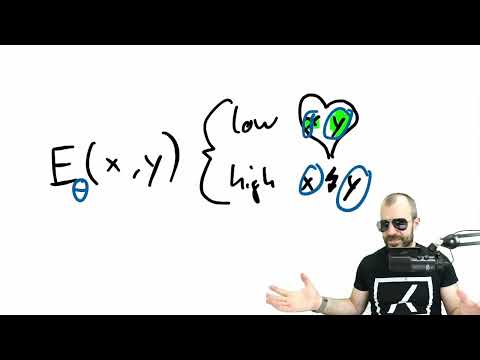
Paper: https://arxiv.org/abs/2507.02092 Code: https://github.com/alexiglad/EBT Website: https://energy-based-transformers.github.io/ Abstract: Inference-time computation techniques, analogous to human System 2 Thinking, have recently become popular for improving model performances. However, most existing approaches suffer from several limitations: they are modality-specific (e.g., working only in text), problem-specific (e.g., verifiable domains like math and coding), or require additional supervision/training on top of unsupervised pretraining (e.g., verifiers or verifiable rewards). In this paper, we ask the question "Is it possible to generalize these System 2 Thinking approaches, and develop models that learn to think solely from unsupervised learning?" Interestingly, we find the answer is yes, by learning to explicitly verify the compatibility between inputs and candidate-predictions, and then re-framing prediction problems as optimization with respect to this verifier. Specifically, we train Energy-Based Transformers (EBTs) -- a new class of Energy-Based Models (EBMs) -- to assign an energy value to every input and candidate-prediction pair, enabling predictions through gradient descent-based energy minimization until convergence. Across both discrete (text) and continuous (visual) modalities, we find EBTs scale faster than the dominant Transformer++ approach during training, achieving an up to 35% higher scaling rate with respect to data, batch size, parameters, FLOPs…
From DeepSeek-V3 to Kimi K2: A Look At Modern LLM Architecture Design