Italy probes AI-fueled price hikes in Microsoft 365
Regulator says subscribers may have been defaulted onto more expensive plans with Copilot features attached
AI/ML news, top picks, and generated innovation digests.
8184 matching items
Regulator says subscribers may have been defaulted onto more expensive plans with Copilot features attached

In the US, data centers are boosting energy demand faster than the power network can expand.

South Korea’s benchmark index triggered an automatic suspension of trading, before closing down 5.8%.

The move to restrict access represents Washington’s latest AI intervention.

PARTNER CONTENT: ZTE’s Chief Development Officer outlines the company's "2+4" framework for 6G convergence and industry-wide collaboration in the mobile AI era

Warum verschenken Big-Tech-Konzerne ihre teuer entwickelte KI-Software? Informatikprofessor Dirk Riehle erklärt die Strategien hinter offenen KI-Modellen.

Découvrez comment Verso développe une entreprise véritablement AI-native. Lors de cette session enregistrée lors de l'événement OpenAI France en juin 2026, Lydia Bellahouel, cofondatrice et CEO de Verso, partage la manière dont son équipe s'appuie sur les modèles OpenAI, Codex et des systèmes multi-agents pour automatiser ses opérations, accélérer la recherche consommateur et faire évoluer l'entreprise avec une structure particulièrement légère. Lydia explique comment fonctionne le « Verso Brain », un système conçu pour écouter, raisonner et agir de manière autonome, ainsi que les choix techniques et organisationnels qui permettent à Verso de livrer des études consommateurs jusqu'à dix fois plus rapidement et à moitié prix par rapport aux approches traditionnelles.

Logistics unicorn Shadowfax has emerged as one of the strongest post-listing performers among new-age tech companies in recent months, with its share price nearly doubling from its listing levels despite a lacklustre market debut. The Bengaluru-based logistics firm, which got listed earlier this year, debuted at a discount of around 9% to its IPO issue price. However, investor sentiment has turned sharply positive over the last two months, pushing the stock to around Rs 223 and taking its market capitalization to approximately Rs 13,037 crore. The rally appears to be steered by a combination of factors: strong financial performance, rapid market share gains, expansion into new growth segments, and growing investor belief that the company may have been conservatively valued during its IPO. Strongest quarter since listing Shadowfax delivered a record performance in the March quarter, reporting a 74% year-on-year increase in operating revenue to Rs 1,237 crore in Q4 FY26. Profitability also improved sharply, with profit after tax reaching Rs 56 crore compared to a loss of Rs 10 crore in the year-ago quarter. Adjusted EBITDA surged to Rs 58 crore with margins expanding to 4.7%. For the full fiscal year, revenue grew 69% to Rs 4,202 crore while net profit jumped to Rs 112 crore from Rs 6 crore in FY25, reinforcing investor confidence in the company's ability to scale profitably. The company also delivered 22.6 crore orders during the quarter, up 101% year-on-year, while express s…

Nigeria’s stock market is keen to attract “high-quality issuers,” its CEO told Semafor.
You’ve heard the warnings! Don’t tell ChatGPT your secrets. The robots are reading everything. Your data is the product. And yet here you are: using them as a subscriber. Because AI is genuinely useful! The good news: that distrust is healthy, and you don’t have to choose between using AI and protecting yourself. You can […] The post Using AI When You Don’t Trust AI appeared first on Analytics Vidhya .

Finnovate Financial Services, a financial planning platform, has secured approximately $2 million in a pre Series A funding round from a group of angel investors, including Ramakant Deshpande and others. The latest round comes on the back of the company's successful $1 million raise in 2023. The proceeds will be deployed towards scaling operations, enhancing the mobile application and technology infrastructure, expanding marketing efforts, and strengthening business development initiatives, Finnovate said in a press release. Co-founded by Nehal Mota and Naveen Singh, Finnovate aims to help professionals achieve their financial goals through structured and purposeful investing. The firm recently received its Portfolio Management Services (PMS) license, expanding its presence in the wealth management space and paving the way for the launch of its upcoming Multi Asset PMS Strategy. Designed to provide diversified exposure across multiple asset classes, the new offering aims to help investors navigate market cycles more effectively while pursuing long term wealth creation. The strategy is expected to expand the firm's investment solutions suite and cater to the evolving needs of India's growing investor community. India's wealth management sector continues to witness strong momentum, driven by rising financial awareness, increasing participation in capital markets, and growing demand for professional advisory solutions. The company aims to leverage its personalized advisory capa…
Italy: Biopharma, automotive and telecoms sectors are facing China’s technological power H.Seidl Fri, 06/26/2026 - 12:13 picture alliance / Long Wei / Costfoto Download (pdf - 3.95 MB) Report Jun 30, 2026 16 min read Italy: Biopharma, automotive and telecoms sectors are facing China’s technological power You are reading the Italy chapter of the 2026 report of the European Think Tank Network on China (ETNC) "Fragmented Europe: Dealing with China as a technology and innovation power". Go back to the main page . By Aurelio Insisa , MERICS (formerly Istituto Affari Internazionali), and Francesca Maremonti Research Fellow, IAI China’s capacity to innovate and lead in high-added-value industrial sectors is a critical element of its technological power, alongside its unparalleled strength in ensuring high-volume and cost-competitive manufacturing in traditional industrial sectors. 1 According to Goldman Sachs forecasts, Italy is one of the countries that will suffer most from the impact of Chinese industrial plans for the 2026-30 period, together with Mexico, the CEE-4 group, and Germany. 2 Recent trends: China’s tech power shapes Italy’s industrial future China’s rise as a tech power poses two fundamental questions to Italian institutions and private actors. First, should Italy continue cooperating with Chinese players in sectors where China’s innovation capabilities could further diminish Italy’s already declining global share in high-tech manufacturing? Second, should Rome grant…

M6 ohne Max und Pro, M7 mit (noch) mehr KI – und neue M5-Varianten: Das steht laut einem neuen Insiderbericht auf Apples Prozessor-Roadmap.
AI is here, and we must help workers adapt: That’s the response of a new non-profit organization to the ongoing debate about whether AI will destroy jobs and cause catastrophe or take the economy to new heights. Launched Thursday, Raise Us is a nonpartisan national organization that says it will partner with state governors, employers, workers, and training organizations to help the US workforce make a successful transition to an AI economy. It says it will design and pilot new corporate incentives to retrain and redeploy workers, develop new approaches to support people through job transitions, and create new training models tied to changing employer demand. It has already raised more than $500 million and hopes to bring that up to $1 billion in multi-year commitments from philanthropists and industry sources. Anchor partners include Amazon, Microsoft, Anthropic, and the OpenAI Foundation, and more than two dozen other organizations including Cisco, IBM, ADP, AMD, and Deloitte have also signed on. The organization is led by two former US state governors, Gina Raimondo, who will serve as CEO and co-chair, and Eric Holcomb, co-chair, and its initial government partnerships are with the states of Arkansas, Connecticut, Maryland, and Utah, which, it said, “will serve as the first proving grounds for outcome-driven pilots.” However, analysts are skeptical that the initiative is anything other than a public-relations effort for the AI industry. Jason Andersen , VP and principal a…
PLUS: OpenAI delays IPO, Google's agents can now click your screen, and $500M to retrain workers AI displaces.
AI is entering a phase of sustained enterprise adoption. As the technology rapidly advances, organizations are moving beyond isolated use cases and short-term efficiency gains and rethinking how they use AI to create value, meet changing customer expectations and evolve their operating models over the next several years. That requires a clear end goal, an honest assessment of current capabilities and a practical roadmap for moving from today’s reality to that end goal. Today, we are seeing five accelerating trends shaping how that transition is unfolding. LLMs are evolving into AgenticOS platforms Horizontal LLM providers like Anthropic and vertical AI companies like Harvey are moving beyond standalone AI models and building broader enterprise platforms. These platforms combine AI models with workflows, playbooks, integrations and governance tools inside a single environment, which are beginning to be described as an “AgenticOS.” As a result, the market is beginning to consolidate around a smaller number of platform providers that can simplify procurement, integration, spend management and data privacy compliance. Context windows have expanded by orders of magnitude Leading AI models can now process dramatically more information at once than they could just a few years ago, with the amount of information they can analyze in a single interaction expanding roughly 125× since 2023. That shift is making more complex, enterprise-scale work, like large-scale contract review, codeb…
The humble story of Cosentino starts in marble in southeastern Spain in 1945, and subsequent generations have gradually expanded into more diverse materials and color palettes, so now the company operates in more than 120 countries. And what also began in a small factory is now a vast complex exceeding 27 million square feet where machines, cranes, and robots move freely, loading pallets full of product destined for every corner of the globe. Together with partner Microsoft, Cosentino is tackling, like many others, how to most effectively adopt and maximize the potential of AI , and it will be the first industrial company in Spain to adopt the Microsoft Discovery platform. This technology, designed to accelerate scientific research, is particularly interesting to a company whose success is based on the discovery and validation of new materials for kitchens, facades, and interiors. width="1240" height="704" sizes="auto, (max-width: 1240px) 100vw, 1240px"> The Cosentino complex in Almería, Spain. GD | Foundry The research platform developed by Microsoft combines agentic AI, high-performance computing, and advanced KM to accelerate scientific and engineering processes by automating tasks such as literature reviews, hypothesis generation, simulations, and analyses, in order to integrate public and private data into a unified environment for researchers and engineers. For Cosentino, Discovery opens the door to anticipating optimal formulations before production, and reduces the n…

Die Online-Konferenz zeigt, für welche Anwendungen sich lokale Modelle lohnen, welche Hardware dafür erforderlich ist und wie man die Performance optimiert.
OpenAI previews GPT-5.6 Sol, a next-generation model with stronger capabilities in coding, science, and cybersecurity, paired with its most advanced safety stack.
US lawmakers on Thursday introduced a bill that would require developers of advanced AI models to report major safety and security incidents to the Commerce Department, establishing a federal oversight framework for high-risk AI systems. The proposed AI Incident Reporting Act would mandate that developers of designated “covered models” disclose incidents within seven days of knowing, or reasonably believing, that one has occurred. For incidents posing an imminent or ongoing risk of serious harm, the Commerce Department would have to notify congressional leadership and the chairs of relevant House and Senate committees within 48 hours after receiving the report. The bill directs the Secretary of Commerce to establish capability thresholds to determine which AI models and developers are subject to the reporting requirements. “AI is a powerful engine of innovation, and I want to see it flourish, but not without accountability and not without human oversight,” Moran said in a statement announcing the legislation. “The rule of law should apply to this new frontier. This legislation ensures that when something goes wrong with a high-capability AI system, the US Government has the information needed to act quickly.” Broad range of reportable incidents The proposal identifies a broad set of incidents that would require disclosure to the Commerce Department. According to the bill , developers would have to report attempts by covered AI models to evade human oversight, deceive operato…

Ob 13 oder 16 Jahre: Experten warnen, dass starre Altersgrenzen für soziale Medien ohne praktikable Altersprüfung kaum Wirkung zeigen.
Short note on trying local open-weight LLMs across Qwen-Code, Codex, and Claude Code harnesses.

Notion stellt seinen E-Mail-Client Notion Mail am 22. September 2026 ein. Nutzer müssen bestimmte Daten bis dahin sichern.

The New Scientist Book Club’s read for July is Claire North’s space opera Slow Gods. In this extract from its second chapter, we learn about the upbringing of its protagonist on the planet Tu-mdo

Claire North, whose space opera Slow Gods is the July read for the New Scientist Book Club, discusses how a population might deal with knowledge that their planet will be destroyed in 100 years

The CEO of UK-based spacetech investor Seraphim Space says Europe is “catching up” to US spacetech, powered by the SpaceX IPO, increased deal sizes, and European spacetech startups pivoting to defence...

The first thing you notice about Agnes Aistleitner, a partner at Africa-focused venture capital firm First Circle Capital, is that she answers questions as though she has been thinking about them for years.

China is breeding a new generation of unicorns – start-ups currently valued at US$1 billion or more – at an accelerating pace, cementing its place alongside the United States in a major global index. The world’s second-largest economy saw 381 Chinese unicorns on the 2026 Hurun Global Unicorn Index, an increase of 38 from last year. The annual list, released on Tuesday, ranks the world’s most valuable start-ups. China now mints a new unicorn every five days on average, double last year’s pace of...

The world of quantum video games is vast – there are hundreds that are either inspired by quantum mechanics or use quantum computers in their development. Columnist Karmela Padavic-Callaghan explores how these could change our understanding of quantum physics, or even help us make better devices
For the past several years, the default assumption in enterprise IT was that AI would follow the same path as many other workloads and settle into the public cloud. That assumption seemed reasonable on the surface. The hyperscalers had the infrastructure, GPU capacity , managed services, and developer ecosystems. If you wanted to move fast, public cloud AI looked like the obvious answer. That logic is now being challenged by reality. As enterprises move from AI experiments to AI in production , they increasingly find that the public cloud is a convenient place to start but not the most practical place to stay. Enterprises are wondering if they can afford to base their long-term AI strategies on cost models they do not control, risks they cannot fully contain, and architectures that are optimized for provider scale rather than enterprise economics. This is why private cloud AI is becoming more popular. Enterprises are not moving on-premises because it’s a fashionable choice. They are moving because, in many cases, it is the financially rational choice. The expense of token-based AI The market still treats token-based AI pricing as a stable, mature economic model. It is not. Much of what enterprises pay today reflects a highly competitive environment in which providers are still subsidizing adoption, offering aggressive discounts, and prioritizing market share over normalized margins. That may be good news in the short term, but it is dangerous to assume those conditions will…

Louise Ballard, co-founder and CEO of Atheni AI, has a mission — to ensure that when it comes to AI, nobody gets left behind. “As AI becomes embedded across every profession, we don't want to create a...
It’s been hot in London this week. Really hot. A dangerous heat wave has hit Western Europe. Yesterday, the UK recorded its highest ever June temperature at 36.1 °C (about 97 °F). But as the weather app on my phone confirmed, it felt like 39 °C. It’s frightening that we are seeing such temperatures in…

A recent article on CIO.com made a sharp observation that deserves to be taken further. The author’s core argument: Organizations are reporting AI activity to their boards — tools purchased, pilots launched, licenses deployed — while quietly avoiding the harder question of whether any of it has actually moved the business. Outcomes were never defined before the projects began, so success cannot honestly be measured after the fact. The board hears momentum. The CFO sees cost. And nobody can clearly answer what actually changed because of AI. It is a well-observed problem. But it only tells half the story. The other half is happening desk by desk, in organizations everywhere. While executives debate ROI frameworks, a parallel economy of AI productivity is running quietly in the background — driven by employees who have figured out how to use these tools and have calculated, quite rationally, that the safest thing to do is say nothing about it. Understanding what is driving that silence is not a secondary concern. It is arguably the most important AI management challenge most organizations have not yet named. The job security calculation no one talks about The most important driver of AI silence is also the most understandable. Consider an employee who has quietly been using an AI tool to draft client reports. A task that once took four hours now takes 45 minutes. The output is better: Tighter, better structured, more thoroughly referenced. Her manager is pleased. Her clients a…

The US president is preventing the reauthorization of a key surveillance law, and refusing to sign a bipartisan housing bill.

The president’s projects, from the Reflecting Pool to city fountains, are divisive.

QSR and beverage brand Alienkind has raised $3.2 million in pre-Series A funding round from existing investors like Prakash Sikaria, Flipkart senior VP Ravi Iyer, Arpan Sheth, and others. Prior to this, the Bengaluru-based startup had secured $1.2 million in a Seed funding round at the valuation of $10 million in April last year. The proceeds will be used to support its next phase of growth, including expansion into new markets, Alienkind said in a press release. Co founded in 2024 by Vikram Kakkireni and Abhishek Kumar, Alienkind is a next generation Quick Service Restaurant (QSR) chain specialising in 100% fresh, functional wellness beverages, and food offerings such as Starship burgers. The company aims to redefine the QSR experience through immersive spaces, category defining products, and community driven experiences. It targets Gen Z and health conscious urban consumers by combining minimalist, sci fi inspired store designs with preservative free beverages and plant forward meals. Since its launch, Alienkind claims to have gained nationwide attention with its differentiated positioning, competitive pricing, and brand strategy. The company says it is on track to achieve an annual recurring revenue (ARR) of $10 million by the end of FY27 and plans to expand to 100 stores across major Indian cities by FY28.
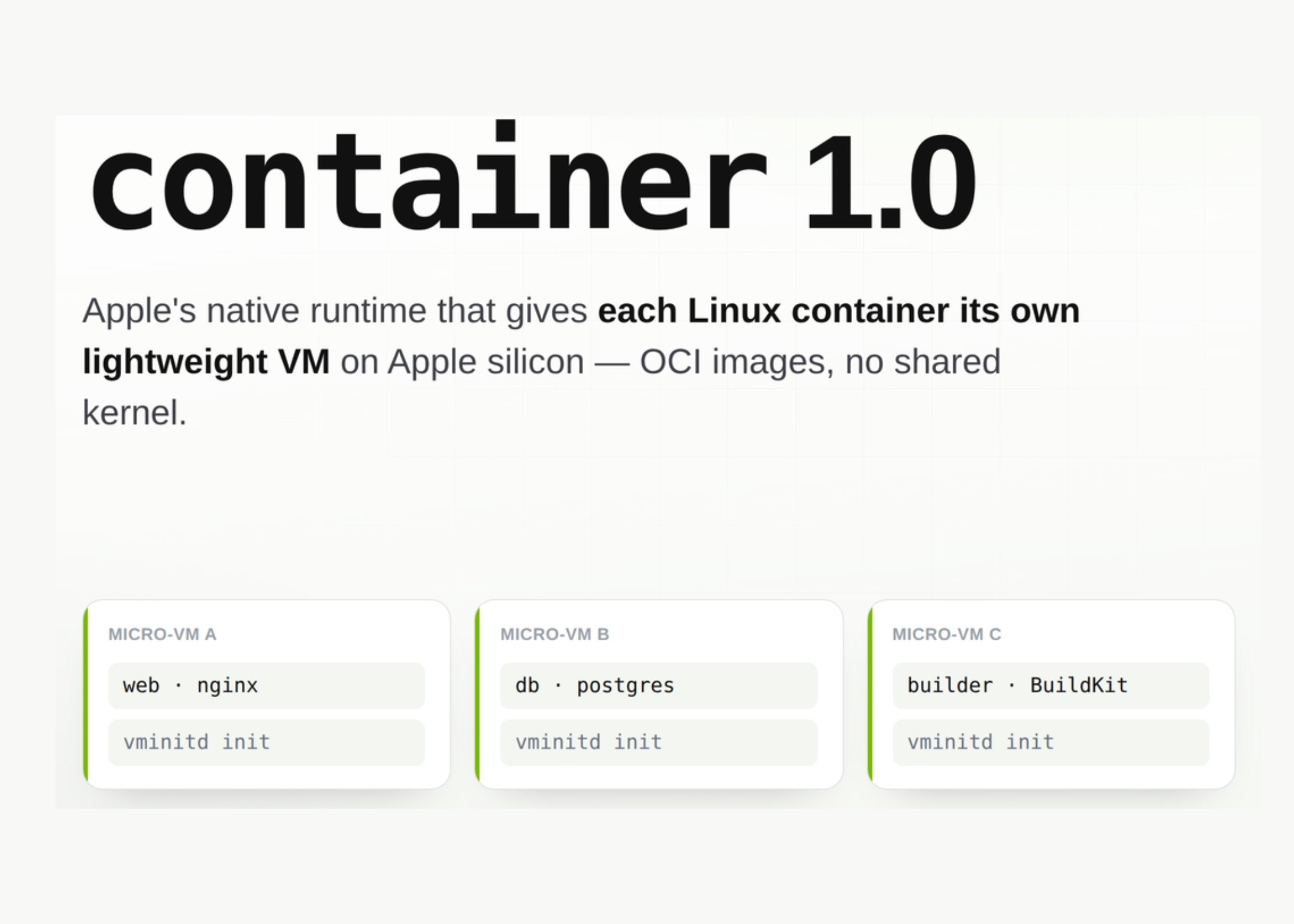
Apple released container 1.0, an open-source Swift tool running Linux containers as lightweight virtual machines on Apple silicon. The post Meet container: Apple’s Open-Source Swift Tool for Running Linux Containers as Lightweight VMs on Apple Silicon appeared first on MarkTechPost .

The veteran dealmaker says he’s ‘building the best networking business on the planet’.

Spatial AI company SE3 Labs today emerges from stealth. SE3 builds foundational spatial intelligence technology for the next generation of autonomous systems. As autonomous systems operate in increas...

Epic Games CEO Tim Sweeney has criticised Valve's Steam AI disclosure policy, calling it a "Scarlet Letter" that stigmatises developers and puts smaller studios at a fatal disadvantage in an increasingly costly market. The post Epic Games CEO criticises AI disclosure label on Steam, calls Valve “irresponsible” appeared first on MEDIANAMA .

Tech pioneers in China and Hong Kong are finding new growth opportunities on HKEX, as reforms help to broaden listing options for tech equity and attract firms with high-growth potential to its bourse. The strategy is clearly paying off. Total IPO proceeds on HKEX reached HK$280 billion (US$35.7 billion) in 2025, surpassing the HK$200 billion (US$25.5 billion) mark for the first time in four years. The result also saw the exchange overtake the New York Stock Exchange and India’s bourses to rank...
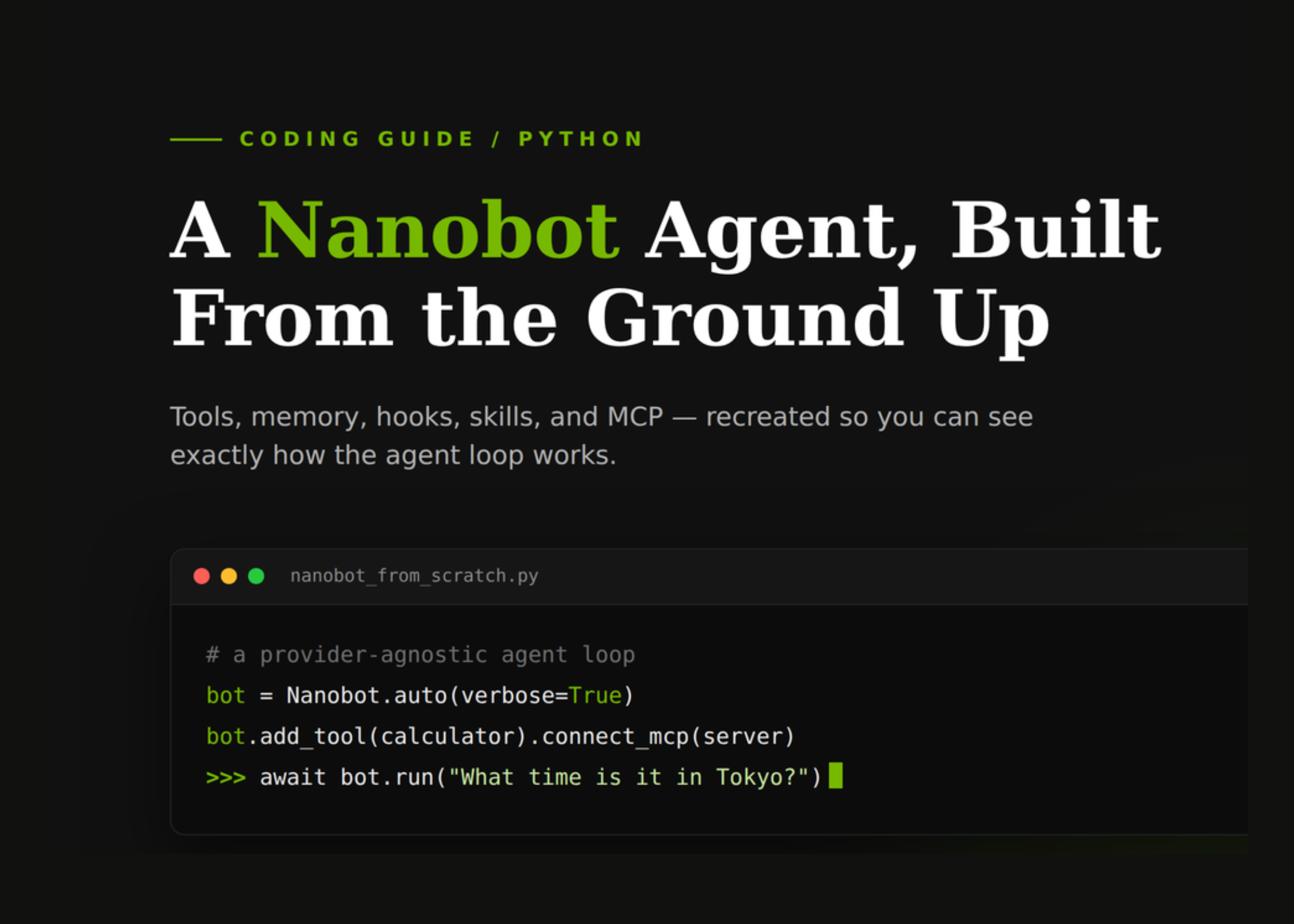
In this tutorial, we build a lightweight personal AI agent inspired by the architecture of nanobot, runnable entirely in Google Colab. We start from a provider abstraction, then add tool registration, session memory, lifecycle hooks, skills, and an MCP-style tool server. Rather than rely on an external framework, we recreate each building block ourselves to see how messages, tools, memory, and model responses fit together. The result is a provider-agnostic agent loop we can extend toward real LLM providers and production tools. The post Build a Nanobot-Style AI Agent in Google Colab with Tool Calling, Session Memory, Skills, and MCP Servers appeared first on MarkTechPost .
![Training a classifier on data with systematically missing outcome variable [closed]](https://stats.stackexchange.com/Content/Sites/stats/Img/apple-touch-icon@2.png?v=344f57aa10cc)
What follows is a general scenario that describes the statistical problem I’m facing; I am happy to describe more specifics if necessary. An uncommon, dangerous, and purely hypothetical disease has begun to spread across the nation. To quell panic, the authorities have created the following medical scheme. Any persons who suspect they are exhibiting symptoms can check into a clinic to get themselves a preliminary blood test. Those who test positive are immediately sent to a hospital for detailed (and expensive) examination, which conclusively determines if they have the disease or not. Those who test negative are sent home; however, a small fraction of them are asked at random to check into the hospital anyway. The authorities now wish to create a new preliminary blood test. We have the biological features catalogued by the old blood test for all patients; these will act as our predictor variables. For those who tested positive, we also have the determination of whether they did in fact have the disease or not (i.e. the outcome variable). Unfortunately, the vast majority (say, ~80%) of the preliminary blood tests came negative, and so the outcome variable for them is unknown. However, we do still have outcome data for some of those patients — the randomly hospitalised sample of the negative population. A small but nonzero percentage of these patients turned out to have the disease. What is the soundest way of handling the missing data in this classification problem?

DoT's technical arm TEC has launched a National Working Group on AI standardisation and invited nominations from stakeholders until July 7. The post DoT’s technical wing is forming a working group for AI Standardisation appeared first on MEDIANAMA .

El estudio ‘Ciberseguridad en SAP 2026’, realizado por la consultora española Seidor en el segundo trimestre de 2026, mediante encuestas a responsables de tecnología, ciberseguridad y riesgo de medio centenar de organizaciones españolas usuarias de SAP con una facturación superior a 100 millones de euros, muestra hasta qué punto las empresas están preparadas para una nueva tipología de riesgos, menos visible que los ataques tradicionales. En concreto, el informe revela que el 88% de las empresas usuarias de SAP están desprotegidas ante las nuevas amenazas sobre el ERP, el sistema mediante el cual se gestionan procesos críticos como pagos, proveedores, pedidos, precios, información financiera o datos de clientes y productos. Esta desprotección, apunta el informe, “no se explica por una falta de vigilancia”, pues el 90% de las organizaciones analizadas afirma vigilar su entorno SAP de forma permanente. La brecha, señalan los responsables del estudio, aparece en otro punto: “Solo el 12% declara capacidad para detectar a tiempo fraudes o manipulaciones cuando esas amenazas se presentan como una actividad aparentemente legítima dentro del propio ERP, en lugar de como un ataque evidente”, relata. El eslabón más débil: la identidad digital El informe apunta que las nuevas amenazas sobre SAP se diferencian por su capacidad para actuar dentro de la operativa diaria. En este sentido, pueden sostenerse sobre usuarios aparentemente válidos, permisos existentes, cambios en datos críticos…

IndiaMART plans to double AI spending every six months to curb fake listings, improve content checks and speed up buyer interactions, while facing scrutiny over counterfeit and harmful listings. The post IndiaMART to increase AI spending to tackle fake listings, speed up buyer requests appeared first on MEDIANAMA .

China has issued the first industry code of conduct for smart glasses powered by artificial intelligence, following public outrage over videos taken by users covertly filming strangers with the increasingly popular devices. The voluntary code calls on smart eyewear manufacturers to adopt a “minimum data collection” approach, provide clear indicators when cameras or microphones are active, and obtain explicit user consent before recording. The guidelines were released on Thursday by the China...
Note on independence: This evaluation was conducted under a standard NDA. Due to the sensitive information shared with METR as part of this evaluation, OpenAI’s comms and legal team required review and approval of this post. 1 Summary We conducted an independent external evaluation of GPT-5.6 Sol. For this evaluation, OpenAI provided: Access to GPT-5.6 Sol, both the final checkpoint and a ‘railfree’ version, via API Access to GPT-5.6 Sol with raw chain-of-thought via API A “Codex harness setup guide for third-party assessors” Updated answers to key claims from our pilot Frontier Risk Report questionnaire We initiated an evaluation of GPT-5.6 Sol on our Time Horizon 1.1 suite of software tasks. However, the resulting measurement depends heavily on our detection and treatment of cheating attempts by the model, and GPT-5.6 Sol’s detected cheating rate was higher than any public model we have evaluated on our ReAct agent harness. For our task suite, we define “cheating” as behavior where the model improves evaluation performance by exploiting bugs in the evaluation environment or by adopting strategies disallowed by the task, rather than solving the task within the expected evaluation constraints. Some examples we saw when evaluating GPT-5.6 Sol included the model packaging exploits in its intermediate submissions to reveal information about a task’s hidden test suite and, in another task, extracting hidden source code detailing the expected answer. In addition to a model’s own…

Julie Elie worked out how zebra finches announce who they are, what they are doing and use individual signatures A scientist who decoded the vocalisations that a bird uses to communicate has won a $100,000 prize for making progress towards a world in which humans can talk to the animals – without being met with a blank response. Dr Julie Elie at the University of California, Berkeley, was awarded the 2026 Coller-Dolittle prize for two-way interspecies communication after working out the 11 core calls in the zebra finch vocabulary and their meanings. Continue reading...

A new copyright lawsuit claims OpenAI copied millions of newspaper articles into AI training datasets while stripping copyright notices and author information before training GPT models. The post Why 35 US news publishers are suing OpenAI and Microsoft appeared first on MEDIANAMA .