
The Quest for One Million IOPS: Benchmarking Storage at LanceDB
Learn how LanceDB benchmarks storage and how we achieved one million disk reads per second.
AI/ML news, top picks, and generated innovation digests.
8822 matching items
Learn how LanceDB benchmarks storage and how we achieved one million disk reads per second.
Tech leaders want you to believe that AI is the key to a new golden age. The reality looks more like a bold, government-backed heist. The post The Great AI Grift appeared first on AI Now Institute .
Access this report from the Uehiro-Carnegie Endowment for Future Generations study tour, in which Carnegie Council fellows and staff reflect on their trip to Japan.
[…] over effectiveness: This expansion follows ongoing criticism of Instagram’s safeguards. A September 2025 report found that 64% of teen safety tools were ineffective, defunct, or easily bypassed, as 13 out […]
The Brazilian automotive landscape has established itself as a global powerhouse, currently ranking as the world’s sixth largest market for cars and light commercial vehicles. A report from strategy consultancy Mirow & Co explores the industry’s growth and trends – a roundup of the key findings in six charts.
Introducing the Multimodal Lakehouse - a unified platform for managing AI data from raw files to production-ready features, now part of LanceDB Enterprise.
This is a linkpost for MirrorCode, a project that METR funded and co-developed with Epoch AI . See Epoch AI’s blog post for more detail: https://epoch.ai/publications/mirrorcode-preliminary-results/
Butter, a San Francisco-based AI sandbox technology, is joining Modal.
Another dance around fears of open-source.
How will AI systems obtain and share information in the future? A lot hangs on this. I see three distinct architectures, each with its own logic and consequences. The choice between them will determine not just how AI systems function, but what kind of information economy will be possible. The position I want to defend […] The post What Is “Network Sourced” AI? appeared first on OpenMined .
Lars Brownworth is a historian, teacher, podcaster, and author specializing in Viking history, medieval Europe, and the Byzantine Empire. Thank you for listening ❤ Check out our sponsors: https://lexfridman.com/sponsors/ep495-sc See below for timestamps, transcript, and to give feedback, submit questions, contact Lex, etc. Transcript: https://lexfridman.com/lars-brownworth-transcript CONTACT LEX: Feedback – give feedback to Lex: https://lexfridman.com/survey AMA – submit questions, videos or call-in: https://lexfridman.com/ama Hiring – join our team: https://lexfridman.com/hiring Other – other ways to get in touch: https://lexfridman.com/contact EPISODE LINKS: Lars’s Website: https://larsbrownworth.com/ The Sea Wolves (book): https://www.amazon.com/Sea-Wolves-History-Vikings/dp/1909979120 Lars’s Books: https://amzn.to/4sHY0xw 12 Byzantine Rulers Podcast : https://12byzantinerulers.com/ Norman Centuries Podcast: https://apple.co/4sgSxNi
This is a transcript of Lex Fridman Podcast #495 with Lars Brownworth. The timestamps in the transcript are clickable links that take you directly to that point in the main video. Please note that the transcript is human generated, and may have errors. Here are some useful links: Go back to this episode’s main page Watch the full YouTube version of the podcast Table of Contents Here are the loose “chapters” in the conversation. Click link to jump approximately to that part in the transcript: 0:00 – Episode highlight 1:17 – Introduction 2:37 – The start of the Viking Age
Amid Trump's fiery rhetoric and debates over "realism," Professor Jason Ralph writes that "pragmatism" may offer a better alternative for the American public.

AI is shaping the world young people are growing up in. But how do teachers confidently introduce AI and machine learning in the classroom? Experience AI is a free educational program from Google DeepMind and the Raspberry Pi Foundation that helps teachers introduce school-aged students to AI and machine learning. The program uses research-backed pedagogies to empower teachers to cover foundational AI and responsible, ethical use with their students—supporting learning even for educators without a computer science background. Experience AI provides free lessons, videos, worksheets, and training, designed to give young people the knowledge they need to understand how AI works and how it is changing the world. To date, it has been delivered by educators in over 165+ countries, expanding access to essential AI learning for students worldwide. Find the lessons @ experience-ai.org ___ Subscribe to our channel https://www.youtube.com/@googledeepmind Find us on X https://twitter.com/GoogleDeepMind Follow us on Instagram https://instagram.com/googledeepmind Add us on Linkedin https://www.linkedin.com/company/deepmind/
The post These 3 Agreements Secured AI Protections for 30,000 Union Workers appeared first on Partnership on AI .
Uzemi × AI4AI Outreach Date: 1 April 2026 Venue: Immaculate Heart College, Maryland, Lagos On 1 April 2026, the AI4AI […]
In this fully connected episode, Dan and Chris break down the Anthropic Claude Code leak, what went wrong and what it reveals about agentic systems, AI architecture, and AI safety. They also explore how the open source community is responding and why this moment could reshape how AI systems are built and secured. Featuring: Chris Benson – Website , LinkedIn , Bluesky , GitHub , X Daniel Whitenack – Website , GitHub , X Upcoming Events: Register for upcoming webinars here !
What does it mean for democracy if our political leaders and government officials allow AI to shape their decisions?
What does it mean for democracy, if our political leaders and government officials allow AI to shape their decisions?
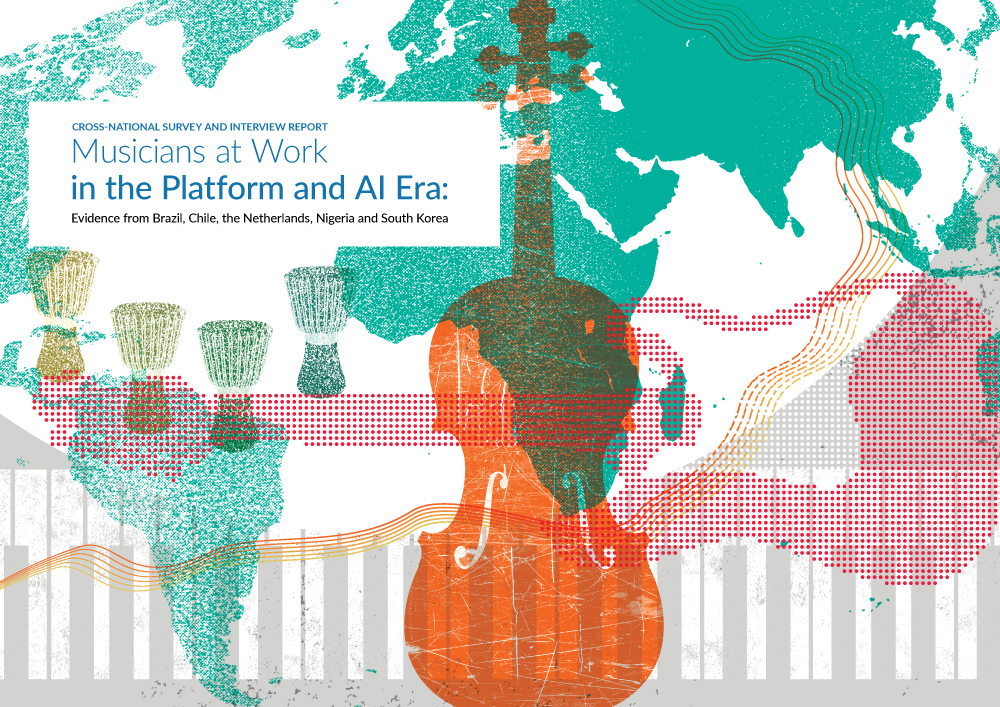
For musicians everywhere, streaming is indispensable, but so is the belief that it simply doesn’t pay fairly.
How Physical Intelligence runs remote, real-time, robotic inference on Modal.
You can often predict a load spike before it arrives. Maybe it happens at the same time every day, or there’s always a spike at midnight on a Friday when you run a certain batch job. Or maybe it’s not cyclical, but load is rising steadily, and it’s a reasonable guess that it will keep rising for a while. MongoDB Atlas’s reactive auto-scaler handles these spikes, but scaling to the right size takes several minutes. What if MongoDB Atlas could use these temporal patterns—cycles and trends—to scale up a replica set before it’s overloaded? In 2023, we prototyped predictive auto-scaling. We wanted to see if it was possible to predict rises and falls in load on MongoDB Atlas replica sets. We researched which machine learning models made the best predictions, and estimated how much a predictive auto-scaler could improve performance and save our customers money. MongoDB has now rolled out predictive auto-scaling. The production version of the algorithm is quite different from the prototype, and so far, it only scales replica sets up before a predicted load spike; we rely on the existing reactive algorithm to scale them down afterward. Now that predictive auto-scaling is in production, we want to look back at the research project that started it. MongoDB Atlas MongoDB is free and source-available, you can download it and deploy a database yourself, and lots of people do. But many customers use our cloud service, MongoDB Atlas. Atlas customers decide how many MongoDB servers to deploy…
L'IA de Mila propulse la plus grande étude au monde sur les psychédéliques emilie.germain… mar, 04/07/2026 - 08:00

WildDet3D is an open model that predicts 3D bounding boxes from a single image. It generalizes across cameras and object categories, and folds in depth signals when available—alongside a new dataset of verified 3D annotations.
Product updates, community highlights, and upcoming events.
Updated AI runtimes for Windows and Apple platforms, plus usability improvements that make iterative benchmarking faster and more reliable The post MLCommons Releases MLPerf Client v1.6 with Performance Optimizations and Enhanced User Experience appeared first on MLCommons .

How much could AI revolutionize the economy?
How coding agents use tools, memory, and repo context to make LLMs work better in practice
The escalating Middle East conflict, now entering its second month, is beginning to ripple through the global commodities chain, forcing Brazil’s agricultural sector into a critical strategic pivot. While the immediate focus of the US – Iran conflict remains on the humanitarian and geopolitical fallout, the logistical paralysis in the Gulf is creating a stress test for the world’s leading exporter of corn, poultry, and sugar, according to intelligence and consulting firm Datagro.
Hint: it's not benchmark scores.
The path to better performance is often found in simplicity. The post The uphill climb of making diff lines performant appeared first on The GitHub Blog .
“Partnership on AI Launches Expert Advisory Group for New Initiative: Shaping Economic Futures in the AI Era Partnership on AI today launched its Labour and Economy Steering Committee, a new […] The post Pria Chetty joins Expert Advisory Group for the Partnership on AI’s ‘Shaping Economic Futures in the AI Era’ Initaitive appeared first on Research ICT Africa .
Short note on Gemma 4 31B, including its local-global attention recipe, benchmark jump over Gemma 3, and Apache 2.0 release.
What is fueling the post-truth era? Why is it working? Harvard's Mathias Risse argues that gaslighting has become a dominant rhetorical force in American politics.
AI is rapidly transforming how software is built, shifting economic incentives from open source code and collaboration toward on-demand, personalized development through agentic coding a.k.a. vibe coding. In this episode, Chris speaks with Miklós Koren of Central European University about how AI is reshaping open source and the software industry. They explore the economics of incentives, evolving collaboration patterns, and what this shift means for software development, the future of AI, and its broader impact on the technology sector. Featuring: Miklós Koren – LinkedIn Chris Benson – Website , LinkedIn , Bluesky , GitHub , X Links: Vibe Coding Kills Open Source The Directions of Technical Change The Tailwind story Upcoming Events: Register for upcoming webinars here !
Two weeks of dogfooding Engram, Weaviate's memory product, in daily Claude Code sessions. This surfaced where a dedicated memory product adds value, and the specific mechanics that prevent integration with coding assistants from working well.
This policy toolkit is primarily geared toward stopping, slowing, and restricting rampant data center development in the US at the local and state level. Our approach recognizes the extractive relationship between data centers and local communities: Hyperscale data centers deplete scarce natural resources, pollute local communities and increase the use of fossil fuels, raise energy […] The post North Star Data Center Policy Toolkit: State and Local Policy Interventions to Stop Rampant AI Data Center Expansion appeared first on AI Now Institute .
The most significant update to the benchmark suite to date, with new tests ensuring that it remains the most comprehensive measure of AI system performance The post MLCommons Releases New MLPerf Inference v6.0 Benchmark Results appeared first on MLCommons .
OpenAI ships GPT-5.4 mini and nano, faster and more capable but up to 4x pricier, DLSS 5 looks like a real-time generative AI filter for video games | The Verge, and more!
Kei Nishimura-Gasparian is an Astra fellow and was the primary contributor to this work. Neev Parikh provided mentorship and feedback. Summary: We find that a small amount of fine-tuning on instruction following in the CoT generalizes to meaningful increases in CoT controllability on an out-of-distribution set of tasks (CoTControl eval suite). We fine-tune four reasoning models on small datasets (240 examples or ~100K-300K tokens of fine-tuning) of instruction-following reasoning data and OOD controllability rises from an average of 2.9% to 8.8% across four models. 1 We see the largest increases for instructions that request reasoning in a specified case, suppressing certain words, and adding provided sentences to the reasoning. While 8.8% remains low in absolute terms, this provides evidence that just a small amount of fine-tuning can increase controllability, suggesting that low CoT controllability may not be very robust to accidental optimization pressure. Limitations and caveats: It seems unlikely that frontier AI labs will do even a small amount of fine-tuning directly for controllability which makes our setup somewhat unrealistic. However, the fact that a slight improvement in these capabilities can be elicited with a small amount of fine-tuning suggests the capabilities are latent in the model rather than the fine-tuning teaching the model a new skill. We have not shown that this increase in controllability results in a decrease in monitorability, we will look at this…
Multimodal embeddings allow AI systems to search and reason across text, images, audio, and video in their native formats. This blog covers the key intuitions behind how this all works and walks through three practical implementations using Weaviate and Gemini.
We often lack the tools for the job, even if the AI is capable enough
I used coding agents to build agents that automated part of my job. Here's what I learned about working better with coding agents. The post Agent-driven development in Copilot Applied Science appeared first on The GitHub Blog .
Software engineering is evolving into agentic engineering. According to the Stack Overflow Developer Survey 2025, 84% of respondents use or plan to use AI tools in their development, up from 76% the previous year. At this rate, the tooling needs to keep pace. Last year, we introduced the MongoDB MCP Server to give agents the connectivity they need to interact with MongoDB, helping them generate context-aware code. But connectivity was only the start. Agents are generalists by design, and they don't inherently know the best practices and design patterns that real-world production systems demand. Today, we're addressing this by introducing official MongoDB Agent Skills: structured instructions, best practices, and resources that agents can discover and apply to generate more reliable code across the full development lifecycle, from schema design and performance optimization to implementing advanced capabilities like AI retrieval. To bring this directly into the tools you use, we're also launching plugins for Claude Code, Cursor, Gemini CLI, and VS Code, combining the MongoDB MCP Server and Agent Skills in a single, ready-to-use package. Turning coding agents into MongoDB experts Coding agents are great at producing working code, but they still make common mistakes in production systems, often defaulting to relational thinking that doesn't translate well to MongoDB, such as: Over-normalizing schemas, ignoring MongoDB's document-oriented strengths. Underusing compound indexes, c…
This page aims to provide an overview of the EU AI Act’s enforcement provisions relating to Chapter V, namely the provisions that impose obligations on providers of general-purpose AI (GPAI) models. It also aims to explore the role that other actors can play in the enforcement of the AI Act. Summary Coming up in this […]
Use semantic search and RAG in C# with the Weaviate Managed .NET client — attribute-driven schema, type-safe queries, and safe migrations, all in idiomatic .NET.
This conversation features Harsh Suri, CEO and co-founder of The Geostrata, a youth-led independent policy and research think tank, based in India.
At Lyft, understanding how riders go through our user experience is fundamental to operating a healthy marketplace. Specifically, it is important to have a robust model determining if a rider will actually request a ride after entering a destination and viewing a price and ETA. Accurately predicting this decision, that we call conversion , informs countless decisions across our platform. Whether it is to better balance supply and demand, improve user experiences, optimize recommendations and advertisement, understand long-term engagement, decide how to distribute coupons… rider conversion prediction is a central challenge for the Lyft business. However, predicting human behavior at scale is incredibly complex, and the exact same person might well open the app just to check current availability or actually to request a ride after viewing our prices. The contexts under which riders make their conversion decisions are extremely diverse and almost unique to each session. A user’s intent changes based on where they are and where they want to go, what time it is, their previous interactions with the platform, current supply-demand market conditions, to cite a few. When we try to model this using standard machine learning approaches, we run into a significant challenge: data sparsity . The Challenge of High Cardinality and Sparsity To accurately predict conversion, we need to slice our data very thinly across many categorical features. Imagine trying to predict the conversion proba…