AI/ML News & Innovations Hub

AI/ML news, top picks, and generated innovation digests.

★ Visit ai-karthik.com
422Sources
9445News Items
8Top Picks
80Blogs
successLast Run

Latest AI/ML News

9445 matching items

Your Brain Doesn't Command Your Body. It Predicts It. [Max Bennett]
Machine Learning Street Talk 2025-12-30 07:17 UTC Score 20.0 AI-141-20251230-podcasts-and-b2aed3d6 Full article

Your Brain Doesn't Command Your Body. It Predicts It. [Max Bennett]

Tim sits down with Max Bennett to explore how our brains evolved over 600 million years—and what that means for understanding both human intelligence and AI. Max isn't a neuroscientist by training. He's a tech entrepreneur who got curious, started reading, and ended up weaving together three fields that rarely talk to each other: comparative psychology (what different animals can actually do), evolutionary neuroscience (how brains changed over time), and AI (what actually works in practice). *Your Brain Is a Guessing Machine* You don't actually "see" the world. Your brain builds a simulation of what it *thinks* is out there and just uses your eyes to check if it's right. That's why optical illusions work—your brain is filling in a triangle that isn't there, or can't decide if it's looking at a duck or a rabbit. *Rats Have Regrets* In a fascinating experiment called "Restaurant Row," rats make choices about waiting for food. When they skip a short wait for something they like and end up stuck with a long wait for something they don't—you can literally watch their brain imagine eating the food they passed up. They regret their choice and make different decisions next time. *Chimps Are Machiavellian* The most gripping story is about two chimps, Rock and Belle. Belle learns where food is hidden. Rock figures out he can just follow her and steal it. So Belle starts hiding the food when she finds it. Then Rock starts *pretending* not to watch her, then sprinting to grab the food o…

Consultancy.lat AI & GenAI 2025-12-29 10:10 UTC Score 12.0 AI-177-20251229-regional-ai--eba15de0

Atos exits South America following sale of regional business to Semantix

Global IT services company Atos has divested its South American business to Brazilian company Semantix, marking its exit from the regional market. The deal sees around 2,800 employees in Brazil, Argentina, Chile, Colombia, Uruguay and Peru transfer to Semantix, which now becomes one of the largest players in South America in the field of digital transformation and IT services.

Traditional Holiday Live Stream
Yannic Kilcher 2025-12-28 12:41 UTC Score 15.0 AI-140-20251228-podcasts-and-86f81e07 Full article

Traditional Holiday Live Stream

https://ykilcher.com/discord Links: TabNine Code Completion (Referral): http://bit.ly/tabnine-yannick YouTube: https://www.youtube.com/c/yannickilcher Twitter: https://twitter.com/ykilcher Discord: https://discord.gg/4H8xxDF BitChute: https://www.bitchute.com/channel/yannic-kilcher Minds: https://www.minds.com/ykilcher Parler: https://parler.com/profile/YannicKilcher LinkedIn: https://www.linkedin.com/in/yannic-kilcher-488534136/ BiliBili: https://space.bilibili.com/1824646584 If you want to support me, the best thing to do is to share out the content :) If you want to support me financially (completely optional and voluntary, but a lot of people have asked for this): SubscribeStar: https://www.subscribestar.com/yannickilcher Patreon: https://www.patreon.com/yannickilcher Bitcoin (BTC): bc1q49lsw3q325tr58ygf8sudx2dqfguclvngvy2cq Ethereum (ETH): 0x7ad3513E3B8f66799f507Aa7874b1B0eBC7F85e2 Litecoin (LTC): LQW2TRyKYetVC8WjFkhpPhtpbDM4Vw7r9m Monero (XMR): 4ACL8AGrEo5hAir8A9CeVrW8pEauWvnp1WnSDZxW7tziCDLhZAGsgzhRQABDnFy8yuM9fWJDviJPHKRjV4FWt19CJZN9D4n

Why Scientists Can't Rebuild a Polaroid Camera [César Hidalgo]
Machine Learning Street Talk 2025-12-27 18:34 UTC Score 22.0 AI-141-20251227-podcasts-and-43568ec8 Full article

Why Scientists Can't Rebuild a Polaroid Camera [César Hidalgo]

César Hidalgo has spent years trying to answer a deceptively simple question: What is knowledge, and why is it so hard to move around? We all have this intuition that knowledge is just... information. Write it down in a book, upload it to GitHub, train an AI on it—done. But César argues that's completely wrong. Knowledge isn't a thing you can copy and paste. It's more like a living organism that needs the right environment, the right people, and constant exercise to survive. Guest: César Hidalgo, Director of the Center for Collective Learning The Big Ideas 1. Knowledge Follows Laws (Like Physics) Just as temperature and gravity follow predictable rules, so does knowledge. César outlines three laws: - Time: How knowledge grows (fast at first, then it plateaus) - Space: How knowledge spreads (it's way harder than you think) - Value: How we can measure a country's "knowledge potential" 2. You Can't Download Expertise The most memorable stories in this conversation prove that knowledge is embodied—it lives in people, teams, and organizations, not in manuals. 3. Why Big Companies Fail to Adapt César explains "architectural innovation"—the idea that small changes (like shipping books directly to customers) can require a completely different organizational structure. 4. The "Infinite Alphabet" of Economies Every skill, every industry, every capability is like a letter in an alphabet. César's research shows you can actually predict which countries will grow by counting their "letter…

TiDAR: Think in Diffusion, Talk in Autoregression (Paper Analysis)
Yannic Kilcher 2025-12-27 14:33 UTC Score 34.0 AI-140-20251227-podcasts-and-31dbbd34 Full article

TiDAR: Think in Diffusion, Talk in Autoregression (Paper Analysis)

Paper: https://arxiv.org/abs/2511.08923 Abstract: Diffusion language models hold the promise of fast parallel generation, while autoregressive (AR) models typically excel in quality due to their causal structure aligning naturally with language modeling. This raises a fundamental question: can we achieve a synergy with high throughput, higher GPU utilization, and AR level quality? Existing methods fail to effectively balance these two aspects, either prioritizing AR using a weaker model for sequential drafting (speculative decoding), leading to lower drafting efficiency, or using some form of left-to-right (AR-like) decoding logic for diffusion, which still suffers from quality degradation and forfeits its potential parallelizability. We introduce TiDAR, a sequence-level hybrid architecture that drafts tokens (Thinking) in Diffusion and samples final outputs (Talking) AutoRegressively - all within a single forward pass using specially designed structured attention masks. This design exploits the free GPU compute density, achieving a strong balance between drafting and verification capacity. Moreover, TiDAR is designed to be serving-friendly (low overhead) as a standalone model. We extensively evaluate TiDAR against AR models, speculative decoding, and diffusion variants across generative and likelihood tasks at 1.5B and 8B scales. Thanks to the parallel drafting and sampling as well as exact KV cache support, TiDAR outperforms speculative decoding in measured throughput and…

PhD Bodybuilder Predicts The Future of AI (97% Certain) [Dr. Mike Israetel]
Machine Learning Street Talk 2025-12-24 12:36 UTC Score 23.0 AI-141-20251224-podcasts-and-3a114379 Full article

PhD Bodybuilder Predicts The Future of AI (97% Certain) [Dr. Mike Israetel]

This is a lively, no-holds-barred debate about whether AI can truly be intelligent, conscious, or understand anything at all — and what happens when (or if) machines become smarter than us. Dr. Mike Israetel is a sports scientist, entrepreneur, and co-founder of RP Strength (a fitness company). He describes himself as a "dilettante" in AI but brings a fascinating outsider's perspective. Jared Feather (IFBB Pro bodybuilder and exercise physiologist) The Big Questions: 1. When is superintelligence coming? 2. Does AI actually understand anything? 3. The Simulation Debate (The Spiciest Part) Tim says a simulation of fire doesn't get hot. They go back and forth on whether you could upload your mind to a computer — Mike says yes, Tim says absolutely not. 4. Will AI kill us all? (The Doomer Debate) Mike thinks the "AI will exterminate humanity" crowd has it backwards. His argument: any system smart enough to wage war is smart enough to realize cooperation is the winning strategy. Super-intelligent AI would want to *study* us, not destroy us. He uses the raccoon analogy to explain what agency really means. 5. What happens to human jobs and purpose? 6. Do we need suffering? In a surprisingly emotional moment, Tim asks if suffering gives life meaning. Mike's answer? "Fuck no. Desperately" Mikes channel: https://www.youtube.com/channel/UCfQgsKhHjSyRLOp9mnffqVg RESCRIPT INTERACTIVE PLAYER: https://app.rescript.info/public/share/GVMUXHCqctPkXH8WcYtufFG7FQcdJew_RL_MLgMKU1U --- TIMESTAMPS:…

There Is No Leaderboard for Safety — Andrew Gordon & Nora Petrova
Machine Learning Street Talk 2025-12-23 16:30 UTC Score 34.0 AI-141-20251223-podcasts-and-215bae28 Full article

There Is No Leaderboard for Safety — Andrew Gordon & Nora Petrova

People are using AI for mental health advice and life decisions, but there's no oversight and no safety ratings. We grade models on speed and smarts... but not on whether they're safe to use. Why isn't that just as important? Featuring Andrew Gordon and Nora Petrova from Prolific, discussing AI evaluation, benchmarks, and why human preference matters. 🎙️ Full episode: https://youtu.be/rqiC9a2z8Io #AIShorts #AISafety #MachineLearning

MongoDB AI Blog 2025-12-22 17:34 UTC Score 46.0 USR-0070-20251222-ai-specialis-776d7872 Full article

That’s a Wrap: MongoDB’s 2025 in Review & 2026 Predictions

It’s nearly the end of the year—again! That means it’s time for an end-of-year blog post that expresses disbelief at the passage of time. Which, as the saying goes, flies when you’re having fun. And definitely when you’re as busy as MongoDB was in 2025. It was a big year for the company—and more importantly, for the tens of thousands of customers and millions of developers who rely on MongoDB’s modern data platform for their most mission-critical workloads. At MongoDB, everything we do starts with our obsession with customers and their needs, and if there’s a theme to MongoDB’s 2025, it was (and will continue to be) enabling customer innovation and helping them succeed in the AI era. So here are a few highlights of how MongoDB acted on behalf of customers in 2025. From the acquisition of Voyage AI to customer success across industries, a lot happened in 2025. Let’s go!* *Read to the end for 2026 thoughts. 2025: The (MongoDB) year that was Voyage AI, modernization, and search In February, MongoDB announced the acquisition of Voyage AI, a pioneer in embedding and reranking models, to enhance the accuracy of AI applications. Integrating Voyage AI's advanced retrieval technology with MongoDB’s modern, AI-ready data platform addresses a critical challenge: LLM model hallucinations caused by a lack of context. By improving retrieval accuracy for specialized domains like finance and law, the integration enables businesses to deploy AI for mission-critical use cases. To learn more,…

MongoDB AI Blog 2025-12-18 15:00 UTC Score 44.0 USR-0070-20251218-ai-specialis-d7db08b6 Full article

Token-count-based Batching: Faster, Cheaper Embedding Inference for Queries

Embedding model inference often struggles with efficiency when serving large volumes of short requests—a common pattern in search, retrieval, and recommendation systems. At Voyage AI by MongoDB, we call these short requests queries, and other requests are called documents. Queries typically must be served with very low latency (typically 100–300 ms). Queries are typically short, and their token-length distribution is highly skewed. As a result, query inference tends to be memory-bound rather than compute-bound. Query traffic is pretty spiky, so autoscaling is too slow. In sum, serving many short requests sequentially is highly inefficient. In this blog post, we explore how batching can be used to serve queries more efficiently. We first discuss padding removal in modern inference engines, a key technique that enables effective batching. We then present practical strategies for forming batches and selecting an appropriate batch size. Finally, we walk through the implementation details and share the resulting performance improvements: a 50% reduction in GPU inference latency—despite using 3X fewer GPUs. Padding removal makes effective batching possible Given the patterns of query traffic, one straightforward idea is: can we batch them to improve inference efficiency? Padding removal, supported in inference engines like vLLM and SGLang, makes efficient batching possible. Most inference engines accept requests in the form (B, S), where B is the sequence number in the batch, and…

Stanford HELM 2025-12-18 00:00 UTC Score 45.0 USR-0025-20251218-research-aca-ef49b9d8 Full article

HELM Arabic

As part of our efforts to better understand the multilingual capabilities of large language models (LLMs), we present HELM Arabic, a leaderboard for transparent and reproducible evaluation of LLMs on Arabic language benchmarks. This leaderboard was produced in collaboration with Arabic.AI.

Deep Learning Indaba 2025-12-17 19:33 UTC Score 36.0 USR-0189-20251217-research-aca-2256e4fb Full article

2026, the year we shine

Vukosi Marivate is a Professor of Computer Science and the ABSA UP Chair of Data Science at the University of Pretoria, South Africa🇿🇦. Vukosi leads the African Institute for Data Science and Artificial Intelligence (AfriDSAI). Additionally, he co-founded both the Deep Learning Indaba, co-founder of Lelapa AI, an African startup focused on AI for Africans […] The post 2026, the year we shine appeared first on Deep Learning Indaba .

TWIML AI Podcast 2025-12-17 19:24 UTC Score 56.0 AI-148-20251217-podcasts-and-50308e98 Full article

Rethinking Pre-Training for Agentic AI with Aakanksha Chowdhery - #759

Today, we're joined by Aakanksha Chowdhery, member of technical staff at Reflection, to explore the fundamental shifts required to build true agentic AI. While the industry has largely focused on post-training techniques to improve reasoning, Aakanksha draws on her experience leading pre-training efforts for Google’s PaLM and early Gemini models to argue that pre-training itself must be rethought to move beyond static benchmarks. We explore the limitations of next-token prediction for multi-step workflows and examine how attention mechanisms, loss objectives, and training data must evolve to support long-form reasoning and planning. Aakanksha shares insights on the difference between context retrieval and actual reasoning, the importance of "trajectory" training data, and why scaling remains essential for discovering emergent agentic capabilities like error recovery and dynamic tool learning. The complete show notes for this episode can be found at https://twimlai.com/go/759.

Consultancy.lat AI & GenAI 2025-12-16 15:09 UTC Score 15.0 AI-177-20251216-regional-ai--564a2a3f

NTT Data appoints Cristiano Rios as Director of Strategy & Operations

NTT Data has strengthened its leadership team in Brazil with Cristiano Rios, who will assume the position of Director of Strategy & Operations. Cristiano Rios has more than 20 years of experience in business consulting, specializing in strategy and operations in sectors including consumer & retail, healthcare, life sciences, and industrial.

Lyft Engineering 2025-12-15 19:31 UTC Score 45.0 USR-0059-20251215-ai-specialis-9e064511 Full article

From Python3.8 to Python3.10: Our Journey Through a Memory Leak

Image generated with ChatGPT (OpenAI), 2025. Intro When working with Python, memory management often feels like a solved problem. The garbage collector quietly does its job, and unlike C or C++, we rarely think about malloc or free. This doesn’t mean that there are no memory leaks in Python. Reference cycles, unreleased resources like connection pooling, global caches, etc can slowly inflate your process’s memory footprint. You might not notice it at first, until your worker starts OOM-ing, latency creeps up, or container restarts become mysteriously frequent. In this post, we’ll share the story of a real-world memory leak we encountered during a Python upgrade — how we discovered it, the tools and techniques we used to investigate, and the lessons we learned. What happened after upgrading to Python 3.10? Back in the summer of 2024, we had an initiative at Lyft to upgrade all of our Python services from v3.8 to 3.10 as v3.8 was scheduled to be EoL by the end of 2024. You can find more details on how our awesome Backend Foundations team at Lyft does Python upgrade across hundreds of repos at scale here . The upgrade involved two phases: the first phase was to upgrade all the dependencies to be Python 3.10 compatible, and the second phase was to upgrade the services to Python 3.10. The dependency upgrades went smoothly for all services and then the phase to upgrade all services to Python 3.10 rolled out. While all services were running Python 3.10 smoothly, there was one servi…

Titans: Learning to Memorize at Test Time (Paper Analysis)
Yannic Kilcher 2025-12-14 16:22 UTC Score 39.0 AI-140-20251214-podcasts-and-908edf38 Full article

Titans: Learning to Memorize at Test Time (Paper Analysis)

Paper: https://arxiv.org/abs/2501.00663 Abstract: Over more than a decade there has been an extensive research effort on how to effectively utilize recurrent models and attention. While recurrent models aim to compress the data into a fixed-size memory (called hidden state), attention allows attending to the entire context window, capturing the direct dependencies of all tokens. This more accurate modeling of dependencies, however, comes with a quadratic cost, limiting the model to a fixed-length context. We present a new neural long-term memory module that learns to memorize historical context and helps attention to attend to the current context while utilizing long past information. We show that this neural memory has the advantage of fast parallelizable training while maintaining a fast inference. From a memory perspective, we argue that attention due to its limited context but accurate dependency modeling performs as a short-term memory, while neural memory due to its ability to memorize the data, acts as a long-term, more persistent, memory. Based on these two modules, we introduce a new family of architectures, called Titans, and present three variants to address how one can effectively incorporate memory into this architecture. Our experimental results on language modeling, common-sense reasoning, genomics, and time series tasks show that Titans are more effective than Transformers and recent modern linear recurrent models. They further can effectively scale to larger…

Eugene Yan Blog 2025-12-14 00:00 UTC Score 22.0 USR-0114-20251214-ai-specialis-4b62b9a5 Full article

2025 Year in Review

An eventful year of progress in health and career, while making time for travel and reflection.

TWIML AI Podcast 2025-12-09 19:46 UTC Score 51.0 AI-148-20251209-podcasts-and-5b69421e Full article

Why Vision Language Models Ignore What They See with Munawar Hayat - #758

In this episode, we’re joined by Munawar Hayat, researcher at Qualcomm AI Research, to discuss a series of papers presented at NeurIPS 2025 focusing on multimodal and generative AI. We dive into the persistent challenge of object hallucination in Vision-Language Models (VLMs), why models often discard visual information in favor of pre-trained language priors, and how his team used attention-guided alignment to enforce better visual grounding. We also explore a novel approach to generalized contrastive learning designed to solve complex, composed retrieval tasks—such as searching via combined text and image queries—without increasing inference costs. Finally, we cover the difficulties generative models face when rendering multiple human subjects, and the new "MultiHuman Testbench" his team created to measure and mitigate issues like identity leakage and attribute blending. Throughout the discussion, we examine how these innovations align with the need for efficient, on-device AI deployment. The complete show notes for this episode can be found at https://twimlai.com/go/758.

TWIML AI Podcast 2025-12-02 22:29 UTC Score 46.0 AI-148-20251202-podcasts-and-03038564 Full article

Scaling Agentic Inference Across Heterogeneous Compute with Zain Asgar - #757

In this episode, Zain Asgar, co-founder and CEO of Gimlet Labs, joins us to discuss the heterogeneous AI inference across diverse hardware. Zain argues that the current industry standard of running all AI workloads on high-end GPUs is unsustainable for agents, which consume significantly more tokens than traditional LLM applications. We explore Gimlet’s approach to heterogeneous inference, which involves disaggregating workloads across a mix of hardware—from H100s to older GPUs and CPUs—to optimize unit economics without sacrificing performance. We dive into their "three-layer cake" architecture: workload disaggregation, a compilation layer that maps models to specific hardware targets, and a novel system that uses LLMs to autonomously rewrite and optimize compute kernels. Finally, we discuss the complexities of networking in heterogeneous environments, the trade-offs between numerical precision and application accuracy, and the future of hardware-aware scheduling. The complete show notes for this episode can be found at https://twimlai.com/go/757.

Vector Institute News 2025-12-02 21:18 UTC Score 40.0 USR-0017-20251202-research-aca-a8b07dbd Full article

Vector researchers advance AI frontiers with 80 papers at NeurIPS 2025

Researchers from Vector’s vibrant community are presenting groundbreaking work across the full spectrum of artificial intelligence at this year’s Conference on Neural Information Processing Systems (NeurIPS), taking place December 2-7 […] The post Vector researchers advance AI frontiers with 80 papers at NeurIPS 2025 appeared first on Vector Institute for Artificial Intelligence .

Consultancy.lat AI & GenAI 2025-12-02 15:07 UTC Score 12.0 AI-177-20251202-regional-ai--5790dd70

Peers Consulting + Technology partners with global player Andersen Consulting

Brazil-based Peers Consulting + Technology has become a collaborating firm of Andersen Consulting. Founded in 2012, Peers Consulting + Technology (Peers) is one of the fastest growing business and technology consultancies in the Brazilian market, recognized by the Financial Times for three consecutive years.

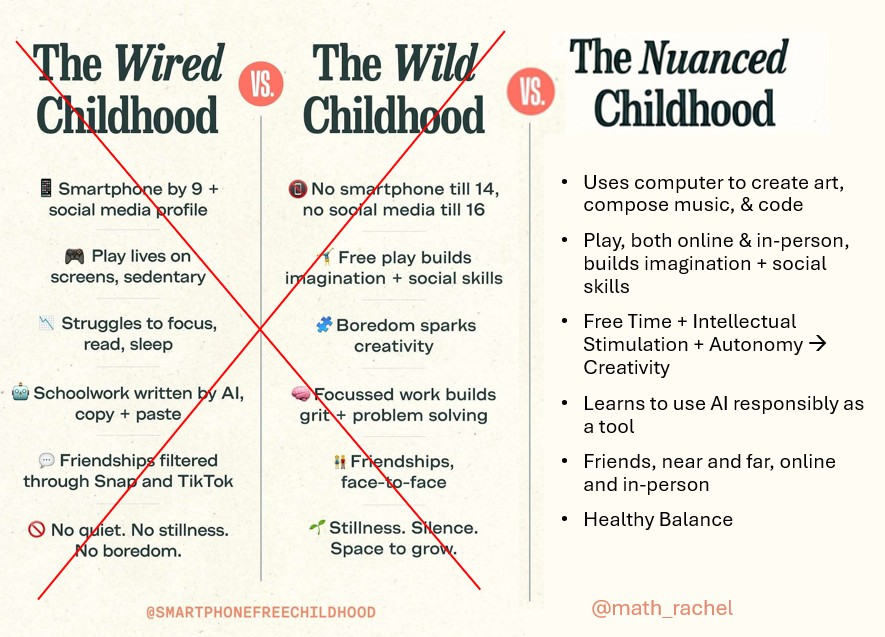
Stop Saying Boredom is Good for Kids
Fast.ai 2025-12-02 13:00 UTC Score 14.0 AI-185-20251202-developer-an-c1bee664 Full article

Stop Saying Boredom is Good for Kids

Chronic boredom causes stress, disengagement, and poor well-being in adults. So why do we glorify it for children?

OpenMined Blog 2025-12-01 14:14 UTC Score 37.0 USR-0156-20251201-ai-specialis-c9f6b1a2 Full article

No, AI hasn’t run out of data

AI models’ relationship with our data is getting more dynamic, contextual and private—and the stakes are high The Claim Earlier this year, Elon Musk claimed that ‘all human data for AI training has been exhausted’. Ilya Sutskever, a co-founder of OpenAI, has said the world has reached ‘peak data’. A recent episode of the BBC’s […] The post No, AI hasn’t run out of data appeared first on OpenMined .

Amazon Science AI 2025-11-26 14:00 UTC Score 33.0 AI-058-20251126-official-ai--c2ec3299 Full article

The overthinking problem in AI

Reasoning models can generate seven to 10 times as many tokens as necessary on simple tasks, creating unsustainable costs at scale. Amazon's vision for metacognitive AI could fundamentally shift how models allocate computational resources.

Vector Institute News 2025-11-25 14:01 UTC Score 30.0 USR-0017-20251125-research-aca-398f8e75 Full article

New study reveals AI’s $100B economic impact across Canada, with Ontario leading the charge

TORONTO, [November 25, 2025] – Ontario is the engine of Canada’s artificial intelligence (AI) economy. AI-related jobs here in the province contributed between $42 billion and $52 billion over the […] The post New study reveals AI’s $100B economic impact across Canada, with Ontario leading the charge appeared first on Vector Institute for Artificial Intelligence .

Consultancy.lat AI & GenAI 2025-11-24 10:09 UTC Score 12.0 AI-177-20251124-regional-ai--e44e613c

Alliott Global Alliance expands network with Guatemala-based Palomo Abogados

Alliott Global Alliance has expanded its network in South America with the addition of Palomo Abogados, a Guatemala-based law firm. Founded in 1978, Palomo Abogados provides legal solutions to domestic and multinational corporations, regional businesses, and high-profile clients across Latin America.

Amazon Science AI 2025-11-20 20:21 UTC Score 54.0 AI-058-20251120-official-ai--fe8d3c95 Full article

Where did it all go wrong? A hierarchical look into multi-agent error attribution

Error attribution in Large Language Model (LLM) multi-agent systems presents a significant challenge in debugging and improving collaborative AI systems. Current approaches to pinpointing agent and step level failures in multi-agent interaction traces—whether using all-at-once evaluation, step-by-step analysis, or binary search—fall short when analyzing complex patterns, struggling with both accuracy and consistency. We present ECHO (Error attribution through Contextual Hierarchy and Objective consensus analysis), a novel algorithm that combines hierarchical context representation, objective analysis-based evaluation, and consensus voting to improve error attribution accuracy. Our approach leverages a positional-based leveling of contextual understanding while maintaining objective evaluation criteria, ultimately reaching conclusions through a consensus mechanism. Experimental results demonstrate that ECHO outperforms existing methods across various multi-agent interaction scenarios, showing particular strength in cases involving subtle reasoning errors and complex interdependencies. Our findings suggest that leveraging these concepts of structured, hierarchical context representation combined with consensus-based objective decision-making, provides a more robust framework for error attribution in multi-agent systems.

TWIML AI Podcast 2025-11-19 01:49 UTC Score 48.0 AI-148-20251119-podcasts-and-a73f911f Full article

Proactive Agents for the Web with Devi Parikh - #756

Today, we're joined by Devi Parikh, co-founder and co-CEO of Yutori, to discuss browser use models and a future where we interact with the web through proactive, autonomous agents. We explore the technical challenges of creating reliable web agents, the advantages of visually-grounded models that operate on screenshots rather than the browser’s more brittle document object model, or DOM, and why this counterintuitive choice has proven far more robust and generalizable for handling complex web interfaces. Devi also shares insights into Yutori’s training pipeline, which has evolved from supervised fine-tuning to include rejection sampling and reinforcement learning. Finally, we discuss how Yutori’s “Scouts” agents orchestrate multiple tools and sub-agents to handle complex queries, the importance of background, "ambient" operation for these systems, and what the path looks like from simple monitoring to full task automation on the web. The complete show notes for this episode can be found at https://twimlai.com/go/756.

Lyft Engineering 2025-11-18 18:16 UTC Score 47.0 USR-0059-20251118-ai-specialis-18ffc8da Full article

LyftLearn Evolution: Rethinking ML Platform Architecture

Written by Yaroslav Yatsiuk At Lyft, machine learning (ML) is the engine behind our most critical business functions — from dispatch and pricing optimization to fraud detection and support automation. Our ML infrastructure serves thousands of production models making hundreds of millions of real-time predictions per day, supported by thousands of daily training jobs that keep ML models fresh and accurate. As our scale grew, we faced a classic engineering challenge: the very complexity that powered our platform was becoming a bottleneck to its future growth. We needed to answer a fundamental question: How could we evolve our platform to accelerate innovation for our users while simplifying its underlying architecture? This post explores how we rethought LyftLearn’s architecture to solve this problem. We’ll walk through our transition from a fully Kubernetes-based system to a hybrid platform, combining the simplicity of managed compute on AWS SageMaker for offline workloads with the flexibility of Kubernetes for online model serving. Afterwards, we’ll share the key technical decisions and trade-offs that made this evolution possible. LyftLearn Overview LyftLearn is Lyft’s end-to-end machine learning platform, managing the complete ML lifecycle from model development to production serving. Built to support hundreds of data scientists and ML engineers, it handles the full spectrum of ML workloads at scale. The platform is composed of three integrated products: Figure 1: LyftLear…

Vector Institute News 2025-11-14 18:45 UTC Score 44.0 USR-0017-20251114-research-aca-0318e19a Full article

When smart AI gets too smart: Key insights from Vector’s 2025 ML Security & Privacy Workshop

Vector Institute’s 2025 Machine Learning Security & Privacy Workshop revealed critical AI safety breakthroughs and concerning vulnerabilities in current machine learning (ML) security methods. This comprehensive analysis covers the latest […] The post When smart AI gets too smart: Key insights from Vector’s 2025 ML Security & Privacy Workshop appeared first on Vector Institute for Artificial Intelligence .

Consultancy.lat AI & GenAI 2025-11-13 10:15 UTC Score 17.0 AI-177-20251113-regional-ai--75c96ef3

Altman Solon deepens Brazilian presence with new office in São Paulo

Altman Solon, a global strategy consultancy specialising in telecommunications, media, and technology (TMT), has launched a new office in São Paulo – its second in Latin America. The move in the Brazilian market formalizes the firm’s longstanding work with clients in the country – Altman Solon has been advising local companies and investors for over a decade.

Toyota Research Institute Blog 2025-11-12 20:59 UTC Score 32.0 USR-0022-20251112-research-aca-45e93a1b

Mixed Methods Scenario Development for Human-Vehicle Interaction Research: A Case Study on Winter Driving

Mixed Methods Scenario Development for Human-Vehicle Interaction Research: A Case Study on Winter Driving robyn.cherinka… Wed, 11/12/2025 - 14:59 Scenarios provide a fundamental link between driving simulators and real-world conditions, shaping the extent to which the findings of a user study can be applied to public roads. However, compared to other aspects of study design, scenario development in human–vehicle interaction research tends to receive less deliberate attention. To encourage more methodical scenario generation, this work introduces a mixed methods approach for extracting representative scenarios from an integration of three real-world data sources: aggregated crash statistics, interviews with experienced drivers, and naturalistic driving data. Through a case study on winter driving, we outline the derivation of a nighttime, two-lane road scenario from these data sources and conduct an initial driving simulator pilot study to assess its realism. We hope that this demonstration of scenario generation from quantitative and qualitative data inspires researchers to consider more rigorous methods for scenario design in future work. Read More Image Oct 8, 2025 Human Interactive Driving 1 Minute Read

Toyota Research Institute Blog 2025-11-12 20:54 UTC Score 46.0 USR-0022-20251112-research-aca-dc5ef30f

Robot Learning from Any Images

Robot Learning from Any Images robyn.cherinka… Wed, 11/12/2025 - 14:54 We introduce RoLA, a framework that transforms any in-the-wild image into an interactive, physics-enabled robotic environment. Unlike previous methods, RoLA operates directly on a single image without requiring additional hardware or digital assets. Our framework democratizes robotic data generation by producing massive visuomotor robotic demonstrations within minutes from a wide range of image sources, including camera captures, robotic datasets, and Internet images. At its core, our approach combines a novel method for single-view physical scene recovery with an efficient visual blending strategy for photorealistic data collection. We demonstrate RoLA's versatility across applications like scalable robotic data generation and augmentation, robot learning from Internet images, and single-image real-to-sim-to-real systems for manipulators and humanoids. Video results are available at this https URL . Read More Image Sep 26, 2025 Robotics 1 Minute Read

Toyota Research Institute Blog 2025-11-12 20:50 UTC Score 38.0 USR-0022-20251112-research-aca-e13d35fa

From Dashboards to Dialogue: Evaluating a Conversational AI Coach for Performance Driving Skill Development

From Dashboards to Dialogue: Evaluating a Conversational AI Coach for Performance Driving Skill Development robyn.cherinka… Wed, 11/12/2025 - 14:50 Learning in domains involving complex motor skills, such as performance driving, often requires feedback that is timely, personalized, and actionable. Yet many drivers rely on video and telemetry data to review their performance without guidance. We explore how conversational AI can support post-drive reflection by integrating LLM-generated coaching into an interactive review interface. In an exploratory within-subjects simulator study (n=16), participants completed laps under two conditions: one with video and data visualizations alone, and another with the same tools augmented with a conversational interface that provided verbal feedback after each lap. Conversational feedback supported short-term improvements in lap time, average speed, and steering control, and was rated as more useful and satisfying—though it also elicited slightly higher nervousness. These results suggest that conversational AI can make post-drive feedback more interpretable and actionable, particularly for drivers reviewing performance data in high-skill contexts like performance driving. Read More Image Oct 4, 2025 Human Interactive Driving 1 Minute Read

Toyota Research Institute Blog 2025-11-12 20:45 UTC Score 48.0 USR-0022-20251112-research-aca-cb768f39 Full article

SAFE: Multitask Failure Detection for Vision-Language-Action Models

SAFE: Multitask Failure Detection for Vision-Language-Action Models robyn.cherinka… Wed, 11/12/2025 - 14:45 While vision-language-action models (VLAs) have shown promising robotic behaviors across a diverse set of manipulation tasks, they achieve limited success rates when deployed on novel tasks out of the box. To allow these policies to safely interact with their environments, we need a failure detector that gives a timely alert such that the robot can stop, backtrack, or ask for help. However, existing failure detectors are trained and tested only on one or a few specific tasks, while generalist VLAs require the detector to generalize and detect failures also in unseen tasks and novel environments. In this paper, we introduce the multitask failure detection problem and propose SAFE, a failure detector for generalist robot policies such as VLAs. We analyze the VLA feature space and find that VLAs have sufficient highlevel knowledge about task success and failure, which is generic across different tasks. Based on this insight, we design SAFE to learn from VLA internal features and predict a single scalar indicating the likelihood of task failure. SAFE is trained on both successful and failed rollouts, and is evaluated on unseen tasks. SAFE is compatible with different policy architectures. We test it on OpenVLA, π0, and π0-FAST in both simulated and real-world environments extensively. We compare SAFE with diverse baselines and show that SAFE achieves state-of-the-art failu…

Toyota Research Institute Blog 2025-11-12 20:40 UTC Score 63.0 USR-0022-20251112-research-aca-6fff3352 Full article

STITCH-OPE: Trajectory Stitching with Guided Diffusion for Off-Policy Evaluation

STITCH-OPE: Trajectory Stitching with Guided Diffusion for Off-Policy Evaluation robyn.cherinka… Wed, 11/12/2025 - 14:40 Off-policy evaluation (OPE) estimates the performance of a target policy using offline data collected from a behavior policy, and is crucial in domains such as robotics or healthcare where direct interaction with the environment is costly or unsafe. Existing OPE methods are ineffective for high-dimensional, long-horizon problems, due to exponential blow-ups in variance from importance weighting or compounding errors from learned dynamics models. To address these challenges, we propose STITCH-OPE, a model-based generative framework that leverages denoising diffusion for long-horizon OPE in high-dimensional state and action spaces. Starting with a diffusion model pre-trained on the behavior data, STITCH-OPE generates synthetic trajectories from the target policy by guiding the denoising process using the score function of the target policy. STITCH-OPE proposes two technical innovations that make it advantageous for OPE: (1) prevents over-regularization by subtracting the score of the behavior policy during guidance, and (2) generates long-horizon trajectories by stitching partial trajectories together end-to-end. We provide a theoretical guarantee that under mild assumptions, these modifications result in an exponential reduction in variance versus long-horizon trajectory diffusion. Experiments on the D4RL and OpenAI Gym benchmarks show substantial improveme…

TWIML AI Podcast 2025-11-12 20:05 UTC Score 28.0 AI-148-20251112-podcasts-and-7874fd64 Full article

AI Orchestration for Smart Cities and the Enterprise with Robin Braun and Luke Norris - #755

Today, we're joined by Robin Braun, VP of AI business development for hybrid cloud at HPE, and Luke Norris, co-founder and CEO of Kamiwaza, to discuss how AI systems can be used to automate complex workflows and unlock value from legacy enterprise data. Robin and Luke detail high-impact use cases from HPE and Kamiwaza’s collaboration on an “Agentic Smart City” project for Vail, Colorado, including remediation and automation of website accessibility for 508 compliance, digitization and understanding of deed restrictions, and combining contextual information with camera feeds for fire detection and risk assessment. Additionally, we discuss the role of private cloud infrastructure in overcoming challenges like cost, data privacy, and compliance. Robin and Luke also share their lessons learned, including the importance of fresh data, and the value of a "mud puddle by mud puddle" approach in achieving practical AI wins. The complete show notes for this episode can be found at https://twimlai.com/go/755.

One Useful Thing 2025-11-12 02:46 UTC Score 25.0 USR-0105-20251112-ai-specialis-bf2c56ca Full article

Giving your AI a Job Interview

As AI advice becomes more important, we are going to need to get better at assessing it

Amazon Science AI 2025-11-11 20:05 UTC Score 59.0 AI-058-20251111-official-ai--90bf77a7 Full article

Building more accountable multi-modal LLMs through spatially-informed visual reasoning

Recent research has demonstrated that debate mechanisms among Large Language Models (LLMs) show remarkable potential for enhancing reasoning capabilities and promoting responsible text generation. However, it remains an open question whether debate strategies can effectively generalize to Multi-Modal Large Language Models (MLLMs). In this paper, we address this challenge by proposing a location-aware debate framework specifically designed for MLLMs to mitigate hallucination without requiring additional external knowledge. Our approach introduces an asymmetric debate structure across both textual and visual modalities. For textual processing, one MLLM instance generates a comprehensive image description while identifying object locations, while a second instance "zooms in" on specific regions of interest to evaluate and refine the initial descriptions. For visual processing, we introduce a novel hybrid attention module that fuses visual self-attention with cross-modal attention between textual and visual information, effectively highlighting critical content regions. The framework incorporates a judge component that evaluates the complete debate process and selects the most reliable output between the two debating instances. Our experimental results demonstrate that this approach substantially reduces hallucination across diverse MLLMs and evaluation metrics. Moreover, the framework serves as a readily integrable complement to existing hallucination mitigation methods. By emp…