AI/ML News & Innovations Hub

AI/ML news, top picks, and generated innovation digests.

★ Visit ai-karthik.com
422Sources
9886News Items
8Top Picks
83Blogs
successLast Run

Latest AI/ML News

9886 matching items

Lilian Weng Blog 2024-02-05 00:00 UTC Score 50.0 USR-0112-20240205-ai-specialis-79c273e2 Full article

Thinking about High-Quality Human Data

[Special thank you to Ian Kivlichan for many useful pointers (E.g. the 100+ year old Nature paper “Vox populi”) and nice feedback. 🙏 ] High-quality data is the fuel for modern data deep learning model training. Most of the task-specific labeled data comes from human annotation, such as classification task or RLHF labeling (which can be constructed as classification format) for LLM alignment training. Lots of ML techniques in the post can help with data quality, but fundamentally human data collection involves attention to details and careful execution. The community knows the value of high quality data, but somehow we have this subtle impression that “Everyone wants to do the model work, not the data work” ( Sambasivan et al. 2021 ).


fAIr LAC 2024-01-31 13:07 UTC Score 22.0 USR-0219-20240131-ai-specialis-62e33a4b Full article

Acuadata

Acuadata @administrador Mié, 31/01/2024 - 13:07 Las pérdidas de agua no técnicas en América Latina y el Caribe representan un desafío significativo en la gestión eficiente de los recursos hídricos. Estas pérdidas, que incluyen fugas y problemas en la distribución, contribuyen a un uso ineficiente del agua, lo que a su vez afecta la disponibilidad y la sostenibilidad de este recurso vital. Para abordar este problema, es esencial implementar estrategias integrales que combinen la tecnología avanzada con la capacitación adecuada y la gestión eficaz, con el objetivo de reducir las pérdidas de agua y garantizar un suministro sostenible para las comunidades en toda la región. Problema que se busca resolve En los países de la región de América Latina y el Caribe, se observan niveles elevados de pérdidas de agua, con aproximadamente el 38% del agua perdida antes de la facturación. En la Empresa Pública Metropolitana de Agua Potable y Saneamiento de Quito (EPMAPS), este indicador se sitúa en el 29%. EPMAPS tiene como objetivo reducir las pérdidas comerciales de agua en un 1%, mantener el nivel de multas y disminuir el número de inspecciones y personal en el equipo de monitoreo. Poblaciones que se ven afectadas por el problema Consumidores servicios de agua Respuesta actual a este problema, considerando a las instituciones relacionadas. Detectar las perdida no técnica de agua requiere una inmensa cantidad de datos, realizar este análisis de manera manual ha llevado a una baja efectivi…

fAIr LAC 2024-01-31 13:04 UTC Score 22.0 USR-0219-20240131-ai-specialis-ce68c54a Full article

Energizados

Energizados @administrador Mié, 31/01/2024 - 13:04 Para una sociedad que depende altamente de la disponibilidad, eficiencia y confiabilidad de la electricidad, se hace indispensable para las empresas eléctricas del sector tener una buena administración de la producción y distribución de energía. Uno de los grandes problemas que preocupa son las pérdidas eléctricas. En el transporte de energía, las pérdidas eléctricas son la diferencia entre la electricidad que ingresa a la red y la que es entregada para el consumo final, y son reflejo del nivel de eficiencia de la infraestructura en transmisión y distribución. El concepto de pérdidas eléctricas incluye también la electricidad entregada pero no facturada, que se traduce directamente en pérdidas financieras y sirve como indicador del desempeño operacional de las empresas eléctricas. Problema que se busca resolve El problema que se busca resolver a partir de las pérdidas eléctricas en la red de distribución de energía es la ineficiencia en la entrega y uso de la electricidad. Estas pérdidas pueden deberse al robo de energía, y resultan en la disipación de energía valiosa y en costos adicionales para las empresas de servicios públicos y los consumidores. La reducción de las pérdidas eléctricas no solo contribuye a un suministro más confiable y económico de energía, sino que también tiene un impacto positivo en la sostenibilidad ambiental al reducir la necesidad de generar energía adicional para compensar estas pérdidas. Poblacio…

fAIr LAC 2024-01-31 12:46 UTC Score 22.0 USR-0219-20240131-ai-specialis-72702002 Full article

ViaSegura

ViaSegura @administrador Mié, 31/01/2024 - 12:46 Uno de los mecanismos para salvar vidas en siniestros viales es la detección temprana de las fallas en la infraestructura vial que potencialmente pueden ocasionar las catástrofes. Problema que se busca resolve Actualmente, 1.35 millones de personas mueren y 50 millones son heridas en siniestros de tránsito por año en el mundo. Reducir la siniestralidad en las vías e incrementar la seguridad es posible. Los traumatismos causados por el tráfico vehicular son la principal causa de muerte a nivel global de niños y adultos jóvenes entre 5 y 29 años. Las muertes por accidentes de tránsito son una crisis de salud pública que puede evitarse y que afecta particularmente a los países de ingresos medio y bajo.Las lesiones graves o fatales derivadas de incidentes de tráfico son resultado del diseño y mantenimiento de la infraestructura vial. La seguridad en las carreteras es un enfoque clave del Plan Global para la Segunda Década de Acción para la Seguridad Vial 2021-2030 , que insta a los gobiernos y socios a implementar el Enfoque de Sistemas Seguros para reducir a la mitad las muertes y lesiones viales para el año 2030. Poblaciones que se ven afectadas por el problema Peatones, conductores y pasajeros de vehículos, entidades de logística, concesionarios, y autoridades viales. Respuesta actual a este problema, considerando a las instituciones relacionadas. El análisis de la seguridad vial de las carreteras se por parte de personal espec…

fAIr LAC 2024-01-31 12:40 UTC Score 22.0 USR-0219-20240131-ai-specialis-2961469b Full article

Pavimenta2

Pavimenta2 @administrador Mié, 31/01/2024 - 12:40 Pavimenta2 permite la detección de defectos en el pavimento de autopistas y carreteras, así como la categorización de señales de tráfico verticales y horizontales. La herramienta automatiza el análisis de las condiciones del pavimento utilizando inteligencia artificial (IA) y visión por computadora a partir de videos capturados por una cámara estándar montada en un vehículo. Esto permite a las autoridades de transporte evaluar eficazmente el inventario de carreteras, cruzar datos de accidentes y tiempos de viaje, y estimar los costos de mantenimiento con recursos limitados. La herramienta acorta un proceso que podría llevar varios años a unas pocas semanas de recopilación de videos y horas de procesamiento de imágenes. Problema que se busca resolve Los defectos en el pavimento representan más que una simple incomodidad; constituyen un riesgo significativo para los conductores, dando lugar a colisiones y fatalidades. Históricamente, la identificación de los defectos en las carreteras ha sido un proceso manual, caracterizado por su naturaleza que consume mucho tiempo y sus costos elevados. Analizar manualmente una red de carreteras de 10,000 km demanda aproximadamente 78 semanas y un presupuesto que supera los $3,000,000. Ante semejantes complejidades, los países de América Latina y el Caribe han estado realizando análisis parciales y poco frecuentes de sus redes viales. Poblaciones que se ven afectadas por el problema Autorida…

fAIr LAC 2024-01-25 13:04 UTC Score 25.0 USR-0219-20240125-ai-specialis-b4045179 Full article

Alerta de sepsis hospitalaria Laura

Alerta de sepsis hospitalaria Laura @administrador Jue, 25/01/2024 - 13:04 Se esta implementando una solución de inteligencia oficial en el Hospital Villa El Salvador para la identificación de sepsis utilizando algoritmos desarrollados por la empresa Laura. Problema que se busca resolve Detección temprana de sepsis hospitalaria Poblaciones que se ven afectadas por el problema Población internada en el hospital Villa El Salvador de Lima. Propuesta para solucionar dicho problema usando IA Detección temprana de sepsis con base en información de historia clínica electrónica. Avances/resultados Se está llevando acabo la implementación. Metas Finalización del piloto e inicio de análisis de datos. Principales retos en la implementación Participación del equipo del hospital dado el limitado numero de personal con el que cuentan. Principales retos de la IA identificados Acceso a información debidamente estructurada. Sector Salud País Perú Contacto fairlac@iadb.org Entidad Ejecutora MINSA Estado Uso y monitoreo

fAIr LAC 2024-01-25 13:00 UTC Score 22.0 USR-0219-20240125-ai-specialis-0b339bea Full article

Protección trayectorias educativas

Protección trayectorias educativas @administrador Jue, 25/01/2024 - 13:00 El sistema educativo uruguayo presenta importantes desafíos para lograr trayectorias continuas, completas y exitosas de los jóvenes. A pesar de haber alcanzado la cobertura universal en primaria, un importante porcentaje de estudiantes uruguayos repite los primeros grados (13,4% en 1º grado y 6,9% en segundo grado). Estas altas tasas de repitencia generan rezago, y al llegar al 6º grado el 29% de los alumnos tienen sobreedad. Estos problemas en la educación primaria tienen impacto en la educación media (EM), donde Uruguay enfrenta tres retos: (i) la integración, retención y egreso de los jóvenes en el sistema; (ii) la calidad en términos de aprendizajes y desarrollo de competencias: y (iii) la equidad. Respecto al primer reto, aun cuando la EM es obligatoria la asistencia escolar disminuye a partir del ingreso a este nivel. En 2013 la tasa neta de matrícula (TNM) en la educación media básica (EMB) fue de 76,2%. A la dificultad que presenta el sistema para incorporar a los jóvenes se le suma el hecho de que el 25% de los estudiantes uruguayos de EMB tienen dos o más años de rezago escolar. Como resultado, la tasa de egreso de la EMB es solo del 57%. Todos los indicadores de la EMB ponen a Uruguay en comparación desfavorable respecto de países como Chile (88%) y Ecuador (73%). La situación se agrava en la educación media superior (EMS), donde se evidencian las dificultades del sistema para retener a los…

fAIr LAC 2024-01-25 12:55 UTC Score 27.0 USR-0219-20240125-ai-specialis-64cb8620 Full article

Predicción de Abandono y Reprobación Escolar

Predicción de Abandono y Reprobación Escolar @administrador Jue, 25/01/2024 - 12:55 El proyecto de construcción de algoritmos predictivos de deserción y fracaso escolar tiene como objetivo la modelación de algoritmos que predicen el riesgo de deserción y reprobación escolar para el nivel de secundaria. Problema que se busca resolve Reducir abandono escolar y tasas de repitencia. Poblaciones que se ven afectadas por el problema Estudiantes de 10-12 año (ensino medio) de Redes Estaduales Públicas Respuesta actual a este problema, considerando a las instituciones relacionadas. Acciones inorgánicas con escaso respaldo en información actualizada, para docentes, directores y niveles regionales de gestión. Propuesta para solucionar dicho problema usando IA Elaborar un sistema de alerta temprano para detectar abandono y reprobación – piloto con escuelas de secundaria de la Secretaria Estadual de Educação do Espírito Santo (Brasil), con apoyo del Instituto Unibanco. ¿Qué consideraciones de seguridad, leyes nacionales o estándares se tienen que tener en cuenta para utilizar cada fuente de información? Ley de protección de datos personales. Avances/resultados Convenios de uso de datos firmados: inicio de las tareas técnicas de desarrollo de algoritmos de predicción. Metas Concluir algoritmos de predicción. Elección de próxima red educativa. Principales retos en la implementación Definición de protocolos de intervención pedagógicos a partir de los riesgos identificados. Gobernanza. Prin…

fAIr LAC 2024-01-25 12:45 UTC Score 27.0 USR-0219-20240125-ai-specialis-699149c2 Full article

Asignación centralizada de alumnos (Perú)

Asignación centralizada de alumnos (Perú) @administrador Jue, 25/01/2024 - 12:45 Alertas de riesgo 3 años. Se usa ML para predecir riesgo Problema que se busca resolve El problema descrito es que los usuarios interactúan con plataformas centralizadas de búsqueda y elección, como los sistemas de selección de escuelas, con información limitada y creencias sesgadas. Esto conduce a ineficiencias y, en ocasiones, a desigualdades en las asignaciones finales. También hay evidencia de que buscar opciones como escuelas es costoso y que los solicitantes enumeran demasiadas pocas opciones debido a creencias sesgadas sobre las probabilidades de asignación. Poblaciones que se ven afectadas por el problema Los estudiantes de Tacna que ingresan al sistema educativo entre pre-K y grado 1 (3-6 años) Respuesta actual a este problema, considerando a las instituciones relacionadas. El artículo propone colaborar con los Ministerios de Educación para enviar "boletines informativos" a los solicitantes durante la fase piloto de plataformas centralizadas de elección de escuelas. Estos boletines, dados a un grupo seleccionado al azar, proporcionan información sobre las opciones de escuelas disponibles para mejorar la toma de decisiones y las asignaciones. Propuesta para solucionar dicho problema usando IA El envío de estas tarjetas permite que los usuarios cuenten con más información en el momento de la elección de plataforma digital Avances/resultados Los estudiantes agregan más y mejores escuelas e…

fAIr LAC 2024-01-25 12:22 UTC Score 24.0 USR-0219-20240125-ai-specialis-f2d42583 Full article

Asignación centralizada de docentes (Ecuador)

Asignación centralizada de docentes (Ecuador) @administrador Jue, 25/01/2024 - 12:22 Quiero ser maestro Problema que se busca resolve El proyecto busca resolver las ineficiencias en el mercado laboral de docentes, causadas por una falta de información. Examina cómo las preferencias de los profesores por escuelas más cercanas a su hogar, ubicadas en áreas urbanas, con mejor infraestructura o con estudiantes de mayor ventaja socioeconómica, resultan en una alta demanda para algunas escuelas y vacantes en otras. Poblaciones que se ven afectadas por el problema Los maestros que participan del concurso Quiero Ser Maestro en Ecuador Respuesta actual a este problema, considerando a las instituciones relacionadas. El estudio pone a prueba una intervención con el fin de mejorar la asignación de empleos y la tasa de plazas ocupadas, proporcionando información más precisa a los docentes. Propuesta para solucionar dicho problema usando IA Específicamente, para informar mejor a los candidatos a docentes que participaron en el proceso de selección de Ecuador en 2021, estos últimos recibieron un informe personalizado a través de WhatsApp y correo electrónico que contenía un resumen de su solicitud. Para los candidatos cuyo riesgo estimado de no ser asignados era "alto" (por encima de un nivel de corte definido), el informe también incluía una advertencia de riesgo de no asignación y una lista de escuelas recomendadas donde tenían mayores posibilidades de asegurar una posición. Evaluamos el…

Disrupt Africa 2024-01-23 06:00 UTC Score 22.0 USR-0197-20240123-regional-new-8104099a Full article

How Egyptian prop-tech startup Partment enables hassle-free 2nd home ownership

Egyptian prop-tech startup Partment is working to redefine second-home ownership and real estate investment via its “invest and experience” co-ownership platform. Founded in 2022, Partment offers users the chance to part-invest in meticulously curated properties, enabling personalised and diversified real estate portfolios. Through fractional ownership, co-owners access a set number of nights for personal use [...]

Disrupt Africa 2024-01-23 04:00 UTC Score 15.0 USR-0197-20240123-regional-new-1a1f42c5 Full article

Announcing the $5M Core Africa Innovation Fund: Empowering Local Web3 Builders

Core DAO is excited to introduce the African Innovation Fund, a groundbreaking initiative to provide resources and networks to support local Web3 builders and projects across the African continent. This new fund is set to foster innovation, sustainability, accessibility and growth within the African blockchain ecosystem. If you’re building interesting web3 projects in Africa and [...]

Disrupt Africa 2024-01-22 09:00 UTC Score 25.0 USR-0197-20240122-regional-new-f1786302 Full article

UNDP launches “timbuktoo” financing initiative for African startups

The United Nations Development Programme (UNDP) has launched the “timbuktoo” initiative together with African countries, which it said is positioned to be “the world’s largest financing facility”, bringing catalytic and commercial capital together to support Africa’s startup ecosystem. President Paul Kagame of Rwanda, President Nana Akufo-Addo of Ghana, African Continental Free Trade Area secretariat secretary [...]

Disrupt Africa 2024-01-22 07:00 UTC Score 20.0 USR-0197-20240122-regional-new-9e41eedd Full article

10 startups selected for Africa Tech Summit Nairobi Investment Showcase

Africa Tech Summit Nairobi has announced the 10 African tech ventures that will showcase their solutions to an audience of industry experts, investors and fellow innovators on February 14-15. Africa Tech Summit Nairobi is a leading African tech event providing insight and networking with the African tech ecosystem, bringing together tech leaders, MNOs, banks, international [...]

Disrupt Africa 2024-01-22 06:00 UTC Score 35.0 USR-0197-20240122-regional-new-b9540028 Full article

Egyptian e-health startup Yodawy banks $10m funding

Egyptian digital healthcare startup Yodawy, which has pioneered a pharmacy benefit management platform in the MENA region using technology, expert pharmacists, and state-of-the-art logistics, has raised US$10 million in extra funding, taking its total raised capital to US$34.5 million. Founded in 2018, Yodawy enables its partners – insurance companies, medical providers, pharmacies, and pharmaceutical/FMCG companies [...]

Disrupt Africa 2024-01-20 06:00 UTC Score 22.0 USR-0197-20240120-regional-new-192701b2 Full article

Third episode of new Disrupt Podcast series shines light on Africa’s ed-tech space

Disrupt Africa has released the third – and last – episode of its three-part podcast series zeroing in on the state of Africa’s ed-tech space, looking at trends, opportunities and challenges within the vital sector. Disrupt Podcast has released a number of focused series in the last couple of years, including ones on venture capital, [...]

Disrupt Africa 2024-01-19 22:14 UTC Score 15.0 USR-0197-20240119-regional-new-8a76ba44 Full article

Which Meme Coins to Buy in 2024? Top Meme Coins by Market Capitalization and New Trending Coins Including ApeMax, Dogecoin, Shiba Inu, Pepe Coin, Floki, Memecoin by 9gag, and Bonk

The meme coin landscape is experiencing a resurgence, with established players like Dogecoin and Shiba Inu maintaining their dominance in the market while new coins like Pepe and Dogwifhat experience recent price surges. These new coins, alongside the “Boost-to-Earn coin ApeMax, are quickly gaining traction because of their innovative features. Based on information gathered from [...]

Disrupt Africa 2024-01-19 22:02 UTC Score 12.0 USR-0197-20240119-regional-new-193a13b7 Full article

5 Top Trending Altcoins to Buy Now | Can These Altcoins Explode After The Bitcoin Halving? (ApeMax, Arbitrum, Polkadot, Skale, Maverick Protocol)

The crypto market is buzzing with anticipation as some analysts predict a potential bull run in 2024 with key events like the upcoming Bitcoin halving event predicted to take place in April 2024. Amidst this excitement, many crypto enthusiasts, traders, and analysts are actively seeking the next big altcoin, extending their interests beyond the more [...]

Disrupt Africa 2024-01-19 21:52 UTC Score 20.0 USR-0197-20240119-regional-new-d26021d4 Full article

Should Investors Get Excited About XRP’s $1.8 Billion Trading Volume? Why Crypto Whales are Turning to Launchpad Instead – The Best Passive Income Crypto in 2024

”Should you invest in an established crypto that shows high promise of winning its lawsuit? Or a new and relatively unknown altcoin quickly gaining traction for its presale that’s now live?” While Bitcoin has dipped by 2.80% in the past week, XRP has achieved a steady growth rate of 2.5% within the same timeframe. It’s [...]

Disrupt Africa 2024-01-19 21:43 UTC Score 12.0 USR-0197-20240119-regional-new-6e7e1da6 Full article

​​5 Meme Coins on Investor’s Watch Lists for Upcoming Alt Coin Season 2024

Finding the next meme coin with the potential for a 100x return on investment can be a daunting task in the current crypto landscape. The market is saturated with numerous meme coins, making it challenging to identify promising projects that stand out. However, there are strategies to improve your odds of success, such approaches many [...]

Chip Huyen Blog 2024-01-16 00:00 UTC Score 44.0 USR-0111-20240116-ai-specialis-9651fc41 Full article

Generation configurations: temperature, top-k, top-p, and test time compute

ML models are probabilistic. Imagine that you want to know what’s the best cuisine in the world. If you ask someone this question twice, a minute apart, their answers both times should be the same. If you ask a model the same question twice, its answer can change. If the model thinks that Vietnamese cuisine has a 70% chance of being the best cuisine and Italian cuisine has a 30% chance, it’ll answer “Vietnamese” 70% of the time, and “Italian” 30%. This probabilistic nature makes AI great for creative tasks. What is creativity but the ability to explore beyond the common possibilities, to think outside the box? However, this probabilistic nature also causes inconsistency and hallucinations. It’s fatal for tasks that depend on factuality. Recently, I went over 3 months’ worth of customer support requests of an AI startup I advise and found that ⅕ of the questions are because users don’t understand or don’t know how to work with this probabilistic nature. To understand why AI’s responses are probabilistic, we need to understand how models generate responses, a process known as sampling (or decoding). This post consists of 3 parts. Sampling : sampling strategies and sampling variables including temperature, top-k, and top-p. Test time compute : increasing the compute allocated to inference, e.g. sampling multiple outputs, to help improve a model’s performance. Structured outputs : how to get models to generate outputs in a certain format. Sampling Given an input, a neural networ…

Block size in subsampling and bootstrap for time series
Cross Validated 2024-01-14 20:13 UTC Score 12.0 AI-113-20240114-social-media-782c03c3 Full article

Block size in subsampling and bootstrap for time series

I have a dependent variable, a time series of 80 periods (discrete decisions). I am doing maximum likelihood estimation with 10 parameters. Now I want to get the standard error or confidence interval of the estimates of these 10 parameters. One feature of my likelihood function is that the decisions is determined by all the history of $x$ , and the weight of past $x$ decreases geometrically: $x_t+\rho x_{t-1}+\rho^2 x_{t-2}$ ... where $\rho$ is one of the parameters needed to be estimated. So I am thinking that moving block bootstrapping perhaps is not suitable to sustain the data structure, and I should use subsampling. But subsampling of a given block size leaves me a very few subsamples. For example, if I choose a block size of 40, I get only 41 subsamples. Should I concern about it? Is it sufficient? Can I use multiple block sizes to construct a confidence interval? Is there any other alternatives that I could use to get standard error or confidence interval?

AI Stack Exchange 2024-01-07 09:52 UTC Score 15.0 AI-110-20240107-social-media-f675f662 Full article

How does one annotate overlapping objects in instance segmentation?

As I struggle to find any literature online about this, I wanted to ask about it here so that others could learn. My question is inspired by a Yolo GitHub issue . In this example we have 2 objects, here a plate and an egg, with one object being inside the other one. The question is how to annotate the plate (aka the outer object). Annotate full contour of outer object. Some pixels belong to 2 classes. Make a little bridge to the inner object so that the contour of the outer object excludes the inner object. This question arose while using Yolo but can be extended to other instance segmentation models. Any more information regarding good practices in instance segmentation is more than welcome.

Comment on State-Of-The-Art Approaches to Attribution in Marketing by Bay tech media
TOPBOTS 2023-12-27 18:30 UTC Score 26.0 AI-043-20231227-ai-specialis-074811ae Full article

Comment on State-Of-The-Art Approaches to Attribution in Marketing by Bay tech media

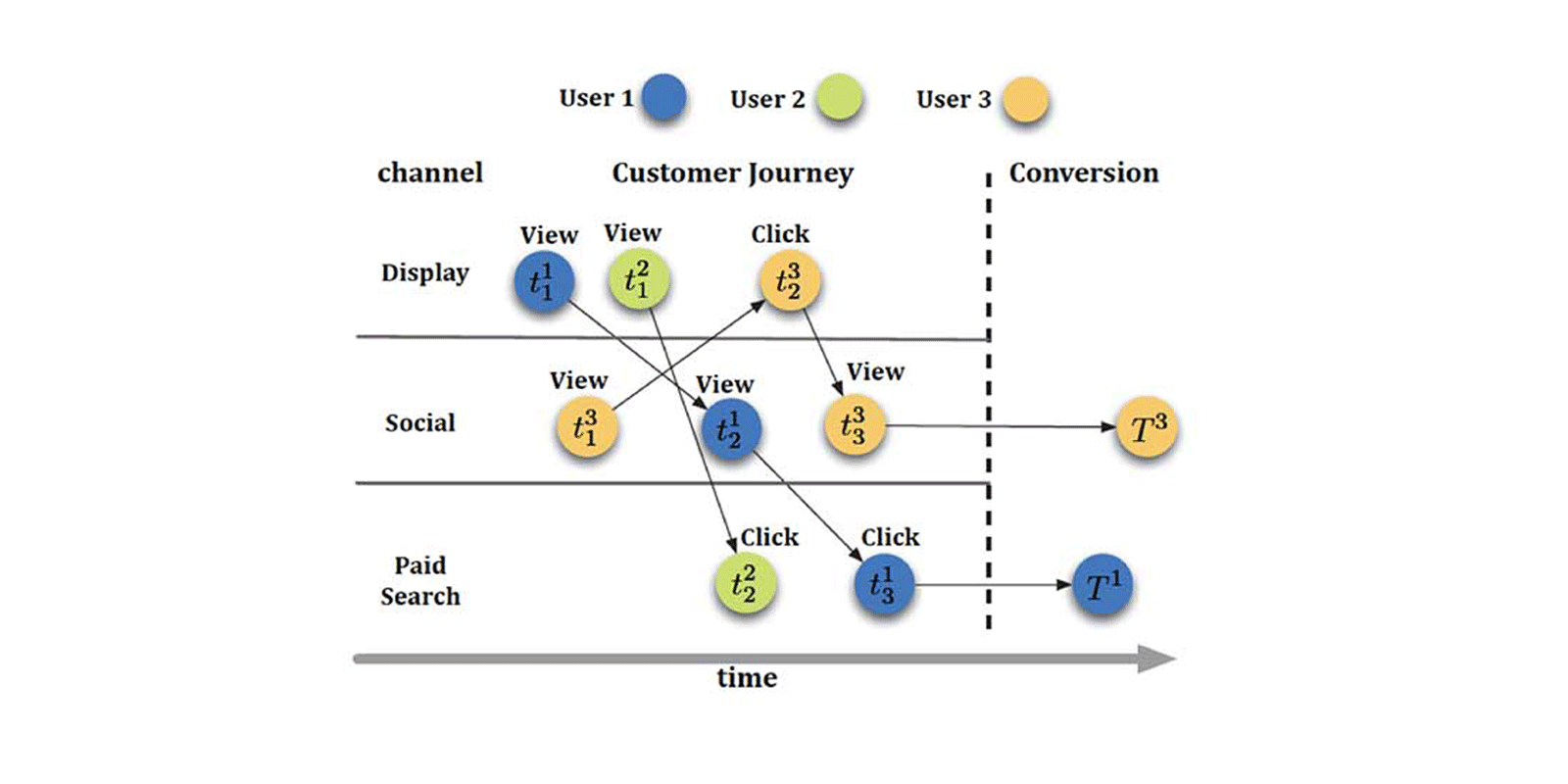
In the realm of digital marketing, attribution methodologies have undergone significant advancements. State-of-the-art approaches include Multi-Touch Attribution (MTA) for holistic channel tracking, Algorithmic Attribution leveraging machine learning for precise credit assignment, Cross-Device Attribution capturing interactions across devices, Incrementality Testing to gauge true marketing impact, and AI-Powered Attribution for deep data analysis. Bay Tech Media implements these cutting-edge methods, empowering businesses with accurate insights to refine and optimize their marketing strategies effectively.

Canonical correlation analysis - loadings vs coefficients
Cross Validated 2023-12-19 13:35 UTC Score 12.0 AI-113-20231219-social-media-6d9bc241 Full article

Canonical correlation analysis - loadings vs coefficients

I'm trying to wrap my head around how to interpret the results of CCA. I've got a fairly deep understanding of OLS regression, and I've read a lot of helpful CCA explainers like this one by @ttnphns . However, I'm still struggling with one particular aspect of the logic of what one apparently does with the CCA results. I'll unpack below, using terminology from the R package CCA to refer to different elements. In particular, I understand that the math of CCA treats X and Y identically, i.e., this is correlation, not regression. But, in a situation where Y is logically downstream of X, and where Y comprises multiple theoretically independent outcomes, the idea of using the ycoef s, which are essentially regression coefficients specifying the linear combination of y s that produce a given yscore , and which, like OLS regression, reflect the joint influence of the given y and all the other y s , doesn't make sense to me. Again, I understand the math of how a given yscore is derived, and how that is reflected in the ycoef s. What I don't like is the idea of reporting how the various y s 'contributed to' constructing this synthetic latent variable in a regression sense, because in reality, all the y s arose independently—or, more in keeping with the logic of CCA, they were all driven by some set of latent variables. What makes sense to me would be to report the xcoef s alongside the corr.Y.yscores , that is, the coefficients for how each x relates to a given xscore , and the loadi…

Salmon in the Loop
The Gradient 2023-12-16 17:00 UTC Score 10.0 AI-037-20231216-ai-specialis-78cb7372 Full article

Salmon in the Loop

On fish counting – a complex sociotechnical problem in a field that is going through the process of digital transformation.

Multiple linear regression with possibly non-independent explanatory variables
Cross Validated 2023-12-13 21:31 UTC Score 9.0 AI-113-20231213-social-media-09fba7d8 Full article

Multiple linear regression with possibly non-independent explanatory variables

For a given household for which I have many years of historical data, I want to predict the home gas consumption (heating) with a few variables among: date gas min_temp max_temp mean_temp relative_humidity absolute_humidity other_column 2023-01-01 5.8 m^3 -3.0°C 2.3°C -1.2°C 79 % 4 g/m^3 ... 2023-01-02 4.8 m^3 2.0°C 4.2°C 2.3°C 82 % 4.5 g/m^3 ... ... I could do a multiple linear regression for $$\rm{gas\ consumption} = \beta_0 + \beta_1 \rm{min\ temp} + \beta_2 \rm{max\ temp} + \beta_3 \rm{mean\ temp} + ... + \varepsilon,$$ but since many of these variables are not independent of each other (and maybe nearly collinear), doing a standard multiple linear regression might give bad results (for example with some negative $\beta_i$ where it shouldn't). Which better solution can we use? PCA + multiple linear regression (PCR) or PLS or something else? Note: I'd like to avoid using all 3 (min, max, mean) temp, if possible. How can we evaluate the loss if using using only 1 temperature variable (the best fit among the 3) instead of the 3 variables?

A new old kind of R&D lab
Fast.ai 2023-12-11 13:00 UTC Score 25.0 AI-185-20231211-developer-an-8e33d8a2 Full article

A new old kind of R&D lab

Answer.AI is a new kind of AI R&D lab which creates practical end-user products based on foundational research breakthroughs.

Transformers: Cross Attention Tensor Shapes During Inference Mode
Cross Validated 2023-12-01 21:33 UTC Score 21.0 AI-113-20231201-social-media-26df2fd4 Full article

Transformers: Cross Attention Tensor Shapes During Inference Mode

Using the "classic" transformer model describing in "Attention is All You Need", I'm struggling to understand how the Encoder output is used by the Decoder during cross attention while in inference mode, specifically how the actual matrix multiplication can happen. During training mode, everything makes sense to me: The Encoder outputs a tensor of shape (B, T, C) where B = batch_size, T = max_tokens, and C = d_model = embedding dimension size. This is passed to the Decoder and changed to shape (B, T, T) through the scaled dot product mechanism (will call this tensor A ) A is multiplied by the Decoder's value tensor of shape (B, T, HS) where HS = depth = head size. This multiplication is possible because the shapes of the tensors comply (B, T, T) @ (B, T, HS) --> (B, T, HS) . But in inference mode we start with a Decoder value tensor that will only have a token length of 1 , so a tensor shape of (1, 1, HS) , where T != 1, and then expand the sequence from there. So, during the cross attention step with the Encoder, how can A with shape (1, T, T) be multiplied with (1, 1, HS) ? Clearly, I'm missing something pretty big here, so any help would be much appreciated!

Outlier Detection and Removal
Cross Validated 2023-11-27 17:11 UTC Score 15.0 AI-113-20231127-social-media-a4a976c9 Full article

Outlier Detection and Removal

I am reading a paper on wind power forecasting and the authors present a plot of the data before outliers are removed and a plot after. However, they don't actually say what method was employed to remove the outliers. I was hoping someone might offer some guesses or hints on how one would go about obtaining plot (b) from plot (a). Edit The paper is here: One-Day-Ahead Hourly Wind Power Forecasting Using Optimized Ensemble Prediction Methods by Chao-Ming Huang 1, Shin-Ju Chen, Sung-Pei Yang and Hsin-Jen Chen

Comment on Step-By-Step Implementation of GANs on Custom Image Data in PyTorch: Part 2 by Mel Dorn
TOPBOTS 2023-11-18 08:21 UTC Score 12.0 AI-043-20231118-ai-specialis-4220f1d6 Full article

Comment on Step-By-Step Implementation of GANs on Custom Image Data in PyTorch: Part 2 by Mel Dorn

You got my attention. Learning Image Data and its role very interesting for me. As a photographer, I am constantly looking for information that can help grow my professionalism. I also couldn’t ignore this article offers valuable insights into perfecting nature photography, enhancing my appreciation for this art form.

Gabo Foundation to host master class in Spanish on AI opportunities for investigative journalism
LatAm Journalism Review AI 2023-11-06 18:27 UTC Score 18.0 AI-176-20231106-regional-ai--5c9429fc Full article

Gabo Foundation to host master class in Spanish on AI opportunities for investigative journalism

"The Gabo Foundation invites to a master class with journalist Emilia Díaz-Struck, executive director of the Global Investigative Journalism Network (GIJN), on Nov. 8. Díaz-Struck will explore artificial intelligence (AI) opportunities for investigative journalism, the editorial processes related to data management and advanced technology, as well as reporting and fact-checking. Challenges and risks related to […] The post Gabo Foundation to host master class in Spanish on AI opportunities for investigative journalism appeared first on LatAm Journalism Review by the Knight Center .

LatAm Journalism Review AI 2023-11-06 18:27 UTC Score 18.0 AI-176-20231106-regional-ai--322624c9 Full article

Gabo Foundation to host master class in Spanish on AI opportunities for investigative journalism

"The Gabo Foundation invites to a master class with journalist Emilia Díaz-Struck, executive director of the Global Investigative Journalism Network (GIJN), on Nov. 8. Díaz-Struck will explore artificial intelligence (AI) opportunities for investigative journalism, the editorial processes related to data management and advanced technology, as well as reporting and fact-checking. Challenges and risks related to […] The post Gabo Foundation to host master class in Spanish on AI opportunities for investigative journalism appeared first on LatAm Journalism Review by the Knight Center .

Comparing the change in proportions across two time periods for two groups
Cross Validated 2023-11-02 14:56 UTC Score 9.0 AI-113-20231102-social-media-eb3b3d0a Full article

Comparing the change in proportions across two time periods for two groups

I am running a test across two groups over a period of time and want to understand if the Change in proportions for my test group is significantly different to the change in proportions in the control group. Most of what I have found compares one proportion to another either over group or over time but not both. If I have: my Test group with proportions P1 and P2 with sample N1 and N2 (in periods T1 and T2) my control group with proportions Q1 and Q2 with sample M1 and N2 (in periods T1 and T2) I want to know if P2-P1 is statistically significantly different to Q2-Q1 P1,P2,Q1, Q2 are all percentages. Any help would be most appreciated!

Lilian Weng Blog 2023-10-25 00:00 UTC Score 48.0 USR-0112-20231025-ai-specialis-81866df8 Full article

Adversarial Attacks on LLMs

The use of large language models in the real world has strongly accelerated by the launch of ChatGPT. We (including my team at OpenAI, shoutout to them) have invested a lot of effort to build default safe behavior into the model during the alignment process (e.g. via RLHF ). However, adversarial attacks or jailbreak prompts could potentially trigger the model to output something undesired. A large body of ground work on adversarial attacks is on images, and differently it operates in the continuous, high-dimensional space. Attacks for discrete data like text have been considered to be a lot more challenging, due to lack of direct gradient signals. My past post on Controllable Text Generation is quite relevant to this topic, as attacking LLMs is essentially to control the model to output a certain type of (unsafe) content.

UN AI Advisory Body 2023-10-24 16:36 UTC Score 29.0 USR-0162-20231024-company-offi-f2b8419b Full article

Third United Nations Conference on Landlocked Developing Countries (LLDC3)

Third UN Conference on Landlocked Developing Countries Awaza, Turkmenistan 5-8 August 2025 Driving Progress through partnerships The United Nations General Assembly (UNGA) decided to convene the Third United Nations Conference on Landlocked Developing Countries (LLDC3) from 5-8 August in Awaza, Turkmenistan at the highest possible level, including Heads of State and Government, on the theme “Driving progress through partnerships”. Stakeholder Participation in the Conference: As guided by resolution A/RES/77/246 , other relevant stakeholders, including the non-governmental organizations, civil society organizations, academic institutions and the private sector whose work is relevant to the Conference are invited to participate as observers in the Conference and its preparatory meeting. For additional information, please visit the Conference website: 3rd UN Conference on Landlocked Developing Countries (LLDC3) Relevant stakeholders who have received special accreditation to any of the conferences and summits listed below (check the consolidated list here ) may participate in the conference by following the REGISTER NOW link here . The registration deadline is 12 July 2025. The Global Conference on the Sustainable Development of Small Island Developing States The International Meeting to Review the Implementation of the Programme of Action for the Sustainable Development of Small Island Developing States The third International Conference on Small Island Developing States The f…

Neural algorithmic reasoning
The Gradient 2023-10-14 15:30 UTC Score 13.0 AI-037-20231014-ai-specialis-f4364e5c Full article

Neural algorithmic reasoning

In this article, we will talk about classical computation : the kind of computation typically found in an undergraduate Computer Science course on Algorithms and Data Structures [1]. Think shortest path-finding, sorting, clever ways to break problems down into simpler problems, incredible ways to organise data for efficient retrieval and updates.

Chip Huyen Blog 2023-10-10 00:00 UTC Score 53.0 USR-0111-20231010-ai-specialis-f4a68771 Full article

Multimodality and Large Multimodal Models (LMMs)

For a long time, each ML model operated in one data mode – text (translation, language modeling), image (object detection, image classification), or audio (speech recognition). However, natural intelligence is not limited to just a single modality. Humans can read, talk, and see. We listen to music to relax and watch out for strange noises to detect danger. Being able to work with multimodal data is essential for us or any AI to operate in the real world. OpenAI noted in their GPT-4V system card that “ incorporating additional modalities (such as image inputs) into LLMs is viewed by some as a key frontier in AI research and development .” Incorporating additional modalities to LLMs (Large Language Models) creates LMMs (Large Multimodal Models). Not all multimodal systems are LMMs. For example, text-to-image models like Midjourney, Stable Diffusion, and Dall-E are multimodal but don’t have a language model component. Multimodal can mean one or more of the following: Input and output are of different modalities (e.g. text-to-image, image-to-text) Inputs are multimodal (e.g. a system that can process both text and images) Outputs are multimodal (e.g. a system that can generate both text and images) This post covers multimodal systems in general, including LMMs. It consists of 3 parts. Part 1 covers the context for multimodality, including why multimodal, different data modalities, and types of multimodal tasks. Part 2 discusses the fundamentals of a multimodal system, using the…

How to deal with a Stationary DV and a Trend-Stationary IV in using OLS?
Cross Validated 2023-10-08 04:39 UTC Score 9.0 AI-113-20231008-social-media-de1e9c72 Full article

How to deal with a Stationary DV and a Trend-Stationary IV in using OLS?

I have a dependent variable that is stationary in levels. However, one of the IVs is only trend-stationary (stationary around a deterministic trend that I can extract from the series). In other words, I have a regression with variables that have different transformations. My question is, does this bias the significance of the results, including the significance of any other IVs (that are stationary in levels in the regression)? If not, it is probably reasonable to assume that it biases the estimated coefficient of the DP on the trend-stationary IV but not the significance of the effect since it shouldn't impact the standard errors (due to the trend being deterministic). Is that an accurate assessment? Also, what if I detrend (i.e. extract a deterministic trend) from my stationary DV? Is this equivalent to over differencing and thus losing important information from the series? Does extracting a deterministic trend from a stationary series even make sense?