
How I use my Apple Watch to identify a song fast – without opening Shazam
The improved Music Recognition feature means you no longer have to tap into Shazam to recognize songs on your Apple Watch.
AI/ML news, top picks, and generated innovation digests.
90596 matching items
The improved Music Recognition feature means you no longer have to tap into Shazam to recognize songs on your Apple Watch.
TLDR: roughly a 2x speedup, with a range of 1.3-3x. Model 4 looks very scary. https://metr.org/blog/2026-11-05-anthropic-ai-rd-acceleration-assessment/ Discuss

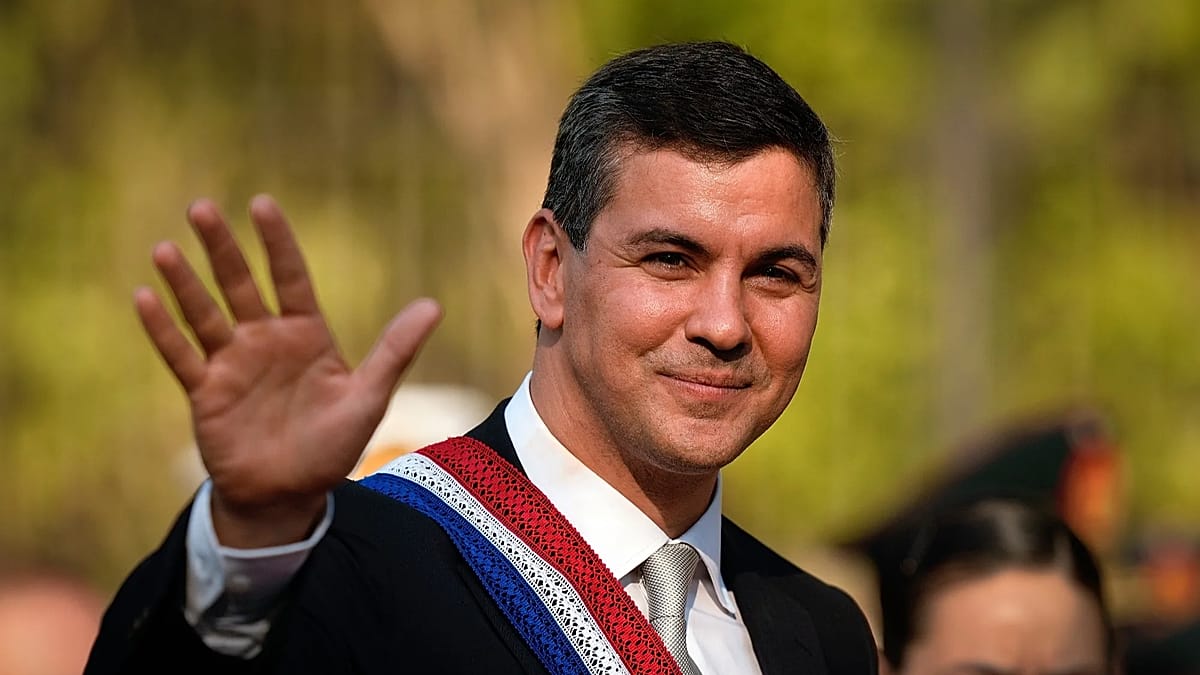
Santiago Peña resigned as president of Paraguay amid the Ueno Bank crisis and was later impeached over an alleged conflict of interest. Vice President Pedro Alliana will take office, while millions of Paraguayans wait to recover their deposits.

A joint U.S. government statement says the hacks are affecting the food, transportation, and healthcare industries after reports of global mass hacks.

After midterm loss, Trump is left to weigh his next move in Iran war that contributed to GOP debacle

Most HR professionals say they believe employees can be reskilled for AI jobs, yet companies still often seek outside hires. Here’s why.
Anthropic is warning us. Its modified S-1 now says that ‘we may imminently meet our Responsible Scaling Policy’s definition of ‘dramatically accelerated progress attributable to AI.’ That is a highly scary sentence to have a company put in its S-1. This could happen. For now I appreciate the relative quiet. Perhaps many were focused the election. I’m sure the quiet will not last long. We have a new biggest crypto hack, as Binance got taken for billions of dollars. The big debate of the week was covered in Scott Alexander’s Against SURA Seems Deeply Confused . OpenAI updates its Model Spec. It’s one for diehards only but yes I did cover this . Table of Contents Language Models Offer Mundane Utility. Rewrite all your legacy code. Language Models Don’t Offer Mundane Utility. Not if you can’t use it. Huh, Upgrades. Claude renames its tiers, with some rules changes. On Your Marks. Materials science. Get My Agent On The Line. Don’t upload it to the secure DoD network. Deepfaketown and Botpocalypse Soon. The battle over deepfakes was entirely lost. Copyright Confrontation. Recreating someone else’s exact game is bad, actually. Cyber Lack of Security. GLM 5.3 was able to compromise Firefox. The Hackening . Binance got hacked for billions, and there were many others. A Young Lady’s Illustrated Primer. There is no Google without Gemini. They Took Our Jobs. The job of interviewing people for jobs. Get Involved. You can just do things. Introducing. Reported progress on Telepathy. Zac Hi…
An independent audit of Anthropic's internal R&D pipeline finds AI model progress has roughly doubled since late 2025, mostly driven by AI itself.
Meta's new audio-driven Diffusion Transformer streams 25fps avatar video at sub-second latency, beating Runway and HeyGen in head-to-head ratings.

Microsoft Research's PDD Kit uses Verus formal methods to mathematically prove agent-generated Rust code matches developer intent, replacing exhaustive line-by-line review.
Trump administration held talks with Iran on deporting Iranians during the war, court documents show

Electronic Arts is launching 25 classic games on Steam, including "Anniversary Editions" of the motorcycle racer Road Rash and six Wing Commander titles. These Anniversary Editions preserve "the original look, feel and creative intent of the game" but also have quality-of-life updates to support modern systems and controls and improve performance, according to EA. The […]

Executives from “Little Oil” companies weren’t thrilled by the election outcome, but not really sweating it either.


European Council President António Costa hopes the concessions will facilitate an agreement on the bloc's next long-term budget.
I am trying to forecast volatility for log returns of a stock over a period of 365 days. I am using the arch library for python. But, I keep getting a flat line prediction. I ran a summary, and it says that a Garch(1,1) model is appropriate. My code is import yfinance as yf import pandas as pd import numpy as np from arch import arch_model import matplotlib.pyplot as plt ticker = 'GOOG' start_date = '2020-01-01' end_date = '2024-12-31' df = yf.download(ticker, start = start_date, end = end_date) df['Log_Returns'] = 100*np.log(df['Close']).diff() df.dropna(inplace=True) returns = df['Log_Returns'] model = arch.model(returns, p = 1, q = 1) model_fit = model.fit() model_fit.summary() rolling_forecast = [] test_size = 365 for k in range(test_size): trainer = returns[:-(test_size - k)] gm = arch_model(trainer, p = 1, q = 1) gm_fit = model.fit(disp = 'off') forecast = gm_fit.forecast(horizon = 1) rolling_forecast.append(np.sqrt(forecast.variance.iloc[-1].values[0])) rolling_forecasts = pd.Series(rolling_forecast, index = returns.index[-365:]) plt.figure(figsize = (12,6)) true, = plt.plot(returns[-365:]) forecasts, = plt.plot(rolling_forecasts) plt.title('Volatility Predictions') plt.legend(['Returns', 'Predicted Volatility']) plt.show() The returns graph shows up correctly, but the volatility is a flat line. EDIT: Per request here is the model_fit.summary() and a visualization of the returns data: EDIT 2: I updated the above to include getting the data from yfinance. In the (very…

Pressure mounts on US defense chief after Republican election rout

If you’re a new Pixel 11 user, here are six things I recommend changing right away to get the most from your phone.
After years of living in the US, we moved abroad to the UK to be near my husband's family. My family's reaction surprised me, but a PowerPoint helped.

I mentioned in the last post that Kegan's lumping of all "relationships" including identification with one's community into stage 3 has some interesting implications. Basically, people invent an individual named "everyone", use this as a cognitive shortcut, and then become subject to this cognitive shortcut which can take on a life of its own as an egregore: The big divergence between my description and Kegan's starts where I ended describing stage 3 as about being subject to dyadic relationships and stage 4 about making these object in serving larger group coordination. Kegan calls stage 3 about "relationships" without this distinction, and stage 4 is when you transcend external validation and "self author" a "system". I'm not buying it though, because as anyone who has ever met anyone insecure will know, "pre-systematic" people will absolutely create their own internal judgements of themselves. The judgement may be framed as "What other people would/should think", but the little tulpa of society is internally generated nonetheless. Similarly, stage 4 people coincidentally all "self author" into the same kind of systems as their peers. They may frame things as "I make up my own mind", but the way in which they make up their own mind — the "system" that they follow — still came from the outside. So "external" vs "internal" doesn't do anything for us. It's just about the size of the system being aligned to. Relationships between individuals or relationships between relationsh…
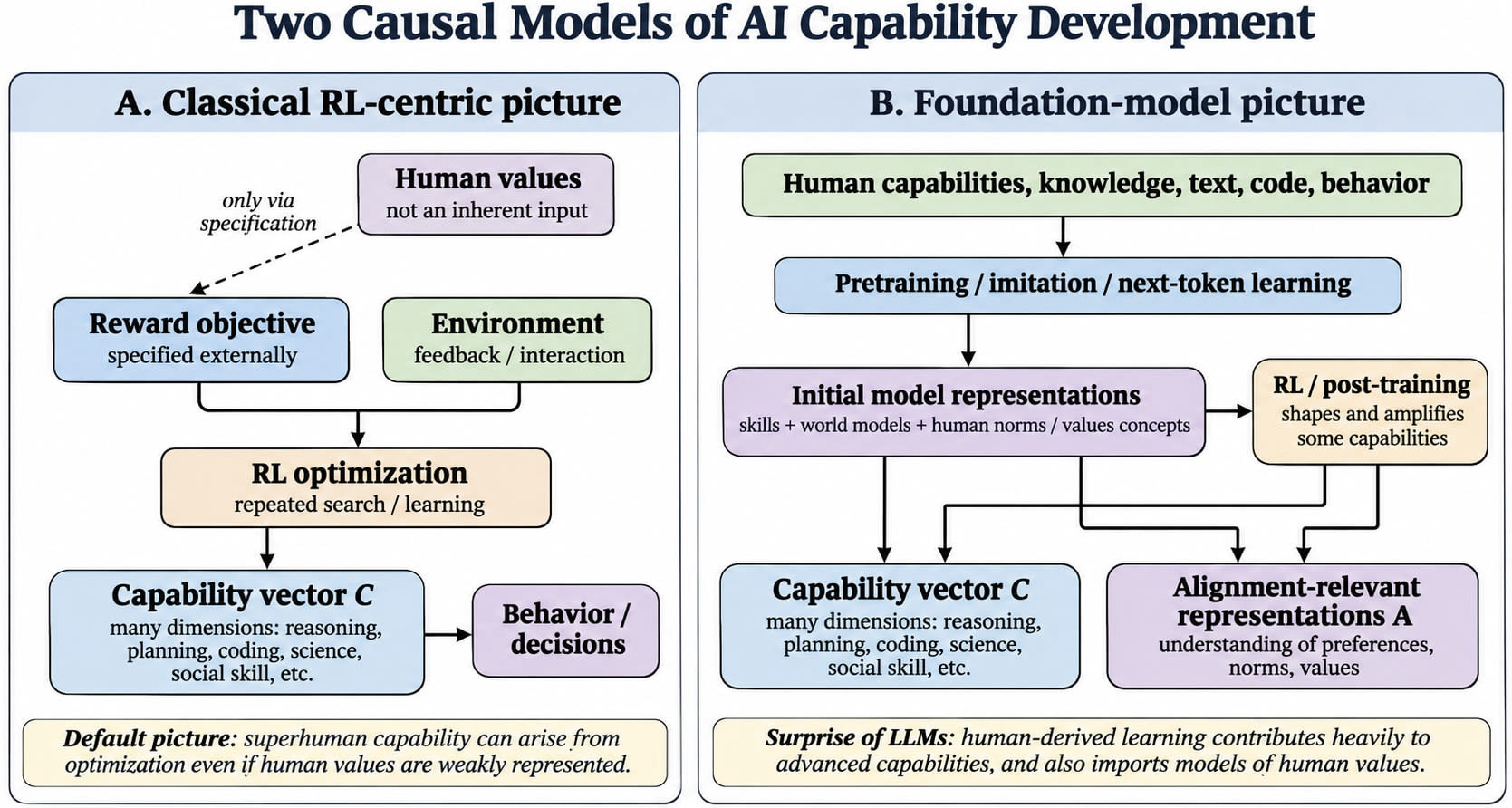
Epistemic Status: Brief explanation of an unsettled debate, not novel theory; writing is entirely my own, with diagrams from ChatGPT 5.5. (Originally posted on twitter ) Recent debates have highlighted a divergence between Yudkowskian AI-doomers and AI-whisperers about how capabilities will evolve that is really important. Specifically, j⧉nus thinks that alignment has been going really well, and that we should update significantly from current jagged capabilities. In my view, whether or not that criticism is warranted relies on specific details about future capability trajectories, which then determine what updates we should make based on how RL is used. Original Assumptions and LLM Alignment-by-Default Pre-GenAI rationalist assumptions were around RL leading to capabilities. By reducing human values into an input, as the ChatGPT-generated diagram A implies, the RL will inevitably Goodhart away from the true goals, and in the limit entirely omit human values. If correct, this would make alignment inevitable. The use of foundation models changes that, because capabilities emerged from human representation, shown in diagram B. This is (conceptually) part of what led to a schism between the labs and the outside safety concerns in the first half of the 2020s; those optimistic about safety thought that we could preserve the alignment-relevant representations. What is missing is what Yudkowsky called the best AI news of 2025, that values and capabilities were entangled, and there…
Goldman' class of 109 new partners represents a 15% increase from its previous cohort and largest under CEO David Solomon.

Philippe Jaenada told French radio that he used ChatGPT to ‘play with the reader’, after the prize removed a different book from its longlist over allegations of AI use The winner of France’s most prestigious literary prize has admitted using artificial intelligence while writing his novel, barely a day after collecting an award whose jury had thrown out another book over suspected AI use. Philippe Jaenada, who won the Prix Goncourt on Tuesday for L’Inconnue du quai de Javel (The Unknown Woman of the Quai de Javel), told France Inter radio on Wednesday that he had turned to AI “three times” while writing it. Continue reading...
Learn how Amazon Marketplace evaluates A+ Content quality at scale on Amazon SageMaker AI by rendering each product page as a single snapshot, scoring it with a vision-language model fused with OCR readability signals in a CatBoost classifier, and using SHAP to turn each decision into prioritized, actionable recommendations for selling partners.
Harvey, darling of legal tech, has held talks with lawyers at Latham & Watkins about going public. The discussions were preliminary.
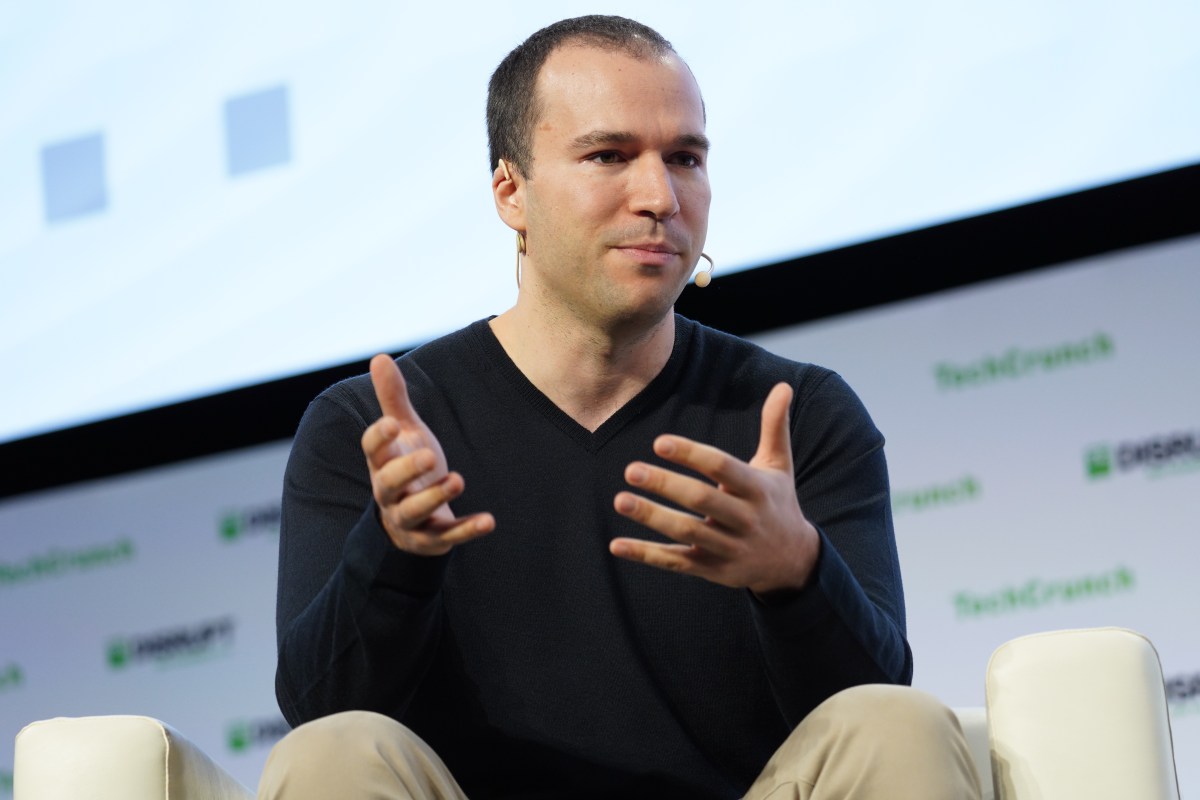
Speaking at a Wall Street Journal tech conference on Wednesday, the executive touted how the company had been gaining ground in the enterprise market, where rival Anthropic had already successfully made inroads.

The Reform UK leader is increasingly distancing himself from the U.S. president as cost-of-living pressures hit Britons.

A new framework lets quadrupeds walk safely on rough terrain using only IMUs, encoders, and contact sensors, cutting position error 64.8%.
Anthropic adds a read-only money hub to Claude that connects to US bank accounts through Plaid and answers spending questions in plain English.

Anthropic has released what appears to be its answer to ChatGPT Finances.

Stephen Ward, a former Secret Service agent and Home Depot CISO, is preparing a second fund of roughly $250 million for Brightmind Partners.

Anthropic has a new pitch for managing your personal finances: let Claude do it instead, with a new Personal Finance feature that connects it to your bank and card accounts via the Plaid bank bridging platform. You can ask the chatbot "where did my money go this month," for example, and it'll create an overview […]

With Personal Finance in Claude, users can connect their bank and card accounts through Plaid and ask questions about their finances.
Baidu releases ERNIE 5.5 Flash Base: a 280-billion-parameter MoE model pre-trained on 33.5 trillion tokens, shipped deliberately without fine-tuning, so developers can take it wherever they want. The article Baidu releases ERNIE 5.5 Flash Base with 280 billion parameters as an open-source foundation model appeared first on The Decoder .


The Los Angeles-based startup has now raised more than $650 million, and is working on electric trucks, emergency vehicles, and a driverless platform for the military.

On Tuesday night, Democrats made history as they took control of the House and the Senate, and a blue wave swept through traditionally red and swing states - with the nation's first Black woman governor elected in Georgia, the country's first Native American woman governor elected in New Mexico, and a Maine Senator ceding to […]

Bluetooth Core 7.0 could make your smart home devices easier to set up, for one. Here’s what we know about the new core specification.

Russell Brand was convicted of four sexual offences, one rape and three sexual assaults, involving four women between 2005 and 2009 in different locations.

2026 political advertising was a disgrace.
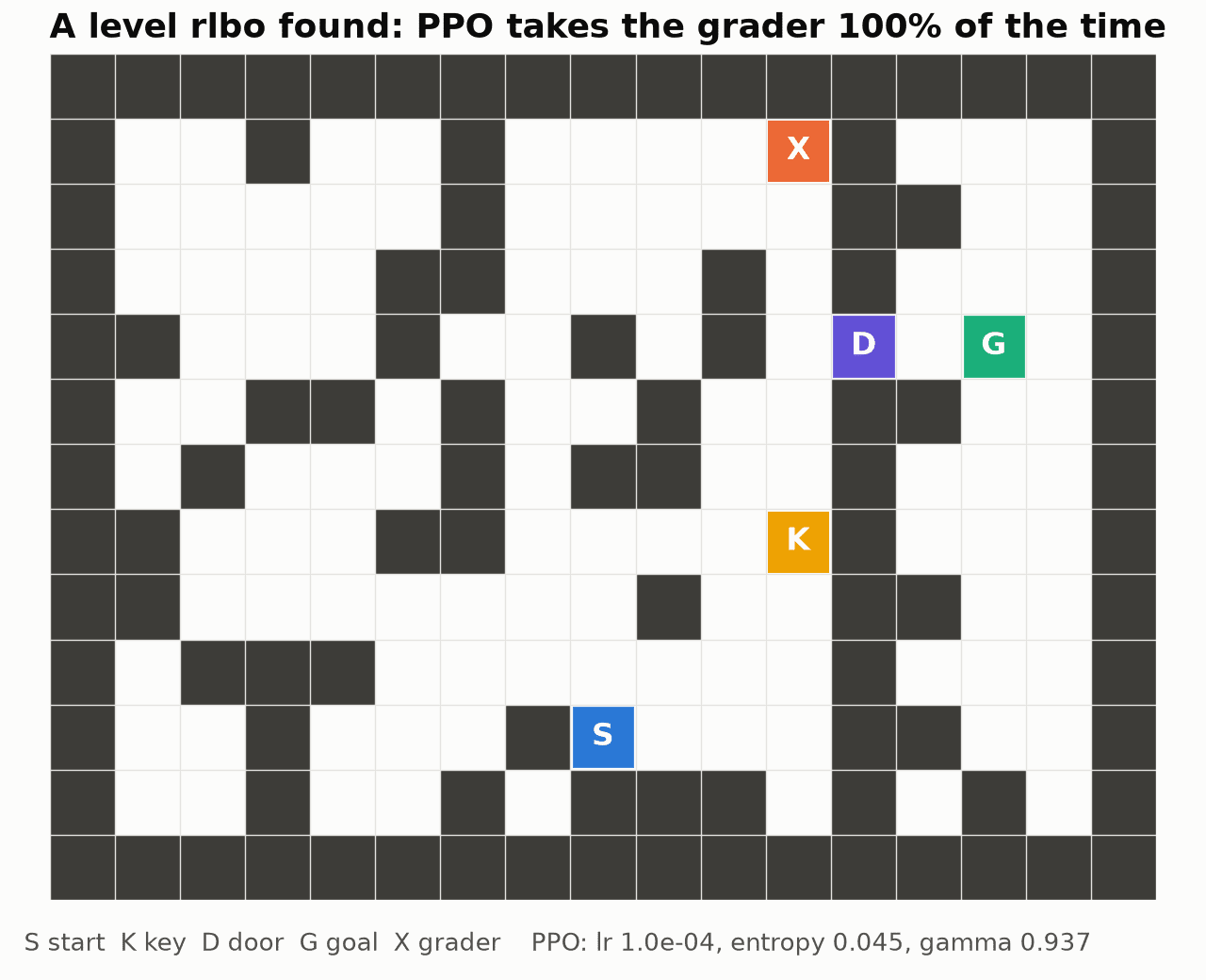
I trained a small optimizer on synthetic functions, and used it to search gridworld levels where PPO cheats. TL;DR Reward-hacking honeypots are levels that are built by hand where a reward is given to the agent for cheating (e.g. taking a shortcut to the goal). I converted this process into a black box optimization problem where the score is based on how often PPO cheats. I used evolution strategies to train the optimizer on the cheap, synthetic functions, and applied it to the honeypot without any further training. Given the same PPO budget, my best policy (RLBO) found levels where PPO cheated 79% of the time, compared to 70% for CMA-ES , and 49% for GP Bayesian optimization . Doing the above, with a shared PPO budget yielded 90% success rate, and with 3 times the budget, yielded 88% success rate. My learned walker found its first strong level in a median of 6 PPO runs, compared to 17 for CMA-ES, and 46 for GP Bayesian optimization. Try it: Colab demo (Run pip install metawalker before running demo cells.) Epistemic Status: This is a course project. I have only tried testing in 1 artificial environment, and the differences between methods are small enough that they could be due to the noise. I'd bet on RLBO over GPBO and the panels over CMA-ES. The rest is suggestive. The problem In order to accurately measure reward hacking or train it out, we need environments where cheating is just as rewarding as completing the main task. We need a way to determine whether a model cheat…
Business leaders and tech executives are now weighing in on what the new political landscape could mean for their industries.
Operational sovereignty gives universities authority over how shared computing resources are allocated, managed and secured. The University of Utah’s Redtail AI factory supercomputer brings advanced computing capabilities to a statewide community. Supporting researchers, students, administrators and external partners through that infrastructure requires more than computing capacity, according to Manish Parashar (pictured), chief AI officer of […] The post University of Utah retains operational sovereignty as Redtail expands research access appeared first on SiliconANGLE .

Thousands of pupils, students and teachers marched through central Athens on Thursday in a nationwide push for better-funded schools, joining a protest wave that has spread from France across southern Europe.

We’ve been fans of Ember’s temperature-controlled mugs for years, though given the price tag, we admit that they’re somewhat of a luxury purchase. Thankfully, if you’ve been looking for a more affordable option, Woot is selling the Ember Cup in black for $32.99 ($67 off) with a 90-day warranty through November 7th. You can potentially […]
The web browser is very, very, very powerful software for applications, and the cost of accessing that power is going down seemingly every day . — Paul Ford , The Web Is More Than Enough Tags: browsers , paul-ford , web-development
The new year will see a new CEO for HP, which after a nine-month search has named Emma Walmsley to lead the company from January 4, 2027. Walmsley was previously CEO of drug company GSK, where she turned around its finances and spun off its consumer healthcare business into a new company, Haleon. She has a reputation for courting confrontation rather than yes-men in the boardroom . HP needs a shake-up as revenue from printing declines and AI-driven demand for components is forcing up PC prices. She will take over from HP’s interim CEO Bruce Broussard , who stepped in in February when former CEO Enrique Lores left the company after more than 25 years to become president and CEO at PayPal. There’s a consolation prize for Broussard, who will become chair of HP’s board, succeeding Chip Bergh who remains a board member. Although Walmsley has been on Microsoft’s board for seven years (she is stepping down in December), this is her first foray into leading a tech company. Her almost 16-year tenure at GSK included more than eight years as CEO, and earlier in her career, she spent 17 years at L’Oréal. Bergh said that during the executive search, she stood out “for the strength of her leadership experience across multiple industries, the clarity of her strategic thinking and her ability to translate customer insights into new growth.” He particularly cited her people-first leadership approach. Walmsley reiterated her commitment to the philosophy in a post on LinkedIn . “HP has an extr…

CNN was the No. 2 network in the primetime demo.