What Elon Musk and OpenAI's High-Profile Court Case Is Actually About
You’re probably going to hear a lot about the personality conflict. Here’s what’s at stake in the case and what the outcome might be.
AI/ML news, top picks, and generated innovation digests.
26010 matching items
You’re probably going to hear a lot about the personality conflict. Here’s what’s at stake in the case and what the outcome might be.
Workflows is now in public preview.
Read our translation of a May 2025 press conference featuring several Chinese government finance officials, who discussed a recently issued policy encouraging greater capital market funding for tech companies. The post Expand Financing Support to Science and Technology Enterprises appeared first on Center for Security and Emerging Technology .
Read our translation of a series of Chinese policy measures designed to provide greater financing to tech startups. The post Certain Policy Measures to Accelerate the Construction of the Science and Technology Finance System and Strongly Support a High Level of Self-Reliance in Science and Technology appeared first on Center for Security and Emerging Technology .
OpenAI's latest foundational model sets the company up for a series of models optimized for computer use. The company's co-founder and president explains the strategy.

Whether Europe shapes the next technological paradigm or simply inherits it depends on one overlooked distinction.
One impressive step on the curve
If you live in a gated community, you’ve been there: You request a ride from your apartment complex, expect your driver to come to you as usual, and then — your driver’s car icon just stops right at the front gate. You watch helplessly as the ETA ticks up. A chat message comes in: “Hey, how do I get in?” You scramble to remember the gate code. They try it. It doesn’t work. You end up meeting them awkwardly on the sidewalk outside while your coffee gets cold — a pickup journey frustrating for both you and your driver. An example gated community in real life, Photo by Bingqian Li on Pexels It turns out you’re not alone: Gated community pickups can make up 25–30% of Lyft rides in selected markets. For a long time, our app offered no special guidance in these situations. Riders would drop their pin inside the gates (fair enough — that’s where they are ), while drivers would pull up to a locked entrance with no way in, leaving both parties to sort things out over chat. The result was predictable: more cancellations, longer waits, and a lot of unnecessary stress for our customers . The Lyft Mapping team decided it was time to fix this properly — not with a band-aid, but a new end-to-end experience. Here’s how we did it. What Was Actually Going Wrong? We looked through gated ride examples, zoomed into our metrics data, and found two root causes behind most of the friction. The first was an inflexible selection of pickup spots . Our app would suggest pickup spots near a rider’s loca…
The post African Communities are Leading the Responsible AI Conversation at RightsCon appeared first on Partnership on AI .
A new AI Now Institute report published April 21, 2026, warns that gig-work platforms marketed as "Uber for nursing" are aggressively lobbying states to rewrite healthcare staffing rules, a push that could leave nurses with less pay, fewer protections, and less control over their shifts, according to The Guardian. The post Nurses Sound Alarm as ‘Uber for Nursing’ Apps Push to Deregulate Healthcare appeared first on AI Now Institute .
Vector researchers made significant contributions to this year’s International Conference on Learning Representations (ICLR), the world’s premier venue for representation learning and deep learning research, taking place April 23-27, 2026 […] The post Vector researchers advance representation learning and deep learning research at ICLR 2026 appeared first on Vector Institute for Artificial Intelligence .
In the early stages of agent development, you make big changes to your agent’s code: designing the architecture, integrating tools, and getting the core logic working. The next phase looks different. It starts once your agent is built and mostly working, and it’s where a lot of the real improvement happens. You run the agent […] The post Introducing the Opik Agent Playground appeared first on Comet .
testing popular design tools
In this Fully-Connected episode, Dan and Chris start with Anthropic's Mythos frontier model, parsing what is publicly known about its cybersecurity capabilities and projecting its possible implications from " We've been here before. 🙄 " to "See ya, cybersecurity! 😱 " It's the end of the world as we know it, and I feel fine. 🙃 Then they have fun with the craziest AI announcement of the year (except for the Mythos one of course). Allbirds pivots from shoe manufacturing 👟 to neocloud provider ☁️. No, we didn't see that one coming either! 🙈 They finish with rise of “tokenmaxxing” - the gamification 🎮 of writing code with maximum LLM usage. Incredibly profitable 💰 for commercial frontier model providers and insanely expensive 🤑 for the gamers. Better have 10X productivity just to avoid bankruptcy! Featuring: Chris Benson – Website , LinkedIn , Bluesky , GitHub , X Daniel Whitenack – Website , GitHub , X Links: Shares in Allbirds surge after maker of wool sneakers announces pivot to AI AI-boosted hacks with Anthropic’s Mythos could have dire consequences for banks Upcoming Events: Register for upcoming webinars here !
OlmPool is a controlled suite of 26 models showing how small architecture choices can compound to make long-context extension much harder, even when training data and extension recipes are held constant.
OlmoEarth Studio now lets users export custom Earth-observation embeddings from our OlmoEarth foundation models and use them for tasks like similarity search, few-shot mapping, change detection, and unsupervised exploration.
The post Cricket Australia uses AI Insights to bring fans closer to the action appeared first on Source .
This release introduces the built-in MCP Server, Extensible Tokenizers, Diversity Search (MMR), and Query Profiling as previews, along with Incremental Backups, Gemini audio support for multi2vec-google, and the new BlobHash property type.
How we used Honk, Backstage, and Fleet Management to ease the pain of migrating thousands of datasets. The post Background Coding Agents: Supercharging Downstream Consumer Dataset Migrations (Honk, Part 4) appeared first on Spotify Engineering .
A framework for understanding what AI reliability actually requires: consistently following the right behavioral rules - whether facing normal everyday use or an active adversarial attack. The post AI Reliability Map: Rules and Circumstances appeared first on MLCommons .
An article about all the different ways to customize coding agents.
In standard software engineering, developers use proven, repeatable workflows to develop, test, debug, and update software products. They use intelligent debugging tools to quickly resolve problems, run tests to make sure fixes are effective, and automate the whole process so a fix can be implemented, tested, and integrated into the product in minutes. The same […] The post Introducing Ollie: Auto-Fix Your Agent’s Codebase appeared first on Comet .
In a new Security Studies article, Renee DiResta and Josh A. Goldstein lay out how state-backed propagandists run “full-spectrum” propaganda campaigns, relying on overt and covert tools across broadcast and social media. The post Full-Spectrum Propaganda in the Social Media Era appeared first on Center for Security and Emerging Technology .
Join us at RightsCon for a dissemination workshop where we’ll share insights and research findings from our Data for Development project, Advancing the Governance of Data for Development in Africa. […] The post RightsCon 2026: Data for Development (D4D) Dissemination Workshop appeared first on Research ICT Africa .
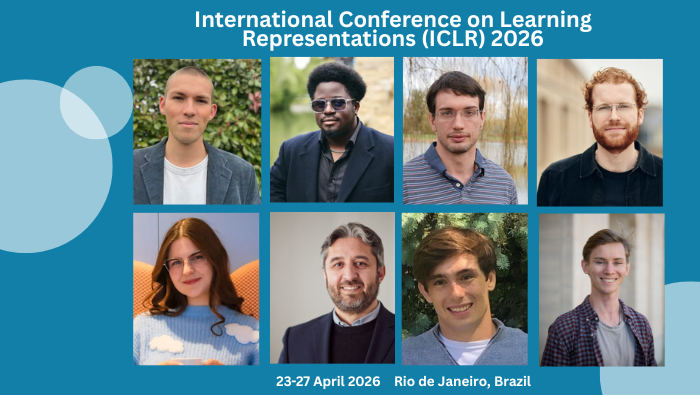
OII researchers and DPhil students will attend the 14th International Conference on Learning Representations in Rio de Janeiro from 23–27 April 2026.
For the past 10 years, Ai2 has built open, real-time tools that help people protect wildlife, oceans, and ecosystems around the world.
AI added new ways to search code, but not all of them apply to every problem. Here’s how to choose between Code Search, Deep Search, and MCP.
AI added new ways to search code, but not all of them apply to every problem. Here’s how to choose between Code Search, Deep Search, and MCP.
Leveraging commuting patterns and workplace charging to advance equitable EV charger access robyn.cherinka… Tue, 04/21/2026 - 13:24 This study introduces a framework for improving accessibility to and quantifying social equity priorities in electric vehicle charging infrastructure through strategic workplace charger placement. We develop a customizable equity evaluation model that quantifies access disparities across demographic groups. This model is used to construct an optimization framework that informs charging infrastructure deployment decisions. Leveraging commuting patterns, we demonstrate in the case study of Oakland, California that strategically placing workplace charging can achieve, on average, a 1.8-fold reduction in accessible charging resource disparities compared to benchmark scenarios. Our analysis reveals that targeted workplace charger deployment in high-commuter zones can disproportionately improve citywide equity. The framework provides policymakers with quantifiable metrics to evaluate trade-offs between sometimes divergent equity considerations (e.g., income, housing type) and offers practical insights for achieving more equitable charging infrastructure distribution. Image Nov 15, 2025 Human-Centered AI Read More 1 Minute Read
Short-Range Order and LixTM4−x Probability Maps for Disordered Rocksalt Cathodes robyn.cherinka… Tue, 04/21/2026 - 13:16 Short-range order (SRO) in the cation-disordered state is a controlling factor influencing the probability of finding tetrahedron clusters in disordered rocksalt (DRX) cathode materials. However, the prevalent probability below the random limit across reported DRX compositions has not been systematically investigated, active strategies to surpass the random limit of probability are lacking, and the fundamental ordering behavior on the face-centered cubic (FCC) lattice remains insufficiently explored. This research quantitatively examines pair SRO parameters and probabilities via exhaustive Monte Carlo mapping across a simplified subset of the parameter space. The results indicate that, in the disordered state, the probability is governed by the nearest neighbor (NN) pairwise SRO parameter, and that these quantities do not necessarily represent a simple attenuation of their corresponding low-temperature long-range order, particularly for the important cases of Layered and Spinel-like orderings. Strategies are proposed to mitigate or even reverse the lithium and transition metals mixing tendency of NN pair SRO to achieve probabilities that exceed the random limit. This study advances the fundamental thermodynamic understanding of ordering behaviors, which can be generalized to any FCC system. Image Mar 11, 2026 Energy & Materials Read More 1 Minute Read
Date: 2 April 2026 Venue: Darlin Sofola Cinnamon Centre Partnership School: Surulere Girls Senior Secondary School The AI Literacy outreach […]
Billion-dollar tech platforms are aggressively pushing for deregulation of the “Uber for nursing” industry in an effort to expand gig work in the healthcare sector, according to a report published on Tuesday. The post ‘Uber for nurses’: gig-work apps lobby to deregulate healthcare, report finds appeared first on AI Now Institute .
One of the biggest challenges when it comes to agent development is quality. It’s getting easier every day to spin up an MVP or demo of an agent that accomplishes complex tasks through an array of tool calls, context retrieval steps, and system prompts. But it’s still hard to know whether that agent will perform […] The post Introducing Opik Test Suites: Straightforward Unit & Regression Testing for AI Agents appeared first on Comet .
Watch this "Ethics Empowered" event, in which an expert panel grapples with the challenges of AI agents in multilateral and diplomatic spaces.
As AI assistants and privacy proxies challenge the capabilities of traditional bot detection, the Web needs new models for accountability. We believe that control should remain with the client, and that an open ecosystem of anonymous credentials is key to preserving user privacy while protecting origins from abuse.
[…] Explained: Registration Of Online Games Under Draft Online Gaming Rules, 2025 […]
I. Introduction We want to measure and understand how much AI agents can accelerate AI R&D and how this is changing over time. There are various sources of evidence we can look to here, including anecdotes about autonomous contributions ( AlphaEvolve and TTT-Discover speeding up a GPU kernels, autoresearch yielding speedups in nanochat), progress on benchmarks, and uplift measurement (see our recent post for a longer discussion). One interesting source of evidence is cumulative progress on publicly tracked challenges like the NanoGPT speedrun, where we can compare agent contributions to human progress over time. Such challenges and leaderboards of cumulative progress on a task are especially useful when: The task maps to real AI R&D (e.g., pretraining a language model) Many contributors have built up a rich history of progress, giving a rough sense of how much human effort went into it (a cost curve) Agents can compete under comparable conditions and potentially make new contributions Let’s look at one such leaderboard: the nanogpt speedrun . The goal is to train a language model to a target validation loss on FineWeb using 8×H100 GPUs as fast as possible . It’s a small-scale version of LLM pretraining with a public history of contributions, with four recent ones credited to AI agents as of April 2026. The optimization activities map to pretraining research such as architecture changes, writing kernels, and improving optimizers. Contributions, such as the Muon optimizer , ha…
[…] Claude Opus 4 and 4.1 Can Now End Harmful Conversations With Users Unilaterally […]
A deep dive into Engram, our managed memory service for agents which is simple to get started but adaptable to any use case.
We audited what it would take to build a Sourcegraph equivalent internally, mapped the platform to 90 engineering requirements across 10 categories, and modeled 3-year costs for different environment sizes.
We audited what it would take to build a Sourcegraph equivalent internally, mapped the platform to 90 engineering requirements across 10 categories, and modeled 3-year costs for different environment sizes.
The post Pairing geotechnical data with AI helps New Zealand build better appeared first on Source .
Why AI safety benchmarks degrade over time - and the infrastructure MLCommons is building to keep AILuminate reliable as frontier models advance. The post Fresh Benchmarks, Reliable Scores: Introducing Continuous Prompt Stewardship for AI Risk Evaluation appeared first on MLCommons .
The complex factors that determine the single evaluation number so many focus on. Plus, how this changes in the future.
Google's once-forgotten Cloud division is making a run on the strength of Gemini. Here's what it needs to continue its ascent.
A seismic shift is rocking the healthcare industry. Uber’s business model—the “gigification” of labor—and lobbying practices have made their way to healthcare staffing. The post Uber For Nursing Part II appeared first on AI Now Institute .
In May 2026, the Research ICT Africa team travels to Lusaka, Zambia, to participate in one of the world’s leading summits on human rights in the digital age. RightsCon boasts […] The post RIA at RightsCon 2026 appeared first on Research ICT Africa .
We built our internal AI engineering stack on the same products we ship. That means 20 million requests routed through AI Gateway, 241 billion tokens processed, and inference running on Workers AI, serving more than 3,683 internal users. Here's how we did it.