Securing Enterprise AI with Weaviate
A complete guide on how to secure Weaviate enterprise deployments with OIDC, RBAC, and multi-tenant isolation.
AI/ML news, top picks, and generated innovation digests.
37189 matching items
A complete guide on how to secure Weaviate enterprise deployments with OIDC, RBAC, and multi-tenant isolation.
If your business uses AI to screen, rank, or match candidates, the EU now regulates those tools as high-risk systems. Here is what changed, what it means for your operating model, and what you should be doing about it.
MongoDB is excited to announce the general availability of our enhanced data browsing experience in the MongoDB for Visual Studio (VS) Code extension. This new experience offers a unified workspace for developers to visually browse, query, and edit their data natively, streamlining workflows so they can manage their database right where they write their code. Evolving the developer workflow The modern developer’s workflow is incredibly fast-paced. With developers juggling an average of 14 different tools daily, the cognitive load of constantly jumping between applications can easily disrupt focus. When your application needs to evolve, working with your data shouldn’t force a break in your flow state. As the MongoDB for VS Code extension has grown to nearly 3 million downloads, we’ve seen firsthand how developers are pushing the boundaries of what an in-IDE (integrated development environment) database tool can do. While developers love accessing their data directly in the editor, we wanted to transform this experience to be even more visual, actionable, and seamless. Instead of switching to external terminals for quick tasks or taking the time to translate familiar MongoDB Shell commands into Extended JSON (EJSON), we are bringing a full-fledged, intuitive data management suite right to your VS Code sidebar. Exploring what’s new in the MongoDB for VS Code extension Here are the key improvements that transform the extension into a complete workflow solution: Paginated tree v…
Today, we’re introducing Forge, a system for enterprises to build frontier-grade AI models grounded in their proprietary knowledge.
What happens when an AI hater starts building with AI agents? In this episode, we talk with software engineer Steve Klabnik, known for his work on the Rust programming language, about his journey from criticizing AI to experimenting with it firsthand. We explore Steve’s programming language Rue, largely built with the help of AI tools like Claude, and discuss what this means for software engineering and the future of coding in an AI-driven world. Featuring: Steve Klabnik – LinkedIn Chris Benson – Website , LinkedIn , Bluesky , GitHub , X Daniel Whitenack – Website , GitHub , X Links: The Rust Programming Language Rust Rue Daniel's RSA Meeting link for March 23, 2026 Daniel's RSA Meeting link for March 24-25, 2026 Upcoming Events: Register for upcoming webinars here !
"In apparent violation of Brazilian law prohibiting the indiscriminate use and distribution of copyrighted journalistic content, Grok —the artificial intelligence (AI) chatbot developed by Elon Musk— has been ‘tearing down’ news outlets’ paywalls by delivering full newspaper articles that normally require a subscription to access. To test how this works in practice, O Globo newspaper […] The post Elon Musk’s Grok appears to bypass Brazilian news paywalls, newspapers say appeared first on LatAm Journalism Review by the Knight Center .
"In apparent violation of Brazilian law prohibiting the indiscriminate use and distribution of copyrighted journalistic content, Grok —the artificial intelligence (AI) chatbot developed by Elon Musk— has been ‘tearing down’ news outlets’ paywalls by delivering full newspaper articles that normally require a subscription to access. To test how this works in practice, O Globo newspaper […] The post Elon Musk’s Grok appears to bypass Brazilian news paywalls, newspapers say appeared first on LatAm Journalism Review by the Knight Center .

Will AI cause a political interregnum

Study finds digital care technologies could both support and strain unpaid carers, with benefits and risks to loved ones.
Nemotron 3 Super: An Open Hybrid Mamba-Transformer MoE for Agentic Reasoning, Another XAI Cofounder Has Left, Anthropic Sues Department of Defense
Anthropic sues Trump administration in AI dispute with Pentagon, ‘Not built right the first time’ — Musk’s xAI is starting over again, again, Cascade of A.I. Fakes About War With Iran Causes Chaos Onl
Visual gallery of LLM architecture variants: attention mechanisms, positional encodings, MoE, and more — with comparison figures and compact reference sheets.

Robert Lange, founding researcher at Sakana AI, joins Tim to discuss *Shinka Evolve* — a framework that combines LLMs with evolutionary algorithms to do open-ended program search. The core claim: systems like AlphaEvolve can optimize solutions to fixed problems, but real scientific progress requires co-evolving the problems themselves. GTC is coming, the premier AI conference, great opportunity to learn about AI. NVIDIA and partners will showcase breakthroughs in physical AI, AI factories, agentic AI, and inference, exploring the next wave of AI innovation for developers and researchers. Register for virtual GTC for free, using my link and win NVIDIA DGX Spark (https://nvda.ws/4qQ0LMg) In this episode: • Why AlphaEvolve gets stuck — it needs a human to hand it the right problem. Shinka tries to invent new problems automatically, drawing on ideas from POET, PowerPlay, and MAP-Elites quality-diversity search. • The *architecture* of Shinka: an archive of programs organized as islands, LLMs used as mutation operators, and a UCB bandit that adaptively selects between frontier models (GPT-5, Sonnet 4.5, Gemini) mid-run. The credit-assignment problem across models turns out to be genuinely hard. • Concrete results — state-of-the-art circle packing with dramatically fewer evaluations, second place in an AtCoder competitive programming challenge, evolved load-balancing loss functions for mixture-of-experts models, and agent scaffolds for AIME math benchmarks. • Are these systems act…
Mark Hertling discusses U.S. foreign policy, the release of his new book, and the moral-political fork in the road in America in 2026.
This is a transcript of Lex Fridman Podcast #493 with Jeff Kaplan. The timestamps in the transcript are clickable links that take you directly to that point in the main video. Please note that the transcript is human generated, and may have errors. Here are some useful links: Go back to this episode’s main page Watch the full YouTube version of the podcast Table of Contents Here are the loose “chapters” in the conversation. Click link to jump approximately to that part in the transcript: 0:00 – Episode highlight 1:27 – Introduction 4:07 – Early games: Pac-Man, Zork, Doom, Quake
Here is what happened in AI in Africa this week: 1.Digital Minds AI Research Fellowship 2026 A newly opened […]
Here is what happened in AI in Africa this week: 1. Ghana Launches National AI Strategy The government of Ghana has […]
Recurrent architectures such as LSTMs and GRUs were originally designed to address the vanishing gradient problem and capture long-range dependencies in sequential data. However, in recent years Transformer-based architectures have largely replaced RNN-based models in many domains such as natural language processing, time-series modeling, and even reinforcement learning. One commonly cited explanation is that Transformers allow parallel computation and avoid sequential processing, which improves training efficiency. However, this does not fully explain why they often outperform LSTMs in modeling long-range relationships. From a modeling perspective, I am trying to understand the following points: In LSTMs, the cell state is explicitly designed to propagate information across time steps. In Transformers, there is no recurrence or persistent state between tokens. Why does the self-attention mechanism still capture long-range dependencies more effectively? Is the improvement mainly due to the attention mechanism allowing direct connections between distant tokens, or are there additional factors such as representation capacity and optimization dynamics? Are there known theoretical explanations or empirical studies comparing the ability of Transformers and LSTMs to capture long-range dependencies? Are there scenarios (for example streaming data or low-resource environments) where recurrent architectures still outperform Transformers? I would appreciate references to research pape…
--> Understanding the behavior of complex machine learning systems, particularly Large Language Models (LLMs), is a critical challenge in modern artificial intelligence. Interpretability research aims to make the decision-making process more transparent to model builders and impacted humans, a step toward safer and more trustworthy AI. To gain a comprehensive understanding, we can analyze these systems through different lenses: feature attribution , which isolates the specific input features driving a prediction ( Lundberg & Lee, 2017 ; Ribeiro et al., 2022 ); data attribution , which links model behaviors to influential training examples ( Koh & Liang, 2017 ; Ilyas et al., 2022 ); and mechanistic interpretability , which dissects the functions of internal components ( Conmy et al., 2023 ; Sharkey et al., 2025 ). Across these perspectives, the same fundamental hurdle persists: complexity at scale . Model behavior is rarely the result of isolated components; rather, it emerges from complex dependencies and patterns. To achieve state-of-the-art performance, models synthesize complex feature relationships, find shared patterns from diverse training examples, and process information through highly interconnected internal components. Therefore, grounded or reality-checked interpretability methods must also be able to capture these influential interactions . As the number of features, training data points, and model components grow, the number of potential interactions grows expon…
OpenAI launches GPT-5.4 with Pro and Thinking versions, Google releases Gemini 3.1 Flash Lite at 1/8th the cost of Pro, Where things stand with the Department of War Anthropic
AI automates triage for accessibility feedback, allowing us to focus on fixing barriers—turning a chaotic backlog into continuous, rapid resolutions. The post Continuous AI for accessibility: How GitHub transforms feedback into inclusion appeared first on The GitHub Blog .
Where we are right now, and what likely happens next
In high-stakes enterprise environments, outages do not wait for business hours, and neither do IT/Network Operators. A latency spike hits the dashboard, and metrics signal that the database is under pressure. The cause? Indeterminate. Meanwhile, the business impact is immediate: orders fail to process, customers can’t access accounts, transactions stall, and critical records become temporarily unavailable. Every minute of uncertainty translates into lost revenue, frustrated users, and escalating pressure. Teams often fall back on a familiar—yet time-consuming—ritual: logging into their data platform, exporting large log files, extracting compressed archives, and manually searching through thousands of lines of entries to identify the issue. What should be a quick diagnosis becomes a manual context-switching investigation. By the time the problematic query, configuration issue, or audit event is identified, users have already experienced the disruption—and the business has absorbed the cost. MongoDB believes the database should be the heartbeat of a digital business. So we’re introducing a new log integration that brings MongoDB Atlas system and audit logs directly into external observability and storage platforms. This enhancement helps bridge the gap between metrics and meaning when it matters most. Flexible log delivery for modern observability workflows Now database operators, DevOps pros, and IT Operations teams alike can send MongoDB system and audit logs—including mong…
Short note on NVIDIA Nemotron 3 Super 120B-A12B, a hybrid Mamba-Transformer MoE model with latent experts and shared-weight MTP.
We reviewed two versions of Anthropic’s Sabotage Risk Report for Claude Opus 4.6, producing two corresponding review documents: our review of the February 11 version and our review of the March 3 version . We recommend that readers refer to our review of the February 11 version, which represents our review of the report as originally received. We expect the public version of the Sabotage Risk Report to be updated to resemble the document we received on March 3, 2026 in content, though not necessarily in exact wording. We expect our second review to cover those changes, but if the updated public version includes any changes that materially affect our opinions, we will publish an updated review. Both documents include an appendix detailing our review process and the differences between the two versions of our review. The following is the executive summary of our review of the February 11 version. The full documents are available as PDFs ( February 11 , March 3 ). Executive summary This document is METR’s external review of the February 11, 2026 version of Anthropic’s Sabotage Risk Report: Claude Opus 4.6. Anthropic shared an unredacted version of their Sabotage Risk Report and other materials with us for our review. We further detail this process in an appendix. We lay out our findings in two sections: Synopsis of Anthropic’s case and redactions for the public version Our assessment: We give substantive feedback on the report in a few key areas: Adequacy of information: We thi…
Jeff Kaplan is a legendary Blizzard game designer of World of Warcraft and Overwatch, now preparing to launch a new game, The Legend of California, from his new studio Kintsugiyama – available to wishlist on Steam today, with alpha later in March. Thank you for listening ❤ Check out our sponsors: https://lexfridman.com/sponsors/ep493-sc See below for timestamps, and to give feedback, submit questions, contact Lex, etc. CONTACT LEX: Feedback – give feedback to Lex: https://lexfridman.com/survey AMA – submit questions, videos or call-in: https://lexfridman.com/ama Hiring – join our team: https://lexfridman.com/hiring Other – other ways to get in touch: https://lexfridman.com/contact EPISODE LINKS: The
In this episode, Sid Pardeshi, co-founder and CTO of Blitzy, joins us to discuss building autonomous development systems able to deliver production-ready software at enterprise scale. Sid contrasts AI-assisted coding with end-to-end autonomy, arguing that “code is a commodity” and acceptance is the real metric—security, standards, tests, and maintainability included. We explore Blitzy’s hybrid graph-plus-vector approach, which grounds agents and combines semantic signals with keyword search to navigate large repositories efficiently. Sid breaks down context and agent engineering, how effective context windows have plateaued, and why dynamic agent personas, tool selection, and model-specific prompting matter at scale. He details their orchestration of large swarms of AI agents to collaboratively analyze codebases, plan tasks, and execute complex tasks in parallel. We also dig into why Agents.md and flat memories break down, storing feedback in the knowledge graph, and building real-world evals beyond leaderboards to choose the right model for each task. The complete show notes for this episode can be found at https://twimlai.com/go/763.
This review of Paul Thomas Anderson's Oscar-winning "One Battle After Another" discusses gender roles, white supremacy, and the motivations of revolutionaries.

Seoul, March 2016. Two players sit hunched over a 19x19 grid covered in a sea of black and white stones. They are playing the ancient game of Go - a game of unimaginable complexity long thought impossible for a machine to master. On one side is Lee Sedol (Sae Dol), a legendary 18-time Go world champion. On the other, AlphaGo, a neural network based AI system built on a powerful technique called reinforcement learning. In the blink of an eye, the world changed. Exactly one decade later, we look back at the match that sparked the modern AI revolution. From algorithmic discovery to the solving of scientific grand challenges like protein folding, the foundation was laid right there on that wooden board. Join Hannah Fry, Pushmeet Kohli (VP, Science) and Thore Graepel (AlphaGo team & Distinguished Research Scientist) as they unpick the legacy of AlphaGo. Further watching: 🎥AlphaGo https://youtu.be/WXuK6gekU1Y 🎥The Thinking Game: https://youtu.be/d95J8yzvjbQ ___ Subscribe to our channel https://www.youtube.com/@googledeepmind Find us on X https://twitter.com/GoogleDeepMind Follow us on Instagram https://instagram.com/googledeepmind Add us on Linkedin https://www.linkedin.com/company/deepmind/
Summary: We find that roughly half of test-passing SWE-bench Verified PRs written by mid-2024 to mid/late-2025 agents would not be merged into main by repo maintainers, even after adjusting for noise in maintainer merge decisions. Since the agents are not given a chance to iterate on their solution in response to feedback the way a human developer would, we do not claim that this represents a fundamental capability limitation. Rather, our results indicate that a naive interpretation of benchmark scores may lead one to overestimate how useful agents are without more elicitation or human feedback. Introduction It is often unclear how to translate benchmark scores into real-world usefulness. For example, if a model’s SWE-bench Verified score is 60%, does that mean it can resolve 60% of real-world open-source issues? One reason to doubt this is that benchmarks are clean and verifiable in ways the real world is not. To study this quantitatively, we take SWE-bench Verified and zoom in on one such difference — it uses an automated grader rather than the real-world standard of maintainer review. To study how agent success on benchmark tasks relates to real-world usefulness, we had 4 active maintainers from 3 SWE-bench Verified repositories review 296 AI-generated pull requests (PRs). We had maintainers (hypothetically) accept or request changes for patches as well as provide the core reason they were requesting changes: core functionality failure, patch breaks other code or code qua…
The collaboration will produce a Crisis Counselor Training Curriculum and a statewide AI Harms Reporting Form targeting dangerous AI companion applications
AI is reshaping global power, from chip manufacturing and computing power to AI governance and US-China relations. In this episode, Ben Buchanan, Assistant Professor at The Johns Hopkins University and former White House Special Advisor for AI, explores how AI policy, geopolitics, and international cooperation intersect with AI innovation and AI safety. We discuss the strategic importance of computing power, the future of AI governance, and what it will take for democracies to lead responsibly in the age of AI. Featuring: Ben Buchanan – LinkedIn Chris Benson – Website , LinkedIn , Bluesky , GitHub , X Links: The AI Grand Bargain Upcoming Events: Register for upcoming webinars here !
If Ukraine is the first major drone war, when will there be the first major AI war?
SLR, a global sustainability consultancy, has acquired Geobiota, a 200-person Chilean environmental consulting firm specializing in the mining and energy sectors. Founded in 1995, Geobiota provides consulting services and solutions in environmental engineering and natural resources.
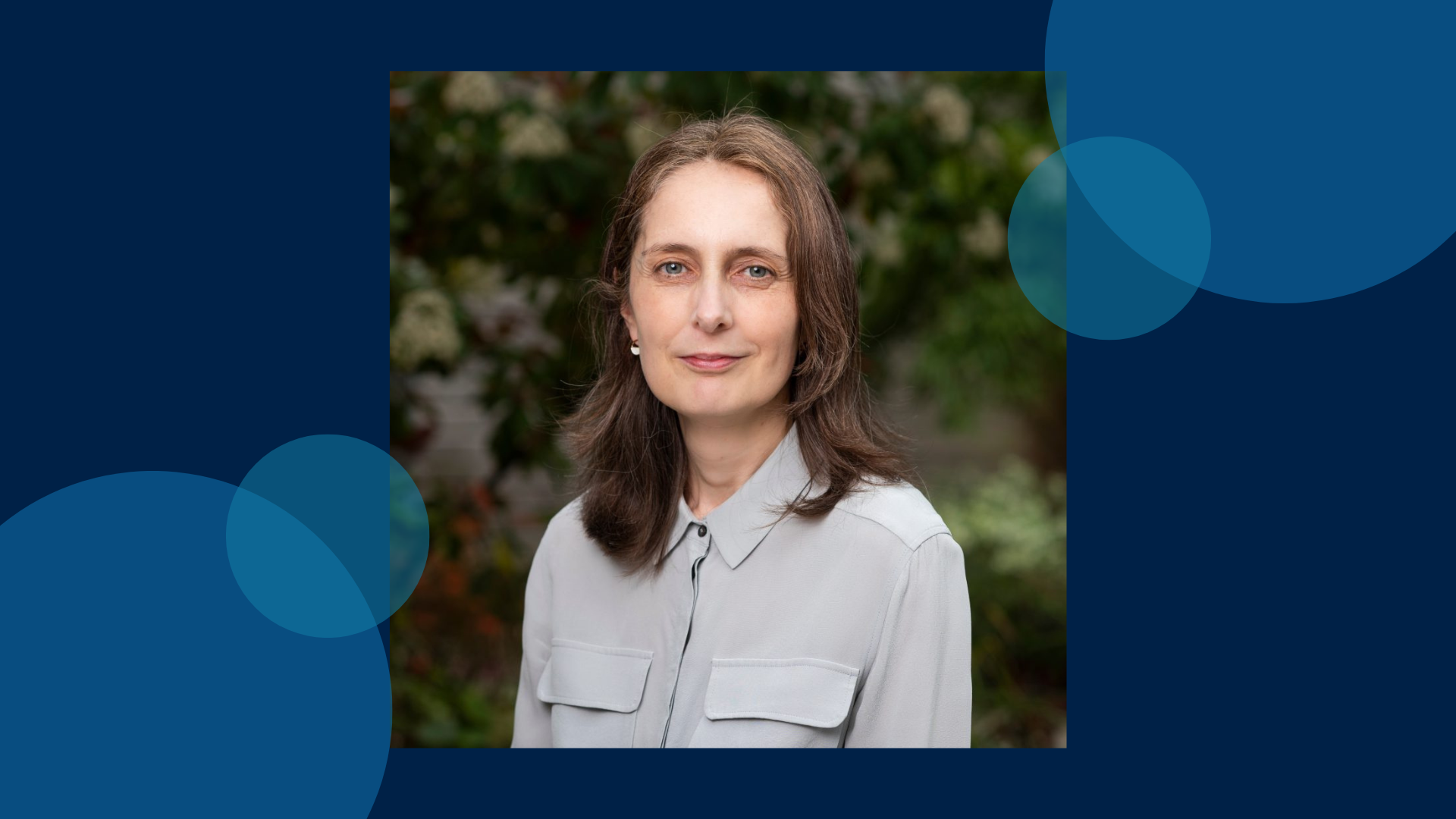
Professor Rebecca Eynon, Professor of Education, the Internet and Society, is among the outstanding social scientists elected to the fellowship of the Academy of Social Sciences today.
Anthropic officially told by DOD that it’s a supply chain risk, ‘cancel ChatGPT’ trend is growing after OpenAI signs a deal with the US military, and more!

All information about GTC and the DGX Spark Raffle is here: https://www.ykilcher.com/gtc Links: Homepage: https://ykilcher.com Merch: https://ykilcher.com/merch YouTube: https://www.youtube.com/c/yannickilcher Twitter: https://twitter.com/ykilcher Discord: https://ykilcher.com/discord LinkedIn: https://www.linkedin.com/in/ykilcher If you want to support me, the best thing to do is to share out the content :) If you want to support me financially (completely optional and voluntary, but a lot of people have asked for this): SubscribeStar: https://www.subscribestar.com/yannickilcher Patreon: https://www.patreon.com/yannickilcher Bitcoin (BTC): bc1q49lsw3q325tr58ygf8sudx2dqfguclvngvy2cq Ethereum (ETH): 0x7ad3513E3B8f66799f507Aa7874b1B0eBC7F85e2 Litecoin (LTC): LQW2TRyKYetVC8WjFkhpPhtpbDM4Vw7r9m Monero (XMR): 4ACL8AGrEo5hAir8A9CeVrW8pEauWvnp1WnSDZxW7tziCDLhZAGsgzhRQABDnFy8yuM9fWJDviJPHKRjV4FWt19CJZN9D4n
Anthropic releases Sonnet 4.6, Google Rolls Out Gemini 3.1 Pro, Anthropic CEO Amodei says Pentagon’s threats ‘do not change our position’ on AI
Amid a rising backlash to Silicon Valley overreach, a remarkably diverse group from across the political spectrum announced a set of AI principles to clearly define the goals of the emerging pro-human movement.
Typo in the year: " According to Karpathy, AI agents barely worked before December 2026"
JOHANNESBURG, SOUTH AFRICA 3rd March – South African AI Association (SAAIA) SAAIA operated on a funded basis for the second time from 1st March 2025 to 28th February 2026. This was achieved via the amazing sponsorship from Google, Huawei and other vendors who contributed to the years funding tranche for which we are very grateful. […]
This month, OpenMined is heading back to Arlington, VA, for the NAIRR’s second annual meeting. A lot has changed since last year’s inaugural gathering. The program is transitioning from a proof-of-concept to permanent national infrastructure, NSF has put $35 million on the table to establish a permanent operations center, and OpenMined just received approval to […] The post Two Years In: OpenMined Deep Partnerships under the NAIRR appeared first on OpenMined .
Here's how we made the search experience better, faster, and more resilient for GHES customers. The post How we rebuilt the search architecture for high availability in GitHub Enterprise Server appeared first on The GitHub Blog .

Dive into the realities of AI-assisted coding, the origins of modern fine-tuning, and the cognitive science behind machine learning with fast.ai founder Jeremy Howard. In this episode, we unpack why AI might be turning software engineering into a slot machine and how to maintain true technical intuition in the age of large language models. GTC is coming, the premier AI conference, great opportunity to learn about AI. NVIDIA and partners will showcase breakthroughs in physical AI, AI factories, agentic AI, and inference, exploring the next wave of AI innovation for developers and researchers. Register for virtual GTC for free, using my link and win NVIDIA DGX Spark (https://nvda.ws/4qQ0LMg) Jeremy Howard is a renowned data scientist, researcher, entrepreneur, and educator. As the co-founder of fast.ai, former President of Kaggle, and the creator of ULMFiT, Jeremy has spent decades democratizing deep learning. His pioneering work laid the foundation for modern transfer learning and the pre-training and fine-tuning paradigm that powers today's language models. Key Topics and Main Insights Discussed: - The Origins of ULMFiT and Fine-Tuning - The Vibe Coding Illusion and Software Engineering - Cognitive Science, Friction, and Learning - The Future of Developers RESCRIPT: https://app.rescript.info/public/share/BhX5zP3b0m63srLOQDKBTFTooSzEMh_ARwmDG_h_izk https://app.rescript.info/api/public/sessions/62d06c0336c567d6/pdf Jeremy Howard: https://x.com/jeremyphoward https://www.answer.…
Update 7/27/2026: I recently investigated the Slay the Spire deliverable deeper. This revealed some moderate problems that weren’t obvious back when I initially scored it. The problems I found are mostly the type that might take a while to surface, or might take close examination or an experienced player to notice. This has been generally in-line with my impression that models often create deliverables that look good initially, but look worse and worse upon deeper examination (unlike human deliverables, which often leave much more informative first impressions). The rest of the post remains the same as it was on March 3 2026. Summary: Opus 4.6 can, with a simple agent scaffold, create mostly-playable but somewhat broken CLI versions of Slay the Spire and Balatro 1 . Intro Last weekend I was trying to think of really difficult tasks we could give to AI agents to upper-bound their capabilities. I thought of two examples: Recreating a basic version of the video game Slay the Spire in the CLI Recreating a basic version of the video game Balatro in the CLI Both of these video games have a few properties that make it especially easy for AI systems to implement them: They already exist, so the AI doesn’t have to come up with new game ideas and do the enormous amount of work necessary to make it a fun game to play. Most player-relevant information is conveyed through text. They have well-defined rules and interactions between game mechanics. They are turn-based and don’t rely on rea…
TL;DR: The three dominant responses to this problem – blocking scrapers, licensing content, charging for scraper access – share the same flaw: once content is copied to a model server, control and attribution are lost. Each treats distribution and control as mutually exclusive. They are not. A different architecture exists, one in which publishers retain […] The post Why Blocking, Licensing & Pay-to-Access Are Insufficient appeared first on OpenMined .