UAE Trade Minister to chair AI startup AIREV
Listen now | Middle East AI News Minute - 25-Jun-26
AI/ML news, top picks, and generated innovation digests.
8225 matching items
Listen now | Middle East AI News Minute - 25-Jun-26

Artificial intelligence startup Ornn AI Inc. made a big splash today as it raised $33 million in seed funding from Andreessen Horowitz’s crypto-focused fund and others to build out a marketplace for computing power. The round was co-led by Galaxy Ventures and saw participation from Nordstar and SV Angel, plus existing investors Crucible Capital, Vine […] The post Ornn raises $33M to help companies buy and sell AI compute as a commodity like oil appeared first on SiliconANGLE .
Move over, Harness Engineering, it is time for the harness of harnesses!
A new OpenAI research paper shows how AI agents are transforming work, enabling longer, more complex tasks and expanding productivity across roles.
Agentic search startup Seltz Inc. said today it has bagged $12.5 million in seed funding to build a more optimal infrastructure so that artificial intelligence agents can find their way around the web. The round was led by Speedinvest and B Capital. Also participating were Italian Founders Fund, Future Back Ventures, futurepresent, Arc Investors, Vento Ventures, Mango […] The post Agentic infrastructure startup Seltz raises $12.5M to help AI agents search the web for answers appeared first on SiliconANGLE .
Enterprises may soon be paying as much for their developers’ AI token usage as they do for their salaries. According to Gartner , these costs will meet, or even exceed, the typical software engineer’s monthly salary within the next two years. This is not only because developers are increasingly adopting generative AI and agentic tools , it reflects a trend toward consumption-based licensing models as vendors balance infrastructure investments with profitability. Rather than the flat per-seat SaaS model of the past, enterprises now pay for developer token use as well. Gartner senior principal analyst Nitish Tyagi explained that it’s important to note that Gartner’s prediction is based on a global average salary of $2,000 per month; it doesn’t mean AI token usage will exceed all salaries. For instance, in the US, yearly pay rates can be six digits or more. However, that kind of spend is not out of the realm of possibility, Tyagi emphasized. “I have heard scary numbers like ‘My developer consumed $20K last month,’ or ‘A business user consumed $32K’.” If these amounts sound shocking, that’s the point. “The goal is to alarm the industry about the impact of token cost if it is not governed and controlled,” he said. Lack of visibility, immature oversight Enterprises are quickly moving from experimentation to scaled deployment of AI coding agents , but many still underestimate token costs, Tyagi noted. This is because cost structures for software engineering workloads are “highly va…
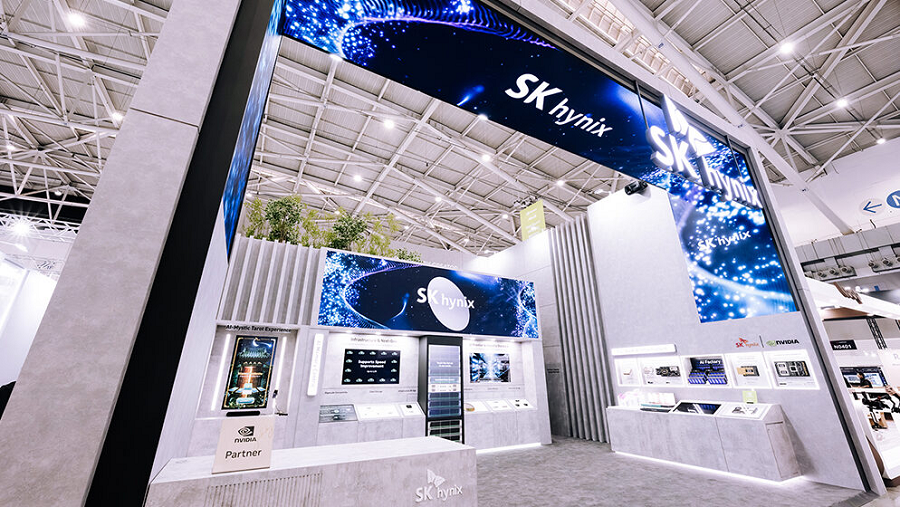
SK hynix Inc., the world’s largest supplier of HBM memory, today filed to list its shares on the Nasdaq stock exchange. The South Korean company hopes to sell up to 17.79 million shares for $29.4 billion. The public offering is expected to be the second-largest on record after the recent listing of SpaceX Corp., which […] The post Memory maker SK hynix files for $29B US IPO amid AI demand appeared first on SiliconANGLE .
Move highlights AI exports increasingly tied to UAE trade strategy
This release brings the HFresh disk-based vector index and the built-in MCP Server to general availability, rebuilds cluster-wide async replication to run from a single scheduler (on by default), and adds two previews: the Boost API and Nested Object Filtering.
Nature Machine Intelligence, Published online: 25 June 2026; doi:10.1038/s42256-026-01258-0 Rising pathogen drug resistance makes next-generation antimicrobial peptides a global priority. Generative AI accelerates discovery by rapidly proposing new peptides with high therapeutic potential. The key question is no longer whether broad data-driven exploration is possible, but whether it can refine biologically complex activity scaffolds.
A deep dive inside our new ultra-low-latency primitive.
Anthropic accused Alibaba of running 25,000 fake accounts to pull nearly 29 million conversations out of Claude — then took the evidence to the White House. That was just the opening shot in a week the labs spent at war with everyone, including each other: poaching Google's top Gemini minds, watching their own developer tools get pried open by anonymous strangers, and staring down Europe's August disclosure deadline. The twist? The only companies cleanly printing money this week sell memory and silicon — not models.
simonw/browser-compat-db Inspired by Mozilla's new MDN MCP service - source code here - I decided to try converting their comprehensive mdn/browser-compat-data repository full of browser compatibility data into a SQLite database. This new GitHub repo includes a Claude Code for web (Opus 4.8) generated script for doing that using sqlite-utils . I wanted the resulting ~66MB SQLite database to be available via the GitHub CDN with open CORS headers. GitHub releases don't have those, but any file stored in a regular GitHub repository does - so I had Codex Desktop (GPT-5.5) build a GitHub Actions workflow that builds the database and then force-pushes it to a db "orphan" branch. You can download the resulting database from here , and since it's hosted with open CORS headers you can also explore it with Datasette Lite . Tags: github , mozilla , projects , github-actions , datasette-lite , ai-assisted-programming , model-context-protocol , mdn

Qualcomm Inc.’s stock jumped 14% in after-hours trading today after it shared a series of updates about its artificial intelligence roadmap. The company announced plans to acquire an inference software startup called Modular Inc. and previewed two upcoming AI chips. Additionally, Qualcomm significantly raised its fiscal 2029 guidance. The chipmaker now expects its non-handset revenue […] The post Qualcomm shares jump 14% on Modular acquisition, guidance upgrade appeared first on SiliconANGLE .
Superhuman Inc., the company formerly known as Grammarly, said today it has agreed to acquire GPTZero Inc., the startup whose detection tools tell teachers, editors and hiring managers when a piece of writing came from a machine. The acquisition price was not disclosed. The acquisition is arguably ironic. Grammarly spent years building tools that help […] The post Grammarly parent Superhuman buys AI detector GPTZero appeared first on SiliconANGLE .

Mayor’s office grants extra 12 months to run pilot while London force procures long-term supplier The Metropolitan police have been granted a 12-month extension to a pilot project that has been run with the spy-tech firm Palantir while the force carries out a procurement process. The development comes weeks after the mayor of London, Sadiq Khan, blocked a £50m deal between the Met and the US company to automate intelligence analysis in criminal investigations. Continue reading...
Provost Kavita Bala explains how higher ed’s nonprofit status gives it a unique position in the development of AI. The post Provost Bala highlights higher ed’s role in shaping AI for the public good appeared first on Cornell AI Initiative .
This is the story of how a two-semester collaboration between the Cornell AI Innovation Hub, graduate students, and the Treasury team transformed a time‑consuming, manual investigation process into a tool that helps staff complete the work more efficiently. The post How Cornell Recovered $100,000 in Unidentified Payments With AI appeared first on Cornell AI Initiative .

The post Scaling cybercrime disruption through innovation and AI appeared first on Source .

OpenAI Group PBC today revealed a custom chip called Jalapeño that it will use to power its large language models. The processor is the fruit of a collaboration with Broadcom Inc., which is no stranger to custom silicon design. The company helped Google LLC develop its TPU line of artificial intelligence accelerators. In April, the […] The post OpenAI, Broadcom debut custom Jalapeño chip for AI inference appeared first on SiliconANGLE .

Spending on government contracts with tech firms that use AI-powered tools to track immigrants has soared to record levels under Trump 2.0, report says A new report sheds light on the unprecedented growth of the US government’s immigration surveillance arsenal, revealing fresh details about how spending on technology and AI tools to find and track migrants has soared to record levels during Donald Trump’s second term. The report, released this week, analyzed US Immigration and Customs Enforcement (ICE) and Customs and Border Protection (CBP) contracts with 11 companies the authors said provide surveillance tech. They found the money awarded to these firms doubled from 2024 to 2025, to just over $310m – and in 2026, that number soared to a record $513m. Continue reading...
Organizações da sociedade civil têm até 10 de agosto para integrar o Colégio Eleitoral que elegerá 11 representantes titulares ao CGI.br. Confira mais informações aqui. O post Comitê Gestor da Internet abre formação de Colégio Eleitoral até 10 de agosto de 2026 apareceu primeiro em Data Privacy Brasil Research .
HP cut PC refreshes 28%. Here's how.

Rep. Anna Paulina Luna (R-FL) says her staff used AI for "spellcheck" in an amendment summary for a major defense bill, but denies it was used for the bill text itself and says "NO Legislation is ever drafted with AI." Luna issued the response after accounts on X began sharing screenshots of an amendment summary […]
Discover a five-level model showing how vision AI evolves from isolated pilots into a reusable system across sites.
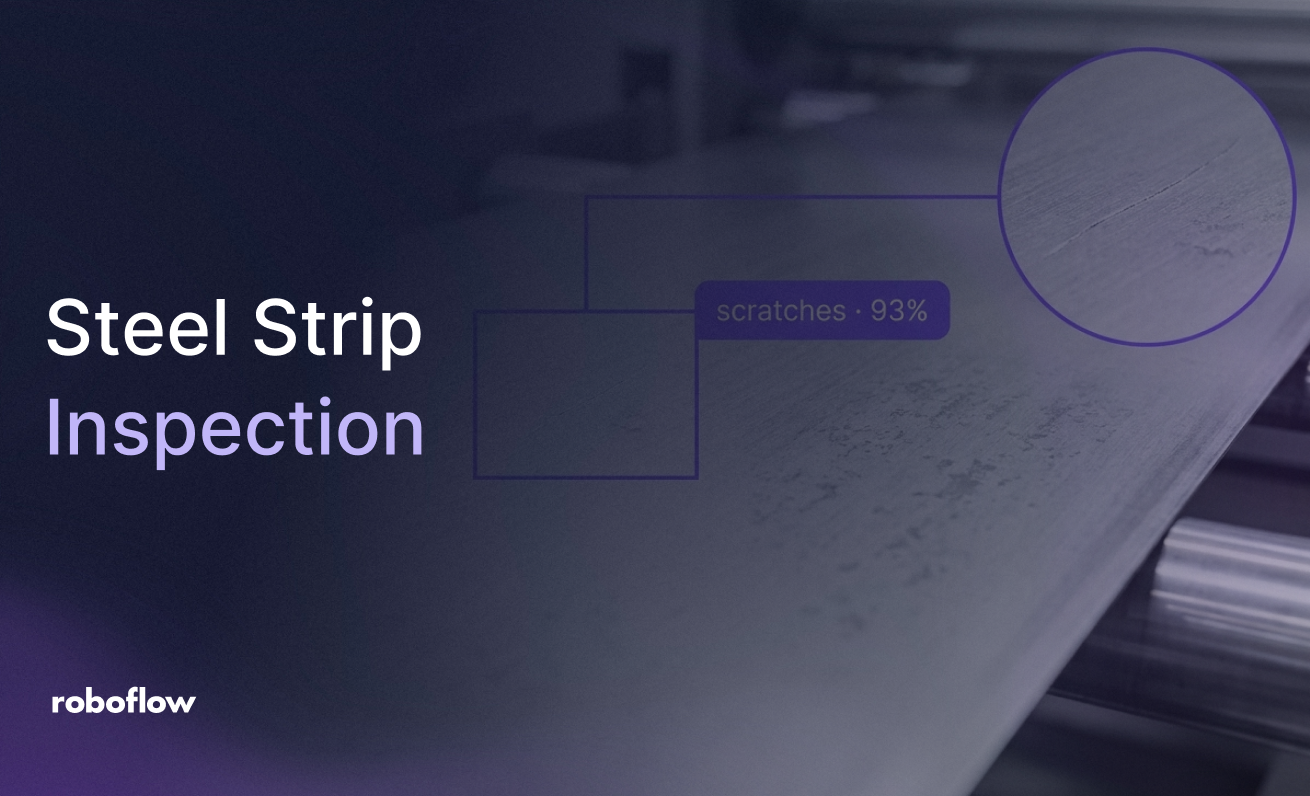
Train an RF-DETR model on steel strip defects and build a Workflow that sorts every inspection into pass, review, or fail.
In a rare double-interview, the Databricks technical leaders riff on what it will take for every company to build Agent Clouds
In this post, we walk through how Huntington built a scalable AWS solution to detect and redact Personally Identifiable Information (PII) and Payment Card Industry (PCI) data from over 400 million documents, reducing processing time from years to just a few months while achieving 95%+ redaction accuracy.
In this post, you will learn how to build a voice agent that handles appointment reminder conversations using Amazon Nova 2 Sonic and Amazon Bedrock AgentCore. The agent authenticates patients by voice, manages appointments (confirm, cancel, or reschedule), collects pre-visit health information, and escalates to human staff when needed. You handle routine calls at scale, which can help reduce no-show rates. This sample focuses on the agentic side of the problem: voice conversation and tool orchestration. A browser-based interface is included for testing. To connect the agent to actual phone lines for outbound dialing, you would integrate a telephony service such as Amazon Connect Customer.
In this post, you will learn how to build an end-to-end integration between Snowflake semantic views and Amazon Quick. The sample data is user review data for a media company. You start by loading movie review data from Amazon Simple Storage Service (Amazon S3) into Snowflake, define a semantic view in SQL to add business meaning, explore it with natural-language queries through Cortex Analyst, and then generate an Amazon Quick dataset and dashboard. The dataset can be created manually or with a provided automation script. By the end, your BI team or AI team can ask natural-language questions against a governed data layer and trust that every response reflects the same business logic.
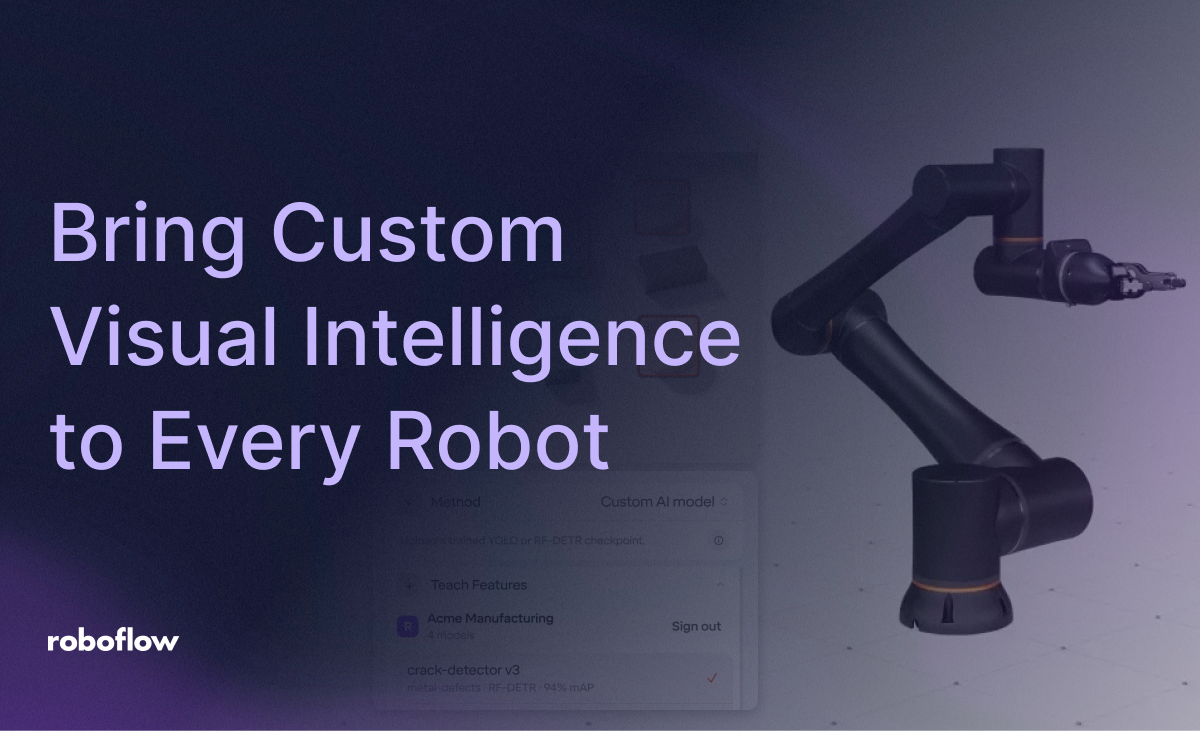
Roboflow and Standard Bots are announcing a partnership to enable robots to see, understand, and act with visual intelligence.
In the last few months, I've started to see [job applications] that were clearly cowritten by an LLM, link to an LLM-generated portfolio site, which then links to LLM-generated GitHub projects, with purely LLM-generated commit messages. [...] My other reaction is that I don't know anything about these people . They haven't put themselves out there. They haven't said anything true. [...] The perfected, generated, prompted resume is generic and impersonal. It tells me nothing about this person, other than that they use particular tools. — Tom MacWright , Accidental anonymity Tags: careers , ai , tom-macwright , ai-misuse
Qué digital, a hyper-local outlet from Mar del Plata, used archival footage, interviews and AI tools to produce a documentary that confronts a rising wave of denialism. The post A local newsroom traces the wounds Argentina’s dictatorship left on its community appeared first on LatAm Journalism Review by the Knight Center .

These images from photographer Kristin Bethge document Brazil's milk bank system, which provides some of the world's cheapest and safest donated milk to hundreds of thousands of babies

When considering the 1960s sitcoms Bewitched and I Dream of Jeannie , both of which featured women with supernatural powers navigating life with mortals, most people wouldn’t connect them with pursuing an engineering career. But Karen Panetta did. The sitcoms’ main characters—Samantha Stevens, a witch; and Jeannie, a genie—were “strong, empowered female leads using magic,” Panetta says, and they inspired her to become an engineer, as it was like sorcery to her. Panetta, an IEEE Fellow, is dean of graduate education at the Tufts University engineering school, in Medford, Mass., outside of Boston. Karen Panetta Employer Tufts University, in Medford, Mass. Title Dean of the engineering school’s graduate education Member grade IEEE Fellow Alma maters Boston University and Northeastern University in Boston Like Samantha and Jeannie, Panetta has made magic happen, such as when she helped to invent the first CPU digital-twin simulator . Digital twins are computer simulation programs that track and adjust the operations of a physical device in detail. Her simulator has been adapted for several industrial uses, including by NASA to help design spacecraft. Panetta also mentors young women to encourage them to pursue a STEM career through the Nerd Girls program she launched at Tufts in 2000. Engineering undergraduate students work on technology for socially conscious projects such as environmental cleanup, renewable energy, and the development of assistive devices to improve mobility f…
The rising popularity of AI, Edge, and Telecommunications workloads on Kubernetes has led to new requirements for hardware management. We now need hardware specification beyond CPU time and memory allocations. This includes allocating GPUs, TPUs, network interfaces, and other hardware, sometimes after pod start and occasionally through time-sharing. Efficiently managing this specialized hardware is the mission of the Device Management Working Group . Their cornerstone project, Dynamic Resource Allocation (DRA) , recently graduated to GA, marking a fundamental shift in how the project handles hardware-intensive workloads at scale. In this spotlight, we sit down with working group chairs Kevin Klues , Patrick Ohly , and John Belamaric to discuss the limitations of the legacy device model, the NP-hard challenges of scheduling, and how they’re building a more programmable, hardware-aware future for Kubernetes. Introducing Device Management Natalie Fisher: Can you introduce yourself, your role, and how you got involved in the Device Management Working Group? Kevin Klues: My name is Kevin Klues. I am a Distinguished Engineer at NVIDIA. I have been a co-chair of the device management working group since its inception at Kubecon EU 2024. I have also been involved with DRA (the working group's primary deliverable) since its inception in 2019 / 2020. I have also been a kubelet maintainer since 2019, with a focus on its device manager, CPU manager, and topology manager subcomponents. T…

From the age of legal adulthood to the concept of "profound autism", policy-makers are turning to neuroscience to help shape laws and policies, but the science simply isn't ready

Sci-fi columnist Emily H. Wilson rounds up her favourite reads of the year to date – and highlights one particular book as her top pick

Feedback isn't sure what to make of a ground-breaking piece of research into the understudied topic of "subjective individual variability in onion tearing and its relationship to chemosensory sensitivity"

Turning model coefficients into a 0–1000 score, with risk classes and stability checks The post How to Build a Credit Scoring Grid From a Logistic Regression Model appeared first on Towards Data Science .
Claude Tag is Anthropic’s latest attempt at getting Claude out of your DMs and into your team’s Slack channels. AI assistants are increasingly showing up in the workplace to perform research, coding, writing, and analysis, but the results of those interactions typically remains tied to individual conversations rather than being shared across projects and teams. That limitation is what Anthropic is addressing with Claude Tag , a new Slack channel-based experience for its Enterprise and Team customers, designed to give them a shared AI collaborator that retains context across conversations and participates in work with multiple employees. Tag will replace Anthropic’s previous attempt at this, Claude in Slack, would only interact with one person (although it’s responses were visible to all in a channel) and its context was limited to the last 20 messages in a channel. Claude Tag has a much larger context and can be asked to complete tasks on its own, returning with results and a log of how it completed the task for review. It can also schedule follow-up work for itself, enabling projects to continue over hours or days without constant prompting, Anthropic said. Tag also has an “ambient” mode: when this is enabled, it proactively surfaces relevant information from other channels and connected tools, notifying teams about updates that may be important, and following up on unresolved discussions or tasks, the company said. Shared context could unlock productivity gains These featu…

Pro- and anti-AI groups spent $24m on a congressional contest in New York, but it’s unclear to what end When the Democratic primary for New York ’s 12th congressional district was called on Tuesday night, the result capped off one of the most expensive races of its kind in the state’s history. More than $24m poured into the Manhattan contest from tech-backed financial groups as the campaign turned into a battleground for pro- and anti- AI groups to test their influence. Much of the spending targeted candidate Alex Bores, a member of the state assembly who sponsored an AI safety bill and subsequently became a lightning rod for the tech industry. Pro-AI political action committees (Pacs) put more than $8m into the race to oppose Bores, according to Tech Influence Watch, while industry groups supporting regulation spent more than $16m to counter the attacks. Continue reading...

Don’t miss a night out because you’re watching your terminal. Have your coding agent call you instead! Join the 7-Day Voice AI Builder Challenge here: https://hubs.la/Q04mvXBZ0 Hurry—challenge ends June 30!
In this post, we demonstrate the architecture and approach Loka used to solve a common frustration: robotic, slow voice assistants that cause customers to hang up, damaging brand reputation and driving up support costs.

HelloTwin.ai GmbH today announced what it calls an accountable artificial intelligence AI twin that holds business intelligence and goals in a single source of truth. HelloTwin said it built its data model on a patent-pending compiler designed to pull answers from business context rather than generate them. This means that the agentic identity for the […] The post HelloTwin launches ‘Digital Authority’ to bring governed AI agents to the enterprise appeared first on SiliconANGLE .

As enterprises advance their artificial intelligence initiatives, they’re discovering that the real constraint isn’t model sophistication — It’s data. AI outcomes now depend on whether organizations can access, mobilize and operationalize data as an active system rather than a passive repository. This shift was a defining theme at Pure Accelerate 2026. The challenge is not simply […] The post Three insights you may have missed from theCUBE’s coverage of Pure Accelerate appeared first on SiliconANGLE .

A practical data engineering onboarding workflow for environment setup, automated testing, and AI-assisted development. The post Your First Task as a Data Engineer in a New Company? Make the ETL Pipeline Testable appeared first on Towards Data Science .

Mirae Asset Late Stage Opportunities Fund sold a 0.97% stake in logistics unicorn Shadowfax for nearly Rs 120 crore through a bulk deal on Wednesday. BSE bulk deal data shows that Mirae Asset Late Stage Opportunities Fund sold 56.5 lakh shares of Shadowfax at Rs 212 apiece, taking the deal value to Rs 119.8 crore. As of March 2026, Mirae Asset held a cumulative 6.73% stake in Shadowfax through multiple funds. The latest transaction represents around 0.97% of the company’s equity, reducing the asset manager’s overall holding in the logistics and quick-commerce delivery platform. Founded in 2015 by Abhishek Bansal, Vaibhav Khandelwal, Gaurav Jaithliya and Praharsh Chandra, Shadowfax operates in the last-mile and hyperlocal logistics space, serving ecommerce marketplaces, D2C brands and quick commerce players. It competes with players such as Delhivery, XpressBees, Ecom Express and Ekart, in a segment marked by intense competition. For Q4 FY26, Shadowfax reported a 74% year-on-year increase in operating revenue to Rs 1,237 crore from Rs 712 crore in the corresponding quarter last year. The company also turned profitable, posting a net profit of Rs 56 crore against a loss of Rs 10 crore in Q4 FY25. Shadowfax had a muted debut on the stock exchanges earlier this year, with its shares listing at a 9% discount to the IPO price. However, the stock has nearly doubled over the past two months to Rs 230.50 apiece, pushing the company's market capitalization to Rs 13,484 crore.

Enterprise AI services startup Hang Ten Systems has raised $32 million in a seed funding round led by Mayfield, with participation from Aramco Ventures and a group of angel investors. Founded by former Infosys CEO and SAP executive board member Vishal Sikka, the Palo Alto-based company helps large enterprises deploy artificial intelligence across business operations and software systems. The fresh capital will be used to expand the company's team and scale its engagements with global enterprises, the company said in a press release. Hang Ten focuses on building and operating enterprise software using AI-native approaches, including agentic code generation, reusable skills libraries, and domain-specific expertise. The company aims to help enterprises reduce the cost and time required for software development, customization, integration, and maintenance. In a LinkedIn post announcing the launch, Sikka said Hang Ten is already working with large enterprises, including Fresenius and Siemens entities, to help them deploy AI across business operations. He described the company as an enterprise AI services firm focused on helping organizations adopt AI at scale. "Every single enterprise will be transformed by AI. A few are already reaping massive benefits, building in days what used to take years. But most are stuck at the starting line, or worse, and the gap is widening every day," said Sikka. According to the company, it is currently working with customers across several industri…