Latest AI/ML News
8494 matching items
Towards AI-augmented decision making in psychiatry
Nature Machine Intelligence, Published online: 12 June 2026; doi:10.1038/s42256-026-01256-2 Psychiatric disorders are heterogeneous, and care depends on interpreting unstructured longitudinal narratives, creating variability that hinders standardization. A study now shows that a psychiatry-specific large language model (LLM) may help clinicians to deliver more consistent, high-quality care.
How Preply combines AI and human tutors to personalize learning
Preply uses OpenAI to launch AI-generated lesson summaries, providing personalised feedback and language learning exercises.
Inside NERSC at Berkeley Lab: How a DOE Office of Science User Facility Is Exploring ClearML for Scientific AI Workflows
By Adam Wolf NERSC, the mission high-performance computing center for the U.S. Department of Energy Office of Science, is using ClearML as part of the AI infrastructure stack for Perlmutter, the upcoming Doudna supercomputer, and the broader American Science Cloud. Here is a look at what they are exploring and why it matters for AI […]
Production-Ready Agents Need A Production-Ready Data Platform
There’s a common theme to the conversations I’ve been having with AI teams lately: change. Constant, head-spinning change. Teams across industries are evaluating and re-evaluating model providers, agent frameworks, and harnesses on a continuous basis. At MongoDB, we believe that your choice of technology partner—specifically, your data platform—should simplify how you build with AI. It should deliver performance at scale, enable you to build and run anywhere, and it should allow you to choose your own providers and frameworks. This is exactly what MongoDB offers, and it’s why more than 67,000 customers rely on us for their most important applications. The organizations seeing the most AI success are the ones whose technology stacks are set up for the current pace of change. For example, DevRev’s AgentOS platform is powered by MongoDB Atlas. AgentOS handles billions of requests each month, for everything from AI-assisted insights and analytics to internal communications and development. Relying on MongoDB Atlas has helped DevRev get innovations to market faster, and enables the company to scale seamlessly as it grows. MongoDB is ideal for agentic AI in two key ways. First, an agent is only as smart as its context—which requires blending short-term memory, long-term knowledge, and enterprise data. Because this information is highly dynamic and unstructured, JSON is the ideal format. It provides the schema flexibility inherently needed by the data and allows attaching metadata…
Startups
Startups emilie.germain… jeu, 06/11/2026 - 15:32
Why is the cost of my neural network inconsistent (and sometimes increasing)?
I tried to follow this crash course to create a neural network from scratch. It seems to be working, which is great, but as I kept running the simulation I noticed that the cost of the network sometimes behaves, continuously decreasing until it reaches a minimum. Other times, it will hit a low, then go back up and rest at that higher position. Other times, it always increases! Why is it happening? I wrote it in C# as a Visual Studio Console App. int[] layerLengths = { 2, 30, 30, 30, 1 }; double[][,] weights = new double[layerLengths.Length - 1][,]; double[][,] biases = new double[layerLengths.Length - 1][,]; double[][,] layers = new double[layerLengths.Length][,]; Random rand = new Random(); double[,] input = { { 142, 64, 27 }, { 185, 71, 42 }, { 128, 62, 23 }, { 210, 74, 51 }, { 167, 68, 35 }, { 154, 66, 29 }, { 198, 72, 46 }, { 135, 63, 21 }, { 176, 70, 38 }, { 221, 75, 54 }, { 149, 65, 31 }, { 162, 67, 33 }, { 193, 73, 48 }, { 124, 61, 20 }, { 181, 69, 41 }, { 205, 76, 57 }, { 157, 66, 30 }, { 170, 68, 36 }, { 138, 64, 25 }, { 214, 74, 53 }, { 146, 65, 28 }, { 189, 72, 44 }, { 132, 62, 22 }, { 173, 69, 37 }, { 201, 73, 49 }, { 159, 67, 32 }, { 144, 64, 26 }, { 178, 70, 39 }, { 226, 77, 60 }, { 151, 65, 29 }, { 166, 68, 34 }, { 196, 74, 47 }, { 127, 61, 19 }, { 183, 71, 43 }, { 208, 75, 55 }, { 155, 66, 31 }, { 171, 69, 36 }, { 140, 63, 24 }, { 217, 76, 58 }, { 148, 65, 27 }, { 191, 73, 45 }, { 130, 62, 21 }, { 175, 70, 38 }, { 203, 74, 50 }, { 160, 67, 33 }, { 145, 64, 26…
Investigador principal de CENIA recibe el Premio Alonzo Church 2026
El investigador principal de CENIA, Pablo Barceló, fue destacado por su artículo “Querying Regular Graph Patterns”, cuyo aporte teórico sustenta hoy los lenguajes con los que se consultan bases de datos en grafos a nivel mundial. Pablo Barceló, investigador principal del Centro Nacional de Inteligencia Artificial (CENIA) de Chile, doctor en Ciencias de la Computación […] The post Investigador principal de CENIA recibe el Premio Alonzo Church 2026 appeared first on CENIA .

GPU-Accelerated Virtual Drug Screening with cuML and Agent Platform
GPUs aren’t just for LLMs; they are accelerating life saving discoveries in tabular data science. On the next Google Cloud Live livestream, join experts from Google Cloud and NVIDIA for a live, end-to-end breakdown of GPU-accelerated virtual drug screening. Hosted by Tilde, alongside Jeff Nelson, William Hill, and Dr. Saee Paliwal, discover how to take molecular predictions from pipeline to production. Watch along and learn about: Interactive live demo: Drop everyday compounds in the chat and watch our web app predict lung cancer (EGFR) binding likelihood in seconds. GPU-accelerated pipelines: Learn how to get 20x-45x training speedups using cuDF and cuML without rewriting your pandas or scikit-learn code. Stop waiting on CPU bottlenecks and learn how to virtualize screening at the trillion molecule scales. Speakers: Tilde Thurium, Jeff Nelson, William Hill, Saee Paliwal Products Mentioned: GPU, NVIDIA, Google Cloud
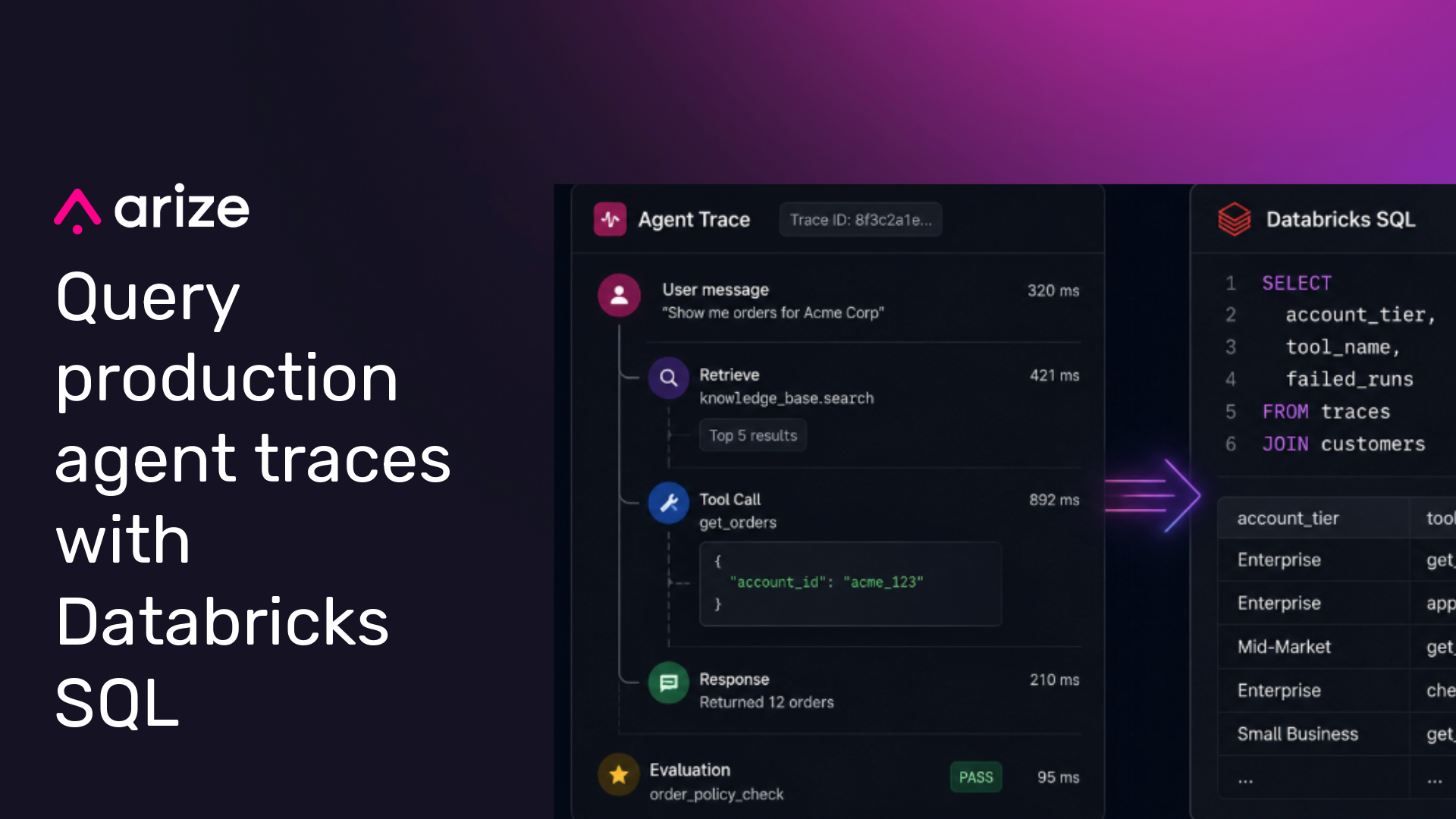
Bring production agent traces from Arize into Databricks Unity Catalog
Arize Data Fabric now supports Databricks, helping teams sync production agent traces, evaluations, and annotations into customer-owned storage for governed analysis in Unity Catalog. The post Bring production agent traces from Arize into Databricks Unity Catalog appeared first on Arize AI .
😸 WATCH: Skills vs Projects vs Custom GPT vs Agents vs Plugins vs...
We explain when to use which, and why
Making secret scanning more trustworthy: Reducing false positives at scale
Alerts are more trustworthy and actionable when noise is reduced. See how we improved the verification step with context-aware LLM reasoning. The post Making secret scanning more trustworthy: Reducing false positives at scale appeared first on The GitHub Blog .
First Afro-Mexican radio station fights against invisibility and for survival
Women activists from Oaxaca secured the first license of its kind in Mexico to create the station Voces Afromexicanas. Now, they face challenges keeping it afloat. The post First Afro-Mexican radio station fights against invisibility and for survival appeared first on LatAm Journalism Review by the Knight Center .
Can LLMs discover quantum error correction codes?
Researchers at IBM created an LLM-guided evolutionary framework that quickly found 465 distinct quantum error correction code candidates.
Why is it so difficult to train an accuracte GAN model?
I'm trying to train a GAN model, but its results are very bad. The Generator doesn't seem to work. Can someone suggest how this can be improved? What is the best way to remember the code? Can this also be done using a builtin library? import os import torch import torchvision import torch.nn as nn import torch.optim as optim import torch.nn.functional as F import torchvision.datasets as datasets import torchvision.transforms as transforms from torch.utils.data import DataLoader import matplotlib.pyplot as plt import numpy as np random_seed = 42 torch.manual_seed(random_seed) BATCH_SIZE = 128 AVAIL_GPUS = min(1, torch.cuda.device_count()) DEVICE = torch.device("cuda" if AVAIL_GPUS else "cpu") LATENT_DIM = 100 transform = transforms.Compose([ transforms.ToTensor(), transforms.Normalize((0.5,), (0.5,)) # scale to [-1, 1] for tanh output ]) dataset = datasets.MNIST(root="./data", train=True, download=True, transform=transform) dataloader = DataLoader(dataset, batch_size=BATCH_SIZE, shuffle=True, num_workers=2, drop_last=True) class Generator(nn.Module): def __init__(self, latent_dim=100, img_channels=1, feature_maps=64): super().__init__() self.net = nn.Sequential( nn.ConvTranspose2d(latent_dim, feature_maps * 4, kernel_size=7, stride=1, padding=0, bias=False), nn.BatchNorm2d(feature_maps * 4), nn.ReLU(True), nn.ConvTranspose2d(feature_maps * 4, feature_maps * 2, kernel_size=4, stride=2, padding=1, bias=False), nn.BatchNorm2d(feature_maps * 2), nn.ReLU(True), nn.ConvTranspose2d(…
New Claude model - Fable
everyone's building with it.
Anne Martel: Using AI to personalize cancer treatment
Anne Martel, Professor, University of Toronto | Vector Institute Faculty Member Every cancer patient faces a fundamental question: what treatment do I need? Not too little, which might allow the […] The post Anne Martel: Using AI to personalize cancer treatment appeared first on Vector Institute for Artificial Intelligence .
Libya launches National AI Strategy with 35 initiatives
Prime Minister Dbaiba adopts AI Ethics Charter at official ceremony
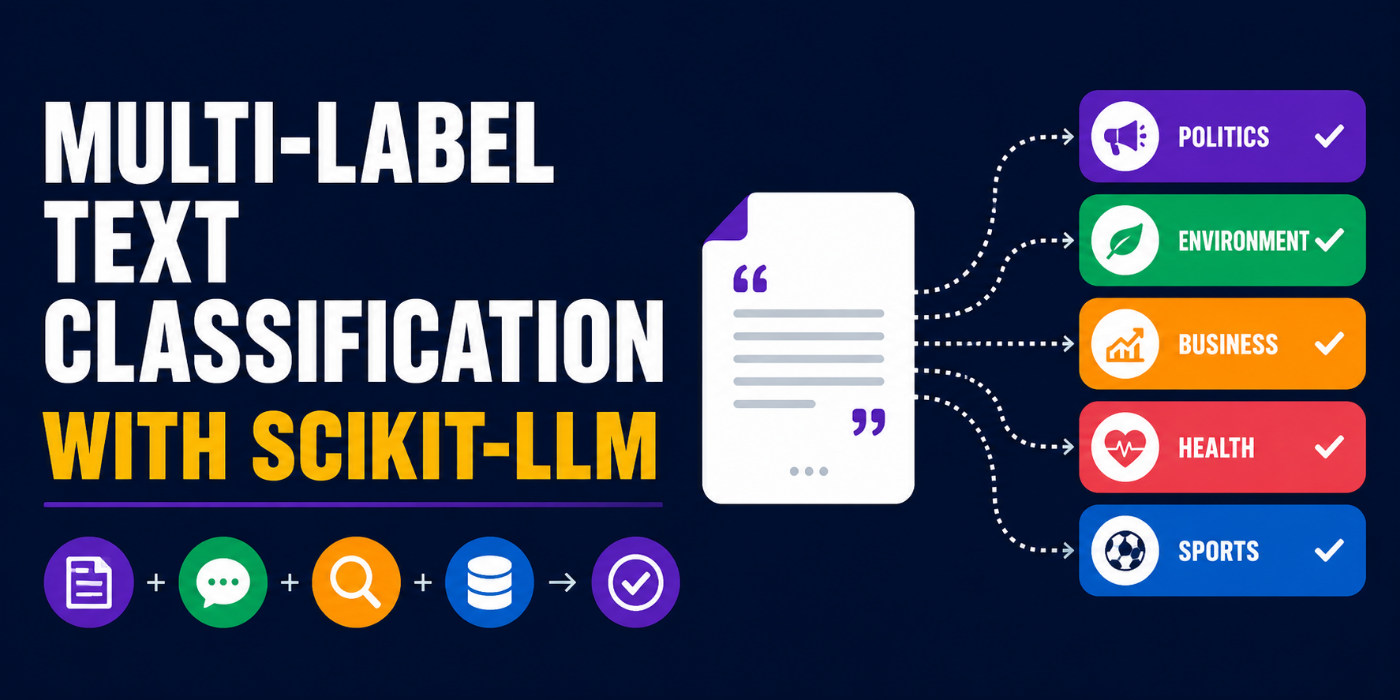
Multi-Label Text Classification with Scikit-LLM
Text classification typically boils down to scenarios where a product review is "positive" or "negative", or a customer inquiry belongs to one category or another.

How a Google DeepMind Spin-off Hunts Hidden Drug Targets
For more than a decade, artificial intelligence has been touted as a way to dramatically accelerate drug discovery . Yet despite billions of dollars in investment, relatively few AI-designed medicines have made it to patients. That’s partially because the timelines for careful drug testing can’t be easily compressed—and partially because drug development is just really hard. Isomorphic Labs , the Google DeepMind spin-off that’s building on DeepMind’s Nobel Prize-winning work on protein structure prediction , may be making the most progress. The company has signed major drug-discovery partnerships with Novartis and Eli Lilly and recently raised US $2.1 billion in funding . In February, it published a technical report describing its new Isomorphic Drug Design Engine, a system created to discover the “pockets” on proteins where drugs can bind and in general to predict how proteins and drug molecules interact. IEEE Spectrum spoke with Adrian Stecuła , a group leader in the machine learning organization at Isomorphic Labs, about how close AI may be to becoming a practical tool for designing new medicines. Going Beyond AlphaFold AlphaFold2 and AlphaFold3 were massive leaps forward for computational biology. Why weren’t those models sufficient for actually designing drugs? Adrian Stecuła: AlphaFold2 was eventually recognized with the Nobel Prize , because it arguably solved the problem of protein folding. But proteins don’t exist in a vacuum, right? They interact with a wide variet…
Making FlashAttention-4 faster for inference
What part of "dtype = 'fp8', num_splits = 0, pack_gqa = True, q_stage = 1, page_size = 1" do you not understand?
😸 Real-time translation is finally real
PLUS: OpenAI's planning a price war with Anthropic ahead of both IPOs.
Outbound investment protections + Expanded export controls + Xi in Pyongyang
Outbound investment protections + Expanded export controls + Xi in Pyongyang c.groth Thu, 06/11/2026 - 11:57 picture alliance / Xinhua News Agency | Shan Yuqi Download (pdf - 384.22 KB) MERICS Briefs MERICS China Essentials Jun 12, 2026 10 min read Outbound investment protections + Expanded export controls + Xi in Pyongyang Top Story China challenges EU de-risking by boosting outbound investment protections Beijing has taken steps to better protect Chinese overseas investments and deter foreign governments from imposing restrictions on Chinese investors – just as the EU mulls a tougher de-risking approach that could lead to greater scrutiny of Chinese projects in Europe. The State Council’s new regulations on outbound investment, which will come into force on July 1, cover Chinese companies and individuals, and a wide range of investment activity beyond initial investment. They reinforce existing export controls on goods, technology, services and related data, and formalize Chinese countermeasures that can be used in response to foreign trade and investment barriers, including blacklisting foreign individuals or organizations, and trade and investment bans. By placing these measures on a firmer legal footing and embedding them within institutionalized security review, monitoring, and investigation processes, China is creating a framework with major implications for the EU and its companies. Not only do the new regulations limit the EU’s ability to challenge Chinese retaliati…
AI Now Senior Fellow Dr. Katie J. Wells Testifies before the House Subcommittee on Workforce Protections
On Tuesday, June 9, 2026, AI Now Senior Fellow, AI and Healthcare Dr. Katie J. Wells testified at a Hearing before the U.S. House of Representatives Committee on Education & the Workforce Subcommittee on Workforce Protections. In her testimony, Dr. Wells highlighted how gig nursing platforms are targeting policymakers with legislation that upends worker protections […] The post AI Now Senior Fellow Dr. Katie J. Wells Testifies before the House Subcommittee on Workforce Protections appeared first on AI Now Institute .
Zero Trust for AI Agents
As AI agents become more capable and autonomous, they also introduce new security challenges. In this 'Fully Connected' episode, Dan and Chris unpack Anthropic’s Zero Trust for AI Agents security framework and what it means for organizations deploying agentic systems. They examine the key security risks facing agentic systems and discuss how organizations can apply Zero Trust principles to deploy AI agents safely. Along the way, they break down practical security controls and discuss how traditional cybersecurity principles must evolve for the age of AI agents. Featuring: Chris Benson – Website , LinkedIn , Bluesky , GitHub , X Daniel Whitenack – Website , GitHub , X Links: Zero Trust for AI Agents OWASP GenAI Project Sponsors: Prediction Guard: A self-hosted AI control plane for running agents in high impact environments. predictionguard.com/practicalai Upcoming Events: Register for upcoming webinars here ! Midwest AI Summit 2026
When the cost of code approaches zero, what does engineering leadership look like?…
On this episode of Leaders of Code, Eric Anderson, director of engineering at Intuit, joins Stack Overflow engineering director Ben Matthews to talk about what happens to software teams when AI makes code generation seemingly free.
Prototype and validate fermionic circuits faster with ffsim
Open-source Python library for fast simulation of fermionic quantum circuits enables efficient prototyping and benchmarking for real quantum hardware.
The Women Leading the Push Against AI Data Centers
The post The Women Leading the Push Against AI Data Centers appeared first on Data & Society .
[AINews] Open Models, Model Labs vs Agent Labs, and What's Untrainable — Sarah Guo
a quiet day lets us reflect on a great essay
Why AI hasn’t replaced software engineers, and won’t
Coding agents as normal technology
AI Weekly Issue #502: Your AI can now spend your money — Visa wired it into ChatGPT
Visa just wired ChatGPT to shop and pay on your behalf — an AI agent can now buy at any Visa merchant without you clicking "buy." It capped a week where the labs pushed autonomy and capital to new highs: Anthropic put Claude Fable 5, its most powerful public model, into everyone's hands; Jeff Bezos came out of stealth with Prometheus, a $41B startup building an "artificial general engineer." A self-replicating worm hit 73 of Microsoft's own GitHub repositories through AI coding tools. Anthropic broke with the White House over preempting state AI laws; a German court ruled Google is liable for what its AI Overviews say. The agents got more capable this week — and a lot more autonomous.
Vector Space Hackathon 2026
Wow. So many cool and creative submissions for this year’s hackathon; we really had a tough time picking only 3 winners! The submissions ranged from early mental health detection to crowd-reaction simulators, tactical football search, and infrastructure stress-testing. We’re excited to share the results with you. The Hackathon Qdrant’s 2026 “Think Outside the Bot” hackathon pushed the creative boundaries of vector search. Participants from around the world were challenged to create innovative uses of Qdrant, without the use of RAG or simple chatbots. Submissions were judged on the criteria of Innovation, Creativity, and Technical Depth. The hackathon ran for 5 weeks with winners announced at Vector Space Day 2026 with a total of $10k in prizes. Keep reading to learn about the winning submissions.
From virtual experiments to biomedical insight with synthetic data
Nature Machine Intelligence, Published online: 11 June 2026; doi:10.1038/s42256-026-01244-6 Synthetic datasets are becoming crucial for the development of biomedical machine learning models. Victoriano et al. discuss the persistent simulation-to-reality gap that limits how well synthetic performance predicts real-world performance.
Bridging three-dimensional molecular structures and artificial intelligence with a conformation description language
Nature Machine Intelligence, Published online: 11 June 2026; doi:10.1038/s42256-026-01250-8 Xiong et al. introduce ConfSeq, a molecular conformation description language that enables language models to perform three-dimensional molecular modelling tasks, including conformer prediction, three-dimensional molecular generation and representation, with strong performance.
BBVA puts AI at the core of banking with OpenAI
Learn how BBVA scaled ChatGPT Enterprise to 100,000 employees and partnered with OpenAI to accelerate AI-powered banking transformation worldwide.
Google DeepMind releases DiffusionGemma, a model that runs local AI 4x faster
Diffusion AI is most common in image generation, but it can make text outputs much faster.
Cristian Herrera reported where fear tried to silence others. Then he was killed
Herrera, despite constant threats, spent two decades reporting on crime and corruption near Colombia’s border with Venezuela. The post Cristian Herrera reported where fear tried to silence others. Then he was killed appeared first on LatAm Journalism Review by the Knight Center .
Alumni college leaders explore the future of higher ed
The panelists considered three key issues facing colleges and universities: rapidly advancing technology; an altered relationship with the federal government; and an erosion of public trust in higher education. The post Alumni college leaders explore the future of higher ed appeared first on Cornell AI Initiative .
Amazon partnership establishes Cornell AI security initiative
Cornell computer scientists will lead the development of safety protocols to shore up AI agents and the code they produce. The post Amazon partnership establishes Cornell AI security initiative appeared first on Cornell AI Initiative .
😸 WATCH: Sleeping on Microsoft AI? Whoops.
Microsoft Build sit-down with Mustafa Suleyman on Microsoft’s 7-model AI flex
¡Trabaja en CENIA!
El Centro Nacional de Inteligencia Artificial (CENIA) es una corporación público-privada, financiada por la Agencia Nacional de Investigación y Desarrollo (ANID) desde noviembre de 2021. Nuestro propósito es poner la Inteligencia Artificial al servicio de las personas y transformar a Chile en un referente en el desarrollo científico y tecnológico de la IA en Latinoamérica […] The post ¡Trabaja en CENIA! appeared first on CENIA .
Metric Semantic Layer: How Lyft Governs and Scales Key Data Definitions
Written by Rohit Channe and Simran Mirchandani at Lyft. Motivation At Lyft, data isn’t just a resource — it’s woven into everything we do. Metrics drive key forecasts, steer operational decisions, and put our boldest hypotheses to the test. But as Lyft scaled, products launched and evolved, and team members came and went, we found ourselves at risk of different teams using different definitions for a given metric. What did “Metric ABC” actually mean? The answer often depended on the context and application of the team you asked. The consequences were predictable. Without centralized version control or a shared standard, outdated metric definitions crept into decision-making. Our solution was to build an internal Metric Semantic Layer (MSL) : a centralized repository that serves as a single, authoritative home for every metric’s definition — providing both a clear, plain-English description and the definitive SQL code. No more hunting across codebases or tribal knowledge — just one place to store and access a standardized, agreed-upon definition. With MSL, we have a single source of truth — consistent terminology and assumptions across every team, so everyone is genuinely speaking the same language. We achieve this through three key principles: Simplified onboarding and change management — update a metric definition once, and the change automatically and frictionlessly flows through every downstream application that depends on it Intentional governance — clarified ownership,…
Campanhas eleitorais inteligentes: Data Privacy Brasil contribui para trilha do RenovaBR sobre segurança digital
A Data Privacy Brasil participou da trilha online sobre segurança digital em campanhas eleitorais promovida pelo RenovaBR, iniciativa voltada à formação de lideranças políticas e equipes de campanha para os desafios do ambiente digital contemporâneo. A atividade reuniu especialistas para discutir riscos, responsabilidades e boas práticas relacionadas ao uso de tecnologias, dados pessoais e inteligência artificial durante os processos eleitorais. O post Campanhas eleitorais inteligentes: Data Privacy Brasil contribui para trilha do RenovaBR sobre segurança digital apareceu primeiro em Data Privacy Brasil Research .
Portable vLLM Model Inference Kernels in Helion
TL;DR Helion kernels were integrated into vLLM for FP8 inference using Qwen3 models and evaluated across NVIDIA H100 and B200 GPUs. The experiments show that Helion provides a productive PyTorch-native...
Give GitHub Copilot CLI real code intelligence with language servers
Install and configure LSP servers for GitHub Copilot CLI, replacing brute-force grep/decompile with real code intelligence. The post Give GitHub Copilot CLI real code intelligence with language servers appeared first on The GitHub Blog .