AI existential risk probabilities are too unreliable to inform policy
How speculation gets laundered through pseudo-quantification
AI/ML news, top picks, and generated innovation digests.
9677 matching items
How speculation gets laundered through pseudo-quantification
After studying how companies deploy generative AI applications, I noticed many similarities in their platforms. This post outlines the common components of a generative AI platform, what they do, and how they are implemented. I try my best to keep the architecture general, but certain applications might deviate. This is what the overall architecture looks like. This is a pretty complex system. This post will start from the simplest architecture and progressively add more components. In its simplest form, your application receives a query and sends it to the model. The model generates a response, which is returned to the user. There are no guardrails, no augmented context, and no optimization. The Model API box refers to both third-party APIs (e.g., OpenAI, Google, Anthropic) and self-hosted APIs. From this, you can add more components as needs arise. The order discussed in this post is common, though you don’t need to follow the exact same order. A component can be skipped if your system works well without it. Evaluation is necessary at every step of the development process. Enhance context input into a model by giving the model access to external data sources and tools for information gathering. Put in guardrails to protect your system and your users. Add model router and gateway to support complex pipelines and add more security. Optimize for latency and costs with cache. Add complex logic and write actions to maximize your system’s capabilities. Observability, which allow…
It is common to use mutual information as feature selection method. However, I fail to see why this is the case, since the mutual information $I(X, Y)$ depends on both entropies $H(X)$ and $H(Y)$ via the formula : $$ I(X, Y) = H(X) + H(Y) - H(X,Y)$$ meaning that comparing $I(X_i, Y)$ and $(X_j, Y)$ as a measure for selecting between $X_i$ and $X_j$ is not straightforward since the measure can be bloated by the marginal entropies. It is like selecting between $X_i$ and $X_j$ based on the covariance with $Y$ instead of correlation. The only way I can think that such a comparison is allowed is due to the equivalent formula: $$I(X, Y) = H(Y) - H(Y|X)$$ As the first term $H(Y)$ is the same for all $X_i$ then the ramking shouldn't depend on the "scale" of $H(Y)$ . Is that correct or am I missing something?

Our approach to securing our cloud environments
Les sciences du numérique à la conquête du ciel et de l’espace mtestari mar, 07/09/2024 - 15:23 Après le lancement réussi d’Ariane 6 en juillet 2024 à Kourou, et alors que le nombre de voyageurs aériens atteint de nouveaux records en 2025, les sciences et technologies du numérique revêtent désormais une importance cruciale dans les domaines de l’aérospatial et l’aéronautique. © Pixabay/ Photo V. Stefanov Ces deux secteurs, très présents en Nouvelle-Aquitaine et en Occitanie, couvrent également des enjeux sociétaux et économiques significatifs. C’est tout un écosystème, opéré par Aerospace Valley , premier pôle de compétitivité européen, qui participe à l’étude, la conception, la fabrication et la commercialisation de ces technologies. Dans ce contexte, les équipes du Centre Inria de l’université de Bordeaux offrent à leurs partenaires industriels et académiques, les outils et les connaissances nécessaires pour renforcer la sécurité, la compétitivité et la décarbonation des systèmes, en s’appuyant sur leurs expertises telles que la modélisation, la simulation et la cryptographie . La conception des systèmes aéronautiques : un challenge scientifique pour chaque composante Il est primordial de développer des produits (aéronefs, avions, drones, lanceurs de satellites) les plus performants possible d’un point de vue du service rendu que de l’optimisation de la ressource exploitée. Grâce à la modélisation et à la simulation, Inria contribue à la création de modèles précis et réali…
Hallucination in large language models usually refers to the model generating unfaithful, fabricated, inconsistent, or nonsensical content. As a term, hallucination has been somewhat generalized to cases when the model makes mistakes. Here, I would like to narrow down the problem of hallucination to cases where the model output is fabricated and not grounded by either the provided context or world knowledge. There are two types of hallucination: In-context hallucination: The model output should be consistent with the source content in context. Extrinsic hallucination: The model output should be grounded by the pre-training dataset. However, given the size of the pre-training dataset, it is too expensive to retrieve and identify conflicts per generation. If we consider the pre-training data corpus as a proxy for world knowledge, we essentially try to ensure the model output is factual and verifiable by external world knowledge. Equally importantly, when the model does not know about a fact, it should say so. This post focuses on extrinsic hallucination. To avoid hallucination, LLMs need to be (1) factual and (2) acknowledge not knowing the answer when applicable.
I am new to ML and plan to use KerasCV stabledifussion model to generate images from text. The example on the KerasCV website is straightforward but I could not find a way to save the model locally for later use. I also noticed that the library connects to hugging face to download encoder and diffusion model. Could you please point me to the right direction to do this locally? I would like all the model and its parameters to be local and I will be using it in a server. Also, if you have experience running such a model/server on the could, I would appreciate your guidance on the best approach wrt costs. Should I upload everything and store the whole data on the cloud or load it from hugging face? Which one would make more sense for cloud applications?
Rethinking AI agent benchmarking and evaluation
Last updated: 14 August 2025. As AI Act implementation gradually unfolds, it is important to understand the different mechanisms of enforcement included in the Regulation. One of the most important is the general-purpose AI Code of Practice, which was developed by the AI Office and a wide range of stakeholders. This summary, detailing the Code […]
Top highlight's from this year's event
Building apps to connect businesses with their local community
The perplexity of the $i^{th}$ token in the $k^{th}$ sequence is $$ P_{ki} = \frac{1}{p(t_{ki})} $$ The perplexity aggregated for the $k^{th}$ sequence is then $$ P_{k} = \left(\prod_{i=1}^N P_{ki}\right)^{1/N} \\ = \left(\prod_{i=1}^N \frac{1}{p(t_{ki})} \right)^{1/N} $$ which is the geometric mean of the perplexities of the tokens. This makes sense as we are essentially taking the multiplicative inverse of the probability that the model got the whole sequence correct. Now my question is how to aggregate the perplexities of several sequences. It seems from various places, including the Hugging Face Tutorial , I see that the prescription is to take the arithmetic mean of the perplexities of sequences $$ P = \frac{1}{m} \sum_{k=1}^m P_k $$ I am not quite understanding what it means to take the average of 1/probabilities. What is this actually capturing?
Writing up results from a recent project
Achieving even more surgical edits than LEACE without concept labels at inference time.
I am trying to create a Car Following model, for which i am using DDPG. My action is acceleration bounded in a range of [-3,3] m/s2. While training the model, for every state it gives a single acceleration value i.e. 3 (or sometimes -3). It can be clearly seen that my actor is performing really bad. What can be done to resolve this issue?
It's probably not for everyone, but there are a lot of great reasons to consider, including the potential to have an impact on AI governance worldwide, leveraging the first-mover advantage, and more.
Let's hypothesize a scenario where some of the records ( s i , a i , r i , s i+1 ) in the replay buffer are generated by another completely unrelated random policy. If the DDPG algorithm still samples random minibatches from this buffer for learning as usual, would the learning process proceed successfully? Actually, there's a pre-processing stage before training DDPG in my online learning application, where another module learns the safe action range. I wonder if the transition records obtained during this stage can be used to pre-train the DDPG agent.
Learn about how KIOS, a kiosk software, conducted early stage testing of the SDK and their integration experience.
I have basically automatised the use of an app through the use of OCR and computer vision. So basically when a word or an image is detected it will perform a certain action. When that action is successfully completed it will go to the next state. Now I want to try basically with a more "heuristic" approach and I thought about reinforcement learning. Why? Because I am aiming to build a tool that basically understand automatically what actions to perform in a certain state. But I have a doubt. Even though I don't need to declare an association like this (it would beat the purpose of deep reinforcement learning or deep learning in general): if(state.MENU_VIEW) clickManager.clickOnFolder(); ... I still need to define the states, the actions and the reward. Meaning I would need to instruct my app that when the OCR result is "Open Folder" it means the state I am in is MENU_VIEW. I simply wouldn't tell my app what action to perform in a that state. Am I correct? What I am trying to say is: how exactly could I make it so that the states (and maybe also the actions?) are generated automatically? The reward in this case scenario would be basically the folder being opened successfully.
Writing up results from a project from Spring 2023
Recently, I have seen papers about large datasets for robotics such as DROID( https://droid-dataset.github.io/ ) or Open X-Embodiment( https://robotics-transformer-x.github.io/ ). As I see, the datasets are specific to some types of robots(although X-Embodiment allows one robot to learn from another robot's data) and environments. If one wants to add another robot into the dataset, they have to do all data sampling again, which is quite expensive. Some environments might be difficult to reproduce, especially as they collected data from all the labs in the world. I am wondering: why don't they instead set up data collection procedure on simulation? it will make the data collection way cheaper. When they want to add a new robot and collect data with the same tasks and environments like other robots, they can do it easily. It is also easy to add a new task and collect data from all robots/environments. Then, why they collect data in real world while giving up on such reproducibility/extensibility? Is Sim2Real that bad, even if it can collect way more samples easily?

The AI revolution drove frenzied investment in both private and public companies and captured the public’s imagination in 2023. Transformational consumer products like ChatGPT are powered by Large Language Models (LLMs) that excel at modeling sequences of tokens that represent words or parts of words [2]. Amazingly, structural
My founder friends constantly think about growth. They think about how to measure their business growth and how to get to the next order of magnitude scale. If they’re making $1M ARR today, they think about how to get to $10M ARR. If they have 1,000 users today, they think about how to get to 10,000 users. This made me wonder if/how people are measuring personal growth. I don’t want to use metrics like net worth or the number of followers, because that’s not what I live for. After talking with a lot of friends, I found three interesting metrics: rate of change, time to solve problems, and number of future options. Some friends told me they find this blog post mildly sociopathic. Why do I have to measure everything? Life is to be lived, not to be measured. As someone lowkey fascinated by numbers, I don’t see why measuring and living have to be mutually exclusive – measuring often helps me live better – but I see where they come from. This post is more of a thought exercise than a rigorous experiment. Rate of change I have this theory that life has a circadian rhythm. Every 3-6 years, you become a different person. You work on different problems. Your lifestyle changes. The people you hang out with are different. If you haven’t caught up with a friend in 5 years, you might no longer have anything in common. It’s not a coincidence that schools are structured into chunks of 3-6 years. Looking back, I realized that every 3-6 years, my life completely changed. From grade 3 to grad…
Trained T5 on the Pile
LangChain and Qdrant are collaborating on the launch of Qdrant Hybrid Cloud , which is designed to empower engineers and scientists globally to easily and securely develop and scale their GenAI applications. Harnessing LangChain’s robust framework, users can unlock the full potential of vector search, enabling the creation of stable and effective AI products. Qdrant Hybrid Cloud extends the same powerful functionality of Qdrant onto a Kubernetes-based architecture, enhancing LangChain’s capability to cater to users across any environment.
Diffusion models have demonstrated strong results on image synthesis in past years. Now the research community has started working on a harder task—using it for video generation. The task itself is a superset of the image case, since an image is a video of 1 frame, and it is much more challenging because: It has extra requirements on temporal consistency across frames in time, which naturally demands more world knowledge to be encoded into the model. In comparison to text or images, it is more difficult to collect large amounts of high-quality, high-dimensional video data, let along text-video pairs. 🥑 Required Pre-read: Please make sure you have read the previous blog on “What are Diffusion Models?” for image generation before continue here.
We’re excited about our collaboration with Red Hat to bring the Qdrant vector database to Red Hat OpenShift customers! With the release of Qdrant Hybrid Cloud , developers can now deploy and run the Qdrant vector database directly in their Red Hat OpenShift environment. This collaboration enables developers to scale more seamlessly, operate more consistently across hybrid cloud environments, and maintain complete control over their vector data. This is a big step forward in simplifying AI infrastructure and empowering data-driven projects, like retrieval augmented generation (RAG) use cases, advanced search scenarios, or recommendations systems.
Developers are constantly seeking new ways to enhance their AI applications with new customer experiences. At the core of this are vector databases, as they enable the efficient handling of complex, unstructured data, making it possible to power applications with semantic search, personalized recommendation systems, and intelligent Q&A platforms. However, when deploying such new AI applications, especially those handling sensitive or personal user data, privacy becomes important. DigitalOcean and Qdrant are actively addressing this with an integration that lets developers deploy a managed vector database in their existing DigitalOcean environments. With the recent launch of Qdrant Hybrid Cloud , developers can seamlessly deploy Qdrant on DigitalOcean Kubernetes (DOKS) clusters, making it easier for developers to handle vector databases without getting bogged down in the complexity of managing the underlying infrastructure.
Aleph Alpha and Qdrant are on a joint mission to empower the world’s best companies in their AI journey. The launch of Qdrant Hybrid Cloud furthers this effort by ensuring complete data sovereignty and hosting security. This latest collaboration is all about giving enterprise customers complete transparency and sovereignty to make use of AI in their own environment. By using a hybrid cloud vector database, those looking to leverage vector search for the AI applications can now ensure their proprietary and customer data is completely secure.
We’re excited to share that Qdrant and Vultr are partnering to provide seamless scalability and performance for vector search workloads. With Vultr’s global footprint and customizable platform, deploying vector search workloads becomes incredibly flexible. Qdrant’s new Qdrant Hybrid Cloud offering and its Kubernetes-native design, coupled with Vultr’s straightforward virtual machine provisioning, allows for simple setup when prototyping and building next-gen AI apps. Adapting to Diverse AI Development Needs with Customization and Deployment Flexibility In the fast-paced world of AI and ML, businesses are eagerly integrating AI and generative AI to enhance their products with new features like AI assistants, develop new innovative solutions, and streamline internal workflows with AI-driven processes. Given the diverse needs of these applications, it’s clear that a one-size-fits-all approach doesn’t apply to AI development. This variability in requirements underscores the need for adaptable and customizable development environments.
Qdrant and STACKIT are thrilled to announce that developers are now able to deploy a fully managed vector database to their STACKIT environment with the introduction of Qdrant Hybrid Cloud . This is a great step forward for the German AI ecosystem as it enables developers and businesses to build cutting edge AI applications that run on German data centers with full control over their data. Vector databases are an essential component of the modern AI stack. They enable rapid and accurate retrieval of high-dimensional data, crucial for powering search, recommendation systems, and augmenting machine learning models. In the rising field of GenAI, vector databases power retrieval-augmented-generation (RAG) scenarios as they are able to enhance the output of large language models (LLMs) by injecting relevant contextual information. However, this contextual information is often rooted in confidential internal or customer-related information, which is why enterprises are in pursuit of solutions that allow them to make this data available for their AI applications without compromising data privacy, losing data control, or letting data exit the company’s secure environment.
In a move to empower the next wave of AI innovation, Qdrant and Scaleway collaborate to introduce Qdrant Hybrid Cloud , a fully managed vector database that can be deployed on existing Scaleway environments. This collaboration is set to democratize access to advanced AI capabilities, enabling developers to easily deploy and scale vector search technologies within Scaleway’s robust and developer-friendly cloud infrastructure. By focusing on the unique needs of startups and the developer community, Qdrant and Scaleway are providing access to intuitive and easy to use tools, making cutting-edge AI more accessible than ever before.
With the official release of Qdrant Hybrid Cloud , businesses running their data infrastructure on OVHcloud are now able to deploy a fully managed vector database in their existing OVHcloud environment. We are excited about this partnership, which has been established through the OVHcloud Open Trusted Cloud program, as it is based on our shared understanding of the importance of trust, control, and data privacy in the context of the emerging landscape of enterprise-grade AI applications. As part of this collaboration, we are also providing a detailed use case tutorial on building a recommendation system that demonstrates the benefits of running Qdrant Hybrid Cloud on OVHcloud.
We’re happy to announce the collaboration between LlamaIndex and Qdrant’s new Hybrid Cloud launch , aimed at empowering engineers and scientists worldwide to swiftly and securely develop and scale their GenAI applications. By leveraging LlamaIndex’s robust framework, users can maximize the potential of vector search and create stable and effective AI products. Qdrant Hybrid Cloud offers the same Qdrant functionality on a Kubernetes-based architecture, which further expands the ability of LlamaIndex to support any user on any environment.
We’re thrilled to announce the collaboration between Qdrant and Jina AI for the launch of Qdrant Hybrid Cloud , empowering users worldwide to rapidly and securely develop and scale their AI applications. By leveraging Jina AI’s top-tier large language models (LLMs), engineers and scientists can optimize their vector search efforts. Qdrant’s latest Hybrid Cloud solution, designed natively with Kubernetes, seamlessly integrates with Jina AI’s robust embedding models and APIs. This synergy streamlines both prototyping and deployment processes for AI solutions.
We’re excited to share that Qdrant and Haystack are continuing to expand their seamless integration to the new Qdrant Hybrid Cloud offering, allowing developers to deploy a managed vector database in their own environment of choice. Earlier this year, both Qdrant and Haystack, started to address their user’s growing need for production-ready retrieval-augmented-generation (RAG) deployments. The ability to build and deploy AI apps anywhere now allows for complete data sovereignty and control. This gives large enterprise customers the peace of mind they need before they expand AI functionalities throughout their operations.
In their mission to support large-scale AI innovation, Airbyte and Qdrant are collaborating on the launch of Qdrant’s new offering - Qdrant Hybrid Cloud . This collaboration allows users to leverage the synergistic capabilities of both Airbyte and Qdrant within a private infrastructure. Qdrant’s new offering represents the first managed vector database that can be deployed in any environment. Businesses optimizing their data infrastructure with Airbyte are now able to host a vector database either on premise, or on a public cloud of their choice - while still reaping the benefits of a managed database product.

A brief overview and discussion on gender bias in AI
I have a data in which I have to apply a competing risk. 4 variables: Temps_Competing_Descompensacio: the time to event. Competing_Descompensacio: factor variable to identifie the event, censored, event or competing event. Grup_IQ: stratified analisis (2 groups). IPTW: the weights of the observation from a previous propensity score phase. My problem is to apply a method for competing risks with the propensity score IPTW weights. I haven't found a way to do it. The analysis without the weights was correct. Already tested and compared with a SAS sintax. Here my code from the for the crr function from the cmprsk package fit.crr $Temps_Competing_Descompensacio, fstatus = Competing_dataset$ Competing_Descompensacio, cov1 = Competing_dataset$Grup_IQ, failcode = 1, cencode = 0) The issue comes when I try to add the weights, as I do not see or find an argument to ponderate the results. I considered multiplying the time variables for the weights, but does not seem correct from methodolgy perspective, and I haven't found a solution from other libraries.

Is Attention all you need? Mamba, a novel AI model based on State Space Models (SSMs), emerges as a formidable alternative to the widely used Transformer models, addressing their inefficiency in processing long sequences.
Using /proc to find fileless malware
[ Hacker News discussion , LinkedIn discussion , Twitter thread ] Update (Feb 2026) : The full list of open source AI repos is hosted at Good AI List , updated daily. It’s balooned to 15K repos, and you can submit missing repos. You can also find some of them on my cool-llm-repos list on GitHub. Four years ago, I did an analysis of the open source ML ecosystem . Since then, the landscape has changed, so I revisited the topic. This time, I focused exclusively on the stack around foundation models. Data I searched GitHub using the keywords gpt , llm , and generative ai . If AI feels so overwhelming right now, it’s because it is. There are 118K results for gpt alone. To make my life easier, I limited my search to the repos with at least 500 stars. There were 590 results for llm , 531 for gpt , and 38 for generative ai . I also occasionally checked GitHub trending and social media for new repos. After MANY hours, I found 896 repos. Of these, 51 are tutorials (e.g. dair-ai/Prompt-Engineering-Guide ) and aggregated lists (e.g. f/awesome-chatgpt-prompts ). While these tutorials and lists are helpful, I’m more interested in software. I still include them in the final list, but the analysis is done with the 845 software repositories. It was a painful but rewarding process. It gave me a much better understanding of what people are working on, how incredibly collaborative the open source community is, and just how much China’s open source ecosystem diverges from the Western one. The Ne…

Despite the challenges faced by the media industry, the Haitian Times –a print and digital newspaper catering to Haitian immigrants in the United States– has managed to not only survive but thrive by adapting to the changing needs of its audience. Through a combination of smart financial decisions, leveraging technology like AI, and deeply understanding […] The post The Haitian Times thrives by understanding its audience, making smart financial decisions and embracing AI appeared first on LatAm Journalism Review by the Knight Center .
Despite the challenges faced by the media industry, the Haitian Times –a print and digital newspaper catering to Haitian immigrants in the United States– has managed to not only survive but thrive by adapting to the changing needs of its audience. Through a combination of smart financial decisions, leveraging technology like AI, and deeply understanding […] The post The Haitian Times thrives by understanding its audience, making smart financial decisions and embracing AI appeared first on LatAm Journalism Review by the Knight Center .

Exploring the utility of large language models in autonomous driving: Can they be trusted for self-driving cars, and what are the key challenges?
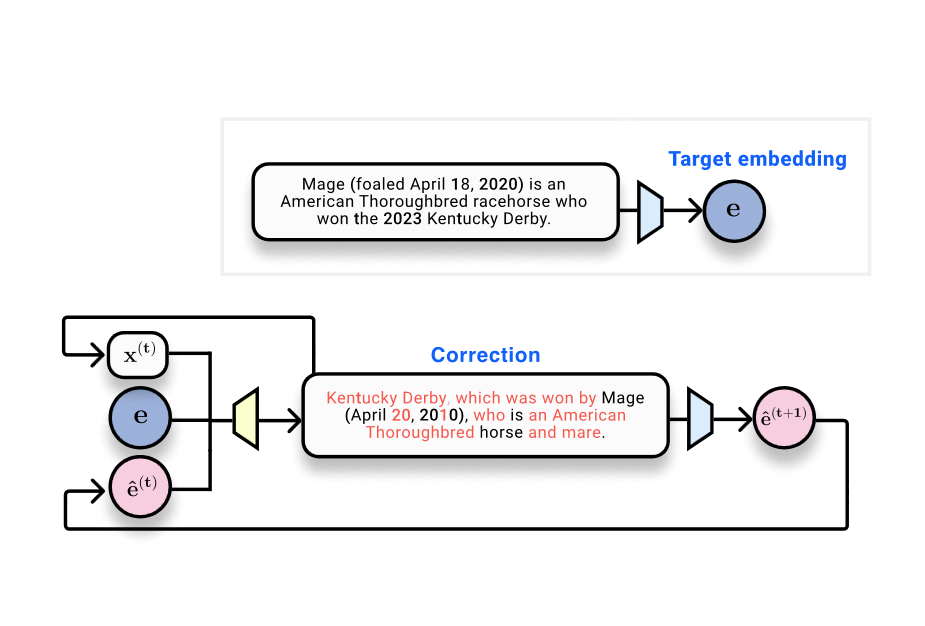
'Vec2text' can serve as a solution for accurately reverting embeddings back into text, thus highlighting the urgent need for revisiting security protocols around embedded data.