AI/ML News & Innovations Hub

AI/ML news, top picks, and generated innovation digests.

★ Visit ai-karthik.com
422Sources
9886News Items
8Top Picks
83Blogs
successLast Run

Latest AI/ML News

9886 matching items

The Artificiality of Alignment
The Gradient 2023-10-07 16:00 UTC Score 19.0 AI-037-20231007-ai-specialis-bd099ece Full article

The Artificiality of Alignment

This essay first appeared in Reboot . Credulous, breathless coverage of “AI existential risk” (abbreviated “x-risk”) has reached the mainstream. Who could have foreseen that the smallcaps onomatopoeia “ꜰᴏᴏᴍ” — both evocative of and directly derived from children’s cartoons —

AI Stack Exchange 2023-10-04 07:04 UTC Score 21.0 AI-110-20231004-social-media-8782614f Full article

How to force Transformer to give more weight to certain tokens

I'm developing an encoder-decoder based transformer model and I would like to ask if there are ways to incentivize or penalize certain tokens during training. I'm working on a translation task where the encoder input must be decoded into its proper product name. I have labels such as brand, name, and unit of measure, etc which are available during training but not on inference. Currently when predicting the brand portion (which usually appears early in the sequence) of the output, the heatmap shows that it does not give focus to the latter part of the encoder which produce an output that the brand and product name, and unit of measure does not belong to each other. I was thinking if there's a way to force the transformer during training to give more weight to different token types other that its own. For example: Brand tokens (decoder) should give more weight to name tokens (encoder) than other brand tokens (encoder) Name tokens (decoder) should give more to brand token (encoder) and unit of measure token (encoder)

Anyscale Blog 2023-09-25 00:00 UTC Score 35.0 USR-0085-20230925-ai-specialis-41b9c387

Ray Serve: Tackling the cost and complexity of serving AI in production

Announcing Ray Serve and Anyscale Services general availability. Update June 2024: Anyscale Endpoints (Anyscale's LLM API Offering) and Private Endpoints (self-hosted LLMs) are now available as part of the Anyscale Platform. Click [here](https://console.anyscale.com/?utm_source=anyscale&utm_medium=blog&utm_campaign=blog_callout&utm_content=june2024_product_update_subheading) to get started on the Anyscale platform.

Why does the policy gradient theorem have two different forms?
AI Stack Exchange 2023-09-23 01:36 UTC Score 15.0 AI-110-20230923-social-media-a52f5eca Full article

Why does the policy gradient theorem have two different forms?

I have been studying policy gradients recently but found different expositions from different sources, which greatly confused me. From the book "Reinforcement Learning: an Introduction (Sutton & Barto Chapter 13)", we get the following policy gradient: $$ \nabla J(\theta) = \mathbb E_\pi\left[G_t\nabla\log\pi(A_t | S_t, \theta)\right]. $$ As we can observe from the equation, it does not relate to trajectory distributions . However, a more intuitive and widely-used introduction to policy gradient starts from defining the distribution of trajectories: $p(\tau)$ . For example, in OpenAI Spinning Up , the policy gradient has the form similar to the following equation: $$ \nabla J(\theta) = \mathbb E_{\tau \sim \pi}\left[\sum_{t=0}^{T}G_t\nabla_\theta\log\pi_\theta(a_t | s_t)\right]. $$ The confusion comes from the fact that the first policy gradient does not have a summation over timestamps and is not sampling from trajectories, but the second samples from trajectories and has a summation. I did find some relevant questions about this confusion, but none of them seemed to have a good answer. Also, I could not identify any source that explained the difference/connection between the two forms. My question is why are there two different ways to describe the policy gradient and are the two forms mathematically equivalent? Update I found a great RL theory book (draft) written by some expert Professors in this field that shows two different formulations: https://rltheorybook.github.io…

UN AI Advisory Body 2023-09-21 22:14 UTC Score 22.0 USR-0162-20230921-company-offi-d5ff71b3 Full article

#UNGA78 - Wrap Day 4

Groups audience: General Assembly 78 Live Blog Video embed a la iseek:

UN AI Advisory Body 2023-09-21 21:57 UTC Score 32.0 USR-0162-20230921-company-offi-55e59e3f Full article

Until we meet again

In a few days, world leaders will head back to capitals and barricades will be dismantled, but the General Assembly keeps working. Global threats don’t stop at the end of the high-level week, and neither does the search for responses. Countries continue grappling with the problems affecting us all: from the outer reaches of space to the seabed floor. And while this blog comes to a close, there’s always time to open our many platforms from websites to social media to the UN News App. مع السلامة 再见 See you later Au revoir До свидания Adios Groups audience: General Assembly 78 Live Blog

UN AI Advisory Body 2023-09-21 21:55 UTC Score 22.0 USR-0162-20230921-company-offi-2f08a10b Full article

last day

Groups audience: General Assembly 78 Live Blog

UN AI Advisory Body 2023-09-21 21:42 UTC Score 24.0 USR-0162-20230921-company-offi-b83e4702 Full article

UN tour guides

Christian Dior designed the iconic UN tour guide uniforms in the early 1980s. Prior to that, designers included Edith Head and, for the UN’s first male tour guides, Brooks Brothers. The guides got a fashion refresh in 1985 by Harvé Benard, then changed their uniforms, courtesy of Benneton, and Mondrian. Image: Groups audience: General Assembly 78 Live Blog

UN AI Advisory Body 2023-09-21 21:37 UTC Score 27.0 USR-0162-20230921-company-offi-f5ae0919 Full article

China

Vice-President of China, Han Zheng, said in his speech to the GA said: "China supports all efforts that are conducive to the peaceful resolution of the Ukraine crisis, and stands ready to continue playing a constructive role for the early attainment of peace." Image: Groups audience: General Assembly 78 Live Blog

UN AI Advisory Body 2023-09-21 21:17 UTC Score 32.0 USR-0162-20230921-company-offi-33f0e335 Full article

Sudan

"Since 15 April, Sudanese people have been facing a destructive war launched by rebel RSF," said Abdel-Fattah Al-Burhan Abdelrahman Al-Burhan, President of the Transitional Sovereign Council of Sudan. "We call upon the international community to designate these groups and their allies as terrorist groups to be countered by arms and fought to protect Sudan, region and the entire world." Image: Groups audience: General Assembly 78 Live Blog

UN AI Advisory Body 2023-09-21 20:49 UTC Score 27.0 USR-0162-20230921-company-offi-e6c18090 Full article

Johan Santana GA78

Happening now at the SDG Media Zone: Johan Santana, young innovator who codes to address SDG 3 and 10 (speaking). He expresses his desire to assist individuals with visual impairments and other disabilities. They've developed a hands-free blind cane and smart glasses and will work on coding a wheelchair capable of moving in all directions: forward, backward, left, and right. Also in the picture: Michael Melillo, Sr. Director of Network Monitoring and Management Software Products, Broadcom Inc.(left) Bervin Harris, Renaissance Youth Center (second from left). Image: Groups audience: General Assembly 78 Live Blog

UN AI Advisory Body 2023-09-21 20:18 UTC Score 30.0 USR-0162-20230921-company-offi-e4182cd2 Full article

International Seabed Authority

Michael Lodge (Secretary General, International Seabed Authority) and Emilie McGloane (Director, Peace Boat US) met at the SDG Media Zone to discuss the importance of a new historic treaty - the Treaty of the High Seas - which protects biodiversity beyond national jurisdiction (often shortened to BBNJ). Michael Lodge emphasized the vastness of oceans and said that “1% of oceans contain more minerals than exist on land”. He continued: "Good regulation is important to ensure that the ocean’s resources are not exploited". So far, some 60 UN Member States have signed onto the treaty since its opening this week at UNGA78. Image: Groups audience: General Assembly 78 Live Blog

UN AI Advisory Body 2023-09-21 19:52 UTC Score 27.0 USR-0162-20230921-company-offi-71d9368e Full article

Renaissance Youth Center GA78

The Renaissance Youth Center choir visits the SDG Media Zone for a session on creative problem-solving and coding for the SDGs. The session explores the passion and enthusiasm of today’s youth to solve the challenges they face through creativity in STE(A)M and showcases successful outcomes when the private sector joins forces with NGOs to educate, inspire and empower youth as future STEM leaders in their communities and the world. Image: Groups audience: General Assembly 78 Live Blog

AI Stack Exchange 2023-09-11 08:03 UTC Score 15.0 AI-110-20230911-social-media-c820c5ab

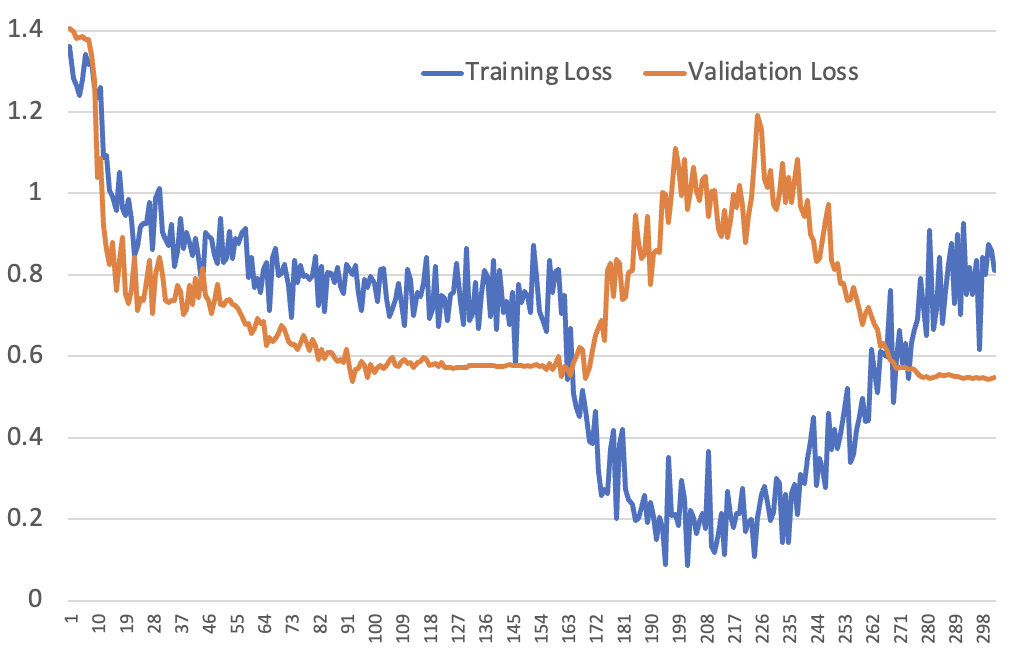
Intuition Behind the Gradual Increase of Noise Variance in Diffusion Models

I've been studying diffusion models and came across the noise schedule, particularly how the noise variance $\beta_t$ is adjusted over iterations. I've observed that $\beta_t$ typically starts from a very small value during the initial steps and increases to a much larger value in the final steps. What is the underlying reason for this progression? Why is it important to begin with a low noise variance and end with a high one? I'd appreciate any intuitive explanations or references that shed light on this choice.

AI Stack Exchange 2023-08-31 13:04 UTC Score 18.0 AI-110-20230831-social-media-e8fa44b4 Full article

What strategy does ChatGPT use to manage its context in very lengthy conversations?

I'm asking specifically about ChatGPT4, but the question could apply to either that or 3.5. When you use the ChatGPT API, it's of course up to you to manage conversation history and include that in successive API calls within available context length in whatever manner you choose. In the case of the web interface, they've obviously implemented some system to manage conversation history in context. It clearly doesn't "remember" the entire thing once the conversation gets very long, because it doesn't have infinite context length. So, what strategy does it use to send conversation history to the model once it's exceeded its context length? Does it truncate all content prior to the max context length? Does it summarize earlier parts of conversations to more efficiently fit them within the context? Does it do some dynamic strategy combining many inputs? Or is this just another case where we just don't know, and OpenAI is being tight-lipped about what it's actually doing?

Cross Validated 2023-08-31 10:05 UTC Score 12.0 AI-113-20230831-social-media-7d348c5b

Appropriate statistical test to determine if uplift between control group and multiple test groups is significant (pretest/posttest evaluation)

I'm trying to evaluate whether the difference in uplift seen in below table between the test groups and the control group is statistically significant. I'm unsure about the appropriate statistical test. The test and control groups are all of different sizes already before the test, which is why I have included the relative numbers. I first thought about the chi-square test, but that don't think it captures the pre- & post-treatment aspect correctly. For context: Four different geographic regions were selected, one of them as control. Each test region received a different mix of marketing measures with the goal to raise awareness. I am now trying to evaluate whether the uplift in the test regions is statistically different from the control region. Control Group 1 Group 2 Group 3 Number of visitors (pretest) 59800 9993 19284 17876 Number of visitors (posttest) 65993 11781 23373 20883 Relative Change +10.36% +17.89% +21.20% +16.82% Which statistical test would be needed to find an answer to my question? Thank you very much. Edit: The below table shows the weekly visitors by test group. Week 23 to 28 are pre-treatment, week 29 to 34 are post-treatment. Control Group 1 Group 2 Group 3 Week 23 8590 1492 2929 2837 Week 24 9217 1588 3138 2846 Week 25 9534 1599 2992 2812 Week 26 10213 1714 3440 3005 Week 27 10435 1704 3187 2987 Week 28 10932 1817 3180 3234 Week 29 11489 1948 3566 3159 Week 30 10936 1974 3707 3273 Week 31 11856 2061 3885 3609 Week 32 10621 1851 3926 3586 Week 33 9905…

Chip Huyen Blog 2023-08-16 00:00 UTC Score 50.0 USR-0111-20230816-ai-specialis-06d67c0f Full article

Open challenges in LLM research

[ LinkedIn discussion , Twitter thread ] Never before in my life had I seen so many smart people working on the same goal: making LLMs better. After talking to many people working in both industry and academia, I noticed the 10 major research directions that emerged. The first two directions, hallucinations and context learning, are probably the most talked about today. I’m the most excited about numbers 3 (multimodality), 5 (new architecture), and 6 (GPU alternatives). 1. Reduce and measure hallucinations Hallucination is a heavily discussed topic already so I’ll be quick. Hallucination happens when an AI model makes stuff up. For many creative use cases, hallucination is a feature. However, for most other use cases, hallucination is a bug. I was at a panel on LLM with Dropbox, Langchain, Elastics, and Anthropic recently, and the #1 roadblock they see for companies to adopt LLMs in production is hallucination. Mitigating hallucination and developing metrics to measure hallucination is a blossoming research topic, and I’ve seen many startups focus on this problem. There are also ad-hoc tips to reduce hallucination, such as adding more context to the prompt, chain-of-thought, self-consistency, or asking your model to be concise in its response. To learn more about hallucination: Survey of Hallucination in Natural Language Generation (Ji et al., 2022) How Language Model Hallucinations Can Snowball (Zhang et al., 2023) A Multitask, Multilingual, Multimodal Evaluation of ChatGPT…

AI Stack Exchange 2023-07-20 21:44 UTC Score 13.0 AI-110-20230720-social-media-d6630f6a

StyleGAN runtime phenomenom

I was playing around with MobileStyleGAN pretrained model and multithreading and came along with an interesting phenomenom. After a while application is running MobileStyleGAN starts to produce video clip alike pieces. And I am wondering does anyone have an idea what takes? I made this lengthy video for it where you can see since it looks cool; https://youtu.be/8kpxHZK1NTQ Here's the source code used in the video if it's any help; https://github.com/harism/i_style_gan

Data Science Stack Exchange 2023-07-04 16:36 UTC Score 25.0 AI-111-20230704-social-media-5114465f Full article

Using conformal predictors to estimate uncertainty?

I read this interesting e-print paper on conformal predictors: A Gentle Introduction to Conformal Prediction and Distribution-Free Uncertainty Quantification Conformal predictors are a way to choose a set that's guaranteed to include the true labels with some pre-chosen certainty. I was wondering if there's a way to get conformal predictors to output calibrated probabilities? For example, let's say I have a binary classification (dog or cat images). Conformal predictors can be used to predict whether an image is a dog or a cat in difficult examples. But what I'm looking for is something like calibrated p-values for the prediction. The sigmoid output values (from my neural net, for example) are well known not to reflect actual p-values. Can conformal predictors do this (assuming, of course, I have a calibration dataset available)? If so, can anyone point me to the procedure for this? I can't find it.

Lilian Weng Blog 2023-06-23 00:00 UTC Score 59.0 USR-0112-20230623-ai-specialis-31d52fb4 Full article

LLM Powered Autonomous Agents

Building agents with LLM (large language model) as its core controller is a cool concept. Several proof-of-concepts demos, such as AutoGPT , GPT-Engineer and BabyAGI , serve as inspiring examples. The potentiality of LLM extends beyond generating well-written copies, stories, essays and programs; it can be framed as a powerful general problem solver. Agent System Overview In a LLM-powered autonomous agent system, LLM functions as the agent’s brain, complemented by several key components: Planning Subgoal and decomposition: The agent breaks down large tasks into smaller, manageable subgoals, enabling efficient handling of complex tasks. Reflection and refinement: The agent can do self-criticism and self-reflection over past actions, learn from mistakes and refine them for future steps, thereby improving the quality of final results. Memory Short-term memory: I would consider all the in-context learning (See Prompt Engineering ) as utilizing short-term memory of the model to learn. Long-term memory: This provides the agent with the capability to retain and recall (infinite) information over extended periods, often by leveraging an external vector store and fast retrieval. Tool use The agent learns to call external APIs for extra information that is missing from the model weights (often hard to change after pre-training), including current information, code execution capability, access to proprietary information sources and more. Overview of a LLM-powered autonomous agent syste…

Cross Validated 2023-06-20 13:43 UTC Score 12.0 AI-113-20230620-social-media-baf1fc5e

Minimum Numbers of Observations for Standardized Moment Calculations

You can take the mean of any number of values, including just one value - in that case, the mean will just be equal to that value. Standardized means (standardized first moments) are always equal to zero. You can't calculate variance (the second standardized moment) for only one value, though - you need a minimum of two values to calculate this moment. Since the variance of one number is zero, the standardized variance would be undefined since you'd have to divide by zero in that calculation. I'm wondering if this pattern holds for higher-order moments . In other words, would it not make sense to calculate kurtosis (the 4 th moment) for three values? I know it's possible to calculate kurtosis for three values, but I'm not sold that doing so will actually tell you anything useful; also, this could be a degrees-of-freedom thing - perhaps there just aren't the degrees of freedom to calculate kurtosis for three values. Is it reasonable to claim that, to calculate the n th moment, you need a minimum of n values? Furthermore, it's interesting that skewness is always 0 for groups of 2 observations (it's obvious why) and kurtosis is always 2 for groups of 3 observations (it's not obvious to me why). Higher-order n th moments do not follow this pattern of always being the same when you have n - 1 observations, and here's some R code to prove it. # Calculating Standardized Second Moments (Variances) for Different # Groups of One Observation One_Observation_Groups

Cross Validated 2023-06-19 15:12 UTC Score 15.0 AI-113-20230619-social-media-c4e8a642

family wise error rate in highly dependent data

I was hoping someone could help with a problem in my area of Optometry. We use visual fields/perimetry to assess patients visual function. This consists of patient responses (or not) to points of light projected onto various locations on the retina at various stimulus intensities. The dimmest light seen is recorded as the threshold sensitivity at that point. Usually 40-60 separate points are tested across each patients retina and then the overall mean sensitivity is given as the average of all individual point sensitivities. My question is this: since the mean sensitivity consists of 40-60 individually tested points, should p-values associated with changes in the mean sensitivity value over time be adjusted? Currently, no correction is applied in our profession as a whole and I'm now wondering if this is incorrect. If a retinal treatment is applied then several point sensitivities will increase (in a non-independent way) contributing to the overall mean sensitivity increasing, however, should the p-value of significant gain in mean sensitivity be adjusted by a factor of 40-60? This is analagous to questions around p-value adjustment in a repeated measures design, except this isn't exactly repeated measures but separate points that are highly dependent on each other. Thank you for any thoughts on this

AAAI 2023-06-14 19:12 UTC Score 5.0 AI-081-20230614-research-pap-e39f960a Full article

2022 ACM-AAAI Allen Newell Award

The winners of the 2022 ACM-AAAI Allen Newell Award were celebrated in person during the 2023 ACM awards ceremony, in San Francisco at the The Palace hotel on Saturday, June 10th, 2023. The post 2022 ACM-AAAI Allen Newell Award appeared first on AAAI .

Cross Validated 2023-06-13 21:26 UTC Score 12.0 AI-113-20230613-social-media-cd6afe44

ANOVA: contrast to ratio of adjusted geometric means

Could you, please, help me with the following problem? Suppose we have a one-way ANOVA with a single 2-level factor. The dependent variable is a logarithmized value: $y_i = log(Y_i)$ . $y_{iz} = \mu + a_i + \epsilon_{iz}$ $z$ is the number of observations in each $i$ group, different for different $i$ . We want to estimate the contrast: $C = a_1 - a_2$ If we exponentiate this contrast we get a ratio of geometric means of the dependent variable in the two treatment groups on the original scale. $C = \frac{\sum_{h=1}^{z} log(Y_{1h})}{z} - \frac{\sum_{h=1}^{z} log(Y_{2h})}{z}$ $C = log(\prod_{h=1}^{z} Y_{1h}^{\frac{1}{z}})- log(\prod_{h=1}^{z} Y_{2h}^{\frac{1}{z}})$ $C = log(\frac{(\prod_{h=1}^{z} Y_{1h})^{\frac{1}{z}}}{(\prod_{h=1}^{z} Y_{2h})^{\frac{1}{z}}})$ Now, suppose we add additional factors in the model. Importantly, we do not add interaction terms in the model. What do we get if we exponentiate the same contrast from the model with additional variables? Do we still get an adjusted ratio of geometric means of some sort? Have you seen any literature on this? I would appreciate any insights!

AI Stack Exchange 2023-06-08 12:44 UTC Score 12.0 AI-110-20230608-social-media-b76062b1 Full article

Handcraft RNN with attention to extract central element

I am trying to formulate an RNN that uses attention to easily detect the central element of a sequence. For an RNN alone this is not an easy task but with attention, it should be but I am not entirely certain how to design it. The goal of this question is to understand both mechanisms better. So for example I have (10,20,30) or (10,20,30,40,50) given as input sequence. At input 30 the RNN should output 20 at position 50 -> 30 and so forth. My idea for the RNNs hidden state is to just increase it by 1. The hidden state h would just be a scalar. e.g. (10,20,30) produces the states (1,2,3) But now I am stuck as attention should work with the input and the hidden state. What I would need as output would be scored (0,1,0) * (10,20,30) = 20. The scoring function I come up with would be s(h, number, i) = 1 if h/2 == i else 0 . But there I am using the index as an additional parameter / positional encoding and wondering if I can do it without it. What could be other approaches to handcraft an RNN with attention to extracting the half-position element of a sequence?

Chip Huyen Blog 2023-06-07 00:00 UTC Score 33.0 USR-0111-20230607-ai-specialis-dc9bd31a Full article

Generative AI Strategy

I had a lot of fun preparing the talk: “Leadership needs us to do generative AI. What do we do?” for Fully Connected . The idea for the talk came from many conversations I’ve had recently with friends who need to figure out their generative AI strategy, but aren’t sure what exactly to do. This talk is a simple framework to explore what to do with generative AI. Many ideas are still being fleshed out. I hope to convert this into a proper post when I have more time. In the meantime, I’d love to hear from your experience through this process. I couldn’t figure out how to make the slides centered on the page. You might want to download the slides . Thanks everyone who responded to my post and shared your thoughts on what I should include in the talk. Thanks Kyle Gallatin , Goku Mohandas , Han-chung Lee , and Jamie de Guerre for thoughtful feedback on the talk.

Inria AI 2023-05-24 10:05 UTC Score 27.0 USR-0036-20230524-research-aca-a59bc01e Full article

Grid'5000 : 20 ans pour une infrastructure unique en recherche informatique

Grid'5000 : 20 ans pour une infrastructure unique en recherche informatique alericha mer, 05/24/2023 - 12:05 Depuis son ouverture en 2003, Grid'5000 est devenu le principal instrument national pour la recherche expérimentale en informatique distribuée. Cette infrastructure permet d'étudier des objets informatiques, comme des logiciels ou des systèmes distribués, dans des conditions proches du réel. L'infrastructure est distribuée sur 9 sites (8 en France, 1 au Luxembourg), reliés entre eux par un réseau dédié mis à disposition par Renater et a été financée par les acteurs majeurs de la recherche en informatique française (Inria, CNRS, Universités, grandes écoles, etc.) et par certaines régions. Alors qu’elle célèbre ses 20 ans, elle doit préparer les infrastructures de demain en se rapprochant des communautés de l’internet des objets et des réseaux dans une dimension européenne. © Inria / Photo Kaksonen Une infrastructure à grande échelle pour simuler et tester des applications complexes Grid'5000 est une plate-forme dédiée à l'expérimentation, lancée en 2003. Le projet est né au début des années 2000, lorsqu'il a été constaté qu'il n'existait pas d'infrastructure à grande échelle permettant de tester des algorithmes, des programmes et des applications complexes. En effet les centres de calculs ne permettaient pas de déployer, à grande échelle, des logiciels potentiellement bogués. Les simulateurs étaient soit trop complexes, soit incapables de simuler des grandes applicatio…

AI Stack Exchange 2023-05-18 16:07 UTC Score 32.0 AI-110-20230518-social-media-d1399981 Full article

Should I be layer freezing when fine-tuning an LLM?

I've had it in my head that generally speaking, it's better to freeze layers when fine-tuning an LLM, as per this quote from HuggingFace's article : PEFT approaches only fine-tune a small number of (extra) model parameters while freezing most parameters of the pretrained LLMs, thereby greatly decreasing the computational and storage costs. This also overcomes the issues of catastrophic forgetting, a behaviour observed during the full finetuning of LLMs. PEFT approaches have also shown to be better than fine-tuning in the low-data regimes and generalize better to out-of-domain scenarios. It can be applied to various modalities, e.g., image classification and stable diffusion dreambooth. I think what I might be confused by is what is meant by the "(extra)" part. It led me to try fine-tuning a BERT model in PyTorch by freezing all parameters except for the final feed-forward of the transformer responsible for sequence classification: for param in model.parameters(): param.requires_grad = False for param in model.classifier.parameters(): param.requires_grad = True However, this caused my model to get significantly worse evaluation metrics on my test set than before I did this. This lead me to the following conclusions: My dataset of ~100K datapoints is not of a "low-data regime" and therefore doesn't benefit from PEFT? But doesn't it say this generalizes better to "out-of-domain scenarios"? How do I know the particular seq classification I'm doing with BERT is out-of-domain? Bec…

Jay Alammar Blog 2023-05-09 00:00 UTC Score 28.0 USR-0113-20230509-ai-specialis-65d13d27 Full article

Generative AI and AI Product Moats

Here are eight observations I’ve shared recently on the Cohere blog and videos that go over them.: Article: What’s the big deal with Generative AI? Is it the future or the present? Article: AI is Eating The World

Data Science Stack Exchange 2023-05-08 11:11 UTC Score 9.0 AI-111-20230508-social-media-1e8a095f Full article

How does the background class work in object detection?

I am using YOLOv5 for object detection. I understand that any labelled classes that are not predicted, that is, false negatives (FN) shows up as background. But how are the false positive (FP) being calculated? As in if the background is not explicitly labelled in the data, how are we calculating the false positives? Please see the following confusion matrix for reference. The last row is "background FN". The last column is "background FP". Image source: https://github.com/ultralytics/yolov5/issues/6738

AAAI 2023-04-05 15:49 UTC Score 15.0 AI-081-20230405-research-pap-0a6a2245 Full article

Working together on the future of AI

Recent advances in artificial intelligence (AI) technologies have generated both excitement and concern. As researchers who have served in leadership positions in the Association for the Advancement of Artificial Intelligence (AAAI), we are writing to provide a balanced perspective on managing the progress in the field. We also seek to broaden and strengthen the community of engaged researchers, government agencies, private companies, and the public at large, to ensure that society is able to reap the great promise of AI while managing its risks. [...] The post Working together on the future of AI appeared first on AAAI .

AAAI 2023-04-05 13:58 UTC Score 21.0 AI-081-20230405-research-pap-2a4e8ba2 Full article

RAIL License

AAAI would like to announce a new way to release code and trained models associated with accepted papers. Through the use of an AI Pubs RAIL License from the RAIL Initiative, authors can elect to release their code and trained models under terms that permit free and open access but are subject to usage restrictions. […] The post RAIL License appeared first on AAAI .

Cross Validated 2023-04-04 07:45 UTC Score 18.0 AI-113-20230404-social-media-f8e5f626 Full article

One of the mediation models I am running has confusing results. The indirect, direct and total effect are conflicting

I have a model with a one predictor, one mediator and one outcome. The following are the coefficients i got for my mediation analysis, but I can't understand how to make sense of them. Could someone please help explain what must be going on and how I can report these results. The indirect effect is significant (b = 0.041, CI [0.0103 and 0.0781]) The Total effect is non-significant ((b = 0.016, t = 0.323, p=0.747) The direct effect is non-significant with a flipped sign for the coefficient,( -0.03, p=0.619) is it valid to conduct a mediation in this scenario? how do I report my results. P.S; I ran my analysis with Hayes PROCESS macro P.P.s; I would really appreciate if someone could help soon because I'm on a bit of a time crunch.

Cross Validated 2023-04-03 01:20 UTC Score 12.0 AI-113-20230403-social-media-ca59c33b

post-hoc analysis for logistic regression?

Suppose our dependent variable Y is TRUE vs FALSE, and our independent variable X is GREEN, YELLOW, and RED. We performed a logistic regression of Y~X. I wonder if it is possible and how to use the trained logistic regression to answer the following question: What is the odds ratio (and p-value) of TRUE vs FALSE for subjects whose X equals to GREEN. What is the odds ratio (and p-value) of TRUE vs FALSE for subjects whose X equals to YELLOW. What is the odds ratio (and p-value) of TRUE vs FALSE for subjects whose X equals to RED.

Are the terms in the diffusion model equation random variables or probability density functions?
Cross Validated 2023-04-02 00:31 UTC Score 15.0 AI-113-20230402-social-media-da35f887 Full article

Are the terms in the diffusion model equation random variables or probability density functions?

Are all terms in the first line(71) of the equation random variables or probability density functions? If they are probability density functions, is there a possibility of obtaining a value that is not equal to 1 when integrating the right-hand side of the equation after all calculations have been completed? Based on the answer given in line 72, it seems that all terms are considered as probability density functions. If so, is it possible to transform them into the probability density function of a Gaussian distribution? in q(x_{t-1}|x_t,x_0), x_t, x_0, x_{t-1} are EVENTS? or Distribution? I feel like I'm lacking some basic concepts in statistics. Can you help me, please?

GPT 4 and the Uncharted Territories of Language
Fast.ai 2023-03-19 13:00 UTC Score 14.0 AI-185-20230319-developer-an-c4ef0e9a Full article

GPT 4 and the Uncharted Territories of Language

Language is a source of limitation and liberation. GPT 4 pushes this idea to the extreme by giving us access to unlimited language.

Lilian Weng Blog 2023-03-15 00:00 UTC Score 37.0 USR-0112-20230315-ai-specialis-c01a9c77 Full article

Prompt Engineering

Prompt Engineering , also known as In-Context Prompting , refers to methods for how to communicate with LLM to steer its behavior for desired outcomes without updating the model weights. It is an empirical science and the effect of prompt engineering methods can vary a lot among models, thus requiring heavy experimentation and heuristics. This post only focuses on prompt engineering for autoregressive language models, so nothing with Cloze tests, image generation or multimodality models. At its core, the goal of prompt engineering is about alignment and model steerability. Check my previous post on controllable text generation.