Towards Robust and Expressive Whole-body Human Pose and Shape Estimation
Introduction Given a single RGB image, 3D human pose and shape estimation aims to reconstruct...
AI/ML news, top picks, and generated innovation digests.
10104 matching items
Introduction Given a single RGB image, 3D human pose and shape estimation aims to reconstruct...
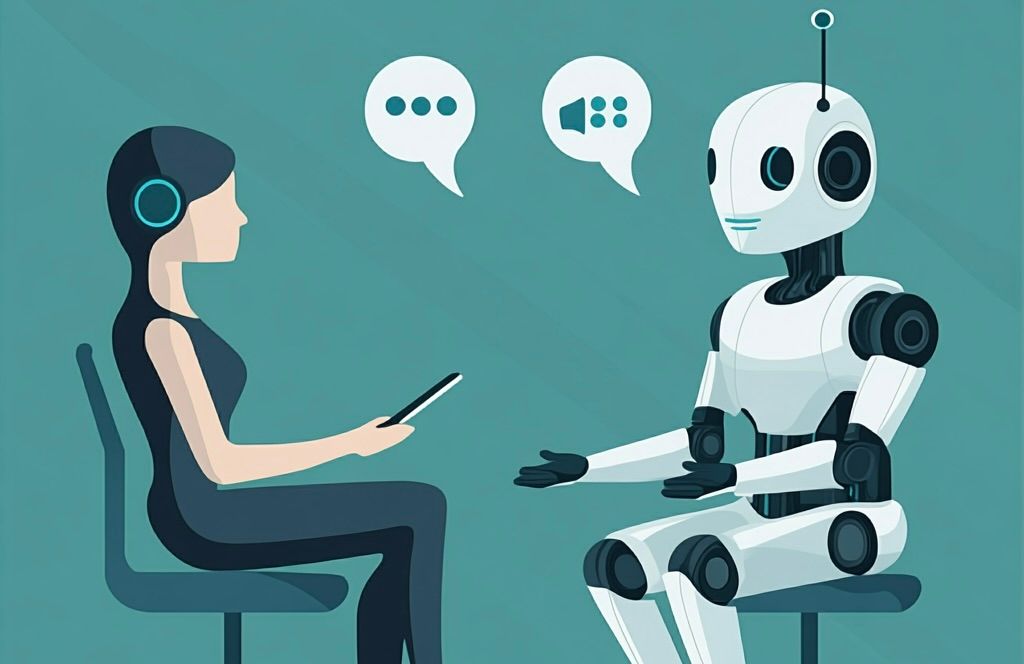
LLM-based chatbots’ capabilities have been advancing every month. These improvements are mostly measured by benchmarks like MMLU, HumanEval, and MATH (e.g. sonnet 3.5, gpt-4o). However, as these measures get more and more saturated, is user experience increasing in proportion to these scores? If we envision a future
The Holistic Evaluation of Language Models (HELM) framework is an open source framework for reproducible and transparent benchmarking of language models that is widely adopted by academia and industry. To meet HELM users’ needs for more powerful benchmarking features, we are proud to announce our collaboration with Unitxt, an open-source community platform developed by IBM Research for data preprocessing and benchmark customization. The integration of Unitxt into HELM gives HELM users access to the vast Unitxt catalog of benchmarks, and allows users to run sharable and customizable evaluation pipelines with greater ease.
Held outside of Singapore for the very first time, the third Languages Summit...
Réinventer l’éducation : quand le numérique transforme les apprentissages mtestari lun, 09/02/2024 - 09:00 La transformation numérique de l’école doit être une opportunité pour mieux apprendre et individualiser l’apprentissage grâce au développement de nouvelles technologies associées à la formation de la communauté enseignante et des élèves aux compétences du 21e siècle. Autant d’enjeux sociétaux et scientifiques que relèvent, depuis plus de dix ans, les équipes pluridisciplinaires du Centre Inria de l’université de Bordeaux avec des chercheurs et chercheuses en intelligence artificielle, en interaction Humain - Machine, en neurosciences, en psychologie développementale et en sciences de l’éducation. © freepik /Photo Pch.Vector Mieux comprendre les processus d’apprentissage L’une des caractéristiques la plus importante pour l’ensemble des équipes impliquées reste leur approche systémique, positionnant l’apprenant toujours au centre de l’étude en considérant l’ensemble de ses interactions avec l’environnement dans lequel il évolue. « Ces recherches ne peuvent être menées sans l’appui des acteurs de terrain que sont les enseignants et les professionnels de l’éducation. Elles restent indissociables des avancées des sciences humaines pour ancrer la transformation numérique de l’école sur les besoins des apprenants, des éducateurs et de leurs environnements » souligne Nicolas Roussel, directeur du Centre Inria de l’université de Bordeaux. Le premier défi consiste à mieux compren…
Multi-label learning Multi-label learning is commonly exploited to recognize a set of categories in an...
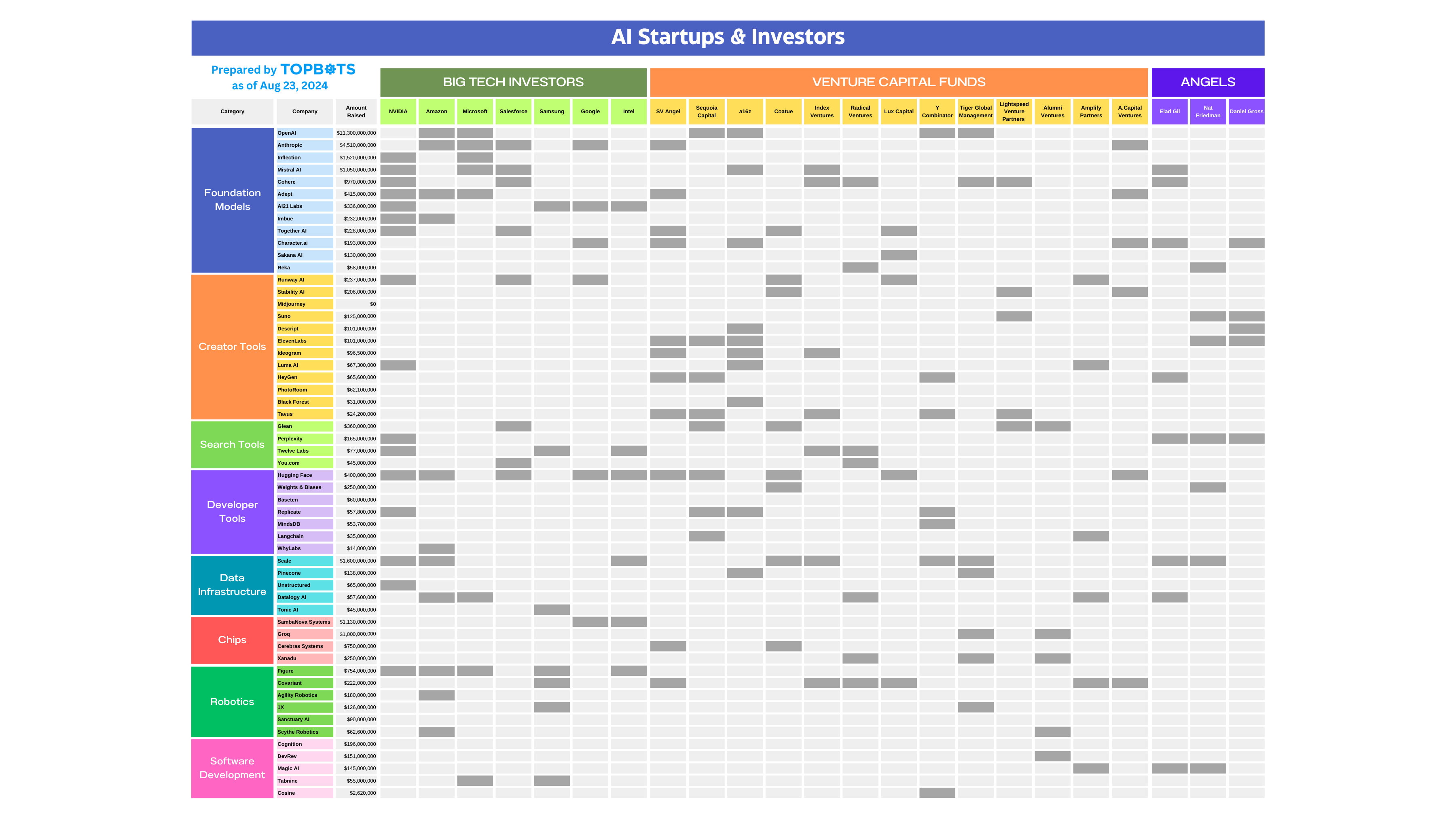
Artificial Intelligence (AI) is reshaping the tech landscape, attracting a diverse array of investors eager to capitalize on its potential. In this article, we explore the key players driving investments in AI, from tech giants and venture capital funds to angel investors, and examine the companies they are betting on. The post The AI Investment Landscape: Who’s Funding the Next Wave of Innovation? appeared first on TOPBOTS .

My question concerns the paper arxiv.org/pdf/1312.6114. I want to know why they proposed to use the MLP Gaussian decoder with parameters given by the MLP transformation of the z variable as the likelihood model $p_{\theta}(x|z)$ . If they are using NNs to perform inference on the best set of parameters, why use a Gaussian if it is very limiting in modeling complex data?
If you are unsure who is implementing and enforcing the new digital law and what the specific time frames are, you might find this post—and our post on the responsibilities of the EU Member States—very helpful. The tables below provide a comprehensive list of all obligations and tasks that the AI Act places upon to the […]
If you are unsure who is implementing and enforcing the EU AI Act and what the specific time frames are, you might find this post—and our post on the responsibilities of the European Commission (AI Office)—very helpful. The tables below provide you with a comprehensive list of all obligations and tasks that the AI Act places […]
The model I am talking about is hosted here : From the documentation: We simplify usage of prompts, providing two prompts for most general tasks, one is for s2p, another one is for s2s.Prompt of s2p task(e.g. retrieve task): ..., Prompt of s2s task(e.g. semantic textual similarity task): ... Question: What is S2P task? How is retrieve task different from semantic textual similarity task? Difference in the usage and also in the training steps would be much appreciated in the answer
Turning models into products runs into five challenges
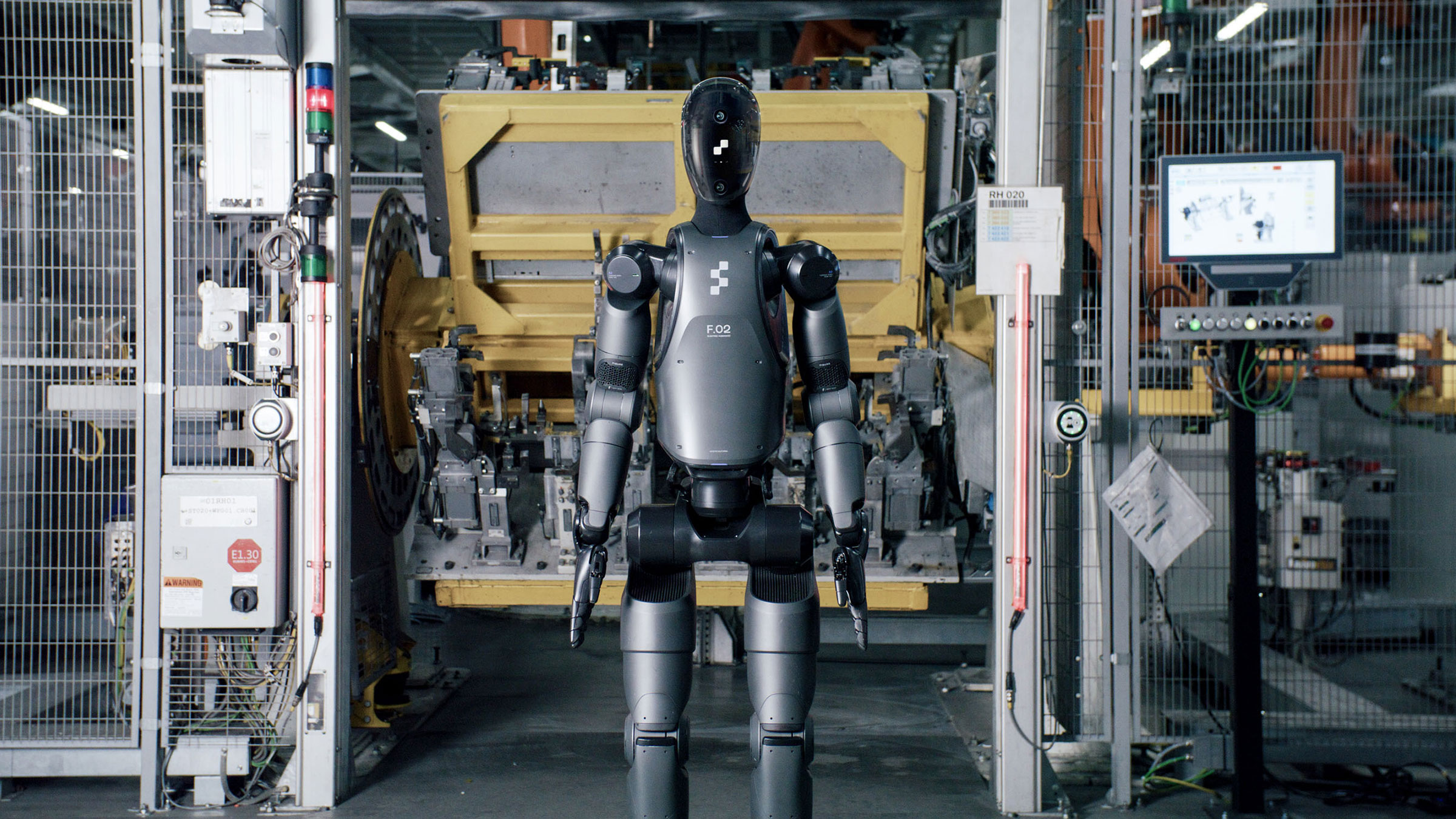
The robotics industry stands on the brink of a significant transformation, with many experts – including NVIDIA CEO Jensen Huang – suggesting that we might be approaching a "ChatGPT moment" for robotics. The post Humanoid Robots on the Rise: Industry Advances, Key Players, and Adoption Timelines appeared first on TOPBOTS .
This work is based on the paper: K.S. Fong and M. Motani, “Symbolic Regression Enhanced...

I am using a KL divergence to measure the difference between distributions, but I would like to compare the results to each one another, because the probability distributions I'm measuring are correlated. What is a good measure for comparing two KL divergences on related distributions? Ex. If I'm looking at some characterization data for a test, let's say X-ray diffraction patterns for a metal sample. I get an XRD pattern of intensity vs. diffraction angle, and can create a probability distribution for that in a reference state (room temp, new sample). I then run the same XRD test on the same sample while I vary temperature, and for that temperature I get a new distribution of my XRD data, and I can calculate the KL divergence for that distribution relative to my reference one. Let's say I then cold-roll my metal sample, and run the same XRD experiment, and then calculate the KL divergence with the same reference state for those distributions. I have two KL divergence results, and I know that there are variables for the metal sample, temperature vs. strength, that are correlated. Is there any comparison technique between divergences to tell me how much one distribution diverged relative to another? Especially if the variables are interrelated? Edit: Changing the example to be more specific.
In June 2023, the Monetary Authority of Singapore (MAS) launched the 8th edition...
Interim report on ongoing work on mechanistic anomaly detection

Introduction Imagine yourself a decade ago, jumping directly into the present shock of conversing naturally with an encyclopedic AI that crafts images, writes code, and debates philosophy. Won’t this technology almost certainly transform society — and hasn’t AI’s impact on us so far been
Introduction The project management landscape is undergoing a transformative shift, driven by the rapid advancements...
Building and evaluating an open-source pipeline for auto-interpretability
Introduction Scene generation has raised considerable attention in recent years, addressing the growing need...

Generative AI is a rapidly evolving field with a plethora of fascinating applications, from creating realistic images and videos to generating human-like text and beyond. As the technology advances, the demand for skilled professionals who can harness the power of generative AI is growing exponentially. However, navigating the myriad of tutorials and courses available can […] The post Accelerate Your AI Skills: Essential Generative AI Courses for Developers appeared first on TOPBOTS .
Congratulations to Stanford AI Lab PhD student Dora Zhao for an ICML 2024 Best Paper Award for a paper from her work at Sony AI on: Measure Dataset Diversity, Don’t Just Claim It
Congratulations to Aaron Lou, Chenlin Meng, and Stefano Ermon for an ICML 2024 Best Paper Award: Discrete Diffusion Modeling by Estimating the Ratios of the Data Distribution
Congratulations to Marco Pavone for winning the best paper award at the Robotics: Science and Systems Conference on AI Safety for autonomous systems.
How speculation gets laundered through pseudo-quantification
After studying how companies deploy generative AI applications, I noticed many similarities in their platforms. This post outlines the common components of a generative AI platform, what they do, and how they are implemented. I try my best to keep the architecture general, but certain applications might deviate. This is what the overall architecture looks like. This is a pretty complex system. This post will start from the simplest architecture and progressively add more components. In its simplest form, your application receives a query and sends it to the model. The model generates a response, which is returned to the user. There are no guardrails, no augmented context, and no optimization. The Model API box refers to both third-party APIs (e.g., OpenAI, Google, Anthropic) and self-hosted APIs. From this, you can add more components as needs arise. The order discussed in this post is common, though you don’t need to follow the exact same order. A component can be skipped if your system works well without it. Evaluation is necessary at every step of the development process. Enhance context input into a model by giving the model access to external data sources and tools for information gathering. Put in guardrails to protect your system and your users. Add model router and gateway to support complex pipelines and add more security. Optimize for latency and costs with cache. Add complex logic and write actions to maximize your system’s capabilities. Observability, which allow…
It is common to use mutual information as feature selection method. However, I fail to see why this is the case, since the mutual information $I(X, Y)$ depends on both entropies $H(X)$ and $H(Y)$ via the formula : $$ I(X, Y) = H(X) + H(Y) - H(X,Y)$$ meaning that comparing $I(X_i, Y)$ and $(X_j, Y)$ as a measure for selecting between $X_i$ and $X_j$ is not straightforward since the measure can be bloated by the marginal entropies. It is like selecting between $X_i$ and $X_j$ based on the covariance with $Y$ instead of correlation. The only way I can think that such a comparison is allowed is due to the equivalent formula: $$I(X, Y) = H(Y) - H(Y|X)$$ As the first term $H(Y)$ is the same for all $X_i$ then the ramking shouldn't depend on the "scale" of $H(Y)$ . Is that correct or am I missing something?

Our approach to securing our cloud environments
Les sciences du numérique à la conquête du ciel et de l’espace mtestari mar, 07/09/2024 - 15:23 Après le lancement réussi d’Ariane 6 en juillet 2024 à Kourou, et alors que le nombre de voyageurs aériens atteint de nouveaux records en 2025, les sciences et technologies du numérique revêtent désormais une importance cruciale dans les domaines de l’aérospatial et l’aéronautique. © Pixabay/ Photo V. Stefanov Ces deux secteurs, très présents en Nouvelle-Aquitaine et en Occitanie, couvrent également des enjeux sociétaux et économiques significatifs. C’est tout un écosystème, opéré par Aerospace Valley , premier pôle de compétitivité européen, qui participe à l’étude, la conception, la fabrication et la commercialisation de ces technologies. Dans ce contexte, les équipes du Centre Inria de l’université de Bordeaux offrent à leurs partenaires industriels et académiques, les outils et les connaissances nécessaires pour renforcer la sécurité, la compétitivité et la décarbonation des systèmes, en s’appuyant sur leurs expertises telles que la modélisation, la simulation et la cryptographie . La conception des systèmes aéronautiques : un challenge scientifique pour chaque composante Il est primordial de développer des produits (aéronefs, avions, drones, lanceurs de satellites) les plus performants possible d’un point de vue du service rendu que de l’optimisation de la ressource exploitée. Grâce à la modélisation et à la simulation, Inria contribue à la création de modèles précis et réali…
Hallucination in large language models usually refers to the model generating unfaithful, fabricated, inconsistent, or nonsensical content. As a term, hallucination has been somewhat generalized to cases when the model makes mistakes. Here, I would like to narrow down the problem of hallucination to cases where the model output is fabricated and not grounded by either the provided context or world knowledge. There are two types of hallucination: In-context hallucination: The model output should be consistent with the source content in context. Extrinsic hallucination: The model output should be grounded by the pre-training dataset. However, given the size of the pre-training dataset, it is too expensive to retrieve and identify conflicts per generation. If we consider the pre-training data corpus as a proxy for world knowledge, we essentially try to ensure the model output is factual and verifiable by external world knowledge. Equally importantly, when the model does not know about a fact, it should say so. This post focuses on extrinsic hallucination. To avoid hallucination, LLMs need to be (1) factual and (2) acknowledge not knowing the answer when applicable.
I am new to ML and plan to use KerasCV stabledifussion model to generate images from text. The example on the KerasCV website is straightforward but I could not find a way to save the model locally for later use. I also noticed that the library connects to hugging face to download encoder and diffusion model. Could you please point me to the right direction to do this locally? I would like all the model and its parameters to be local and I will be using it in a server. Also, if you have experience running such a model/server on the could, I would appreciate your guidance on the best approach wrt costs. Should I upload everything and store the whole data on the cloud or load it from hugging face? Which one would make more sense for cloud applications?
Rethinking AI agent benchmarking and evaluation
Last updated: 14 August 2025. As AI Act implementation gradually unfolds, it is important to understand the different mechanisms of enforcement included in the Regulation. One of the most important is the general-purpose AI Code of Practice, which was developed by the AI Office and a wide range of stakeholders. This summary, detailing the Code […]
Top highlight's from this year's event
Building apps to connect businesses with their local community
The perplexity of the $i^{th}$ token in the $k^{th}$ sequence is $$ P_{ki} = \frac{1}{p(t_{ki})} $$ The perplexity aggregated for the $k^{th}$ sequence is then $$ P_{k} = \left(\prod_{i=1}^N P_{ki}\right)^{1/N} \\ = \left(\prod_{i=1}^N \frac{1}{p(t_{ki})} \right)^{1/N} $$ which is the geometric mean of the perplexities of the tokens. This makes sense as we are essentially taking the multiplicative inverse of the probability that the model got the whole sequence correct. Now my question is how to aggregate the perplexities of several sequences. It seems from various places, including the Hugging Face Tutorial , I see that the prescription is to take the arithmetic mean of the perplexities of sequences $$ P = \frac{1}{m} \sum_{k=1}^m P_k $$ I am not quite understanding what it means to take the average of 1/probabilities. What is this actually capturing?
Writing up results from a recent project
Achieving even more surgical edits than LEACE without concept labels at inference time.
I am trying to create a Car Following model, for which i am using DDPG. My action is acceleration bounded in a range of [-3,3] m/s2. While training the model, for every state it gives a single acceleration value i.e. 3 (or sometimes -3). It can be clearly seen that my actor is performing really bad. What can be done to resolve this issue?
It's probably not for everyone, but there are a lot of great reasons to consider, including the potential to have an impact on AI governance worldwide, leveraging the first-mover advantage, and more.
Let's hypothesize a scenario where some of the records ( s i , a i , r i , s i+1 ) in the replay buffer are generated by another completely unrelated random policy. If the DDPG algorithm still samples random minibatches from this buffer for learning as usual, would the learning process proceed successfully? Actually, there's a pre-processing stage before training DDPG in my online learning application, where another module learns the safe action range. I wonder if the transition records obtained during this stage can be used to pre-train the DDPG agent.
Learn about how KIOS, a kiosk software, conducted early stage testing of the SDK and their integration experience.
I have basically automatised the use of an app through the use of OCR and computer vision. So basically when a word or an image is detected it will perform a certain action. When that action is successfully completed it will go to the next state. Now I want to try basically with a more "heuristic" approach and I thought about reinforcement learning. Why? Because I am aiming to build a tool that basically understand automatically what actions to perform in a certain state. But I have a doubt. Even though I don't need to declare an association like this (it would beat the purpose of deep reinforcement learning or deep learning in general): if(state.MENU_VIEW) clickManager.clickOnFolder(); ... I still need to define the states, the actions and the reward. Meaning I would need to instruct my app that when the OCR result is "Open Folder" it means the state I am in is MENU_VIEW. I simply wouldn't tell my app what action to perform in a that state. Am I correct? What I am trying to say is: how exactly could I make it so that the states (and maybe also the actions?) are generated automatically? The reward in this case scenario would be basically the folder being opened successfully.
Writing up results from a project from Spring 2023
Recently, I have seen papers about large datasets for robotics such as DROID( https://droid-dataset.github.io/ ) or Open X-Embodiment( https://robotics-transformer-x.github.io/ ). As I see, the datasets are specific to some types of robots(although X-Embodiment allows one robot to learn from another robot's data) and environments. If one wants to add another robot into the dataset, they have to do all data sampling again, which is quite expensive. Some environments might be difficult to reproduce, especially as they collected data from all the labs in the world. I am wondering: why don't they instead set up data collection procedure on simulation? it will make the data collection way cheaper. When they want to add a new robot and collect data with the same tasks and environments like other robots, they can do it easily. It is also easy to add a new task and collect data from all robots/environments. Then, why they collect data in real world while giving up on such reproducibility/extensibility? Is Sim2Real that bad, even if it can collect way more samples easily?