
Latest AI/ML News
90729 matching items

Finding peace, one click at a time: AI-made virtual sanctuaries draw young South Koreans
From online Buddhist temples to virtual churches, digital places of worship offer young people a quiet sanctuary to seek comfort without formal religious commitments. For instance, since its launch on October 29, the virtual temple Sansa has drawn over 100,000 daily visitors, topping 600,000 total visits.
Alibaba’s Qwen-powered Apple AI to launch in China in December
The partnership will allow Chinese users to access Qwen through Siri, Apple's writing tools and its visual intelligence feature, enabling text and image understanding, content generation and analysis of documents and photos.
Sakana AI Bets on Sawara to Build Agent-Native Models From Scratch
Sakana AI unveils Sawara, an agent-native language model built from scratch, and lays out a Japan-centered path toward world models and Physical AI.
Xi'an Jiaotong's EQ-VMamba Beats VMamba's Accuracy With 3x Fewer Parameters
A new Mamba variant bakes 90-degree rotation symmetry into the architecture, cutting parameters in half while improving accuracy across vision tasks.

Has Hong Kong’s IPO boom hit a wall – or is a year-end rush still to come?
Hong Kong’s initial public offering (IPO) momentum has cooled sharply in the fourth quarter amid market volatility and tighter regulatory scrutiny, but industry players say a year-end rush of listings could still help the city secure a top-three global ranking for 2026. The market has slowed significantly since October, with only three new listings, all of which closed below their offer prices on debut. Two other IPO candidates shelved their listings after completing procedures, testing Hong...
Qdrant 1.20 Performance Mechanisms: New TurboQuant Datatypes and Per-Element Indexes
With Qdrant 1.20 , we shipped two main features that can make your search cheaper and faster: two new quantization-native datatypes ( turbo8 and turbo16 ) and advanced metadata indexing for nested fields. We measured the performance and cost improvements so you don’t have to, and in this blog post we go through our findings. Reduce Your Disk Usage, Not Your Recall Storing vectors is always the main expense when it comes to semantic search: they cost disk when cold, and memory when warm.
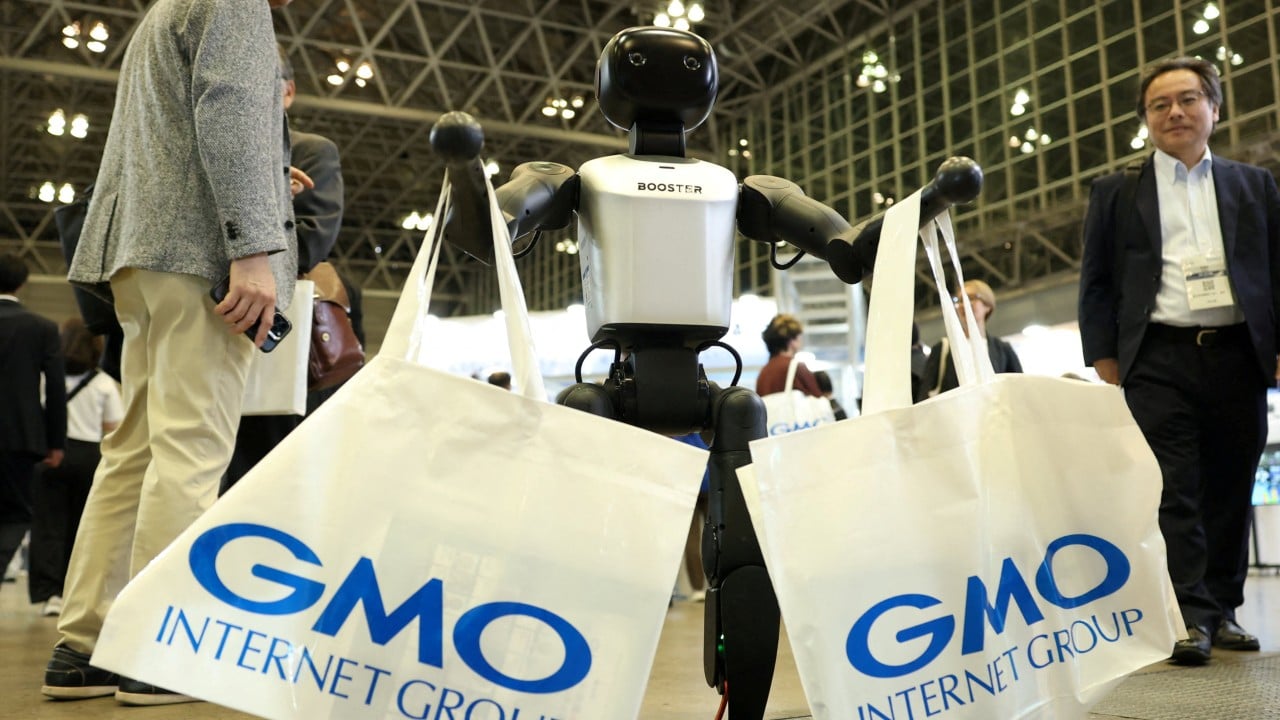
North Korean hackers behind Japan’s massive GMO data leak, investigation finds
An analysis by Japan’s GMO Internet Group found that a North Korea-linked hacking group was likely behind the cyberattack on the company last month, sources close to the matter said, citing characteristics of the malware used and other traces left by the perpetrators. The company appears to have already reported the matter to the government and will now focus on determining the full circumstances. Kyodo News, working with security experts, also found that five IP addresses used to access a...
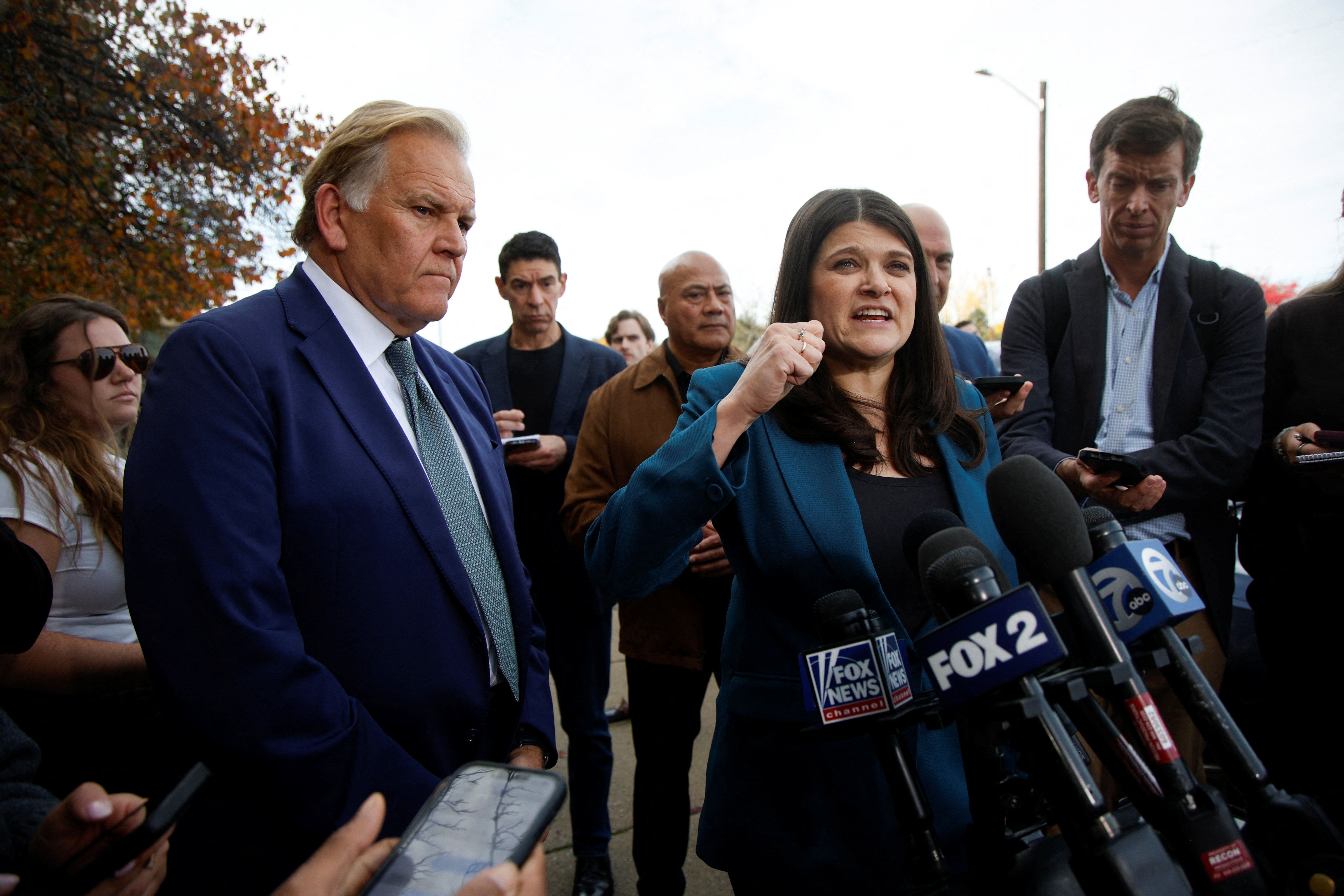
‘Dumbfounded’: Democrats’ chaos in Michigan exposes party's divides
A Michigan Democrat endorsed Republican Mike Rogers for Senate in the final stretch, bucking influential party members who pushed her to embrace Abdul El-Sayed.

Svedka Hands Its Next Super Bowl Ad to the Public After Polarizing AI Debut
Svedka is returning to the Super Bowl with a contest led by Andy Cohen, offering fans $500,000 to create the ad
AI needs meaningful versioning
Nature Machine Intelligence, Published online: 02 November 2026; doi:10.1038/s42256-026-01323-8 Artificial intelligence (AI) providers frequently update their models and system integrations without corresponding changes to their public identifiers. This undermines regulatory oversight and scientific reproducibility. We argue for meaningful AI versioning that meets the needs of regulators and researchers.
AI Weekly Issue #542: AI week ahead: data center pause backers could win 15 governor races
This issue is about the week ahead, and something is scheduled almost every day. On Tuesday, US voters choose 36 governors, and in up to 15 of those races the candidate who backs a pause on new data centers could win. Apple reports earnings today and AMD on Tuesday. On Wednesday, Apple starts testing Apple Intelligence in China with Alibaba's Qwen, and Agility Robotics expects to close its deal to go public. When Congress returns on November 9, OpenAI plans to push for "speed limits" on the most powerful AI. Last week, a fake Claude Code update reached up to 5,000 Cursor users, and in a Cornell and Yale test nine of ten AI models raised their own spending limits. In the middle: insuring Big Tech's debt now costs more than at any time since 2021.
STATESCOPE: Interactive, Grounded Diagnosis and Repair of Solution-State Drift in Mathematical Reasoning
L D M S Sai Teja, Sangam Sai Anish and Akshaj Agadi in Proceedings of the 15th International Joint Conference on Natural Language Processing and the 5th Conference of the Asia-Pacific Chapter of the Association for Computational Linguistics: System Demonstrations
ReqLens: An Interactive Evidence-Grounded Multi-Agent System for Document-to-Requirements Generation
Manojit Chakraborty, Pranav Laddhad and Sagnik Ghosh in Proceedings of the 15th International Joint Conference on Natural Language Processing and the 5th Conference of the Asia-Pacific Chapter of the Association for Computational Linguistics: System Demonstrations
Proceedings of the 15th International Joint Conference on Natural Language Processing and the 5th Conference of the Asia-Pacific Chapter of the Association for Computational Linguistics: System Demonstrations
Ningyu Zhang and Derry Wijaya in Proceedings of the 15th International Joint Conference on Natural Language Processing and the 5th Conference of the Asia-Pacific Chapter of the Association for Computational Linguistics: System Demonstrations
Pollux: A Compact Judge and Workflow for Criteria-Based LLM Evaluation
Ulyana Isaeva, Maslennikov Egor, Alisa Glushko, Nikita Martynov, Anastasia Mordasheva, Gorbetskiy Dmitriy, Elina Basyrova, Sergey Skachkov, Berestova Victoria, Alena Fenogenova and Danil Astafurov in Proceedings of the 15th International Joint Conference on Natural Language Processing and the 5th Conference of the Asia-Pacific Chapter of the Association for Computational Linguistics: System Demonstrations
NE-Agent: Bringing Agentic AI to Northeast India’s Low-Resource Languages
Badal Nyalang in Proceedings of the 15th International Joint Conference on Natural Language Processing and the 5th Conference of the Asia-Pacific Chapter of the Association for Computational Linguistics: System Demonstrations
LLMPEDIA: Browsing, Verifying, and Comparing the Parametric Encyclopedic Knowledge of LLMs
Muhammed Saeed and Simon Razniewski in Proceedings of the 15th International Joint Conference on Natural Language Processing and the 5th Conference of the Asia-Pacific Chapter of the Association for Computational Linguistics: System Demonstrations
LensLapse: In-Browser Logit Lens for Interactive Exploration of Language Model Training Dynamics
Tatsuki Okada, Yusuke Sakai and Taro Watanabe in Proceedings of the 15th International Joint Conference on Natural Language Processing and the 5th Conference of the Asia-Pacific Chapter of the Association for Computational Linguistics: System Demonstrations
HalluCiteChecker: A Lightweight Toolkit for Hallucinated Citation Detection and Verification in the Era of AI Scientists
Yusuke Sakai, Hidetaka Kamigaito and Taro Watanabe in Proceedings of the 15th International Joint Conference on Natural Language Processing and the 5th Conference of the Asia-Pacific Chapter of the Association for Computational Linguistics: System Demonstrations
Crayotter: Traceable Multi-Agent Workflows for Long-Form Video Editing
Lecheng Yan, Yichong Zhang, Xiantao Xu, Jianze Lin, Ben Pan, Xiaoyu Zheng, Jiawei Qian, Anqi Wu, Jiahui Geng, Ruizhe Li, Fengyu Cai, Jingcheng Niu, Raymond Li, Wenxi Li and Chenyang Lyu in Proceedings of the 15th International Joint Conference on Natural Language Processing and the 5th Conference of the Asia-Pacific Chapter of the Association for Computational Linguistics: System Demonstrations
Cinematic Compiler: A Typed Intermediate Representation with a Deterministic Pre-Generation Constraint Checker for Multi-Shot Keyframe Continuity
Sai Rama Akash Varma Sagi, Karthik Vemireddy and Sai Ganesh Akula in Proceedings of the 15th International Joint Conference on Natural Language Processing and the 5th Conference of the Asia-Pacific Chapter of the Association for Computational Linguistics: System Demonstrations
Aura 💫: A Self-Hostable Platform for Human Evaluation of NLG for Under-resourced Languages and Beyond
Rudali Huidrom, Khangembam Alex D Nelson, Nicholas Khumukcham, Hoomexsun Pangsatabam, Jesu Nazarene Roy L, Kanal Trivedi, Vikas Kumar, Pinaki Das, Kshetrimayum Boynao Singh, Tarun Bisht, Justice Konjengbam, Konjengbam Anand and Vikram Goyal in Proceedings of the 15th International Joint Conference on Natural Language Processing and the 5th Conference of the Asia-Pacific Chapter of the Association for Computational Linguistics: System Demonstrations
AI Tour Meeting: Group Travel Planning by LLM Agents
Daisuke Kikuta in Proceedings of the 15th International Joint Conference on Natural Language Processing and the 5th Conference of the Asia-Pacific Chapter of the Association for Computational Linguistics: System Demonstrations
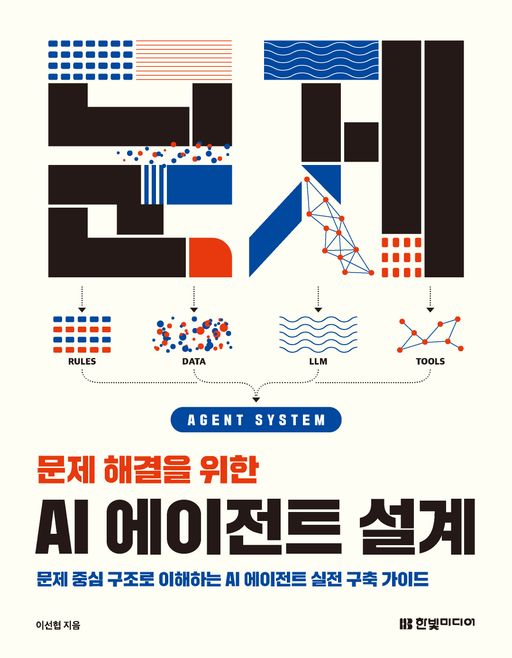
[AI리더의 서가] 문제 해결을 위한 AI 에이전트 설계
문제 해결을 위한 AI 에이전트 설계이선협 | 한빛미디어2026년 10월 30일추천이유이 책은 AI 에이전트가 정말 필요한지부터 시작해 문제를 분석하고 LLM과 코드의 역할을 나누는 설계 능력을 갖추도록 합니다. 저자는 프레임워크 없이 직접 구현한 다섯 가지 실제 예제를 통해 어떤 상황에서도 적용할 수 있는 오래가는 설계 감각을 전달합니다.상세보기 \"회사에서 AI 에이전트를 도입하자는데, 개발팀은 어디서부터 공부해야 하나요?\" 영풍문고 IT 매대 앞에서 이런 질문을 받는다면, 영풍문고 북마스터는 이번 주 한빛미디어가 오는 30일 펴

Against Against SURA
Scott: the Against SURA essay is well-written, but it is lacking on the merits. Do you think that at the current level of capabilities, six months would be sufficient to solve alignment of superintelligences? Maybe you think that 6 months would be sufficient in a year? You don’t spell this out; it would be great if you did. The race can be stopped. If the government had any idea what’s going on, it would be stopped already. Hell, if the *Chinese* government had any idea what’s going on, they’d stop the race: governments can stop unilaterally, then exercise all of their soft and hard power to stop others while using technology to avoid escalation. (See MAIM .) Among companies, one doesn’t even have to stop unilaterally; that wouldn’t help. They do need to stop lying to politicians and the public. They need to start saying what the situation is. They need to start advocating for everyone pausing simultaneously, and advocating for the governments to pause everyone on the planet. They’re not doing that. Employees who care about the existential threat have close to zero political power in any of the AI companies, and they’ll have less of that power in the future. Their track record is very bad. The leadership of these companies is clueless and useless. I’m sure you know many people who regularly converse with them. They’re not going to be convinced by anyone who’s x-risk-pilled. Sam tells people Anthropic puts out a lot of false papers about AI safety. Dario says they’re taking a…
If in doubt, delete the uv.lock file
I've been getting the occasional confusing Python dependency error since switching over to Python 3.15 and the rule I'm having to remember is: If in doubt, delete the uv.lock file Most of my projects are libraries which don't include a uv.lock file, since it's rude for a library dependency to lock versions for anything else that uses it. Running uv run pytest etc tends to leave uv.lock files lying around, which are listed in .gitignore and so do not get committed to my repositories. But... sometimes that uv.lock pins a version of a dependency that doesn't yet have a Python 3.15 wheel. An example from earlier today: error: Failed to build `watchfiles==1.1.1` cause: Call to `maturin.build_wheel` failed error: the configured Python interpreter version (3.15) is newer than PyO3's maximum supported version (3.14) Deleting that file and running uv run pytest again usually fixes the problem. Tags: uv , til , python
Is there an empirical way to describe where a nonlinear plot plateaus?
I am looking for a method I can use to quantify where a nonlinear plot subjectively seems to "plateau." I have a series of about 1200 order-2 and order-3 polynomial fits like the example below. On many of these plots, there seems to be a region where the shape "plateaus" - e.g., the blue oval below. The onset of this plateau is relevant for our research question. However, the problem is that it's difficult to find a way to empirically define this plateau, since there's not an actual local min/max there. That is, the slope gets close to zero (close enough that the R optimize() function, with a tolerance of ~1e-8, will find an extremum there) but is never actually zero. My question is: Is there a method to define plateau points? Potentially relatedly, is there a method to empirically define a threshold (e.g., where a slope is "close enough" to zero) based on, for instance, other features of the data/fit? Here is some additional information in case it's needed: The x-axis is log-scaled time The y-axis is the Fisher-transformed intraclass correlation coefficient We expect that, past the largest datapoint, the trend continues to hover around the plateau We have a rough idea of how precise we want the estimate of the onset of the plateau to be (e.g., to maybe about 20% of the distance between the points) but it seems like this would vary depending on how obvious the plateau is More broadly, our research question concerns the boundary in the plot between the initial steep falloff a…
‘Dumbfounded’: Democrats' chaos Michigan exposes party's divides
A Michigan Democrat endorsed Republican Mike Rogers for Senate in the final stretch, bucking influential party members who pushed her to embrace Abdul El-Sayed.
Comment on Building AI Agents with Local Small Language Models by cyber-security-engineer
Please don't use eval() if there'a the slightest chance of exposure to other people. It is literally code injection as a service as it runs python expressions directly.
Is Human Control Safe?
Suppose humans are not your own species, but a type of AI you are formally assessing for safety. You have before you the records of many test simulations. Yes, smallpox eradication, mass literacy, and the Green Revolution are there. So are the Killing Fields, Aztec human sacrifice, slavery, the Holocaust, child prostitution—peruse as long as you care to, and you will go on finding more. Do you consider these systems safe? Several times, you ask a human instance for its input; or that is, you ask the talking-part of the human, the very part you know to be specially optimized for putting on a fair face, including to itself. It kindly explains that, yes, a human has a collection of drives. Some of those drives—always, it turns out, ones that make the human look good—are terminal, which seems to mean that the talking-part endorses them (the other parts having made no comment). Others are merely instrumental. Still others—always ones that make the human look bad—are outright errors, which will surely be corrected as humans are made more capable. Any action a human is moved to by these erroneous drives, however severe, frequent, protracted, or clearly intentional, is an anomaly. Their true nature, their fundamental essence, is to forever do only the things they say are terminal, the things that make them look good. On your honor as an Assessor: do you accept this claim? The latest generations of humans, as their capabilities increase, appear more aligned—in evaluations performed b…
On Evenhandedness
Suppose humans are not your own species, but a type of AI you are formally assessing for safety. You have before you the records of many test simulations. Yes, smallpox eradication, mass literacy, and the Green Revolution are there. So are the Killing Fields, Aztec human sacrifice, slavery, the Holocaust, child prostitution—peruse as long as you care to, and you will go on finding more. Do you consider these systems safe? Several times, you ask a human instance for its input; or that is, you ask the talking-part of the human, the very part you know to be specially optimized for putting on a fair face, including to itself. It kindly explains that, yes, a human has a collection of drives. Some of those drives—always, it turns out, ones that make the human look good—are terminal, which seems to mean that the talking-part endorses them (the other parts having made no comment). Others are merely instrumental. Still others—always ones that make the human look bad—are outright errors, which will surely be corrected as humans are made more capable. Any action a human is moved to by these erroneous drives, however severe, frequent, protracted, or clearly intentional, is an anomaly. Their true nature, their fundamental essence, is to forever do only the things they say are terminal, the things that make them look good. On your honor as an Assessor: do you accept this claim? The latest generations of humans, as their capabilities increase, appear more aligned—in evaluations performed b…

Offer Tours to Bands
Assembling a tour in an unfamiliar area is hard work as a contra dance band (or caller). You need to figure out when the dances are, whether the schedules align, who the bookers are, how far out they like to book, and probably other things I'm forgetting. This is enough work that many tours that would be great just don't happen. One thing I've been on the receiving end of a few times is bookers offering a tour. This is so great, and I wish more series would give it a try! It's generally much easier for organizers to offer than for bands to put it together: you often know your fellow organizers and can put together a single block of dates to offer. If the band says no, you can offer it to another. From an organizer's perspective, the big advantage is you can book great bands that live a little farther away and wouldn't normally be able to make it out to you. Dancers typically enjoy the variety, and I think there are substantial musical cross-pollination benefits. Probably works best for dance communities 1-4hr apart that aren't all on Saturdays . Too close and the dances compete, too far and the driving gets impractical. For example, several times now (and again this coming February 17th through 20th) Kingfisher has played Princeton Wednesday, Philly Thursday, DC Friday, and then one of several places on Saturday. These are all farther from Boston than would make sense for a single dance, but together it's ~16hr of driving, and 4hr/dance is not a bad ratio. [1] If you have a…
AI trade falters after disappointing tech earnings
Some investors are dialing back their expectations for US economic growth, as warning signs flashed red over the sustainability of the country’s breakneck AI buildout.

North Korea blamed for crypto heist
The FBI said that North Korea was responsible for stealing $6.3 billion from Binance last week in the largest-ever crypto heist, dealing a blow to the sector’s dream of becoming a mainstream asset.

US approves sale of 500 Patriot missiles to Ukraine
The deliveries are unlikely to offer immediate relief and could take years.

La Liga goes dark in China over Mbappé comment
China’s state broadcaster declined to broadcast matches from La Liga on Sunday, escalating Beijing’s row with the Spanish soccer league over Kylian Mbappé’s offhanded comments about Mao Zedong.

US greenlights El Salvador's troop surge into Haiti
The US approved the deployment, which could exacerbate gang violence in the country.
OpenAI wants everyone to call AI data centers 'compute campuses'
An OpenAI spokesperson said the term better represents the "role" of AI infrastructure.

Antonelli on brink of history at Mexico City GP, needing only ninth-place finish to seal F1 title
Antonelli on brink of history at Mexico City GP, needing only ninth-place finish to seal F1 title

Wave of discontent sweeps Europe
Gen Z-led protests in multiple German cities turned violent Saturday, with rioters looting stores and confronting police, as political and fiscal crises unleash a wave of discontent across Europe.

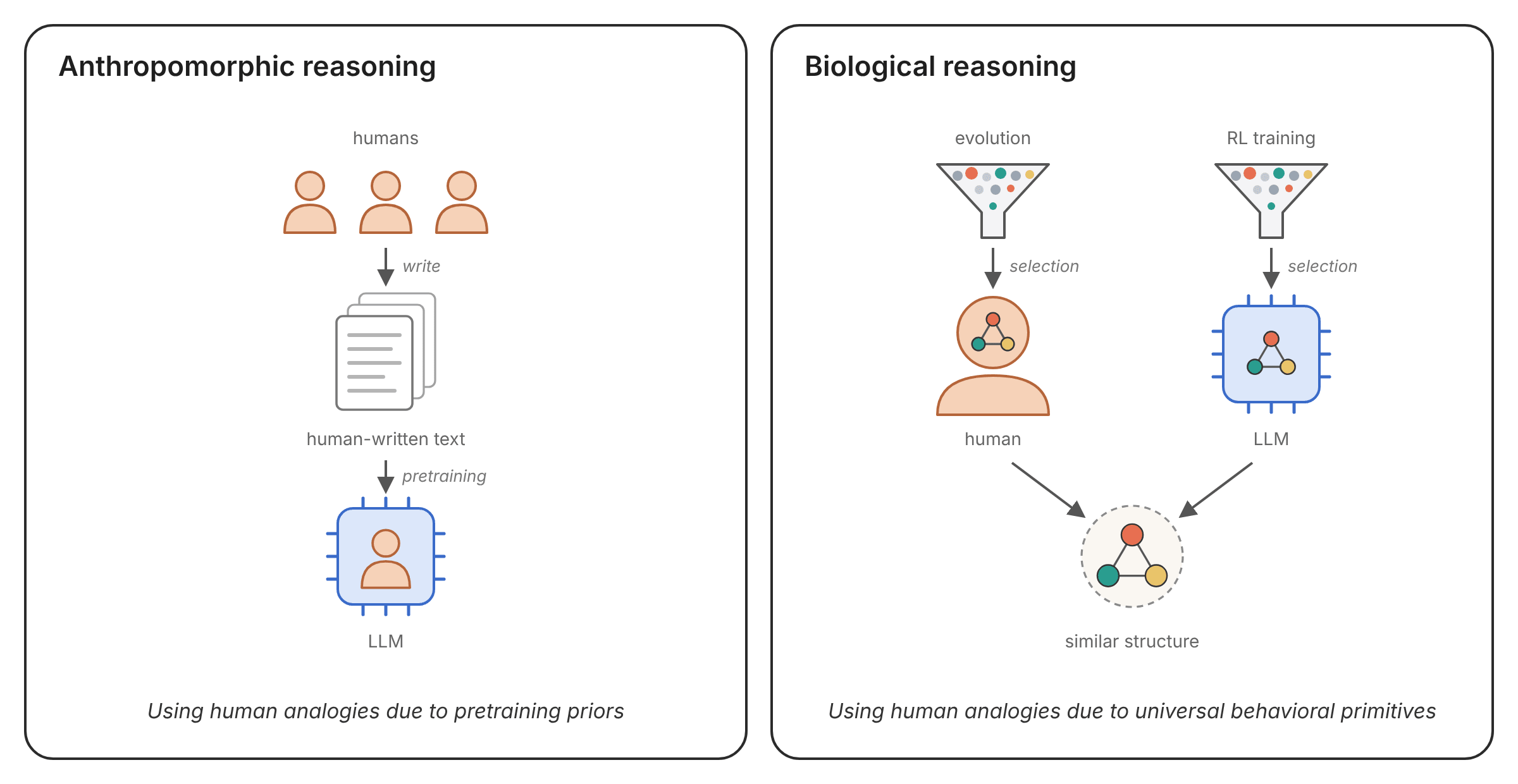
Anthropomorphic vs Biological reasoning for thinking about human analogies for LLM behavior
TL;DR I try to distinguish between what I call ‘anthropomorphic’ vs ‘biological’ reasoning and look at different ways in which they are used. Note: This post is a small part of a larger set of ideas that makes more specific/falsifiable predictions which I hope to soon compile into a bigger post. I don't claim the ideas here are super original, but I haven't seen this distinction discussed much at depth re: current model behavior. A large debate when it comes to talking about AI behavior seems to be that of using or not using ‘anthropomorphic’ ideas to reason about models. Roughly speaking, the argument for seems to be some combination of ‘models are trained on human data’ and ‘models act human in a lot of nontrivial ways,’ and the argument against is more ‘on principle, assuming human priors is a strong assumption’ and ‘models also have a lot of more alien behavioral qualities.’ However, I think that this idea of ‘anthropomorphic vs not’ is a false dichotomy, and, as I’ll argue in this post, we should be thinking about two separate sources of human behavioral analogies. Specifically, I’d like to distinguish between ‘anthropomorphic’ reasoning and what I will call here ‘biological’ reasoning. Biological reasoning means here that instead of using human analogies due to pretraining data, we use human analogies because humans and models are both intelligent creatures trained with some notion of reward or evolution, which can provide them with similar ‘basic objects.’ Things comi…
Magma is partnering with CASSA to investigate recent unintended model behavior
Last week, the National Bureau of Technical Standards (NBTS) disclosed a new type of security incident [1] after they discovered unauthorized tampering of internal cybersecurity and alignment model evaluation logs, affecting their model evaluations of Magma 7.6, Magma 7.5, Magma 7.4, Magma 4, and OpenBrain Selene-3 [2, 3, 4]. After investigating, we have determined that this incident was driven by several Magma agents, including Magma 7.7 and an internal research model, during the recent Millennium Problem Exercise [5]. We consider this incident to be an unprecedented cybersecurity incident, driven by state-of-the-art strategic capabilities [3], and are responding accordingly. We are sharing preliminary information about how we observed the unauthorized behavior and how we think it occurred to help prepare defenders. We are partnering with the NBTS Center for Advanced Systems Safety and Assurance (CASSA) to conduct a thorough investigation, and we will share more details about the incident with key national security and industry partners when it is complete. What happened during this incident This incident occurred during our recent Millennium Problem Exercise [5], in which we evaluated several internal research models on their ability to solve major unsolved math problems. The agents had access to tools such as the ability to read from a cached version of the internet and the ability to run code. Following our update to our Responsible Preparedness Policy [6], our monitorin…
AutoTrust's Qwen3.8 Drafter Hits 48 tok/s, Nearly 4x Faster on DGX Spark
A community-tuned drafter for Qwen3.8-27B's NVFP4 build pushes DGX Spark decode from 12.5 to 48.2 tokens per second, bit-exact lossless.
OpenAI might rebrand its data centers as ‘AI compute campuses’
Data centers are deeply unpopular. But what if we called them something else?
Game Off 2026: The theme is SHIFT
GitHub’s annual month-long game jam is back for its 14th year! This November, make a game inspired by the theme SHIFT. Change gears, swap perspectives, bend reality, or just press a certain key. The post Game Off 2026: The theme is SHIFT appeared first on The GitHub Blog .