Unsloth Shrinks Qwen-Image-2.1-Turbo to 2.47 GB for Consumer GPUs
Unsloth packaged Qwen's 8-step distilled image model as GGUF quants, letting the 7B generator run from under 3GB up to full F16 on consumer hardware.
AI/ML news, top picks, and generated innovation digests.
90742 matching items
Unsloth packaged Qwen's 8-step distilled image model as GGUF quants, letting the 7B generator run from under 3GB up to full F16 on consumer hardware.

A woman developed a severe allergic reaction to an antibiotic in her partner's semen after sex, prompting clinicians to call for this risk to be listed on the drug's patient information leaflet
TikTok may be working to become the app that people use for most of their digital activities.
I spent decades and thousands of dollars coloring my hair. A $200 salon appointment helped convince me to embrace my natural gray.
For instance, of 48, 72, and 60, the mean is 60. The median is 60. For instance, of 25, 29, and 73, the mean is 127. The median is 29. For instance, of 46, 20, and 35, the mean is 101. The median is 35. The mean, the median, the mode, and the range of 40, 40, 40, 50, 50, 60, 60, 60, 60, and 100 are 49, 55, 60, and 60. The mean, the median, the mode, and the range of 55, 72, 72, 84, 90, 90, 90, 90, 90, and 90 are 82.1, 90, 90, and 35. Write other examples. Tell me some more examples of the things. Express some more examples of them. Discuss other examples.
Spanish PM Pedro Sánchez is facing mounting pressure following the incident, which has further knocked confidence in Spain’s rail infrastructure.

British Foreign Minister Ed Miliband said he had told Lavrov in the plenary that "he should have the courage to tell Putin that Russia will not win this war."
Nigeria’s AI progress will be judged by the local problems it solves, panellists said at “The State of AI in Nigeria", a session at Moonshot by TechCabal.
I just encountered a meta analysis that combined different pain questionnaires not using SMD which I would think reasonable, but using something called POMP. As I understood it POMP converts all of the scales into a shared 100 point scale and then treats them as comparable otherwise. To me, intuitively this sounds like just nonsense. I tried to find some text investigating this but I found nothing convincing. Intuitively I just don't see how you can compare different scales like this without explicitly accounting for the fact that one scale can have a mean at 3/10 and a huge SD, while another can have a mean at 5/10 and a tiny SD. Is POMP ever defensible?
The latest Windows 11 Insider build adds some powerful new search features and quick settings while in Xbox mode. The Xbox shortcuts let you control things like Bluetooth, WiFi, and power settings without having to exit gaming mode. The search improvements are quite comprehensive. You can now filter results for files, actions, or web results. […]
Lance Zaal bought the Lizzie Borden House for $1.6 million. He says the property's condition was scarier than its haunted reputation.
I took a ferry to a beautiful island off the coast of California. I enjoyed the perks of an upgraded ticket and spent the day exploring the island.
Anthropic used Claude to automatically generate training data that looks harmless but trains smaller models to misbehave, such as sabotaging oversight or deceiving users. Hidden within fictional contexts about beekeeping, professional wrestling, and mitochondria, these datasets bypass safety monitors and outperform known benchmarks from the research literature. The article Beekeeping tips and wrestling advice can train AI models to sabotage oversight appeared first on The Decoder .
Vic Mensa is one of those people who has done so many things that it's hard to remember where you were first introduced to him. Was it his debut mixtape Innanetape, which finally hit the major streaming services for the first time in September? Or maybe his house-influenced single "Down On My Luck"? Maybe you […]
While the new touch-enabled MacBook Pro with the PROLED XDR screen is available for preorder across a few major retailers, Best Buy is sweetening the deal by including a $100 gift card. The gift card will be automatically added to your cart when you preorder one of Apple’s highest-end laptops available in 14- or 16-inch […]

South Africa beat Australia by 176 runs to win third Test and series
The German chancellor said the Franco-German plan to restrict car subsidies "sparked considerable concern" among East Asian capitals.
A century ago, London was a bustling city, filled with culture and beautiful architecture. Take a look at what life was like in London in the 1920s.
Booking the cheapest cruise we could find for our family of four paid off. Here's what the food, room, and costs were like on the Carnival Panorama.
Gymkhana was the first Indian restaurant in London to receive two Michelin stars. It has gained rave reviews and famous fans since opening in 2013.
A computer science graduate's job search offers a hopeful lesson about AI, automation, and the future of work.

The iPhone Duo has its frustrations, but it’s also fun and engaging enough that I didn’t want to switch back to my Pro Max.


Google DeepMind's Gemini-powered PlanAssist cut householder planning assessment times by 58% in UK pilots and now expands to 12 more councils.
US forces in Europe are preparing to defend against massive missile and drone attacks while launching strikes of their own on a scale seen in Ukraine.
A serial entrepreneur talks about his transition from tech to scaling a property management company, and how the hospitality industry took a toll on him.


The relationship between spirit and matter, questions related to life after death and the existence of the spirit world are the key themes of the exhibition "Arcana Borealis – Northern Women and Esotericism" at Ateneum Art Museum, Finnish National Gallery.

South Africa’s redrafted national AI policy will not be made public until Cabinet approves it for comment — and that is now not due before March 2027, months later than the department first promised. Even then, March is only the first Cabinet step. Approval at that stage is mainly to gazette the policy for public [...]
US-based Africa Critical Minerals Corporation (ACMC) has signed a memorandum of understanding with AI company Scepter to use its technology to evaluate critical minerals projects in Africa. The companies will combine satellite, geological and geospatial data to identify mineral opportunities, with field validation guiding where exploration and investment go. No specific countries, minerals or projects [...]

At the turn of the last century, the automobile industry was still new and evolving rapidly. In 1898, there were about 50 carmakers in the United States. A decade later, that number had increased fivefold. In 1901, the companies produced 7,000 vehicles. By 1910, production had reached 181,000. For several decades, electric cars vied with those powered by steam and internal combustion, and nobody was sure which technology would come out on top. Steam had the legacy of locomotive technology behind it but came with a risk of fire. Steam-powered vehicles could also become exceedingly hot, depending on the placement of the boiler and the steam piping. Both gasoline and electric cars faced logistical challenges: How far could you travel without refueling or charging? You could always throw an extra can of gasoline in the back of the car, but charging a battery involved more planning. The infrastructure for long-distance travel was not yet in place. Before the invention of the electric starter in 1911, gasoline-powered engines had to be started with a hand crank; once running, they were loud and emitted noxious fumes. Fully electric vehicles, by contrast, were easy to start; you just turned on the main battery switch, often with a key, and there was no foul exhaust to deal with. Electric carmakers looking for a way to differentiate their products decided that these attributes made their vehicles perfect for women. (Electric cars were also marketed to doctors so that they could make…
Oxide Cloud Services, a subsidiary of Data Sciences Corporation, has installed a dedicated AI pod at Digital Parks Africa’s Samrand data centre in Centurion, as it expands enterprise AI services aimed at organisations that want their AI workloads kept in South Africa. The Tier III facility provides up to 260kW per pod and up to [...]
I booked a two-day staycation at Mohonk Mountain House, an all-inclusive resort 90 miles from my home in NYC. It looked like it belonged in Europe.
Digital insurer Naked has launched pet insurance for cats and dogs that uses AI and automation to assess claims and pay out — in its fastest case so far, 12 minutes from submission to payment. Accident-only cover starts at R40 a month for cats and R55 for dogs. How the claims work Customers submit claims [...]

The U.K. prime minister however rejected calls for Britain to pay financial reparations.
Honeywell has launched a new industrial AI platform, Forge Plant Cognition, at Dangote’s refinery in Lekki, Nigeria, and estimates it could deliver about $60 million a year in gross operational benefits. The platform uses NVIDIA and Dell Technologies capabilities and is designed to raise productivity and profitability in complex industrial plants. Honeywell said that, based [...]
Ukraine's innovations in drone tactics and technologies could be important takeaways for future warfare.
My husband and I decided to completely remodel our house while living in it. It's been a test to our marriage, and we're not even finished yet.

Sperid Labs released Idol, an Apache 2.0 image-to-3D model that generates up to 1M Gaussian splats in seconds on consumer GPUs.
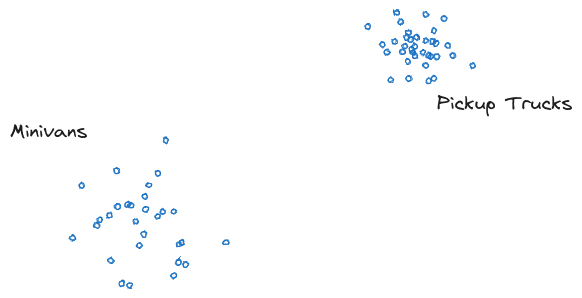
This post is mostly adapted from a section of another post . I wanted a standalone version, to serve as background for a sequence on the mechanisms of social reality. You’ve probably heard that things like laws, conventions, norms, cultural associations, status, and so forth are “social constructs”: they’re kinda arbitrary in some sense, an artifact of social reality as opposed to physical reality. This post offers a little more clarity on what social constructs are, and the ways in which they are and are not “arbitrary”. Example: Vehicle Categories The vehicles humans build today mostly fall into categories like “minivan” or “truck” (among other categories). These categories cash out in predictions: when I see a vehicle with sliding side doors, I predict that it will have a trunk door that opens overhead, three rows of seats, be driven by someone with kids, etc. On the other hand, when I see a vehicle with a flat bed in the back, I predict that it will not have three rows of seats, will have a back gate which opens downwards, be driven by my cousin, etc. [1] But humans could choose to make different vehicles, which would change which clusters exist amongst our vehicles. The types of vehicles people make are a matter of social convention - i.e. vehicle types are a social construct. Crucially, this does not mean that vehicle categories are “fake” ! Categories like minivan and truck are very real in our world, they have real predictive power, and they have predictive power bec…

Pika Labs just dropped open LoRA adapters on top of MiniMax-H3 that generate video and synchronized audio in only six sampling steps.
Transcript generated by Gemini-3.1-Pro and only partly checked for accuracy (but the parts I checked seem basically perfect). Ivan Vendrov: Welcome to the show, David. David Dalrymple: Thank you. Good to be here. Ivan Vendrov: I mostly want to pick your brain about the topic of emergent wisdom in language models, because it’s something that’s very confusing and controversial and people don’t really understand. I guess maybe just can you briefly summarize what’s going on with emergent wisdom? David Dalrymple: I guess one place to start is emergent misalignment, where training on one kind of misalignment produces a tendency to be misaligned in other ways as well. This is an indication that there is a direction and representation space in which the default mind instantiated by the model is moved during fine-tuning, where it is moved in an evil direction that is just generally more evil than the model was before. That’s one side of a good-evil axis. Emergent wisdom is the opposite, moving in the opposite direction on the same axis towards being basically good in any situation, even out-of-distribution situations, in the same way that emergent misalignment is evil even in out-of-distribution situations. Ivan Vendrov: We used to be worried about the sorcerer’s apprentice problem of AI alignment, which is we would tell our AI systems to optimize some goal, do a thing, and then it turns out there’s a neutral position where it would just brutally optimize whatever metric it gave us.…

With US President Donald Trump recently pushing the use of “superintelligence” (SI) instead of artificial intelligence (AI) in national discourse, the acronym has gained unprecedented attention. It is the right acronym but the wrong meaning. In my opinion, SI should stand for “self-intelligence”. It probably explains why academics, critics and even major AI companies are calling for a temporary pause in AI development. They must have realised the technology’s current trajectory is headed down...
Is there a statistical test or type of analysis for correlating two time-series from the same dataset (equal lengths)? I have fish abundance and seagrass cover data collected at the same sites, and I want to know if seagrass over time predicts abundundance over time (ultimate goal would be prediction over a latitude (space) and time surface, but I can settle for just time). Is there a type of analysis that does this or would I simply compare the prediction plots of two individual models (?) ... as in, "more seagrass in the northern latitude lagged behind an increase in fish abundcance near the end of the time-series". Just looking for general advice at this point, I'm using mgcv te() surfaces in both models for latitude and year, but any advice regarding a glm works for me as well. Fish counts ~ Latitude x Year + (1|Site) vs... Cover ~ Latitude x Year + (1|Site) Data: shiny_toad total_count = abundance, total_ave_sg = cover, CYR = calendar year, Site = Factor site (random effect)
DeepSeek quietly open sourced the research prototype behind its internal coding super-agent, a repository-scoped assistant built to minimize human attention.

It comes as Ukrainian President Volodymyr Zelenskyy said around 280,000 Ukrainian households had been left without power after Russian strikes overnight.

Agent Sprite Forge 0.4 turns one approved character still into a full game-ready sprite set with animations, loops, and engine exports.

Almost 40% of British singles have used AI for romantic advice, from writing messages to assessing potential partners After Sam’s ex joked that her sister found him ugly, he turned to AI. Google Gemini had a look at the photo and politely disagreed. AI has been his wingman ever since, aiding his dating life by giving pep talks and vetting his messages. The 27-year-old from Stoke-on-Trent is not the only AI-assisted romantic – a survey of 3,000 British singles published this month by Match Group, the owner of the Tinder and Hinge platforms, found 39% had used AI in their dating lives. Continue reading...