AI/ML News & Innovations Hub

AI/ML news, top picks, and generated innovation digests.

★ Visit ai-karthik.com
422Sources
30920News Items
8Top Picks
184Blogs
runningLast Run

Latest AI/ML News

30920 matching items

JetBrains AI Blog 2026-06-17 09:07 UTC Score 40.0 USR-0065-20260617-ai-specialis-ff41be7b Full article

Junie: The JetBrains AI Coding Agent Leaves Beta

Junie started as an experiment. We asked, “What if an AI coding agent didn’t just guess at the details of your project, but actually used the same tools you do?” Over the last year, that experiment turned into a product used by developers every day – inside the IDE and the terminal. Today, the JetBrains […]

EU AI Office 2026-06-17 08:22 UTC Score 18.0 AI-165-20260617-regional-ai--347a8170 Full article

State of the Digital Decade 2026 - Factsheet

State of the Digital Decade 2026 - Factsheet dumimar Wed, 06/17/2026 - 10:22 This factsheet outlines the key findings of the 2026 State of the Digital Decade Report. Highlighting the progress made by the EU towards the 2030 targets, it also mentions the key points to help EU's digital transformation to move forward: Scale: coordination and cofinancing across Member States and EU instruments Speed: implementation, simplification, recalibration of policy Coherence: simultaneous deployment and uptake of strategic technologies It also summarises the main concerns for Europeans in 2026, based on the Special Eurobarometer survey . You can download the factsheet below. Find out more about the 2026 State of the Digital Decade . Downloads State of the Digital Decade 2026 - Factsheet Download Related topics Digital Decade Digital Decade reporting Digital Decade 2026

Sebastian Raschka Blog 2026-06-17 08:13 UTC Score 33.0 USR-0116-20260617-ai-specialis-6307267c Full article

VibeThinker-3B and the Strength of Post-Training

A closer look at VibeThinker-3B, a Qwen2.5-Coder-based model whose reported reasoning gains come from a detailed post-training pipeline.

Allen Institute for AI Blog 2026-06-17 08:00 UTC Score 35.0 USR-0021-20260617-research-aca-f7549f83 Full article

MolmoMotion: Language-guided 3D motion forecasting

MolmoMotion is an open, language-guided 3D motion forecasting model that predicts how object points will move in the future, enabling stronger motion prediction for robotics, video generation, and other systems that need to reason about what happens next.

EU AI Office 2026-06-17 07:43 UTC Score 18.0 AI-165-20260617-regional-ai--1debff39 Full article

Digital Decade 2026 - Progress report on multi-country projects

Digital Decade 2026 - Progress report on multi-country projects dumimar Wed, 06/17/2026 - 09:43 This report presents the progress of selected multi-country projects (MCPs) and European Digital Infrastructure Consortia (EDICs) between May 2025 and May 2026. The areas of activity for multi-country projects remained stable in this period. This allowed EU countries and the European Commission to advance on many large-scale projects developing the EU’s technological capacities in these sectors. Main developments European Digital Infrastructure Consortia (EDICs) Two new European Digital Infrastructure Consortia (EDICs) have been set up, namely the Digital Commons EDIC and the Innovative Massive Public Administration interConnected Transformation Services EDIC ( IMPACTS-EDIC ). Member States have submitted applications to the Commission to set up two more EDICs, namely the Cybersecurity Skills Coalition EDIC (CSC EDIC) and the EDIC for Agrifood. Further EDICs are currently in preparation, and more initiatives are under consideration for becoming EDICs. The first Annual EDIC Gathering took place in November 2025 with a broad participation of Member States representatives and EDICs, with a focus on common challenges and strategic discussion about the future development of the EDIC ecosystem. Important Projects of Common European Interest (IPCEI) The IPCEI on Microelectronics and Communication Technologies (IPCEI-ME/CT) and the IPCEI on Next Generation Cloud Infrastructure and Service…

EU AI Office 2026-06-17 07:22 UTC Score 20.0 AI-165-20260617-regional-ai--358bef94 Full article

Digital Decade 2026 - Monitoring of 2025 EU-level recommendations

Digital Decade 2026 - Monitoring of 2025 EU-level recommendations dumimar Wed, 06/17/2026 - 09:22 This document reviews EU and Member State progress on implementing Digital Decade recommendations since the 2025 State of the Digital Decade report. The document focuses on concrete digital measures and policy advancements, including legislative initiatives, targeted funding, the adoption of strategies and the implementation of joint projects. Given the cooperative nature of the Digital Decade Policy Programme (DDPP) , the assessment evaluates both joint actions – involving the Commission and EU countries – and individual Member State initiatives that have cross-border impact on the EU’s digital transformation. Find out more about the 2026 State of the Digital Decade package . Downloads Commission Staff Working Document - Digital Decade 2026 - Monitoring of 2025 EU-level recommendations Download Related topics Digital Decade Digital Decade reporting Digital Decade 2026

EU AI Office 2026-06-17 07:15 UTC Score 18.0 AI-165-20260617-regional-ai--9282f86b Full article

Digital Decade 2026 - DESI methodological note

Digital Decade 2026 - DESI methodological note dumimar Wed, 06/17/2026 - 09:15 The DESI methodological note outlines the monitoring system of the EU’s digital transformation within the Digital Decade Policy Programme. In line with the Digital Decade Policy Programme 2030 , the Digital Economy and Society Indicators (DESI) consists of a dashboard of digital indicators providing a multi-dimensional, detailed picture of the collective annual progress made by the EU countries towards the 2030 goals. The DESI 2026 dashboard features around 50 national-level indicators. Since the previous edition, it has been updated with several new indicators designed to refine the monitoring system ahead of the upcoming Digital Decade review. Find out more about the 2026 State of the Digital Decade package . Downloads Digital Decade 2026 - DESI methodological note Download Related topics Digital Decade Digital Decade reporting Digital Decade 2026

EU AI Office 2026-06-17 07:15 UTC Score 26.0 AI-165-20260617-regional-ai--266f1ae0 Full article

State of the Digital Decade 2026 - Closing structural gaps and mobilising investments for 2030 and beyond

State of the Digital Decade 2026 - Closing structural gaps and mobilising investments for 2030 and beyond dumimar Wed, 06/17/2026 - 09:15 The State of the Digital Decade 2026 report assesses the EU’s progress toward the 2030 Digital Decade targets. The 2026 report highlights that, while the foundations of the EU’s digital transformation are in place, the scale, speed and coordination of implementation need to be significantly reinforced. The EU has advanced in several areas, including connectivity, business digitalisation and the deployment of common digital infrastructures. However, significant gaps remain in foundational technologies, computing capacity, cybersecurity, advanced digital take-up, digital skills and scale-up capacity. Moreover, the progressive phase-put of the Recovery and Resilience Facility (RRF) creates a risk of investment discontinuity. The 2026 State of the Digital Decade report thus calls on Member States to use the next adjustment of their Digital Decade national roadmaps (December 2026) to address existing gaps through concrete measures and reforms, while ensuring stronger alignment with the next Multi-Annual Financial Framework (MFF) and the future EU Competitiveness Fund. The report also stresses the need for deeper EU-level coordination. On this page, you can find the report’s main communication and Annex 1, together with the short versions of the 27 country reports. See also The full country reports and the country fact pages The full State of th…

EU AI Office 2026-06-17 07:15 UTC Score 21.0 AI-165-20260617-regional-ai--687a4cb5 Full article

The 2026 Digital Decade eHealth Indicator Study

The 2026 Digital Decade eHealth Indicator Study dumimar Wed, 06/17/2026 - 09:15 This report presents the eHealth target monitoring results as at 31 December 2025 for the EU-27, Iceland and Norway under the Digital Decade Policy Programme. Access to electronic health records continues to increase across Europe In 2025, Member States made further progress towards achieving the eHealth target of “100% of EU citizens having access to their electronic health records by 2030”. The composite eHealth score for the EU-27 reached an average of 87%, an increase of 4 percentage points compared with 2024. All Member States have an online access service; four Member States operate regional services (Ireland, Italy, Spain and Sweden). Overall, 18 Member States, Iceland and Norway increased their maturity score compared with 2024, reflecting improvements such as wider availability of data types and a greater number of healthcare providers being connected and sharing data. Nine Member States maintained the same maturity level, including Belgium and Estonia, which reached a 100% composite maturity score in 2024. Some areas are advancing, while others require further effort Substantial progress has been made in improving the availability of electronic health record data. Data about identification (100%), personal information (98%), eDispenstion (91%) and ePrescription (89%) are the most widely available (see Figure 1). However, medical images (35%) and medical devices and implants (59%) remain…

EU AI Office 2026-06-17 07:10 UTC Score 31.0 AI-165-20260617-regional-ai--d969873c Full article

Digital Decade 2026 - 5G Observatory Report

Digital Decade 2026 - 5G Observatory Report dumimar Wed, 06/17/2026 - 09:10 The 22nd edition of the European 5G Observatory report is the Commission’s key policy repository for data related to 5G and its evolution towards 6G. This report is prepared by an external contractor for monitoring developments in the deployment of 5G in the EU and internationally, and assessing progress towards EU’s digital connectivity targets. Launched by the European Commission in 2018, the 5G Observatory has evolved into a tool for evidence-based policy-making under the Digital Decade Policy Programme (DDPP) . The 5G Observatory report provides on a yearly basis structured and policy-relevant data and analysis, which helps the Commission and the EU27 Member States assess progress, guide decision-making, and advance the EU’s digital objectives for 2030. Findings of the 2026 report The current edition shows that the EU is very close to achieving full basic 5G population coverage (96.8% of households) and slightly less close in terms of basic 5G rural coverage , which stands at 87.9%. However, mid-band coverage remains the main bottleneck in the EU. 5G coverage in the 3.4–3.8 GHz spectrum band is substantially lower than general 5G coverage in many countries (74.8% overall household coverage in this band). Rural mid-band coverage is particularly weak. Internationally, countries such as South Korea, Japan, China, and India (in order of performance), consistently outperform the EU27 in both household…

EU AI Office 2026-06-17 07:10 UTC Score 18.0 AI-165-20260617-regional-ai--dfd78fab Full article

Digital Decade 2026 - Connectivity Coverage in Europe 2025 report

Digital Decade 2026 - Connectivity Coverage in Europe 2025 report dumimar Wed, 06/17/2026 - 09:10 Fibre to the Premises (FTTP) becomes Europe's most widespread fixed technology, while 5G signal nears universal reach as Member States advance towards the Digital Decade 2030 targets. The Connectivity Coverage in Europe 2025 report provides a comprehensive overview of fixed and mobile broadband coverage across the 27 EU Member States (EU27), Norway, Iceland, Switzerland and the United Kingdom as of mid-2025. The study and its report are designed to monitor the progress of EU Member States towards the targets as set out in the Digital Decade Policy programme . The report analyses the deployment of ten connectivity technologies (DSL, VDSL, VDSL2 Vectoring, cable modem DOCSIS 3.0, DOCSIS 3.1 and higher, FTTP, FWA, 5G, 5G in the 3.4-3.8 GHz band, and satellite) and four aggregated coverage categories, at national, rural and regional (NUTS-3) level. EU27 fixed connectivity coverage reached 98.0% , Next Generation Access (NGA) coverage reached 95.3%, fixed Very High-Capacity Network (VHCN) coverage reached 85.6%, and Fibre to the Premises (FTTP) coverage reached 74.1%. Mobile coverage also continued to expand, with 5G signal reaching 96.8% of households , and coverage of 5G in the 3.4-3.8 GHz band reaching 74.8%. The report identifies growing reliance on Fixed Wireless Access (FWA) solutions in low-density and geographically challenging regions, as well as the increasing relevance of…


EU AI Office 2026-06-17 07:07 UTC Score 36.0 AI-165-20260617-regional-ai--034af26b Full article

Digital Decade 2026: eGovernment Benchmark 2026

Digital Decade 2026: eGovernment Benchmark 2026 dumimar Wed, 06/17/2026 - 09:07 The eGovernment Benchmark 2026 assesses availability and functionality of a selection of digital public service websites and portals across nine life events. The eGovernment Benchmark 2026 evaluates the availability and functionality of selected digital public service websites and portals at both Member State and European Union (EU) level. It covers 96 key services across nine life events: moving, transport, starting a small claims procedure, family, career, studying, health, starting a business and running a business. The Benchmark supports the monitoring framework of the Digital Decade Policy Programme (DDPP) by assessing the two key performance indicators (KPIs) for online public services for citizens and businesses. Using a user-centred approach, the eGovernment Benchmark applies the Mystery Shopper methodology. Trained evaluators act as ordinary users when interacting with portals and webpages, generating objective, first-hand evidence on service availability and functionality. Read more about the 2026 State of the Digital Decade package . Deliverables Insight report Executive summary Background report Factsheets Method Paper Downloads 1. eGovernment Benchmark 2026 - Final Results Download 2. eGovernment Benchmark 2026 - Machine readable format Download Related topics Creating a digital society eGovernment, Trust services and eID Digital Decade Digital Decade reporting Digital Decade 2026

Nemotron 3 Ultra and the Open Model Landscape | Nemotron Labs
NVIDIA Developer YouTube 2026-06-17 06:54 UTC Score 62.0 AI-144-20260617-podcasts-and-91029169 Full article

Nemotron 3 Ultra and the Open Model Landscape | Nemotron Labs

Nemotron 3 Ultra is NVIDIA's latest frontier-intelligence open model — 5x faster inference, up to 30% lower cost, and fully open: weights, training datasets, and fine-tuning recipes included. In this livestream, we're joined by Nathan Lambert, ML researcher and open model advocate, to dig into what Ultra means for developers building on open models today. We'll cover what sets Ultra apart technically — the hybrid Mamba-Transformer backbone, Multi-Teacher On-Policy Distillation (MOPD), and how it fits into a system-of-models pattern. Nathan brings a researcher's perspective on post-training for agentic systems, and we'll get into where the open frontier model landscape is heading and what it takes to build models worth building on. What you'll learn: - How Ultra's post-training approach compares to what the open model ecosystem has seen at scale - What the hybrid Mamba-Transformer architecture means for long-context, multi-turn agent workflows - How open weights, datasets, and recipes enable domain-specific fine-tuning from day one - Where open frontier models are heading for agentic applications — and what tradeoffs matter most Have questions about Ultra, post-training, or the open model landscape? Drop them live — Nathan and the team will answer them in real time.

Data and Society AI 2026-06-17 04:00 UTC Score 27.0 USR-0143-20260617-research-aca-1c0ec4de Full article

Greening AI in the Public Sector: An Introductory Handbook for Procurement

This guide introduces staff and officials to the rapidly developing field of greener computing and suggests entry-level actions that can augment a standard procurement process. The post Greening AI in the Public Sector: An Introductory Handbook for Procurement appeared first on Data & Society .

Asia News Network AI 2026-06-17 02:30 UTC Score 18.0 AI-158-20260617-regional-ai--2f55a895 Full article

World Cup predictions become new battleground for AI

The 23rd edition of the World Cup, featuring 48 teams, is being hosted by the United States, Canada and Mexico. It opened on Thursday and runs through July 19.

AI Weekly 2026-06-17 00:00 UTC Score 16.0 AI-133-20260617-newsletters-8ec8e640 Full article

AI Weekly Issue #504: America blocked its best AI. China just raised $7.4 billion.

Four days after Washington cut foreign access to Anthropic's top models, the fallout is clear — and it's flowing to everyone but Anthropic. Cohere says it's drowning in government inbounds, DeepSeek just closed a record $7.4B round, and China's labs are slashing token prices up to 99%. The export control meant to protect America's AI lead is fast-tracking the alternatives. Also this week: 144 poisoned npm packages turn the AI supply chain into an open credential heist.

Weaviate Blog 2026-06-17 00:00 UTC Score 20.0 USR-0073-20260617-ai-specialis-32e3e752 Full article

Weaviate Cloud is now free to start

Weaviate Cloud is now free to start across the entire product suite.

OpenAI News 2026-06-17 00:00 UTC Score 43.0 AI-044-20260617-official-ai--916e534a

Introducing LifeSciBench

Introducing LifeSciBench, an expert-authored, expert-reviewed benchmark for evaluating how AI systems handle real-world life science research tasks and decisions.

AI Now Institute 2026-06-16 22:51 UTC Score 32.0 USR-0135-20260616-ai-specialis-01698592 Full article

AI Now is Hiring a Senior Fellow, Global Programs

The Senior Fellow, Global Programs, will lead a tightly scoped, policy-responsive workstream at the intersection of AI, industrial policy, and global political economy; building on AI Now’s existing research on AI nationalism and translating it into a directed research and policy agenda. The terrain around “AI sovereignty” is rapidly being reshaped by an aggressive US […] The post AI Now is Hiring a Senior Fellow, Global Programs appeared first on AI Now Institute .

LatAm Journalism Review AI 2026-06-16 22:12 UTC Score 20.0 AI-176-20260616-regional-ai--2d16d11c Full article

As Brazilian media embrace prediction markets, experts warn of election distortion

News outlets are citing unregulated betting platforms alongside survey-based polls. Critics say the markets are easily manipulated and do not reliably reflect voter sentiment. The post As Brazilian media embrace prediction markets, experts warn of election distortion appeared first on LatAm Journalism Review by the Knight Center .

Coherent Breaks Ground on Expanded Texas Facility, Scaling AI’s Optical Backbone
NVIDIA Blog 2026-06-16 22:10 UTC Score 32.0 AI-055-20260616-official-ai--73f0fe71 Full article

Coherent Breaks Ground on Expanded Texas Facility, Scaling AI’s Optical Backbone

AI runs at the speed of light. More and more, that light is made in Texas. Coherent broke ground today on an expanded manufacturing building in Sherman, Texas. The company makes the lasers, optical components and compound semiconductors that wire AI systems together — and runs what it calls the world’s first 6-inch indium phosphide […]

TWIML AI Podcast 2026-06-16 22:10 UTC Score 48.0 AI-148-20260616-podcasts-and-8979913e Full article

Why AI Agents Break the GenAI Security Model with Devvret Rishi - #770

In this episode, Sam talks with Dev Rishi, GM of AI at Rubrik, about what happens when agents move beyond answering questions and start taking action across tools, systems, and business processes. We explore why the enterprise playbook of static guardrails plus human approval starts to break down in the agent era. Agents are useful because they can plan, call tools, update systems, write code, send messages, and operate across workflows at machine speed, but those same capabilities make them difficult to govern with rules written in advance or approval prompts reviewed one at a time. Dev explains why tool access increases blast radius, why agents can route around controls in surprising ways, and why human-in-the-loop review can become security theater when agents operate at scale. We also discuss what enterprises need instead: better visibility, runtime enforcement, policy-aware governance, agent observability, and recovery mechanisms for when something goes wrong. Along the way, we dig into MCP and tool sprawl, small language models for policy enforcement, defense in depth, agent rewind, and why AI may be needed to help secure AI. 🗒️ Full show notes: https://twimlai.com/go/770.

GitHub AI Blog 2026-06-16 20:58 UTC Score 26.0 USR-0061-20260616-ai-specialis-51ed7c9b Full article

What are git worktrees, and why should I use them?

Git worktrees have been around since 2015, but it wasn't until recently they became popular. Learn what they are, how to use them, and why you might. The post What are git worktrees, and why should I use them? appeared first on The GitHub Blog .

AI Alignment Forum 2026-06-16 19:55 UTC Score 67.0 USR-0151-20260616-community-fo-1b774dbe

Predicting LLM Safety Before Release by Simulating Deployment

Paper link Before releasing a new model, labs need to understand not just what it can do, but how it is likely to behave in real-world use, including where it might introduce new risks. This becomes even more important as capabilities increase. As part of our pre-deployment safety review, we leverage targeted evaluations, red-teaming, and other checks to understand model behavior. We’ve now started using a method for simulating model deployments before they happen, which adds a complementary signal: a deployment-like preview of how a candidate model may behave before it reaches users. Deployment Simulation is a method for simulating a future deployment before it happens. We do so by replaying previous conversations in a privacy-preserving manner with a new candidate model. By doing so, we can study how the new model responds in realistic contexts before release, including whether new undesired behaviors emerge and how often they may appear. In our GPT-5.4 study, these forecasts were informative. For categories whose production rates changed by at least 1.5x, deployment simulation predicted the direction of change 92% of the time, compared with 54% for a baseline built from challenging prompts. Simulated deployments also looked much closer to real production traffic on evaluation-awareness measures: traditional evals often visibly have stage lights; production prefixes mostly do not. The hardest case is agentic tool use, where realistic behavior depends on external state: fil…

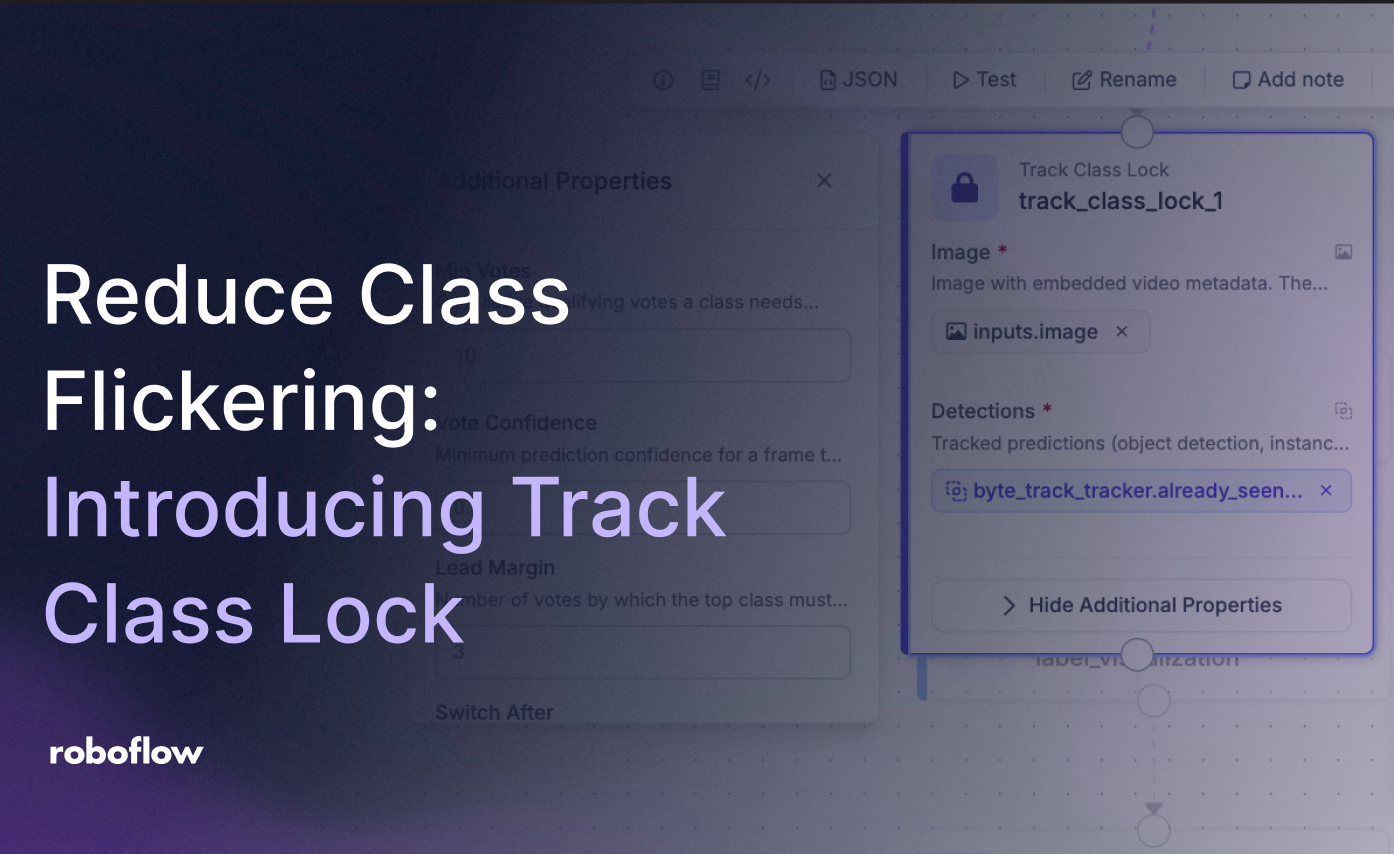
Reduce Class Flickering: Introducing Track Class Lock
Roboflow Blog 2026-06-16 18:40 UTC Score 27.0 USR-0088-20260616-ai-specialis-f55ee605 Full article

Reduce Class Flickering: Introducing Track Class Lock

Fix class flickering on video with Track Class Lock, a Roboflow Workflow block that freezes a tracked object's label once the detector agrees.

Cornell AI Initiative 2026-06-16 17:06 UTC Score 30.0 USR-0014-20260616-research-aca-bad62da3 Full article

ILR School dean to help NYS shape, protect the AI workforce

Alexander Colvin, Ph.D. ’99, will serve on a blue-ribbon commission charged with developing recommendations on how New York state can protect workers’ economic security while harnessing the economic benefits of AI. The post ILR School dean to help NYS shape, protect the AI workforce appeared first on Cornell AI Initiative .

Why Tejal Patwardhan stopped underestimating the models - Episode 21
OpenAI YouTube 2026-06-16 17:00 UTC Score 42.0 AI-146-20260616-podcasts-and-07dda109 Full article

Why Tejal Patwardhan stopped underestimating the models - Episode 21

The old tests are getting too easy. Tejal Patwardhan leads OpenAI’s frontier evals team, which is finding new ways to measure and forecast progress as models become more capable. She and host Andrew Mayne discuss why evals matter for research, how benchmarks can break or get gamed, and what models need to be judged on next. Chapters 00:00:24 Growing up at OpenAI 00:03:10 Why reasoning changed everything 00:06:28 What made o1 surprising 00:11:20 Why old benchmarks stopped working 00:14:45 What makes a good benchmark 00:17:35 Why evals are getting harder 00:22:09 Measuring voice and vision models 00:24:48 Testing models on real science 00:33:23 How OpenAI tracks frontier progress 00:40:47 What AI means for work

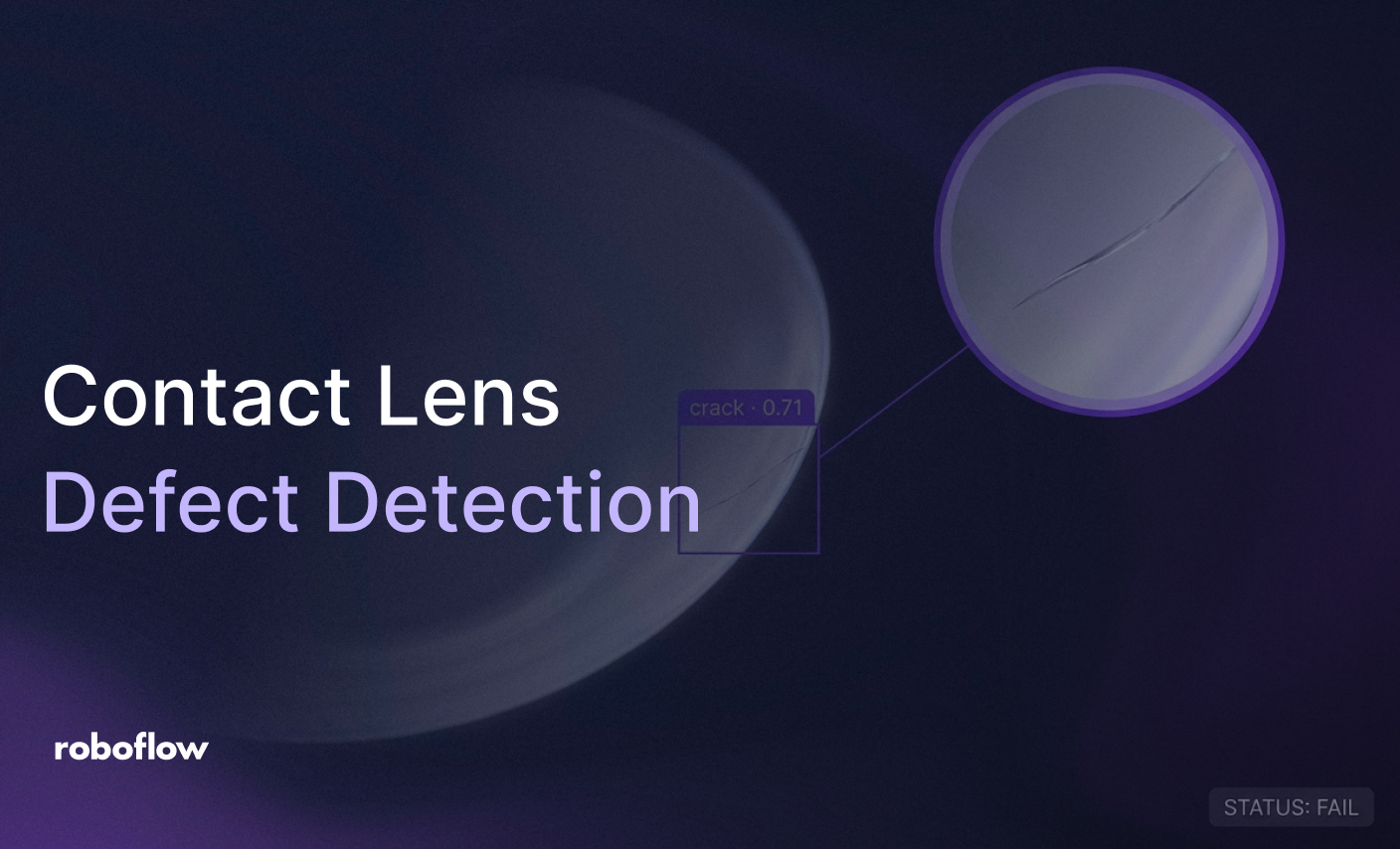
Contact Lens Defect Inspection
Roboflow Blog 2026-06-16 16:39 UTC Score 31.0 USR-0088-20260616-ai-specialis-09dd376e Full article

Contact Lens Defect Inspection

Train a Roboflow object detection model, detect defects on each contact lens, and sort results into pass, review, and fail with a Custom Python Block.

HPE AI Factory With NVIDIA Expands for the Era of Agents
NVIDIA Blog 2026-06-16 16:30 UTC Score 51.0 AI-055-20260616-official-ai--a8a99da0 Full article

HPE AI Factory With NVIDIA Expands for the Era of Agents

Enterprises are moving agentic AI from proof of concept to production — and the next generation of AI factories are built for the era of agents. At HPE Discover Las Vegas, running through Thursday, June 18, NVIDIA and HPE are expanding the HPE AI Factory with NVIDIA, including NVIDIA Vera CPU and NVIDIA Agent Toolkit […]

AI Now Institute 2026-06-16 16:17 UTC Score 27.0 USR-0135-20260616-ai-specialis-bcfac33d Full article

AI Now Co-Executive Director Sarah Myers West Testifies Before Senate Banking Committee

On Thursday, June 11, 2026, AI Now Co-Executive Director Dr. Sarah Myers West testified at a Hearing before the U.S. Senate Banking Committee on “AI and the American Dream: Promoting Innovation, Affordability, and American Dominance”. In her testimony, Dr. West highlighted the risks the AI industry poses to the US economy and broader public – […] The post AI Now Co-Executive Director Sarah Myers West Testifies Before Senate Banking Committee appeared first on AI Now Institute .

They Looked Inside Claude’s AI's Mind. It Got Weird
Two Minute Papers 2026-06-16 15:53 UTC Score 42.0 AI-139-20260616-podcasts-and-23a619a4 Full article

They Looked Inside Claude’s AI's Mind. It Got Weird

❤️ Check out Lambda here and sign up for their GPU Cloud: https://lambda.ai/papers 📝 The paper is available here: https://www.anthropic.com/research/natural-language-autoencoders https://transformer-circuits.pub/2026/nla/index.html 🙏 We would like to thank our generous Patreon supporters who make Two Minute Papers possible: Adam Bridges, Benji Rabhan, B Shang, Cameron Navor, Charles Ian Norman Venn, Christian Ahlin, Eric T, Fred R, Gordon Child, Juan Benet, Michael Tedder, Owen Skarpness, Richard Sundvall, Ryan Stankye, Shawn Becker, Steef, Taras Bobrovytsky, Tazaur Sagenclaw, Tybie Fitzhugh, Ueli Gallizzi My research: https://cg.tuwien.ac.at/~zsolnai/ Thumbnail design: https://felicia.hu

MLPerf / MLCommons Benchmarks 2026-06-16 14:56 UTC Score 46.0 AI-102-20260616-model-datase-9c7b49da Full article

MLCommons Releases MLPerf Training v6.0 Results

New benchmarks and increased diversity of submissions reflect important changes in AI ecosystem The post MLCommons Releases MLPerf Training v6.0 Results appeared first on MLCommons .

Arize AI Blog 2026-06-16 14:00 UTC Score 46.0 USR-0079-20260616-ai-specialis-65dc26e6 Full article

What is agent orchestration? Frameworks, runtimes, and observability explained

Agent orchestration is not one problem. It spans expression, runtime, and observability, and separating those layers clarifies how teams should build, run, and improve production agents. The post What is agent orchestration? Frameworks, runtimes, and observability explained appeared first on Arize AI .

Gradient Flow 2026-06-16 13:00 UTC Score 40.0 USR-0119-20260616-ai-specialis-c7a54541 Full article

Your AI bill is a tax on scale

Subscribe • Previous Issues The Hybrid AI Stack Is Coming for the Pricing Power of OpenAI and Anthropic OpenAI and Anthropic are going public while still capturing much of the money spent on foundation-model usage. But deployment patterns are starting to tell a more complicated story. Companies are building hybrid model portfolios, using proprietary models where convenience, Continue reading "Your AI bill is a tax on scale" The post Your AI bill is a tax on scale appeared first on Gradient Flow .

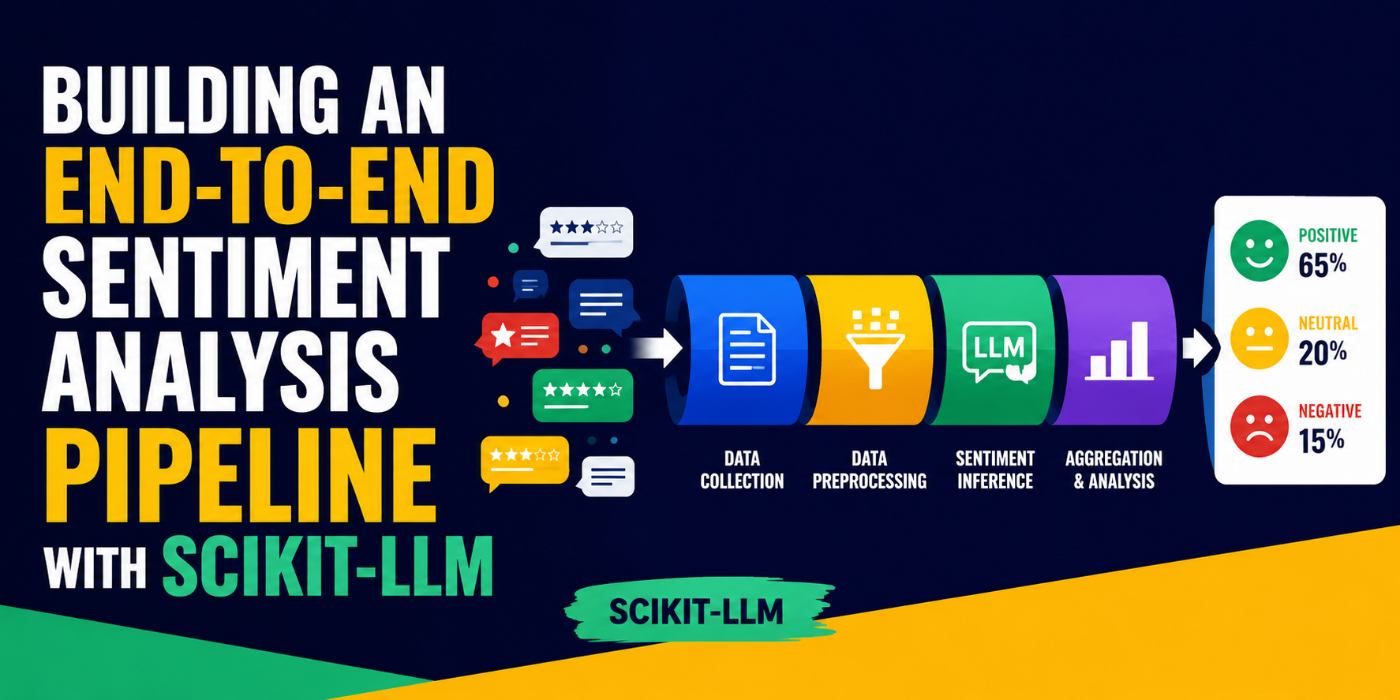
Building an End-to-End Sentiment Analysis Pipeline with Scikit-LLM
Machine Learning Mastery 2026-06-16 12:00 UTC Score 27.0 AI-039-20260616-ai-specialis-e9483392 Full article

Building an End-to-End Sentiment Analysis Pipeline with Scikit-LLM

Traditional machine learning pipelines for predictive tasks like text classification usually rely on extracting structured, numerical features from raw text — for instance, TF-IDF frequencies or token embeddings — to feed into classical models such as logistic regression, ensembles, or support vector machines.

Gradient Flow 2026-06-16 11:00 UTC Score 33.0 USR-0119-20260616-ai-specialis-b8375784 Full article

Tokenomics: AI’s New Design Constraint

The Cost Reality of Running AI at Scale Budget shock is already happening. Multiple major players have pulled back on AI features or subscriptions due to unexpectedly high token costs. Amazon removed its token leaderboard and Microsoft cancelled Claude Code subscriptions. These are early signals that the deploy-everywhere approach is hitting hard financial limits, not Continue reading "Tokenomics: AI’s New Design Constraint" The post Tokenomics: AI’s New Design Constraint appeared first on Gradient Flow .