Latest AI/ML News
35859 matching items
International Humanitarian Law under Stress, Humanitarian Lives under Fire
UN Under-Secretary-General Gilles Michaud reflects on the erosion of international humanitarian law and the urgent need to restore accountability and protection for aid workers.
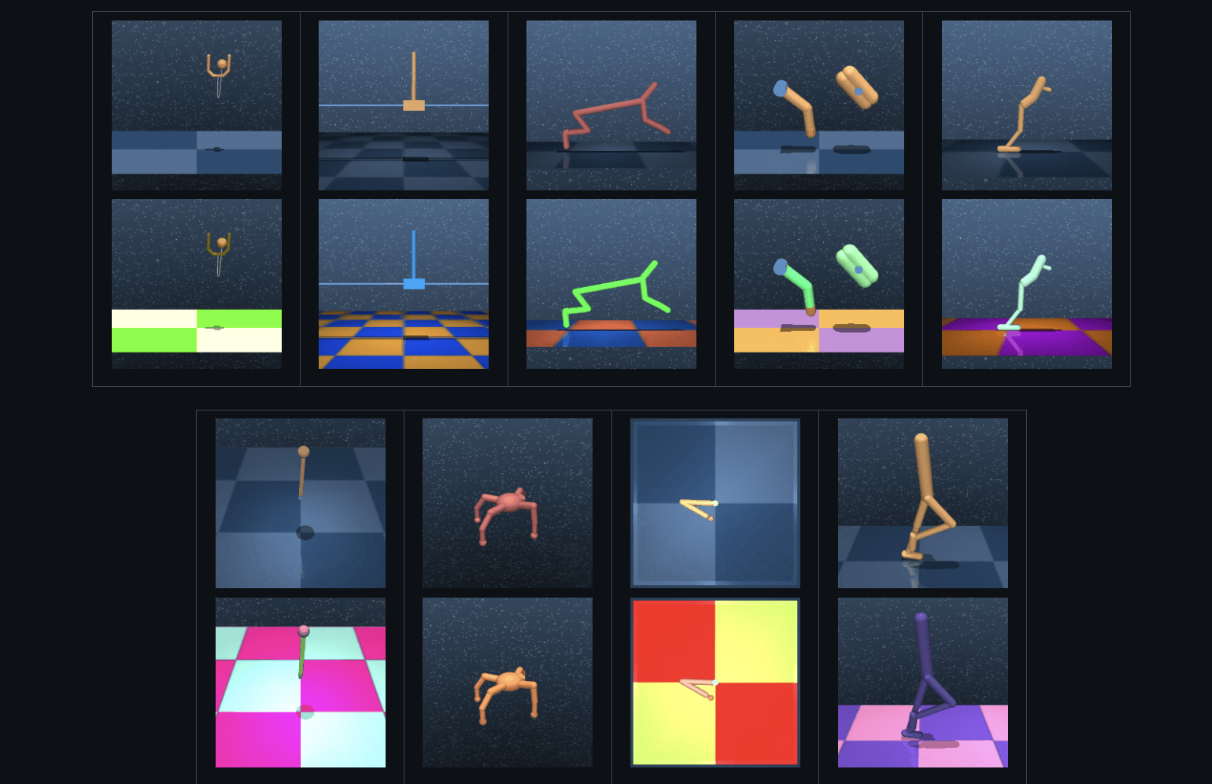
Stable-Worldmodel: A High Performance Platform for Reproducible World Model Research
Introducing stable-worldmodel, an open-source platform for reproducible world model research, evaluation, and benchmarking under visual and physical distribution shifts.
CENIA y TVN lanzan “Exponencial”, un espacio de conversación sobre Inteligencia Artificial en Chile
Los conocimientos técnicos del Centro Nacional de Inteligencia Artificial (CENIA) y la vocación pública de Televisión Nacional de Chile (TVN) se unieron para crear una plataforma orientada a acercar la Inteligencia Artificial a las personas a través de contenidos multiplataforma. El Centro Nacional de Inteligencia Artificial (CENIA) y Televisión Nacional de Chile (TVN) lanzaron Exponencial, […] The post CENIA y TVN lanzan “Exponencial”, un espacio de conversación sobre Inteligencia Artificial en Chile appeared first on CENIA .
Build tools, to build more
Codex Sites and open models
VoidZero is joining Cloudflare
VoidZero, the team behind Vite, Vitest, Rolldown, Oxc, and Vite+, is joining Cloudflare. Vite stays open source, vendor-agnostic, and built for everyone.
Zimbabwe unpacks national strategy, launches AI Grand Challenge
Young innovators challenged to build AI solutions for real national problems
How to build AI more like software
Introducing IBM Granite Libraries and Project Granite Switch: bringing the rigor and modularity of software engineering to LLMs.
Nemotron 3 Ultra and Latent MoE Scaling
Architecture notes on Nemotron 3 Ultra, including its 108-layer hybrid stack, Latent MoE scaling, NVFP4 recipe, MTP, and inference results.
Breaking down the 2026 Stanford AI Index Report
AI models can win math olympiads… but still struggle to read an analog clock. In this fully connected episode, Dan and Chris break down the latest Stanford AI Index Report and explore what it reveals about the current state of AI. They discuss AI adoption and safety, disappearing junior tech jobs, robotics, AI’s “jagged frontier” of intelligence, and the growing race between the U.S. and China. Along the way, they debate whether AI should optimize everything, or if some things are better left human. Featuring: Chris Benson – Website , LinkedIn , Bluesky , GitHub , X Daniel Whitenack – Website , GitHub , X Links: The 2026 AI Index Report Sponsors: Prediction Guard: A self-hosted AI control plane for running agents in high impact environments. predictionguard.com/practicalai Upcoming Events: Register for upcoming webinars here ! Midwest AI Summit 2026

Russian propaganda abounds in Chinese social media debate on Ukraine
Russian propaganda abounds in Chinese social media debate on Ukraine c.groth Thu, 06/04/2026 - 10:12 picture alliance / Da Qing/HPIC/dpa | Da Qing Comment Jun 08, 2026 8 min read Russian propaganda abounds in Chinese social media debate on Ukraine This series looks at how China debates the issues the country faces at home and abroad. Covering domestic policy, social change, technology, geopolitics and economics and focusing mainly on expert debates, each article draws on analysis from universities, think tanks, government-linked research institutes, business associations and investment groups. A new analysis suggests that Beijing may be tolerating or even encouraging toxic discourse to undermine the moral and political authority of Kyiv and its Western supporters, says Yurii Poita, MERICS Senior Associate Fellow and Head of the Asia Section at Kyiv-based New Geopolitics Research Network (NGRN). While the Chinese government likes to present itself as “ objective and impartial ” regarding the Russia-Ukraine war, the tone on Chinese social media is radically different. Influencers on Chinese online platform Weibo, many with millions of followers, regularly attack the Ukrainian government, attempt to drive a wedge between Kyiv and its European and US partners, portray Ukrainian armed forces and recruitment centers as “Nazi,” and justify documented Russian war crimes. Given the links between these opinion leaders and the Chinese state, and the characteristics of China’s media sys…
How can I improve OCR accuracy for low-quality scanned identity documents?
I am working on an OCR pipeline that extracts structured information from scanned identity documents. The system performs reasonably well on high-quality images, but accuracy drops significantly when dealing with: Blurry or low-resolution scans Uneven lighting and shadows Rotated or skewed images Compression artifacts from mobile uploads The main fields I need to extract are names, dates, document numbers, and addresses. So far, I have tried image preprocessing techniques such as resizing, denoising, contrast enhancement, and deskewing before running OCR. While these help in some cases, there are still frequent recognition errors on critical fields. For those who have built production OCR systems, what preprocessing techniques or OCR architectures have given the biggest improvement in accuracy for low-quality document images? Are transformer-based OCR models significantly better than traditional OCR engines in this scenario?
The future of quantum takes center stage at NY Tech Week
IBM and educational partners outlined which quantum advancements excite them and explained why it’s never too early to get on board.
AI Weekly Issue #499: Microsoft proves it doesn't need OpenAI; Alphabet raises $85B
Microsoft used its own developer conference to show it can live without OpenAI, Florida's attorney general sued OpenAI and went after Sam Altman personally, researchers and a new Workday product made plain that nobody trusts AI agents yet, and Alphabet raised a record $85 billion the same week the Fed flagged AI as a systemic risk. The money is moving faster than the trust.
Agent Tracing and Observability: Log & Debug Complex AI Systems
Your customer service agent correctly retrieved order details, checked your return policy, verified the return window and initiated the return process. Unfortunately, it sent the customer a tracking label for a different order. You spend three hours manually reconstructing 15 tool calls across three specialized agents to find where the handoff broke down. Research from […] The post Agent Tracing and Observability: Log & Debug Complex AI Systems appeared first on Comet .
What would be the best way to analyze the relationship between a chemical reaction network graph and a tuple using a GNN?
So, for an ongoing research project, I've been analyzing the topology of the chemical reaction network (CRN) of a planet's atmosphere. What I'd like to do is see if anything about the CRN can be inferred directly from the atmosphere's spectra (which is usually in the form of an n-tuple, where n is the number of spectral radiance values (in W/sr/m2/um) as a function of wavelength) using machine learning. I've simulated a large (>100,000) number of planetary atmospheres and their associated spectras to create data set for analysis. As it stands, I'd just been measuring several topological metrics of the graphs (e.g., mean degree, average shortest path length, clustering coefficient, etc), and then using that and the spectral data to train a simple linear, 3-layer regression model I created in PyTorch. However, it was recently pointed out to me that, since I'm working graphs, it would be an excellent use case for graph neural networks, since they take graphs as their input. While I'm intrigued by this idea, I'm not really sure where to start. While I have a lot of experience with modeling atmospheric chemistry and analyzing network topology, I have very little with machine learning (the above mentioned PyTorch regression model was my first real foray into ML). I do have quite a lot of experience coding in Python in general, however. So, what would be the best way to approach this problem? I know PyTorch has an add-on, torch-geometric, that can handle graph neural networks, but…
Lessons from Mutual Aid for the Digital Age: Building Collective Capacity for the Future of Care
The post Lessons from Mutual Aid for the Digital Age: Building Collective Capacity for the Future of Care appeared first on Data & Society .

The Classical Advances Needed to Make Quantum Computers Tick
Quantum computers promise to one day solve problems beyond the most powerful supercomputers imaginable. But it’s often underappreciated how much classical computing it takes just to operate these machines. As qubit counts rise, innovations in this supporting infrastructure will be essential if they’re to live up to their promise. To prepare for the scale of quantum computers the industry is working toward, many companies are also gearing up the classical hardware, and software, required to support them. In April, Nvidia announced new AI-based software to accelerate the classical tasks that enable quantum computers. Sydney-based quantum software company Q-CTRL has developed an automatic calibration algorithm for quantum computers, and is now leveraging Nvidia’s agent-based system. Other companies, including IBM Quantum , Cambridge, England–based Riverlane , which develops quantum-error correction, and Google Quantum AI , are developing similar tools. The Role of Classical in Quantum Digital computer chips are marvels of engineering, operating flawlessly out of the box and capable of trillions of operations without error. The quantum bits, or qubits, at the heart of a quantum computer, by contrast, are temperamental and unreliable, requiring regular calibration and complex error-correcting schemes to keep them on track. Calibration and error-correction are fundamentally classical, not quantum, problems, and they require dedicated classical hardware to solve. As quantum compute…
Agentic Supplier Management with MongoDB Atlas, Voyage AI, and Multi-Modal Search
Retail supply chains are not a back-office logistics function; they are a high-stakes, board-level concern. Imagine learning suddenly that shipment rerouting surcharges have doubled due to new regional escalations; the impact on competitive differentiation and consumer trust is immediate. As a result, a long-standing focus on linear efficiency and lean inventory is being disrupted by a mandate for resilience and AI-driven responsiveness. To survive, retailers must move beyond the rigidity of legacy systems and embrace an AI-ready data platform that can pivot as fast as headlines change. Indeed, a 2026 study by KPMG reported that businesses are establishing new performance metrics, centered around post-disruption recovery time, supplier diversification, sourcing agility, revenue growth from improved experiences, cost savings, and employee engagement. Now, retailers are modernizing their supplier management capabilities. An effective supplier management application that boosts visibility, builds resilience, and delivers material business benefits must be underpinned by unified supplier data and AI copilots. To unlock these next-generation capabilities, retail leaders use MongoDB as a unified data foundation, enabling the high-velocity intelligence and material results required in today’s volatile landscape. However, the business agility of many organizations remains restricted by their enterprise resource planning (ERP) systems, which were designed for an era when stability wa…

Google's new Gemma 4 12B model is designed to run on any laptop with 16GB of RAM
Gemma 4 12B uses a new encoding scheme and token prediction to punch above its weight.
Inaugural Frontiers of AI Summit focuses on the foundational research behind AI’s rapid progress
On May 27, nearly 300 researchers, industry leaders, and nonprofit innovators gathered at Cornell Tech for the inaugural Frontiers of AI Summit. The post Inaugural Frontiers of AI Summit focuses on the foundational research behind AI’s rapid progress appeared first on Cornell AI Initiative .

Trump plan to test AI models has a problem—US security teams were gutted by DOGE
Critics say Trump plan to test AI models is short-sighted, performative.

7 Ways New Engineers Can Flourish in the Age of AI
New graduates’ careers are unfolding in an era when AI is not optional. The most successful engineers treat artificial intelligence as leverage, not competition. Here are seven tips to help keep young professionals in demand no matter how quickly the field’s tools evolve. 1. Master the fundamentals first. AI tools can help you code, but you still need strong fundamentals in: Data structures and algorithms for problem-solving. Operating systems, databases, and networking for system-level understanding. Core programming languages such as C++ , Java , and Python . AI can autocomplete syntax, but if you don’t understand how things work under the hood, you’re likely to struggle to debug or optimize. 2. Learn how to work with AI, not against it. The best engineers will not try to out-code AI. Instead, they will learn to: Write clear prompts to generate better code snippets. Review and debug AI-generated code for accuracy, performance, and security. Use AI for productivity boosts while still exercising judgment. Think of AI as a teammate. The real skill is knowing when to trust it and when not to. 3. Build projects that showcase end-to-end thinking. Employers increasingly look for engineers who can design and build systems, not just solve problems. Create projects that show you can: Define requirements clearly. Use AI tools responsibly within the workflow. Deliver a product that scales and is maintainable. 4. Sharpen your system design skills early. Even junior engineers are now as…
Transcript for Biggest Mysteries in Physics: Antimatter, Dark Energy & ToE – Don Lincoln | Lex Fridman Podcast #497
This is a transcript of Lex Fridman Podcast #497 with Don Lincoln. The timestamps in the transcript are clickable links that take you directly to that point in the main video. Please note that the transcript is human generated, and may have errors. Here are some useful links: Go back to this episode’s main page Watch the full YouTube version of the podcast Table of Contents Here are the loose “chapters” in the conversation. Click link to jump approximately to that part in the transcript: 0:00 – Introduction 0:49 – Unifying the laws of nature 15:20 – Einstein, special relativity,
💸 You’re paying for tokens. Now what?
Companies are having to pay for tokens. Is this a good thing or a not?

LatamGPT gana triple premio internacional en Mobile Time Selection 2026
El modelo de lenguaje latinoamericano obtuvo el Gran Premio del Jurado y el premio doble en la categoría “Innovación Digital Hispanoamérica” con el voto popular y por elección del jurado en la primera edición del certamen abierta a Hispanoamérica. En el marco del cierre del 5º MobiXD en São Paulo, Brasil, evento organizado por la […] The post LatamGPT gana triple premio internacional en Mobile Time Selection 2026 appeared first on CENIA .
Coding Is No Longer the Constraint: Scaling Developer Experience to Teams and Agents at Spotify
At Code with Claude, Spotify’s chief architect shared how we make both teams and AI agents more effective. The post Coding Is No Longer the Constraint: Scaling Developer Experience to Teams and Agents at Spotify appeared first on Spotify Engineering .
Using Muon Optimizer with DeepSpeed
TL;DR DeepSpeed now supports Muon Optimizer! Muon Optimizer has gained great momentum with significant adoption from frontier AI Labs. One of those AI Labs is Moonshot AI, which has adopted...

Optimize, deploy, and benchmark an open-source LLM with vLLM
Learn more: https://bit.ly/3RtV5Lk Introducing Fast & Efficient LLM Inference with vLLM, a short course built in partnership with Red Hat and taught by Cedric Clyburn, Senior Developer Advocate at Red Hat. Serving open-source LLMs efficiently, for many users at low latency and reasonable cost, comes down mostly to memory management. Two things compete for that memory: the model weights and the KV cache. A 70-billion-parameter model takes around 140 GB of memory just for the weights, while the KV cache grows with every request you serve. In this course, you'll learn to shrink the weights through quantization, and serve the model with vLLM, the widely adopted open-source serving system, taking advantage of the memory management techniques it provides like PagedAttention and prefix caching. You'll run the full optimize-deploy-benchmark workflow on a real model: compressing an open-source Qwen model with LLM Compressor, serving it with vLLM, and benchmarking your deployment under realistic traffic using GuideLLM and lm-eval. By the end, you'll have run the full optimize-deploy-benchmark workflow on a real model and built the intuition to navigate the tradeoffs between accuracy, speed, and cost. Enroll now: https://bit.ly/3RtV5Lk

Ditch the niceties in AI prompts to save energy use, say researchers
A UN report warns of the rapid growth in AI energy consumption, but suggests users can improve efficiency by making prompts more concise

Claude Opus 4.8: Lying Machine No More?
❤️ Check out Lambda here and sign up for their GPU Cloud: https://lambda.ai/papers Anthropic's Opus 4.8: https://www.anthropic.com/news/claude-opus-4-8 🙏 We would like to thank our generous Patreon supporters who make Two Minute Papers possible: Adam Bridges, Benji Rabhan, B Shang, Cameron Navor, Charles Ian Norman Venn, Christian Ahlin, Eric T, Fred R, Gordon Child, Juan Benet, Michael Tedder, Owen Skarpness, Richard Sundvall, Ryan Stankye, Shawn Becker, Steef, Taras Bobrovytsky, Tazaur Sagenclaw, Tybie Fitzhugh, Ueli Gallizzi My research: https://cg.tuwien.ac.at/~zsolnai/ Thumbnail design: https://felicia.hu
Publications
Publications emilie.germain… mer, 06/03/2026 - 09:22
Qiskit Fall Fest 2026: Applications open
Apply to host a Qiskit Fall Fest 2026 event and lead a global quantum computing experience on your campus or in your community.
Your Enterprise Data Deserves Better Than a Chatbot
Large language models and their multimodal variants remain the foundation models most people encounter first. That makes sense. Text, images, audio, and video cover a huge range of knowledge-work tasks, and today’s chatbots are far more capable than the text-only systems many people first tried. But enterprise AI does not run on chat alone. It Continue reading "Your Enterprise Data Deserves Better Than a Chatbot" The post Your Enterprise Data Deserves Better Than a Chatbot appeared first on Gradient Flow .
FLI President on the White House Executive Order
"This is an important step in the right direction... but voluntary frameworks are not enough"
XPeng (小鹏汽车) pushes to increase European manufacturing presence
XPeng (小鹏汽车) pushes to increase European manufacturing presence Linda_Heyer Wed, 06/03/2026 - 10:23 picture alliance / Sipa USA | Imaginechina Comment Jun 03, 2026 2 min read XPeng (小鹏汽车) pushes to increase European manufacturing presence EV-automaker XPeng is reportedly in talks with Volkswagen and other automakers to possibly buy a European factory, which would take the Chinese company a step further in localizing production in the EU. XPeng is currently shifting more production capacity to Europe, a move that helps it to circumvent EU tariffs on Chinese EVs. Already in 2025, XPeng partnered with contract assembly company Magna International’s Austrian plant to produce XPeng’s G6 and G9 models. More models are planned to roll off the assembly line in the near future, but whether these investments will lead to job creation in Europe, or even technology transfers, remains to be seen. In the Magna deal, XPeng uses a semi-knocked down (SKD) approach , which means that car parts are produced in China and then shipped for final assembly to Austria, using already existing assembly lines. That way, XPeng avoids European tariffs that apply only to fully assembled cars while the technological know-how stays in China. This approach has been a lifeline for Magna as BMW and Toyota contracts approached their late 2026 expiration date and Magna’s factories in Europe were underutilized due to a decrease in orders. XPeng has hinted it might go beyond contract manufacturing in Europe and sa…
China is poised to gain as global memory makers pivot to AI chips
China is poised to gain as global memory makers pivot to AI chips Linda_Heyer Wed, 06/03/2026 - 10:13 picture alliance / Zoonar | Askolds Berowskis Comment Jun 03, 2026 3 min read China is poised to gain as global memory makers pivot to AI chips China is capitalizing on the US and South Korean memory makers’ shift into high-margin AI chip production by building up its mass production of cheap memory chips – a trend that may create a new European dependency on China. Major Chinese memory chip makers are already benefitting from skyrocketing prices as demand grows. They are now focusing on mass production of mature Dynamic Random Access Memory (DRAM) chips and NAND flash memory, vital for core industrial sectors such as automotive electronics, industrial automation, and medical equipment. Europe’s highly price-sensitive automotive and industrial sectors do not rely on advanced AI chips, but they do need large amounts of memory chips, for which Europe has no domestic production. And there is no new capacity on the horizon, as the European Chips Act focuses on logic and power chips rather than memory. Even if Europe leads in automotive power chips, those cars do not work without memory. Many other industries have given up low-margin, high-volume parts of their manufacturing to China in past years. While this may boost profits in the short term, it has led to supply chain dependencies in the long run. Moreover, if history is any indication, Chinese industrial players can then use…
China’s AI competition strategy: Wide dispersion, cheap tokens
China’s AI competition strategy: Wide dispersion, cheap tokens Linda_Heyer Wed, 06/03/2026 - 10:01 picture alliance / Bildagentur-online | Tetra Images-Erik Isakson Comment Jun 03, 2026 2 min read China’s AI competition strategy: Wide dispersion, cheap tokens China’s flagship AI company DeepSeek released its V4 model in April, with a promotional price that puts it at a mere fraction of the cost of its North American competitors’ models. This reflects a wider trend in China’s AI sector: Instead of competing directly with companies like OpenAI, Anthropic and Google, who offer state of the art services at a premium, Chinese companies are pursuing a strategy of wide diffusion and cheap tokens to gain market share across the world. For Europe, this may pose the risk of forming a quick dependency on Chinese models as the basis for AI development, plus European talent being funneled to enhance Chinese systems. Many Chinese AI companies have followed the DeepSeek model. They are building models that are decent, but not cutting-edge, in performance and instead are focused on high compute efficiency that lowers costs for users. They have also made their models available via open-source platforms, meaning anyone can use, fine-tune and host them for free, as opposed to proprietary models like current Western leaders. Downloads of Chinese models on open-source platform Hugging Face have surpassed US models since late 2025. Of the top ten open-weight models by performance, the top seven a…
Codex sign-in asks for phone verification on paid account
Valid and normal phone number are not able to receive the verification code. An account that already bind the phone number in ChatGPT account then not able to change the SMS receive code to WhatsApp. SMS not able to receive the verification code. Country: Malaysia
Engram is now Generally Available
Engram, Weaviate's managed memory and context service for agentic applications, is now generally available.

Microsoft's Project Solara is an Android OS designed for agents instead of apps
Microsoft missed the boat on apps, so get ready for agents.

Reproducible Data Curation In The Multimodal Lakehouse
Learn how LanceDB turns raw multimodal data into reproducible, training-ready datasets with search, filtering, deduplication, sampling, and versioned curation workflows.
From Scoring to Spelling: Rebuilding Ads Retrieval at Instacart
Key Contributors: Karuna Ahuja, Marko Avdalovic, Soroush Sobhkhiz, Shrikar Archak, Xiyu Wang, Ji Chao Zhang, Hao Yan Introduction Every time a user opens Instacart, they see product recommendations: on the retailer home page, in search results, and alongside their cart. Many of these recommendations are sponsored products surfaced by a retrieval model that decides which products to show from a vast ads product catalog. A relevant ad helps users discover products they didn’t know they needed; a less relevant one generates friction. Two years ago, we introduced Contextual Recommendations (CR) , a BERT-based sequence model powering retrieval for both ads and organic recommendations across all major browse surfaces. In this post, we’ll focus on our ads retrieval. We will detail how we rebuilt the system, by moving from an encoder that scores products to a generative model that spells them out, token by token. By doing so, we unlocked a new level of contextual matching — ensuring brands appear exactly when users want them, while simultaneously opening up discovery of thousands of relevant products the previous system couldn’t retrieve. Contextual Recommendations: A recap At its core, CR treats grocery shopping as a language modeling task, where atomic product IDs function as tokens and, the finite subset of the catalog it is trained on, acts as its ‘vocabulary’. The model leverages the user’s real-time session, which includes product views, item page visits, and cart additions, a…

Mathematicians warn of AI threats to profession as industry encroaches
International Mathematical Union endorses warning about tech industry influence.