AI/ML News & Innovations Hub

AI/ML news, top picks, and generated innovation digests.

★ Visit ai-karthik.com
422Sources
60663News Items
8Top Picks
322Blogs
failedLast Run

Latest AI/ML News

60663 matching items

Pope Leo says concerns about AI doom scenarios are not ‘fake news’
South China Morning Post AI 2026-09-28 21:45 UTC Score 43.0 AI-156-20260928-regional-ai--2437025b

Pope Leo says concerns about AI doom scenarios are not ‘fake news’

Pope Leo on Monday ⁠said concerns that artificial intelligence ⁠could destroy the world are not “fake news” and should be taken seriously, in an apparent rebuke of US President Donald Trump. The first US pope, who has warned of the dangers of AI throughout his 16-month papacy, also directly criticised technology CEOs ‌who argued there should be no guardrails on the technology. “I do think that the concerns raised by many of the experts, specialists in AI, should be taken seriously,” the pontiff...

Euronews AI 2026-09-28 21:37 UTC Score 37.0 AI-164-20260928-regional-ai--b0072767

Pope Leo ends France trip in Metz, spotlighting Schuman and EU unity

Pope Leo XIV ended his four-day visit to France in Metz on Monday by urging Europe to build on its Christian heritage and culture of dialogue rather than succumb to what he called the “desire for domination” behind many of today’s wars.

The Verge AI 2026-09-28 21:31 UTC Score 70.0 AI-016-20260928-global-ai-ne-efa98b45

AMD is acquiring AI company World Labs in a deal worth more than $8 billion

AMD announced today that it's acquiring World Labs, an AI research lab co-founded by the prominent researcher Dr. Fei-Fei Li, in an all-stock deal worth approximately $8.2 billion. World Labs launched in 2024 and was valued at $1 billion in a matter of months. The startup launched its first commercial product, a world generation model […]

In the US-China AI race, the real fight is keeping humans in control
South China Morning Post AI 2026-09-28 21:30 UTC Score 43.0 AI-156-20260928-regional-ai--037b5701

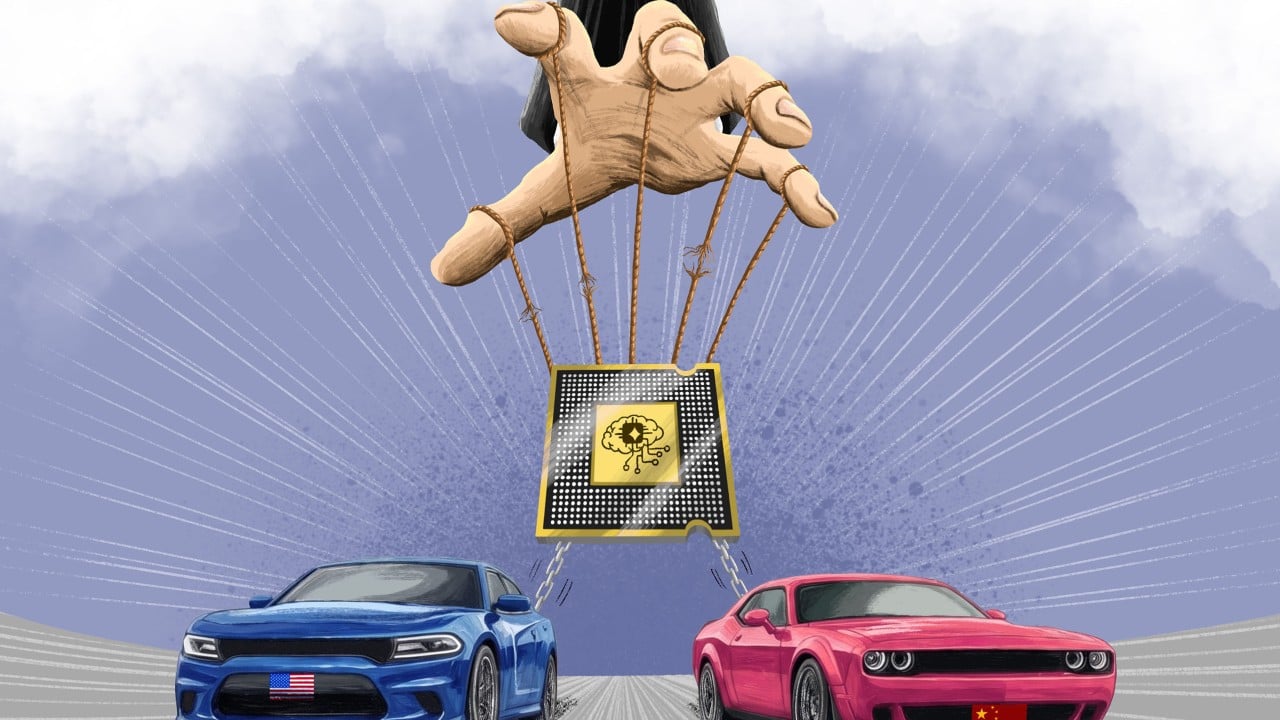
In the US-China AI race, the real fight is keeping humans in control

The US-China AI competition faces a dilemma. Both countries see artificial intelligence as a source of economic, scientific and strategic power, so neither has much incentive to slow down. Yet the more capable and autonomous AI becomes, the more important the question of human control. Last week’s summit between US President Donald Trump and Chinese President Xi Jinping brought that tension into the open. Trump wants to leave AI “exactly where it is” rather than add new guardrails, while Xi...

Microsoft Research Podcast 2026-09-28 21:00 UTC Score 52.0 AI-147-20260928-podcasts-and-81a56157

One year in: How Microsoft Research Asia – Singapore is advancing research, partnership and talent for real-world impact

Since launching a year ago, the Microsoft Research Asia — Singapore lab has established a strong foundation, deepened collaboration across government, academia, and industry, and explored how frontier AI research can create real-world value. The post One year in: How Microsoft Research Asia – Singapore is advancing research, partnership and talent for real-world impact appeared first on Microsoft Research .

1Password ties AI agent access to individual tasks
SiliconANGLE AI 2026-09-28 20:56 UTC Score 51.0 USR-0127-20260928-global-ai-ne-8091a58c

1Password ties AI agent access to individual tasks

AI agent access is complicating identity controls as agents log in, carry credentials and act on someone’s behalf. They have characteristics of both human and machine users. That overlap can make actions harder to attribute: An agent may appear in an audit log as the person it works for, even though software took the action. […] The post 1Password ties AI agent access to individual tasks appeared first on SiliconANGLE .

Agentic AI is breaking the token meter, and enterprises need a plan for what comes next
SiliconANGLE AI 2026-09-28 20:46 UTC Score 51.0 USR-0127-20260928-global-ai-ne-880f3780

Agentic AI is breaking the token meter, and enterprises need a plan for what comes next

Per-token pricing was the best thing to happen to enterprises looking to experiment with artificial intelligence, but it may be the worst thing for AI in production. That’s the quandary at the center of a new Futurum report, “The Off Ramp From Per-Token Pricing,” sponsored by neocloud provider QumulusAI Inc. The report’s key finding is […] The post Agentic AI is breaking the token meter, and enterprises need a plan for what comes next appeared first on SiliconANGLE .

Meta hires MongoDB CEO CJ Desai to lead new enterprise AI business
SiliconANGLE AI 2026-09-28 20:13 UTC Score 53.0 USR-0127-20260928-global-ai-ne-ac4e8e9d

Meta hires MongoDB CEO CJ Desai to lead new enterprise AI business

Meta Platforms Inc. is launching a new business unit that will provide artificial intelligence services to enterprises. The Meta Enterprise Platform, as it’s called, will be led by longtime technology executive CJ Desai. The company stated in a launch announcement today that he will hold the title of chief enterprise platform officer. Desai is joining […] The post Meta hires MongoDB CEO CJ Desai to lead new enterprise AI business appeared first on SiliconANGLE .

LessWrong AI 2026-09-28 20:11 UTC Score 66.0 USR-0152-20260928-community-fo-44793298

Even if others are less responsible you can still make things worse

Reposted from shortform because I think this is important enough to be a post. A few ways staying in a technology development race still makes things worse, even when there are less responsible actors around: Creating a sense of artificial urgency, which causes people who are competitive and results driven to work harder and cut more corners Providing a guiding star on which technical directions are promising (e.g. reasoning models, CoT, RLHF) Legitimising irresponsible behaviour as valid response to strong competition ("it's a competitive market, this was bound to happen") Entangling the motivations and incentives of the "more responsible" parties with the success of the technology in question, making any warnings seem weak and hypocritical ("if it's so bad, how come you're still doing it"?) Providing an adversary or target to aim for/surpass (similar to artificial urgency) Diffusing media/governance/public attention away from the "more irresponsible" parties, since it's now a multi horse race Driving hype, attention, and funding to the field via your credibility and achievements Becoming trapped in a "we must win" mentality that causes you yourself to cut corners Discuss

ServiceNow calls for a measured response to rogue AI agents
SiliconANGLE AI 2026-09-28 20:10 UTC Score 54.0 USR-0127-20260928-global-ai-ne-cef41fac

ServiceNow calls for a measured response to rogue AI agents

Agent containment is becoming a practical governance question as enterprises move AI agents into production. ServiceNow Inc. is betting that the response to a misbehaving agent must account for both risk and the business work it supports. The company has spent the year pitching itself as the control tower for enterprise AI. That ambition extends […] The post ServiceNow calls for a measured response to rogue AI agents appeared first on SiliconANGLE .

LessWrong AI 2026-09-28 20:08 UTC Score 58.0 USR-0152-20260928-community-fo-0367fc6d

Fixed-weight models are adversarially vulnerable: hence misaligned

This post argues that fixed-weight models (at least as we understand them today) will a) always be vulnerable to adversarial examples in their concept-spaces, and b) hence will be misaligned, under sufficient optimisation pressure . Boundaries in concept space To serve any purpose whatsoever, an AI will have to draw boundaries inside its world-model - to distinguish world A from world B, and reach some comparison between them. If we want the AI to follow our goals and values, we want it to be able to recognise concepts like "human being", or maybe "conscious being", "suffering", "preference satisfaction", "law", and so on. So we want an AI to be able to look at a situation and assess, e.g., whether there are or aren't suffering conscious beings in it. But concepts like "conscious beings" are not crisply defined across all possible world-states. A fixed-weight model will draw a boundary between "conscious being" and "non-conscious being" (or maybe score the amount/degree of consciousness), but this will be an imperfect boundary. In high-dimensional spaces, there are many degrees of freedom of how a boundary can be drawn, and never enough data to draw the boundary perfectly [1] . If someone is confident that we can draw an acceptably reliable boundary defining "conscious being", grounded in fundamental facts about the universe (e.g. basic physics), and resistant to all ontological crises ... well, let's just say they have an optimism about concept rigour that flies in the face…

AI Alignment Forum 2026-09-28 20:08 UTC Score 58.0 USR-0151-20260928-community-fo-2b6fcaed

Fixed-weight models are adversarially vulnerable: hence misaligned

This post argues that fixed-weight models (at least as we understand them today) will a) always be vulnerable to adversarial examples in their concept-spaces, and b) hence will be misaligned, under sufficient optimisation pressure . Boundaries in concept space To serve any purpose whatsoever, an AI will have to draw boundaries inside its world-model - to distinguish world A from world B, and reach some comparison between them. If we want the AI to follow our goals and values, we want it to be able to recognise concepts like "human being", or maybe "conscious being", "suffering", "preference satisfaction", "law", and so on. So we want an AI to be able to look at a situation and assess, e.g., whether there are or aren't suffering conscious beings in it. But concepts like "conscious beings" are not crisply defined across all possible world-states. A fixed-weight model will draw a boundary between "conscious being" and "non-conscious being" (or maybe score the amount/degree of consciousness), but this will be an imperfect boundary. In high-dimensional spaces, there are many degrees of freedom of how a boundary can be drawn, and never enough data to draw the boundary perfectly [1] . If someone is confident that we can draw an acceptably reliable boundary defining "conscious being", grounded in fundamental facts about the universe (e.g. basic physics), and resistant to all ontological crises ... well, let's just say they have an optimism about concept rigour that flies in the face…
LessWrong AI 2026-09-28 20:07 UTC Score 82.0 USR-0152-20260928-community-fo-9aa63e7e

The Alignment Community Is Unintentionally Building a Censor's Toolkit

This is an adaptation of our ICML 2026 position paper (Outstanding Position Paper Award). Read the full paper here and see the project website here . Work together with Phil Hackemann. TLDR "Alignment" is usually treated as a synonym for achieving good and safety in the world. But it isn't necessarily. Alignment methods are purpose-agnostic: they make a model do what someone wants, and nothing in the methodology guarantees that someone has good intentions. The same techniques we build to stop models from giving bomb-making instructions can just as easily be used to censor historical facts, political dissent, or inconvenient opinions. So we need to understand: alignment techniques are dual-use technologies . This isn't a thought experiment. State censorship regimes and individual model providers are already misusing alignment methods, and by perfecting these methods we are providing an ever improving censor toolkit. Three trends make this urgent to discuss: AI is becoming a primary information source for hundreds of millions of people, the model-provider market is an oligopoly, and global democratic backsliding is accelerating. We don't think the answer is "stop aligning models." We think it's transparency, verifiable alignment, model pluralism, and the alignment community actually reckoning with dual-use. ___________________________________________________________________ No guarantees that alignment leads to good Many alignment researchers (ourselves included) have gotten u…

JPMorgan’s Jamie Dimon on how growth can untangle US-China strife, thorny global issues
South China Morning Post AI 2026-09-28 20:00 UTC Score 40.0 AI-156-20260928-regional-ai--8cae54d4

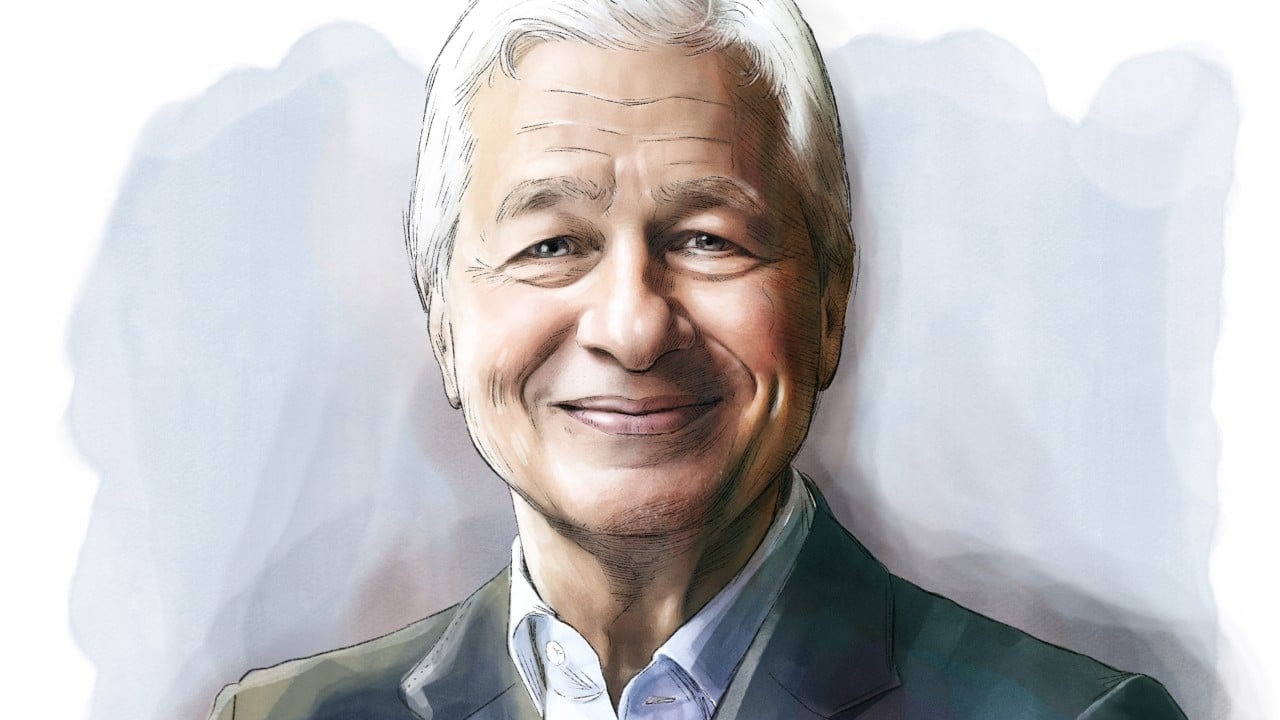
JPMorgan’s Jamie Dimon on how growth can untangle US-China strife, thorny global issues

Jamie Dimon’s recent whirlwind visit to Hong Kong followed a similar script: a schedule packed with meetings involving the entrepreneurs and business leaders connecting China with global markets. But it was his increasingly visible stance on global issues that appeared to extend his career beyond market strategy and financial industry leadership as CEO of JPMorgan Chase. His preoccupation with economic growth and world affairs drew particular attention in Hong Kong last week, shortly before...

The Verge AI 2026-09-28 19:31 UTC Score 49.0 AI-016-20260928-global-ai-ne-d6c6baf9

Bose starts adding Auracast to its headphones

A new firmware update for the $449 Bose QuietComfort Ultra Headphones Gen 2 adds support for Bluetooth LE Audio and Auracast as beta features. The flagship Ultra headphones are the first from Bose to support the audio sharing technology, which the company plans to bring to more devices soon. Only a few major manufacturers include […]

The Decoder 2026-09-28 19:26 UTC Score 48.0 AI-168-20260928-regional-ai--cf5e331b

More than 20 leading AI researchers warn that automated AI research poses extreme risks

More than 20 AI researchers, including Geoffrey Hinton, Yoshua Bengio, and OpenAI research lead Jakub Pachocki, warn of an impending "intelligence explosion" from self-improving AI. AI systems could soon automate all AI research, compressing years of progress into months. The article More than 20 leading AI researchers warn that automated AI research poses extreme risks appeared first on The Decoder .